
Monday saw the drop of a rare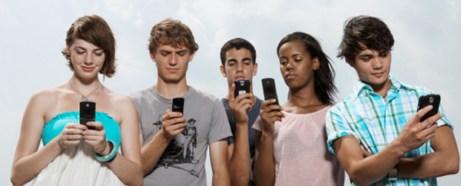 essay from Andrew Sullivan, former blogger with the Daily Dish. The essay, “I Used to Be a Human Being,” recounted Sullivan’s struggle with detoxing from digital culture, from blogging to smart phones. The piece got lots of traction from all different corners, which is always cool, particularly as he referenced some of my favorite writers/thinkers (like Nicholas Carr, Alan Jacobs, and Matthew Crawford). Thought I’d spend a couple of posts pointing out some favorite moments from the essay.
One of the things I like most about “I Used to Be a Human Being” is how Sullivan traces the quick ascendancy of our most recent digital culture. While it didn’t happen overnight in our lifetimes, it did happen in the blink of an eye when you look at the big picture.
Since the invention of the printing press, every new revolution in information technology has prompted apocalyptic fears. From the panic that easy access to the vernacular English Bible would destroy Christian orthodoxy all the way to the revulsion, in the 1950s, at the barbaric young medium of television, cultural critics have moaned and wailed at every turn. Each shift represented a further fracturing of attention — continuing up to the previously unimaginable kaleidoscope of cable TV in the late-20th century and the now infinite, infinitely multiplying spaces of the web. And yet society has always managed to adapt and adjust, without obvious damage, and with some more-than-obvious progress. So it’s perhaps too easy to view this new era of mass distraction as something newly dystopian.
But it sure does represent a huge leap from even the very recent past. The data bewilder. Every single minute on the planet, YouTube users upload 400 hours of video and Tinder users swipe profiles over a million times. Each day, there are literally billions of Facebook “likes.” Online outlets now publish exponentially more material than they once did, churning out articles at a rapid-fire pace, adding new details to the news every few minutes. Blogs, Facebook feeds, Tumblr accounts, tweets, and propaganda outlets repurpose, borow, and add topspin to the same output.
What’s been frustrating about the trend is how few people pushing technology have spent much time looking at all of the angles of digital influence. Sure, some of that could be chalked up to a sense of “the unknown,” but we do have all of our previous technological jumps to help us be a bit more critical of what we’re getting ourselves into.
And the engagement never ends. Not long ago, surfing the web, however addictive, was a stationary activity. At your desk at work, or at home on your laptop, you disappeared down a rabbit hole of links and resurfaced minutes (or hours) later to reencounter the world. But the smartphone then went and made the rabbit hole portable, inviting us to get lost in it anywhere, at any time, whatever else we might be doing. Information soon penetrated every waking moment of our lives.
And it did so with staggering swiftness. We almost forget that ten years ago, there were no smartphones, and as recently as 2011, only a third of Americans owned one. Now nearly two-thirds do. That figure reaches 85 percent when you’re only counting young adults. And 46 percent of Americans told Pew surveyors last year a simple but remarkable thing: They could not live without one. The device went from unknown to indispensable in less than a decade. The handful of spaces where it was once impossible to be connected — the airplane, the subway, the wilderness — are dwindling fast. Even hiker backpacks now come fitted with battery power for smartphones. Perhaps the only “safe space” that still exists is the shower.
Am I exaggerating? A small but detailed 2015 study of young adults found that participants were using their phones five hours a day, at 85 separate times. Most of these interactions were for less than 30 seconds, but they add up. Just as revealing: The users weren’t fully aware of how addicted they were. They thought they picked up their phones half as much as they actually did. But whether they were aware of it or not, a new technology had seized control of around one-third of these young adults’ waking hours.
This past week, I talked my students through the idea of a frog dying in boiling water because the temperature was turned up gradually and without much notice. The science behind the anecdote is questionable (you can check YouTube for that), but the sentiment is clear and obvious. It’s a different take on the opening story in David Foster Wallace’s Kenyon College address, “This is Water.” We are in the water, our culture, and the very temperature of the water has changed (thanks to digital technology, in a way). It’s a bit of what Douglas Coupland was going for in his short work, The Age of Earthquakes.
For Sullivan, the solution was walking away from technology. Much of the essay retells some of that story. He traces the idea of silence from the Protestant Reformation to the annual Burning Man event. It’s a long read, but it’s also a good one. And while you may not agree with all of Sullivan’s many views, I do think he speaks truth on a vital issue for us today, we whose very brains are being continually rewired by the digital landscape around us.
You can read the whole essay here. Tomorrow, I’m going to make note of some of the overtly Christian connections in the piece, which includes an indictment on contemporary Christian spirituality in America.
(image from comfortade.com)


 Space Enough, and Time