
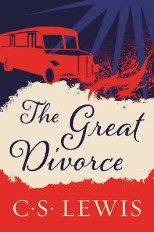
 One of the practices I’m trying to hold to during the Lenten season is the reading of shorter books. Small thing, I know, but it feels somehow fitting. The season started as I finished up Zena Hitz’s Philosophers Look at Religious Life, which was far from a tome. From there, I made my way (back) to The Great Divorce by C. S. Lewis. It’s a book that I have read a few times over the years and think about often. It’s not the kind of book one read’s flippantly. Till We Have Faces feels much the same way, though The Great Divorce has more payoff throughout the book.
Funny enough, the preface of The Great Divorce is almost worth the whole price of admission. He starts with the thought that we can’t have it all, that life will ultimately boil down to some kind of either-or choice that is not a fallacy. Lewis writes:
You cannot take all luggage with you on all journeys; on one journey even your right hand and your right eye may be among the things you have to leave behind.
A nice nod to the Sermon on the Mount there. At the end of the same paragraph Lewis writes:
Good, as it ripens, becomes continually more different not only from evil but from other good.
Which feels like a key Lewisian thought in a nutshell.
There are so many great moments in the story’s 146 pages. So many honest questions asked and sobering responses given. I hate to take too many of them out of context, which the narrator’s guide is also concerned about, it seems. But here’s one of my all-time favorite conversation/quotes from the book (which hopefully doesn’t suffer from a lack of context here):
‘Every natural love will rise again and live forever in this country: but none will rise again until it has been buried.’
‘The saying is almost too hard for us.’
‘Ah, but it’s cruel not to say it. They that know have grown afraid to speak. That is why sorrows that used to purify now only fester.’


 Space Enough, and Time