
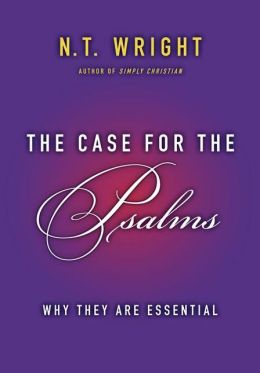
 N. T. Wright’s latest book, The Case for the Psalms, dropped last week without much fanfare. It’s a little book, small in both page size and page count. It is also, surprisingly, a brilliant book about worldview.
Worldview has been a part of my vocabulary since my junior year of college, when I intercepted and read a book being passed from one teacher to another. I’ve been able to nurture the concept’s place in curriculum over the last few years, too. So I was quite glad to see Wright’s take on the book of Psalms as a worldview-shaper.
Early in the book, Wright distinguishes his use of the term from the more Francis Schaeffer-esque view, which is “used to refer to a basic kit of would-be Christian assumptions that for some reason have taken on a particular political slant.” Instead, Wright employs worldview as “something like a pair of spectacles: it is what you look through, not what you look at. Worldviews . . . are a swirling combination of stories, symbols, habitual praxis, and assumed answers to key questions.”
For Wright, the Psalms are a key component of that swirl. And, as is so often the case, Wright presents his thoughts brilliantly. The Law. Second-Temple Judaism. Messianic imprints throughout the book. Regular church practice. All of it is there. All of it based on a “creational monotheism” that stands opposite of our own modern Epicureanism.
Christianity Today just posted an interview with Wright concerning the book. I’d encourage you to read it to get a better picture of his thoughts. You can read the interview here. The book, The Case for the Psalms, is available online or at your local Barnes and Noble.


 Space Enough, and Time