
 Alan Jacobs recently brought together Star Wars, The Lord of the Rings, and Pixar’s The Incredibles for a quality reflection on power (or, in most cases, super-powers) and its subversion in popular mediums. From the article:
“The race is not [always] to the swift, nor the battle to the strong,” saith the Preacher — to which Damon Runyon famously replied, and with some justification, yeah, but that’s the way to bet. It is, if you’re a betting person. Nobody smart would have bet on David against Goliath. But sometimes — not often, but sometimes — longshots come in. And if you hang around long enough, or read enough history, you start to notice that they tend to do so at curiously opportune times. Not often, mind you, not often enough that everyone will see a pattern, but … sometimes the battle is not to the strong; sometimes overwhelming force is defeated. Occasionally it plays a role in its own defeat, by trusting too much in itself — counting on, calculating by, force only — never suspecting that there may be powers at work other than those of strength, skill, numbers.
And then:
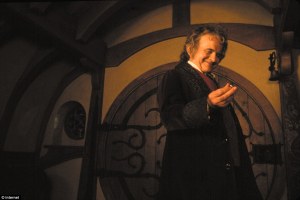
In Tolkien’s Lord of the Rings — setting aside Peter Jackson’s — Gandalf tells the history of the Rings of Power, and especially of the Great Ring made “to rule them all,” and explains that that Ring was constantly striving to get back to its maker, Sauron. And yet it did not make its way to him. Instead it came to Bilbo. And behind that curious event “there was something else at work, beyond any design of the Ring-maker. I can put it no plainer than by saying that Bilbo was meant to find the Ring, and not by its maker.” This is not putting the matter very plainly at all: Gandalf’s use of the passive voice is telling. It is perhaps, even for him, just a suspicion — little more than the reading of hints, in the long historical record he knows so well, that Sauron’s bet on the inevitable victory of Power just might not pay off; that perhaps there is something more moving in the world, something that does not work through the Great but through the small, the weak, the unknown, the neglected, the utterly marginal.
You can read the whole article here. Be warned, though, as Star Wars spoilers are present.
Good thoughts for this good day, I think. For all of it’s angels and shepherds, hopeful prophets and angry kings, there is a smallness to the story of Jesus’ birth we ought not forget. Simple. Mysterious. Wonderful.
(image from dailymail.co.uk)


 Space Enough, and Time