
 It is difficult to believe that we are one full month into 2016. At the end of last year, there were a couple of good articles/essays about things like The Lord of the Rings and Star Wars- The Force Awakens that reminded us of the on-going nature of the story we are in. The church, of course, retells its story in various and sundry ways. More often than not (and more frequently than before in evangelical circles), that story is retold through the church calendar.
In his reflection on starting 2016 (along with Advent in general), author Stephen Williams had this to say (and this in light of JRR Tolkien):
It is against the backdrop of these reflections – and questions – about our human history that I find myself reaching for the wise words of an old friend. J.R.R. Tolkien needs no introduction, but perhaps these two passages do, so bear with me. The first may be familiar to some; the second, while more obscure, clarifies the first in breathtaking fashion. In The Fellowship of the Ring, Tolkien quietly reveals his historical vision through the words the immortal elf Galadriel, who, speaking of her husband Celeborn, makes this observation about their time in Middle Earth: “Together through ages of the world we have fought the long defeat.”
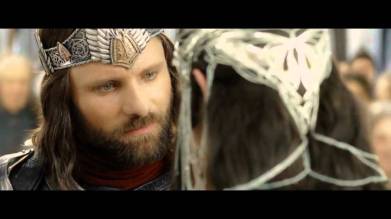
Anyone who has read Tolkien will know that he is no pessimist, so why would he use a phrase like “fought the long defeat” when the word “defeat” carries with it an almost automatic connotation of hopelessness? Time and space and my own poor intellectual giftings prohibit me from giving these words the treatment they are due, but thankfully, perhaps Tolkien answers the question himself in a parallel passage buried deep in the appendices of The Lord of the Rings. Aragorn, the King Ellesar, having come to the end of a long reign of peace and renewal, speaks tenderly from his deathbed to his queen, Arwen, of their imminent parting; indeed, these are his last recorded words to her: “In sorrow we must go, but not in despair. Behold! we are not bound for ever to the circles of the world, and beyond them is more than memory.”
This eminently poignant scene deserves far more readership than it likely receives, for in a mere two sentences it addresses the very real sorrows of this present life while still communicating the hope that lies in the next. Tolkien wisely recognized that no lot in this old world would ever leave us wishing to stay here; he recognized that no lot would prevent us from facing the agonizing wait appointed to those who are on a pilgrimage to a land beyond circles of their current existence.
Christians have always felt the tension between this life and what comes next, all that business of earthly good and heavenly good. Living between the two is a necessary good just as much as it can be perceived to be a necessary evil. One of my favorite lines of dialogue from The Two Towers that didn’t make it into Jackson’s series was upon Gandalf’s return. “Beyond hope you return to us in our time of need!” Aragorn said. Always good to be mindful of the Power that exists beyond hope.
You can read the rest of Williams’s reflection here.
(image from youtube.com)


 Space Enough, and Time