
“The Christian religion,” wrote Robert Louis Wilken, “is inescapably ritualistic (one is received into the Church by a solemn washing with water), uncompromisingly moral (‘be ye perfect as your Father in heaven is perfect,’ said Jesus), and unapologetically intellectual (be ready to give a ‘reason for the hope that is in you,’ in the words of 1 Peter). Like all the major religions of the world, Christianity is more than a set of devotional practices and a moral code: it is also a way of thinking about God, about human beings, about the world and history.”
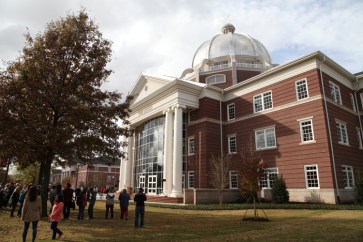 So begins “Go With God,” an “open letter” from Stanley Hauerwas to up-and-coming Christian college freshmen that was posted to First Things back in 2010. I didn’t know that it existed until last week, when the site re-upped the letter on its Twitter feed. It’s a great read that I thought I’d work through over the course of a few days.
It is interesting to reflect on “Christian thinking,” particularly in a culture that has (overly?) emphasized feeling as the prime faith disposition. And while I would ultimately argue that its a false distinction, I do think it’s good to think about “thinking Christianly” as a particular muscle that needs exercise for many of us. Hauerwas does a great job of helping us see that.
The Christian fact is very straightforward: To be a student is a calling. . .
It is an extraordinary gift. In a world of deep injustice and violence, a people exists that thinks some can be given time to study. We need you to take seriously the calling that is yours by virtue of going to college. You may well be thinking, “What is he thinking? I’m just beginning my freshman year. I’m not being called to be a student. None of my peers thinks he or she is called to be a student. They’re going to college because it prepares you for life. I’m going to college so I can get a better job and have a better life than I’d have if I didn’t go to college. It’s not a calling.”
But you are a Christian. This means you cannot go to college just to get a better job. These days, people talk about college as an investment because they think of education as a bank account: You deposit the knowledge and expertise you’ve earned, and when it comes time to get a job, you make a withdrawal, putting all that stuff on a résumé and making money off the investment of your four years. Christians need jobs just like anybody else, but the years you spend as an undergraduate are like everything else in your life. They’re not yours to do with as you please. They’re Christ’s.
Hauerwas is correct: it’s an odd thing to think of going to college as a “calling.” It is an assumption for many high school students today, a necessary step to getting reach certain employment goals in a decent time-frame. It is good to be reminded, though, that there is something special and humbling about getting to set aside a chunk of time to get the chance to think and read and learn and explore God’s creation and mankind’s interaction with it. And then to say that, like everything else, those years belong to Christ? Brilliant.
Christ’s call on you as a student is a calling to meet the needs of the Church, both for its own life and the life of the world. The Resurrection of Jesus, Wilken suggests, is not only the central fact of Christian worship but also the ground of all Christian thinking “about God, about human beings, about the world and history.” Somebody needs to do that thinking—and that means you.
You can read the whole letter here. Next time we’ll look at what Hauerwas says about the intellectual life and the church.
(image from vipjackson.com)


 Space Enough, and Time