
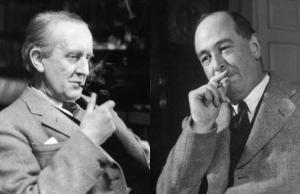
 While I haven’t listened to the interview to be found at the article’s end, I did enjoy the recent Forbes piece on “The Inklings at War” by Jerry Bower. In the article, Bowyer traces the philosophical implications of the first World War, particularly in light of contemporary culture, from Joseph Loconte’s A Hobbit, a Wardrobe, and a Great War.
As I surveyed the landscape of our leadership class here in America, I found myself tempted to despair. And then I spent several hours in the company of two World War I officers: C. S. Lewis and his future friend J.R.R. Tolkien, and I actually found myself refreshed. They were part of a generation which endured far worse than we have, and yet Lewis and Tolkien came out… I won’t say ‘unscathed’, but I will say scathed in a way which left them with empathy and wisdom along with their permanent scars. No, they never fully healed. Like Frodo, and Percival, The Fisher King, and like the Patriarch Jacob they carried their wounds for the rest of their lives. But they bought something with their wounds. Wisdom came from suffering.
Through historical and philosophical context, Bower concludes:
The lost generation dragged high culture down into nihilism and low culture into decadence, but the Found Generation founded a counter-counter-culture. The novels of Tolkien, and not those of Gertrude Stein, or T.S. Eliot, or even Ernest Hemingway are read widely by the general public (and not under compulsion of class syllabus). The Lord of the Rings was voted most beloved novel of the century by the British public. Lewis has a wide subculture to his name, and there’s serious talk about a C.S. Lewis College at Oxford. That’s because the middle and working classes cannot live on a diet of nothingness, they need meat, and in Lewis and Tolkien, they have been served red beef and strong beer.
Food for thought for us, for sure.
You can read the rest of the article (and the linked interview with Loconte) here.
(image from thewrap.com)


 Space Enough, and Time