
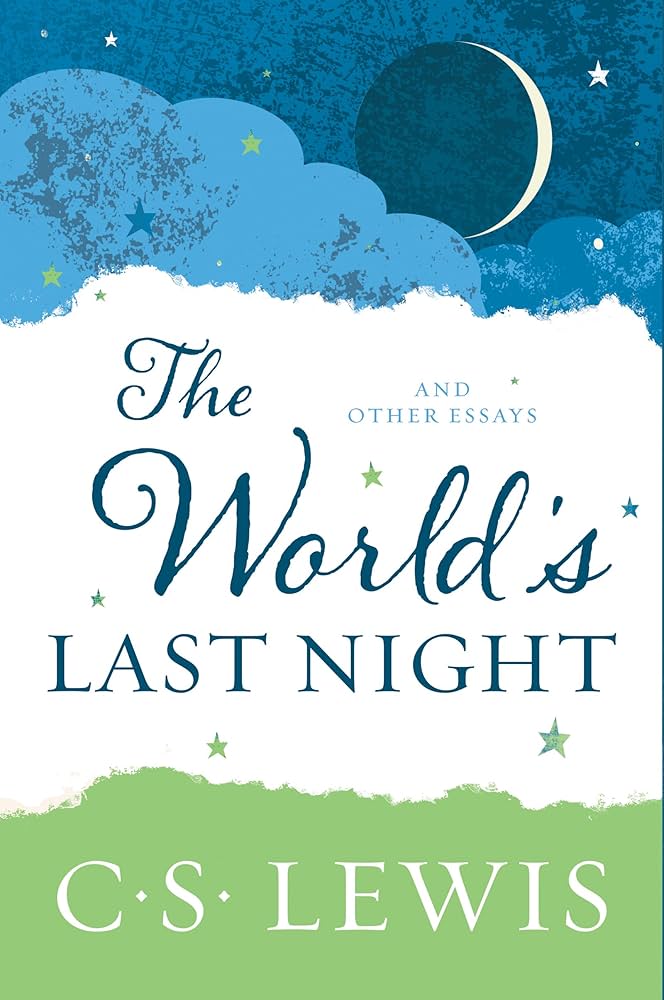
 Advent, as I understand it, helps us consider two truths: the birth of Jesus (His first coming) and the return of Jesus (His second coming). That’s a lot to hold together, I think, especially with the strong pull of Christmas Day and all that comes with it. But that second truth still stands, which is why I often think of “The World’s Last Night” by C. S. Lewis.
The essay starts with the doctrine of Jesus’ second coming and the frustration that the doctrine can bring to people, especially those with a strong desire to pinpoint exact time and location of that event. Lewis does a solid job of reminding us of a number of truths surrounding the second coming, including an interesting section on the place of apocalyptic literature in the first place:
. . . our Lord’s production of something like the other apocalyptic documents (of first-century Judaism) would not necessarily result from his supposed bondage to the errors of his period, but would be the Divine exploitation of a sound element in contemporary Judaism: nay, the time and place in which it pleased him to be incarnate would, presumably, have been chosen because, there and then, that element existed, and had, by his eternal providence, been developed for that very purpose.
Lewis also deals with the knowledge of the incarnate Jesus: what did he know (or not) and how did he know it. It’s a theological question that lots of people ask often, and I think he handles it well. Near the essay’s end, he asserts:
What is important is not that we should always fear (or hope) about the End but that we should always remember, always take it into account . . . What modern Christians find it harder to remember is that the whole life of humanity in this world is also precarious, temporary, and provisional.
And so what Ash Wednesday does for the individual, this facet of Advent does for all of humanity and all of our history. Both are good and necessary reminders, particularly as Advent gives way to Christmas.


 Space Enough, and Time