
And just like that, spring break has come to an end. For all intents and purposes, the turn of the calendar from Saturday to Sunday brings with it a change in disposition, of direction, when conversations and thoughts turn in earnest to the fourth quarter of the school year.
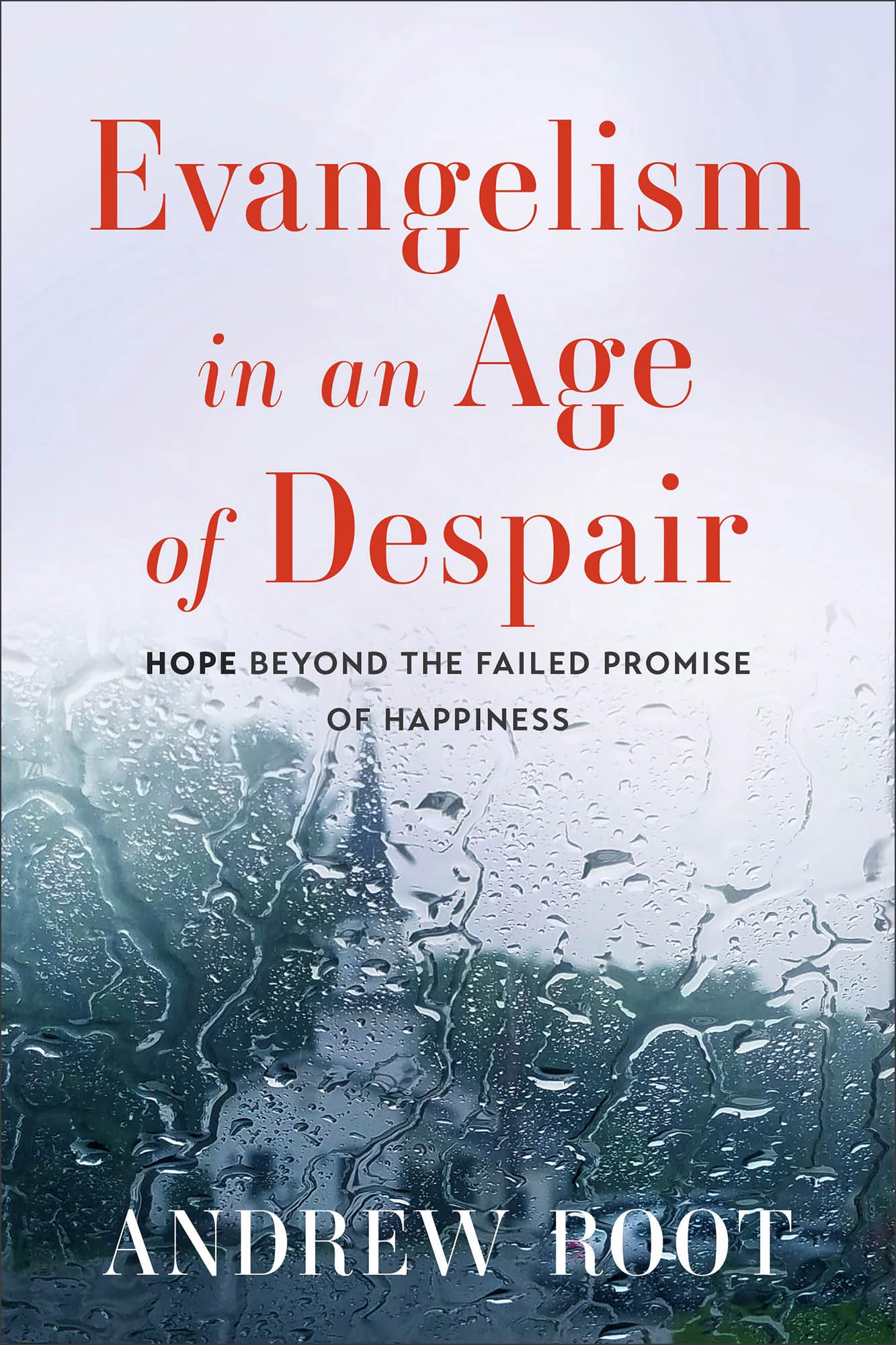
It’s been a good break, with the first week being particularly productive and the second week being a little more restful and reflective. The “big read” for the break was Andrew Root’s Evangelism in an Age of Despair. I’ve been following Root’s thinking for a good while now (probably through 10 to 12 books) and have been greatly challenged and encouraged by his “spin” on life in “a secular age” (much of his work has been connected with Charles Taylor’s book that bears that name). The general premise is that God meets us in our sorrows. that Jesus (the Man of Sorrows) brings consolation to us (and therefore we are called to bring it to one another). There’s more to it than that (and he uses a historical trail that starts with Michel de Montaigne as a thread), but that’s enough for now.
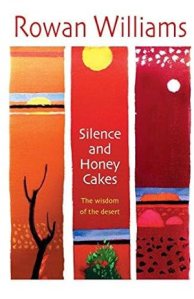 Beyond that, I also finished a much shorter book, Silence and Honey Cakes by Rowan Williams. The book is about the sayings of the monks and nuns of the desert, so it tracks nicely with the “Desert Fathers in a Year” podcast that I started following back on January 1st. The book is a good summary of some major things of the desert literature. The chapters on feeling and staying were wonderfully time for me, too. From here, I turn my attention to Soul Making by Alan Jones, which also speaks of “the desert way of spirituality.” I’m also about halfway through Curt Thompson’s Anatomy of the Soul. I finally dipped my toe into Justin Whitmel Earley’s Made for People podcast, which started up just over a month ago. Thompson was the guest in the first episode that I listened to, and it was brilliant. Funny enough, I’ve tried reading Thompson before but to no avail. This book (and Thompson’s podcast) are a good way to check out an interesting (and Christian) approach to the soul and neuroscience.
The break was a bit dry cinematically. I did watch 28 Days Later at the beginning of break with the neighbors. The movie is straight out of 2002, and every moment on the screen feels like it. It was fun (?) seeing Christopher Eccleston have a role in the movie (which predates his one-season run as The Doctor). I did take a couple of hours to watch the final Bridget Jones movie on Peacock, which was both funny and sad (which is the way of things). I did end up seeing two movies in the theater: Black Bag starring Blanchett and Fassbender and then Novocaine. Black Bag was a “spy on the spies” story that was wonderfully small and twisty. Novocaine was about a guy who cannot feel pain and who goes to extreme lengths to save the woman he loves. It was good, too, though I found myself wishing the movie had a narrator to give things a little more depth (which Mickey 17 had, which I saw just as break started).
We’ve got three weeks from now until Easter Sunday. It’s always weird to start something new so near then end (like the final quarter of a school year), but that’s the way of it. On some level, this moment in time makes a good pivot point for moving from Lent to Easter. I’ve been listening to some older Poco a Poco podcasts. Their Lent series from 2023 has so far moved from the desert temptations of Jesus to His transfiguration and most recently to His conversation with the Samaritan woman at the well. All pictures of Jesus having specific moments that help us better understand our own journey with Jesus.
Erik Varden just posted a homily he gave to some Benedictine nuns at the end of a retreat, when they take time to renew their vows. He says this about the ascetic life (of which Lent is a picture). I’ll bold the line I like the most:
The purpose of asceticism is not to combat nature, but to order it in view of flourishing and fruitfulness.
Such a project calls for perseverance, which at times spells combat.
‘Your fidelity’, says the Lord, ‘is like a morning cloud, like the dew that quickly disappears.’ If we surrender to the pursuit of facile, passing preferences, this is how it is.
We must root ourselves, therefore, like trees, like majestic Breton beeches, in order that our nurtured faithfulness will correspond to God’s, as vast as the sea.
This indeed is the foundation of all spiritual life: the interaction of God’s fidelity with ours.
The Good News, as Paul wrote in his second letter to Timothy, is that regardless of our faithfulness, He remains faithful because He cannot disown Himself (2 Timothy 2:13). We see the faithfulness of Jesus in desert and on the mountain and at the well just like we can see His faithfulness in our own lives, which is a great blessing.
Finally: a song. I was reminded recently of this great song by Andy Gullahorn that captures something good about this and every moment if we (at least on good days) have the eyes to see it.


 Space Enough, and Time