
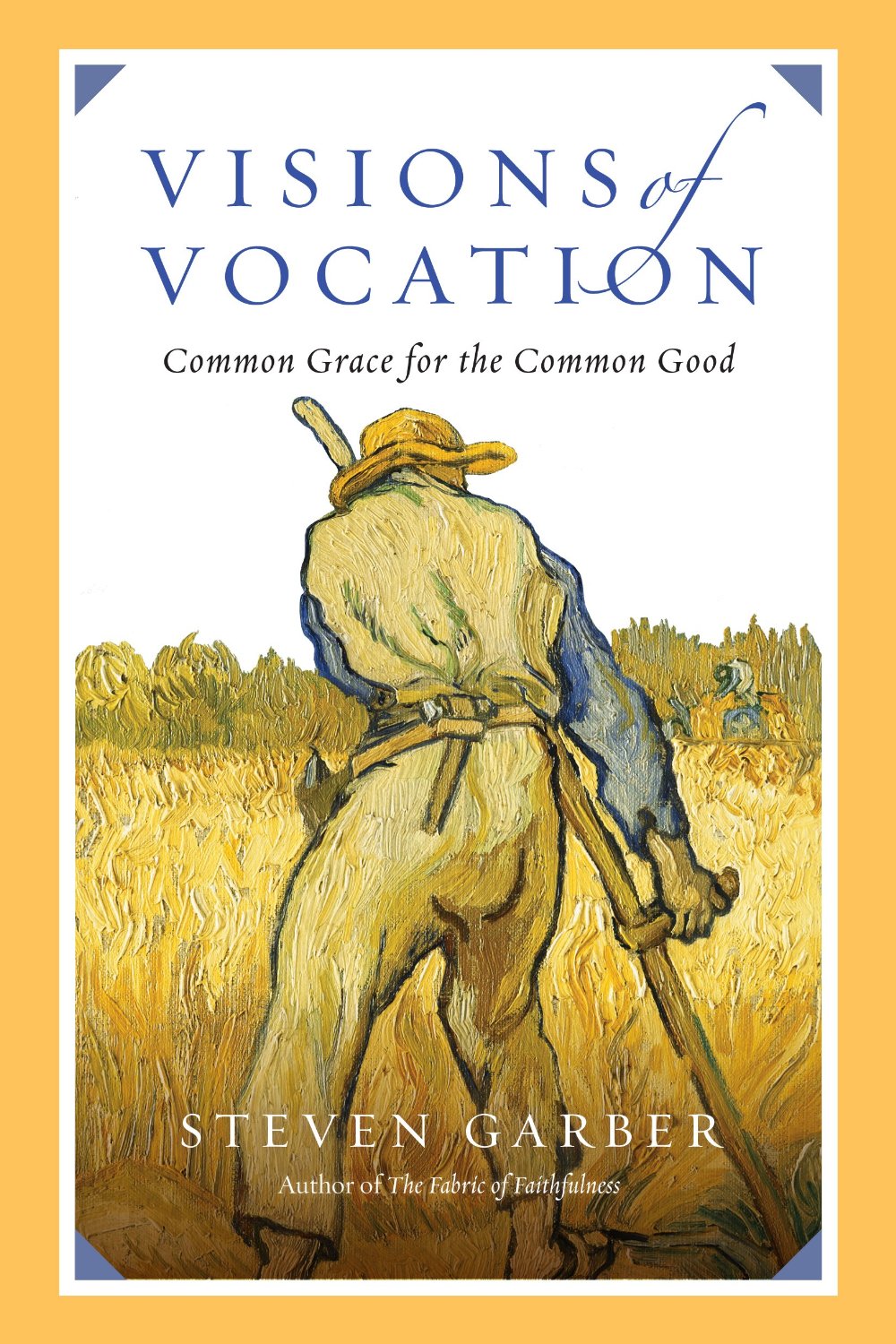
 If I gave an award for “Book Bought Most in 2014,” it would definitely be Steven Garber’s Visions of Vocation. It dropped in late spring, and I was so moved by it that I had to pass it on to anyone I knew who was working hard at understanding calling and mission in 21st century America. The key question Garber asks has stuck with me all year: knowing what I now know of the world, can I still love it?
Christianity Today recently saw fit to recognize Garber’s book with an “award of merit” in their year-end consideration of books. They posted a section of the book to their website titled “Overcoming Cynicism, Even After You’ve Seen How the Sausage is Made.” You can read it all here. Some of my favorite lines:
In the strange calculus of history and the human heart, the subtle temptation of cynicism confounds our best efforts at working toward a common good. Sometimes all we can do is name the problem, cancerous as it is to a good life and a good society. Some, of course, do not see it as a problem, instead embracing it as the reality of realities. . .
Whether conscious or not, intentional or not, the temptation to cynicism is always a way of keeping one’s heart from being wounded, again. . .
There is much to be cynical about—and it is a good answer if there has not been an incarnation. But if that has happened, if the Word did become flesh, and if there are men and women who in and through their own vocations imitate the vocation of God, then sometimes and in some places the world becomes something more like the way it ought to be.
Some of the book was also released at Patheos earlier in the year through a dedicated blog. Tying into the incarnation and vocation and using Jesus’ challenge to “come and see” to his first disciples:
The Abrahamic religions have several central truths in common, but at this point of God becoming flesh there are deep divisions. “Not for a moment,” Judaism protests, arguing instead that God is one— even as they still hope for a Messiah, someday and sometime. And while Islam believes that there was a great prophet named Jesus, it is incensed at the idea of incarnation. Pushing the boundaries into the pluralizing world at large, those who call themselves atheists and pantheists do not believe that an incarnation of God happened in history. And yet it is the heart of mere Christianity. But if that is the central reality of Christian faith, come and see is profoundly instructive. We do not learn the deepest lessons any other way. Moral meaning is always learned in apprenticeship, in seeing over-the-shoulder and through-the -heart of those who have gone before us, of those who have something to teach us. Theologian Stanley Hauerwas maintains that we learn brick laying only through apprenticeship, just as we learn to hope only through apprenticeship—and he is right. We do not learn anything that matters any other way.
You can read more of that excerpt here.
Most days it’s challenge enough just to see rightly. Acting on what you see takes a different and deeper kind of strength. I’m thankful that this year brought a new book by Garber to help me better understand that reality. Give the book a chance if you’re looking for a challenging read. And if you do read it, let me know what you think.


 Space Enough, and Time