“The Soil for Unexpected Good”

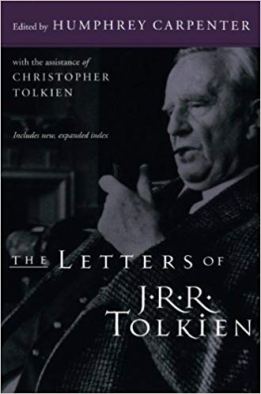
Tolkien's LettersAbout fifty letters into The Letters of J. R. R. Tolkien edited by Humphrey Carpenter we get a series of letters to Tolkien’s third son, Christopher.  The letters move back and forth wonderfully and soberingly between the events of World War Two and the writing of The Two Towers, being the second part of The Lord of the Rings.  And while I will get to some of the best parts on the writing of The Two Towers, I think it best to start with one of the many great articulations of life in war-time (which is part of what it means to be human, some might say).  From the letter to Christopher on April 30, 1944:

I sometimes feel appalled at the thought of the sum total of human misery all over the world at the present moment: the millions parted, fretting, wasting in unprofitable days– quite apart from torture, pain, death, bereavement, injustice.  If anguish were visible, almost the whole of this benighted planet would be enveloped in a dense dark vapour, shrouded from the amazed vision of the heavens!  And the products of it all will be mainly evil– historically considered.  But the historical version is, of course, not the only one.  All things and deeds have a value in themselves, apart from their ’causes’ and ‘effects.’  No man can estimate what is really happening at the present sub specie aeternitatis [under the aspect of eternity].  All we do know, and that to a large extent by direct experience, is that evil labours with vast power and perpetual success– in vain: preparing always only the soil for unexpected good to sprout in.  So it is in general, and so it is in our own lives . . . . . But there is still some hope that things may be better for us, even on the temporal plane, in the mercy of God.  And though we need all our natural human courage and guts (the vast sum of human courage and endurance is stupendous, isn’t it?) and all our religious faith to fave the evil that may befall us (as it befalls others, if God wills) still we may hope and pray.  I do.  And you were so special to a gift to me, in a time of sorrow and mental suffering, and your love, opening at once almost as soon as you were born, foretold to me, as it were in spoken words, that I am consoled every by the certainty that there is no end to this.

Posted in Books, Faith, The Long Story | Tagged | Leave a comment

Pastors and Lonely People

eleanor rigby from pophistorydigIt is interesting to me that Andrew Root gives his better definition of the office of pastor in a chapter titled “All the Lonely People.”  Search the terms pastor and lonely online and you’ll find at least one article a year from a religious news site about the struggle of the lonely pastor.  The ubiquity of the topic doesn’t make it any less real.  Nor does it help congregations that might be full of lonely people, too.  But Root weaves these threads together in The Relational Pastor.

Before he gets to redefining the pastor from a ministerial perspective, though, Root adds to the significance of personhood (as opposed to individualism) by talking about loss:

Loneliness reveals personhood because loneliness is the confession of lost relationship; it is clutching to find your personhood.  And it can be so radical that some psychologists actually say that the hardest thing to get clients to discuss is loneliness; they hypothesize that this is so because the feeling of loneliness is the closest experience we have to death.  It is to be dead to all others; it is to be alone.

The sharing of a life with another, then, is friendship.  If anything, Root’s work ensconces the following truth in my mind: one of the best and greatest gifts of the church, and the thing it can lack the most, is friendship.  In fact, I’m convinced that church as it exists today for many actively works against friendships.  But that’s a post for another time.  Root acknowledges great significance to Jesus’ calling his disciples friends by the end of his ministry as recounted in John’s Gospel.  How, though, does a pastor fit into this?

Root tries to stay away from a more functional definition of the term for as long as he can.  But he starts with this:

You can only be called pastor, as a mother can only be called mother, because there is a reltionship that gives you this personal reality, this identity.

A pastor has to be more than simply a priest, what Root calls “the projector and distributor of divine things, the true reader of the sacred texts.”  He continues:

A person is a pastor because … he is called by the Spirit to open … his own spirit to the spirit of the flock.  The pastor does this by preaching the Word of the God who encounters our persons, and by being present through the personal act of sharing in the sacraments, prayers and the story of … his people.  What pastors do is pastor, and pastoring is the brave action of leading by opening your person to the person of others so that together we might share in the life of God.

By chapter’s end, Root acknowledges that he’s left a few loose ends, including the goals of evangelism/conversion as well as the day-to-day practical expectations of a pastor.  Two wonderfully terse responses:

Yes, as pastors we still have things that must be taken care of; we still take on goals to get the institutions to function . . . But it is bad, or at least warped, when the functional wants of our job drown out or can’t support the reality of the personal . . . Pastoral ministry is filled with busy functions, but they are stillborn if they ignore the personal.

And:

To confess the incarnate Christ is to confess the centrality of the personal to ministry . . . Salvation is finding your person bound to God through the person of Jesus Christ . . . The goal of evangelism is not to convince people to take on a Christian interest in the world but to help them open their very person to the person of Jesus Christ.

If you’re interested, you can purchase The Relational Pastor here.

(image from pophistorydig.com)

Posted in Books, Faith | Tagged | Leave a comment

Missing the Mechanism for Persons?

As he does in some other books, Andrew Root attempts to give some historical context to what being a pastor has looked like throughout history.  This is also true for The Relational Pastor.  Early in the book, Root traces the role of pastor (and, by default, ministry) from via “energy practices from “hunter-gatherer” to “steam and coal” to “electric and managed oil” up to what might be “a new day.”  It’s an interesting and brief survey that at least gives some food for thought, though it might not give as much bang-for-buck as other surveys.  But it does get us up-to-date and prepared to see what pastoral ministry looks like beyond “self-help entertainer.”

+ + + + + + +

Person or IndividualIn the last post on this thread, we ended with the idea of the person versus the individual.  And it might sound like a splitting of hairs, I gut-level feel the distinction that Root makes.  Person is the better way to be, the best way to go.  It’s the self in multiple dimensions, where individual is a kind of shifting caricature.  And because persons are involved, there must be some way to move towards empathy and understanding.  The pastor stands at the heart of whatever this looks like going forward:

Pastoral ministry in our new era must surround the practice of facilitating personal encounter, of setting a space for people to be in relationships not of individualized self-help but of human person to human person.  Relationship in ministry cannot be for the purpose of influencing people (a blind spot of the era of pseudo-therapeutic self-help programs in the oil era), because such a motivation blinds us from personhood.  The other person becomes a problem to solve, something to fix, someone to win loyalty and resources from rather than another to encounter, a person to see and be with and for.

That last part reminds me of something my former pastor tried to articulate to us occasionally from Scot McKnight’s A Fellowship of Differents: that love is a rugged commitment to be with and for another person unto godliness (you can see a summary of that thinking here).  While I liked the concept, it didn’t seem to get much traction, possibly because there was no easy way to see a transition to that kind of love actually happen.  The mechanism just wasn’t there.

We are often too busy at church to get a sense of this.  We have too many lots to fill, too many pressing institutional/organization needs to meet, to see beyond the individual to the personal.  Because being personal means needing space for the messes that we are:

Personhood demands that the other see me, and see me not as a will that decides, not as someone to get to a program or a church, but as a human being bound to others in love and fear.  Personhood demands that I see the other as mystery to encounter, not as a will to mold through influence.

And so the question is posed:

Will a pastor be one who can win the loyalty of individuals or one who opens space in preaching, teaching, liturgy, study and fellowship for persons to encounter persons in the confession of God’s own incarnate person?

+ + + + + + +

It is worth thinking about the various “mechanisms” in church life that can help people see others as persons and not as individuals needed to fill slots.  Surely preaching and liturgy (or whatever you call the “order of service at church) play a role.  That’s kind of where the official take on things gets communicated.  For many, then, a place like Sunday School or a small group is where you are most likely to encounter persons.  Except that many Christians are also leading other groups like children or youth and therefore not easily connected with.  Or they are involved with committees and planning groups that are Spirit-sanctioned but also instrumental. Beyond that, Sunday School is primarily didactic, which can weirdly enforce the individual while giving some airplay to the personal.  Add the fact that many churches tend to be “commuter churches” that meet Sunday only and you’ve got a real confusion of hopes and possibilities.

You can purchase The Relational Pastor here.

(image from app.emaze.com)

Posted in Books, Faith | Tagged | Leave a comment

The Personal and the Individual

The Relational PastorLast week I started looking at some of the concepts articulated by professor Andrew Root in The Relational Pastor.  I’d like to continue to unpack some of his thinking this week, particularly as it relates to the shared life of Christians in community.

I think it’s significant that Root contextualizes things in terms of ministry.  While he gets theological and ecclesiological, Root reminds us that there is also a necessary place for ministry within the church.  And possibly moreso than more specific things like preaching and teaching and leading in worship at church, ministry is messy (and maybe difficult to define).  In most churches, ministry manifests through programs and acts of compassion.  In his thinking, Root wants to “place [ministry] again on the Christian concession of personhood.”  He continues:

… relationships in ministry are an end.  Relationships are the very point of ministry; in and through relationships people encounter the person of Jesus Christ and are therefore given their own personhood– a true personhood free from sin and death.

And so we come together, we relate to one another as people who have encountered Jesus Himself.  And that changes everything for us . . . and between us.  This serves as a potent contrast to a culture, our culture, that has capitulated to an unhealthy individualism.  Root asserts that our views on something as fundamental as conversion have been effected by it.

But even the theological concept of conversion has been overtaken by individualism.  In our churches we desire ministries that change people, that transform and convert people from death to life, from the old to the new.  But too often, caged by individualism, we contend that transformation or conversion is solely an epistemological reality.  Even when we dress it up with personal language, like saying we want people to “have a personal relationship with Jesus,” what we actually mean is not something personal but something individual; we want them to individually, in their own minds, assimilate knowledge about Jesus and become loyal to the idea of Jesus.  We use our relationships as leverage to get people to know things about their own individual ideas or behaviors, to change to new ideas and behaviors.  We use the relationship to convince them that our Christian subculture is better than another.  And so often in ministry we become burned out or discouraged, or burned out because we are discouraged, because transformation never seems to stick.  People can individually be be converted to an idea, only later to be individually captivated by another competing perspective.  Bound within individualism, transformation is like fashion, it is important for the now, but eventually we’ll move on.

“Relationships as leverage” is sobering enough.  Root’s inclusion of “transformation” as something affected by individualism is also a shock . . . because I don’t think he’s wrong.  There was a time when conversion meant personal encounter and change because of the revelation of Jesus and the power of the Spirit.  And transformation was towards a likeness of Jesus Himself.  That’s a big part of what I thought Christian maturity always pointed to.  But maybe transformation really is like fashion.  And we are expected to roll with the punches, change with the times, and trade out one style for another even if some of the substance gets lost.

That last part I don’t actually believe.  But I do believe that we have lost a sense of “the long story” with Jesus and what that “long obedience” can and should look like.

You can purchase Root’s book here.

Posted in Books, Faith | Tagged | Leave a comment

Tolkien on Sermons

From the late-April 1994 from JRR Tolkien to his son Christopher concerning sermons:

But as for sermons!  They are bad, aren’t they!  Most of them from any point of view.  The answer to the mystery is prob. not simple; but part of it is that ‘rhetoric’ (of which preaching is a dept.) is an art, which requires (a) some native talent and (b) learning and practice.  The instrument used is v. much more complex than a piano, yet most performers are in the position of a man who sits down to a piano and expects to move his audience without any knowledge of the notes at all.  The art can be learned (granted some modicum of aptitude) and can then be effective, in a way, when wholly unconnected with sincerity, sanctity etc.  But preaching is complicated by the fact that we expect in it not only a performance, but truth and sincerity, and also at least no word, tone, or note that suggests the possession of vices (such as hypocrisy, vanity) or defects (such as folly, ignorance) in the preacher.

Good sermons require some art, some virtue, some knowledge.  Real sermons require some special grace which does not transcend art but arrives at it by instinct or ‘inspiration’; indeed the Holy Spirit seems sometimes to speak through a human mouth providing art, virtue and insight he does not himself possess: but the occasions are rare.  In other times I don’t think an educated person is required to suppress the critical faculty, but it should be kept in order by a constant endeavour to apply the truth (if any), even in the cliche form, to oneself exclusively!  A difficult exercise …

Posted in Books, Faith | Tagged | Leave a comment

The War of Winners Begins

Wednesday night brought the two-hour premiere of Survivor‘s fortieth “season.”  This time around they’ve brought together twenty winners to battle it out for twice the normal prize.  And those first two hours didn’t disappoint.  A few interesting things:

  1.  It’s always interesting to see early players learn first-hand how the game has changed. From alliances to voting blocks to every day-something different, the tempo of this has changed.  I’m not a big fan of the tempo change, but that’s kind of how it’s worked out.  It’s also sobering to be reminded that there was a time where hidden immunity idols weren’t in play.  The addition of “fire coins” will definitely make this season a little more interesting.  Anything, I think, is better than Exile Island.
  2.  It’s amazing to think that life outside of the game has at least a strong initial influence on voting.  That some of the players have played together multiple times, that some have played poker together on television . . . that’s the kind of “meta” thing that I wasn’t quite expecting.  And it will be interesting to see how that plays out over the next few weeks.
  3. We saw two contestants voted out in the first evening.  One completely makes sense.  The other, not so much.  It’s amazing to watch older players still play such a great social game.  Any time Sandra talks you just assume that she’s turning the game her way.  Same with Boston Rob.

Here’s a quick interview done with contestants about who each thought should get voted out first.  Interesting to see how some things happened and some things didn’t line up at all.

Posted in Television | Tagged | Leave a comment

Losing by Winning

While I don’t leap or land in all the same places with Andrew Root, there are a number of things he writes about in The Relational Pastor that confirms some of my own experience and emboldens me with some hope for what is possible with the Church.  I’ve been thinking about the disconnect between relationships and instrumentalization for some time, at least as far back as this post from last August.  There’s also this post from over a year ago.    So it’s no surprise that I felt some affirmation when I read this:

While we in the church frequently discuss the importance of relationships for our ministry, we have often failed to recognize that relationships, or something called relational ministry, is dependent on persons.  It is dependent on personhood, on seeing those in our churches and communities as persons, not as consumers of programs, not as “giving units” or volunteers, nor as rational calculators that decided they and their families can get the most out of their involvement at this church over another.  And we have done this too often.  We have deeply wanted our ministry to be relational, but  not for the sake of persons, for the sake of ministry… In other words, we’ve wanted people to feel relationally connected so that they might come to what we are offering or believe what we are preaching or teaching.

So when we speak of “relational,” we usually mean it as another strategy, another buzzword to get people to do what we want them to do… The point of our ministry isn’t the relationship between persons, but how the relationship wins us influence.

Ouch.  On some level, of course, this is a very cynical view.  And yet in a culture of instrumentalization (a culture we have all contributed to), it’s an ever-present danger and too-often reality.  And while not everybody feels burned by it (because we will often take a sense of belonging at a low price).  It’s also good to keep in mind that many people walk through the doors of the church as part of a family unit, with spouse and kids flanking them, protecting them, promising a sense of safety that others of us don’t quite have.  That safety can go a long way in feeling like you belong because you bring a strong sense of it with you.

What, then, would Root suggest is a good way forward?  And how do we step in the direction while tripping over all of the wires we’ve put in place to maintain “programs, units, and rational calculators”?

You can purchase The Relational Pastor here.

Posted in Books, Faith | Tagged | Leave a comment

A Way Back In (When You’re Not Outside)

In yesterday’s post, I pivoted from Yuval Levin’s discussion of institutional renewal to a question about renewal in the church.  Levin spends a good bit of time talking about outsiders and insiders and how we need to see ourselves as insiders regardless of how we feel about our institutions.  To do otherwise is to see institutions as platforms and not as molds.

Over the last few months, the writings of Andrew Root (associate professor of youth and family ministry at Lutheran Seminary) has been a good way for me to think/rethink some thoughts about the church.  Because even though I’m something of an insider at church, I’m also a kind of outsider.  I imagine people saying that I am outsider by choice, but a big part of that is because they have no interest in hearing my story or see me primarily as a cog in the programmatic wheel, a person to fill a slot.  That probably sounds harsh, but it also rings true from experience.

+ + + + + + +

The Relational PastorAndrew Root begins The Relational Pastor in an interesting way: he admits to being an introvert, which colors the way he understands relationships.  From the preface:

I’ve come to recognize that the very fact that I possess this personal disposition gives me a perspective on the depth and mystery of relationships themselves.  Because relationships are not a reflex for me, I’ve been forced to think deeply about them.  And when reflecting on my own experience I’ve been overcome by a spiritual significance relationship has played in my life (even in the life of a TV-loving introvert).  When I’m broken, afraid, and needing to celebrate, like an impulse I (again, the severe introvert) seek out others; I need others to share with me, to share in me.  There is something about relationship that is deeper than the introvert-extrovert personal traits; there is something about the human spirit that yearns (needs at the deepest level) for others to share in our lives.

+ + + + + + + +

For some time now I’ve thought about how there’s a difference between being relational and having relationships.  Being relational means that you are cordial, are friendly to others.  It’s a kind of “Southern hospitality.”  Having relationships, on the other hand, involves a commitment a step beyond kindness.  Maybe the distinction isn’t that important to others, but it’s helped me think through some things.  Rich Mullins said it this way in “Elijah”:

There’s people been friendly, but they’d never be your friend

and sometimes this has bent me to the ground.

I like that Root lays this kind of foundation for his book from the outset.  Just because you’re an introvert doesn’t mean that relationships aren’t as important to you as they are to an extrovert.  They may be more important (for good or bad) because they are hard fought/hard won.  The difference is in obviousness.  Those of us who walk the line between introversion and extroversion exist in an odd kind of no-man’s land, especially if you live far from the givens of family and long-term friendships.  And those of us who are professionally in front of people all of the time can find ourselves in an uneasy spot between relationships with others.

Relationship is, of course, the way back in (even when you’re not really on the outside).  And while the world of relationships can be a real minefield, it’s the ground that is necessary for us to traverse in order to find ourselves in a better place.

You can purchase Andrew Root’s The Relational Pastor here.

Posted in Books, Faith, Teaching | Tagged | Leave a comment

Devotion, Discontent, and Dissent

New Yuval LevinOne of the reasons I enjoy reading books like Yuval Levin’s work on institutions is because I believe in them.  I was formed by them.  And I’ve been wounded by them (as have we all).  While I live far from my family, I have done my best to invest in at least one family around me.  I have spent many years “investing” in the institution of education.  And I have spent many, many years caring about the institution of the church.  I want these things to work.  I hope these things survive.  And I know that when they thrive, I can thrive.  But I also know that when they are weakened that I am diminished.

At the end of A Time to Build, Levin writes about the core of “the rootedness and responsibility of the member and the partner and the worker and the owner and the citizen.”  “There is a word for this,” he asserts.  “The word is devotion.”  This, Levin asserts, points to the idea of callings reflected in love and sacrifice.  Levin continues:

Younger Americans especially seem hungry for these kings of callings.  But they often don’t see that what they seek is already within reach.  They are confronted mostly with models of dissent and rejection.  Even our traditionalists are dissenters– wondering out loud if their inheritance is just a burden, and if maybe our way of life has failed.  We lack a grammar and vocabulary for articulating what we are for.  It’s easy to be fashionable rebels.  It’s harder to remind ourselves why our core commitments are worthwhile.  That is the kind of case that institutionalism now involves, and why it is so crucial.

“Younger Americans” is the main concern, of course.  They seem to have known nothing but the failure of institutions.  But what about those of us who have been shaped well by institutions but now find ourselves strangers in them, lost somewhere between expectation and reality?  What about those of us who are “insiders” who actually feel like “outsiders”?  Perhaps those on the “inside” think that such a position is impossible?  Levin continues:

There is reason to think that renewal is possible, because the hunger for it is evident in the very symptoms of decline around us now.  The fact our dissatisfaction should send us searching for signs of that hunger.  But these signs might not be quite what we expect . . .

To be able to spot this hunger and yearning, we do need some idea of what we are looking for.  Or rather, we must consider what some angry and dejected fellow citizens might want but will not ask for by name.

It’s that last line that gets me: the idea of the dejected wanting what it will not ask for by name. Some of us, of course, have been taught “to grin and bear it” when it comes to our place in institutions that we love but cannot seem to change.  I think a number of us find that to be true in the church.

One of the best examples of this odd balance between devotion and dissent popped up over at Rod Dreher’s blog during the Christmas season.  In a post titled “Church Without Community,” Dreher reprinted a long email from a young man who had been formed by what sounds like is a long-term good experience with the Evangelical church: years in church, attended Christian primary-middle-high school, went to an Evangelical college, spent a year in the mission field, and now attending a conservative Evangelical seminary and an SBC church.  For all intents and purposes, he should be so well-formed that he fits right in.  And yet the post articulates a discontent that many would write off as pitiful complaint.  More telling that the post itself, though, are the many comments left by readers of the blog (and Dreher really does have a great collection of readers).  The whole things is worth a good, nonjudgmental read.

What is the balance, then, between devotion, discontent, and dissent?  The young man in the blog post obviously wants to be devoted to the institution of the church.  And he’s obviously discontent in a way that is easy to articulate on paper (or online) but might be hard to navigate in day-to-day living.  Giving him the benefit of the doubt, this is not a guy who just wants to spend his time kicking the can further down the road.

If Levin is correct, and I think he is, how do those of us devoted but silent in our discontent find a way to communicate that doesn’t sound like easily-dismissed complaint or whining?  Who is there to ask the questions?  Who has been formed or shaped to do that kind of work?  And what do you do if the people and the mechanism just aren’t there?

+ + + + + + +

Over the next few days, I’m hoping to do some reflecting on Andrew Root’s The Relational Pastor.  I think he has some suggestions that can be beneficial, even if it’s just a matter of the “grammar and vocabulary” that Levin mentions.

I highly recommend Levin’s A Time to Build.  It starts, builds, and ends well.  He paints good, sobering pictures, and provides answers that can open doors to good conversations.  You can order the book here.  You can read Levin’s thoughts on the intersection of institutions as mold or as platforms here in a recent piece for The Atlantic, too.

Posted in Books, Faith, Notes for a World's End | Leave a comment

Context, Contingency, and Commitment

A few days ago, a co-worker forwarded me a copy of a document that I wrote about ten years that served as a kind of “manifesto” for what I thought could and should be accomplished at work on the level of culture.  While I’ve thought of the document often over the last few years, I hadn’t really thought about any intentional revisit of it.  I was a different person then, for sure.  But as I looked through it, I found some stuff worth retooling and breathing back into life some.

I am entering a stage in my career where I’m having to define and defend things more and more.  It’s a sobering experience.  Some of the things I am (re)defining and defending are things that have been around for years, that almost touch on the systemic, that people are calling into question (and perhaps rightly so).  Some of the things I am defending I do so by default because I stepped in because f need, which creates a different sense of responsibility.

So I’m preparing for a season of defense and defining that I don’t expect to enjoy all that much.  As I reflect and (probably wrongly) attempt to predict what happens next, three things are worth keeping in mind (that can easily be forgotten, particularly if someone enters into the conversation for the first time).

  1.  Context.  We are often not trained to “think big.”  By “think big,” I do not mean to think about the blowing up of a balloon to as large as it can be blown.  I mean “think big” in the sense that what we assume are discrete things are actually parts of a larger system, a larger flow.  And that system of flow can sometimes be hard to recognize.  I spent the first few years of my job learning about some of the “on the ground” history of things, which isn’t quite the same as official institutional history.  Both are vital, one even more so for how you interact with others.  At what point, through, does context take a major paradigm shift?  When you’ve been around for a good while, it’s possible for the paradigm to shift right under your feet without realizing it.  Context is as important as it is tricky.
  2. Contingency.  Context is closely tied to contingency.  If context is holding the big picture, the interconnectedness of systems, in place, then contingency is how we move through the given context.  “Because of x, I can do y but probably shouldn’t do z.”  As I look back at the decisions I have made over time, they are all of them in some way contingent on what had gone before, who had done those things, and what was missing or needed augmentation.  I never assumed that one thing could do everything or that one person could do everything (in that way lies madness).  Contingency means you strive to do good and right with what you have, knowing that in a different context you might have done something completely differently.
  3. Commitment. If context is big picture, and contingency is movement in the picture, commitment is the through-line that directs the movement.  If the commitment is health, the contingency involves what foods or exercise or emotional support options are available in a given context and how best to choose through your options.  Whatever you choose, though, health is the underlying commitment.  For the Christian, the underlying commitment is the kingdom of God revealed through Jesus.  If that commitment is in play, it will preclude some directions and encourage others.  And what it looks like will be determined by the context.  Even if what is done is an entirely new thing, it is a thing instantly embedded in contingency and context.

How does one invest long-term in places and people and institutions and maneuver things like changes in broader culture and close-to-home leadership?  On some level, you have no control over anything but the decisions right in front of you.  I think often of Joseph and how God used him to save his family during the famine in the latter part of Genesis.  It is an amazing story full of twists and turns that reveal God’s faithfulness.  And then you turn the page to Exodus to find that there arose up a new king over Egypt, which knew not Joseph. (The KJV says it so well.)  The land is still the same.  God is still the same.  But so much else has changed.  The same thing will be true when Moses passes and Joshua leads the Israelites into the Promised Land.  And when Daniel finds himself in Babylon.  And when Jesus confronts the religious leaders of his time.  And when Paul preaches the Gospel to the Gentiles.  And when John sees the context and contingencies of everything in his great Revelation.

May God grant us a good picture of the greater context of things.  May we be able to discern the contingency between things.  And may we hold fast to the right commitments.

Posted in Notes for a World's End, Scripture, Teaching | Leave a comment