
I have to admit: I don’t feel forty.
Granted, also have to admit that I’m writing this Tuesday night, a couple of days shy of actually turning the big 4-0. Even still, forty feels like a strange number to hear cross my lips (or to type onto the screen).
And while I’d prefer to never ever use the phrase “middle-aged,” I suppose that there’s something to be said for “owning it.” So it was of no small interest to find that David Brooks (of The New York Times and The Road to Character) had recently written a short essay on the topic . . . and had even mentioned Christian theologian Karl Barth in the process. After discussing a new book about “new life in the 40s and 50s,” Brooks says:
The theologian Karl Barth described midlife in precisely this way. At middle age, he wrote, “the sowing is behind; now is the time to reap. The run has been taken; now is the time to leap. Preparation has been made; now is the time for the venture of the work itself.”
The middle-aged person, Barth continued, can see death in the distance, but moves with a “measured haste” to get big new things done while there is still time.
It’s a nice thought, for sure. And it’s something we’ll probably hear more and more as we keep living longer and longer. It lines up with some business and “character” books that I’ve read. And I hope that it’s true.
You can read the whole article here. It’s nice thinking, for sure. And, as is often the case, Brooks’s writing is clear. Beyond the Barth quotation, my favorite part of the essay:
By middle age you might begin to see, retrospectively, the dominant motifs that have been running through your various decisions. You might begin to see how all your different commitments can be integrated into one meaning and purpose. You might see the social problem your past has made you uniquely equipped to tackle. You might have enough clarity by now to orient your life around a true north on some ultimate horizon.
Life, of course, is rarely that easy and never that clear-cut. But it’s definitely something to reflect on, to ponder, as if a new kind of possibility might open up. We have no idea how it will open up, just that it might. And maybe the next round of possibilities won’t seem so precluded.
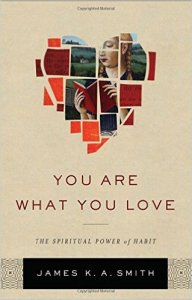 I’ve been trying to think of some way forward for some time now. Forward in lots of ways really: faith, work, relationships, the rhythms of life. I get bits and pieces here and there, often from what I read, sometimes from the words and encouragement of others. Something that I find myself more and more convinced of, though, it that the way forward is going to look (at least a little bit, if not a lot) like looking back. You get a sense of that with the Benedict Option. You get a strong sense of it in the Old Testament. And you get a sense of it in the ideas of others who are trying to figure out how to be faithful in “what comes next.”
 One of the greater challenges for churches at this point in the 21st century (and perhaps in any century) is how to work and worship for the formation of young people. For years, it seemed like youth work was the cutting edge of the church: it was where all of the good and appropriately-forward thinking was taking place. These days, from my outsider perspective, something about youth ministry seems somehow gutted. In You Are What You Love, Smith attempts to address the question of raising young believers. He works his way through the worship and communal aspect of the church. He plays off of the part of youth culture that seems addicted to emotion and a kind of anti-intellectualism. Consider:
 One of the ways that You Are What You Love moves beyond James K. A. Smith’s other books on “cultural liturgies” is how it approaches the implications for daily life. Smith spends one solid chapter on marriage and “household life.” It’s great stuff, particularly in how it references the Orthodox wedding ceremony as a better picture to guide marriages.
 I would love to say lots of things about Jeff Nichols’s Midnight Special, but saying almost anything beyond the basics would spoil too much. I caught a showing yesterday. I had high expectations, partly because Mud was such a well-done movie and partly because the only trailer that I saw for the sci-fi story of a young boy with powers (?) was its own kind of off-guard thrilling.
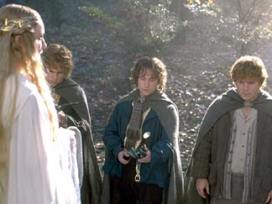 One of the odd gifts of Tolkien’s Lord of the Rings is the way that it enchants the world for the reader . . . only to see that enchantment end as the story draws to a close. A compounded sense of loss, indeed. In the vein of Charles Taylor, James K. A. Smith argues that modernity has “flattened” and “disenchanted” the world. His argumentation in You Are What You Love is a kind of response to that . . . a suggestion of how Christians might go about “re-enchanting” the world.
 The first move in James K. A. Smith’s argument in You Are What You Love is to help us understand that longing and desire play a key role in understanding why we do what we do. “Your love or desire– aimed at a vision of the good life that shapes how you see the world while also moving and motivating you– is operative on a largely nonconscious level. Your love is a kind of automaticity,” he asserts. You are more than just a thinking self. You are (primarily) and feeling and wanting self.


 Space Enough, and Time