
Questioning the Need for Alarm

alarm.jpgSeth Godin recently had something interesting to say about organizations and the “need for alarm.”  Turns out there are things organizations can and should be mindful of.  From Godin:

Alarm is overrated.

People say, “there’s no need for alarm,” as if that rule only applies right now, as if sometimes, there is a need for alarm.

It turns out that there’s never a need for alarm, because alarm doesn’t do us any good. Alertness, awareness, action… there’s a need for this. But alarm?

Alertness and awareness are definitely important ingredients for organizations to be mindful of.  We may not all be as certain as Godin, but we don’t have to be clueless.

You can read more from Godin each day here.

(image from safeguardresponse.co.uk)

Posted in Internet | Leave a comment

When Irony Killed the World

fury roadPerhaps the most important question posed by Mad Max: Fury Road was found scrawled on a couple of walls in the movie’s bleak landscape: who killed the world?  And while it’s obvious in the movie that man and his greed did the deed, there are other possibilities for the world that we know.  Based on Jedidiah Purdy’s For Common Things, irony could be a likely culprit.  Consider:

Irony has become the marker of worldliness and maturity. The ironic individual practices a style of speech and behavior that avoids all appearance of naivety— of naive devotion, belief, or hope.

What has so exhausted the world for us? For one, we are all exquisitely self-aware. Around us, commercials mock the very idea of commercials, situation comedies make being a sitcom their running joke, and image consultants detail the techniques of designing and marketing a personality as a product. We can have no intimate moment, no private words of affection, empathy, or rebuke that we have not seen pronounced on a thirty-foot screen before an audience of hundreds. We cannot speak of atonement or apology without knowing how those words have been put to cynical, almost morally pornographic use by politicians. Even in solitary encounters with nature, bicycling on a country road or hiking on a mountain path, we reluctant ironists realize that our pleasure in these place has been anticipated by a thousand L. L. Bean catalogues, Ansel Adams calendars, and advertisements promising a portion of the rugged or bucolic life. So we sense an unreal quality in our own words and even in our own thoughts. They are superficial, they belong to other people and other purposes; they are not ours, and it may be that nothing is properly ours. It is this awareness, and the wish not to rest the weight of our hopes on someone else’s stage set, that the ironic attitude expresses.

Purdy wrote this at the end of the ’90s, when shows like Seinfeld epitomized our ironic, self-aware culture.  Since then, we’ve settled into a kind of wink-wink, nod-nod relationship with our ironic reality.  Maybe we embraced it and came out the other side mostly undamaged.  Mostly undamaged, perhaps, but definitely not stronger.  We live with the hope that a well-documented life will result in a meaningful one.  We’ve taken pictures of our moments and sold them to more accessible versions of L. L. Bean and Ansel Adams.  The world is no longer a stage for our devotion, belief, or hope.  Now it is an endless photo-op, a planet-sized photo booth with all of the ancient props we can handle.

Purdy has a lot more to say about irony and its effects on public life and civil discourse.  He will also contrast the way of irony with the way of real and solid things, the kind of “common things” worth our attention.

(image from youtube.com)

Posted in Books, Movies, Uncategorized | Tagged | Leave a comment

On Paying Attention

newsroomAt the end of the final season of The Newsroom, Jedidiah Purdy and For Common Things get name-dropped.  Being a fan of show-runner Aaron Sorkin, I decided to give the book a try.  I ordered it from Amazon, only to have it get lost or misdirected for a week or so.  When it finally arrived, I jumped right in and was pleasantly surprised and appropriately challenged.  I thought I’d take a few posts over the next couple of weeks and talk through some of my favorite quotes from the book.

The first thing I liked about Purdy’s first book wasn’t even about Purdy’s writing.  It was a quote by Czeslaw Milosz: What is unpronounced tends to nonexistence.  It lays the foundation for much of what Purdy tries to articulate (or in this case, pronounce) throughout the book. It is both seeing and saying.  It is a twist on something I heard a few years ago: things that “go without saying” are often the things that most need to be said.  From the preface:

. . . this book is a plea for the value of declaring hopes that we know to be fragile.  It is an argument that those hopes are no less necessary for their fragility, and that permitting ourselves to neglect them is both reckless and impoverishing.  My purpose in writing is to take our inhibition seriously and to ask what would be required to overcome it, to speak earnestly of uncertain hopes.

The book serves as a great call to attention of the basic things too easily taken for granted in our modern society.  And attention is important.  From later in the book:

Attentiveness helps us to see what can and what cannot support our hope, and so it may be our best stay against despair.

Hope and despair are big words for me, words with personal, communal, and spiritual weight.  And while much of what Purdy argues in the book doesn’t make much of spiritual reality, it definitely takes up the cause in connection to the personal and communal.

* * *

So we should ask: what things “go without saying” but need to be said?  What foundational things do we rely on and potentially take for granted?  What basic, day-to-day things demand our attention, not so much to fix them but to keep them from needing repair in the first place?

(image from tv.com)

Posted in Books, Television | Tagged | Leave a comment

Let There Be Light, Love, and Music

One of the songs Andrew Peterson played (and that he had the audience join in with) at his Hawaii concert last month was “Let There Be Light.”  It wasn’t a song that I had listened to much (if at all) until that evening, but I’m glad it’s in my musical rotation now.  The folks at Laity Lodge just posted a video of the song from 2014, with Peterson joined by Andy Gullahorn, Buddy Greene, and Jeff Taylor.  Check it out below.

Posted in Faith, Internet, Music | Leave a comment

Origins of the Outlaws

A few weeks ago, I mentioned the forthcoming book from N. D. Wilson, Outlaws of Time.  Wilson recently posted some backstory to the new endeavor, setting it in the context of his attempt to embrace more of the “myth of America.”  For this novel, he turns his pen to the Southwest:

As I set out to write a superhero origin story—a genre with deep Jewish roots in the Old Testament judges and prophets, the same roots that power classic “lonely lawdog” westerns—I knew this wouldn’t be a story on the prairie (I’ve done Kansas, after all). I wanted to introduce the atmosphere of a mythical and legendary Southwest to the imaginations of contemporary kids around the world. Trains and outlaws and San Fran and Tombstone and Earps and Navajo and empty cliff cities to remind us all of civilizations and histories that predate the white faces.

You can read more about Wilson’s “origin story” thoughts here.  And here’s the “book trailer” for Outlaws of Time:

Outlaws of Time drops April 19.

Posted in Books, Internet | Leave a comment

Sentences for Lent

A couple of days ago, I quoted an article by Peter Leithart about the nature of the Christian calendar (particularly in light of the season of Lent).  He recently posted “a murder of tweets” about the season.  I share my favorites below.

To observe Lent rightly, we have to be persuaded that we already stand in God’s favor.

Ash Wednesday reminds us to number our days. It helps us gain a heart of wisdom (Psalm 90:12).

We keep Easter to manifest and deepen our prior share in resurrection. We observe Lent to manifest and deepen our share in the cross.

Lent is the season of blood and guts and flesh. It is the supremely anti-Gnostic season.

Israel sought out and purged old leaven once a year. Lent is the Christian feast of unleavened bread.

For Christians, death is not end but beginning. Lent is an extended meditation on that good news.

Life is a Lenten journey through death toward resurrection.

Without Lent or something like it, the church risks falling into a victoryism without the cross, which is the weapon of victory.

Lent is training in the fundamental Christian discipline of waiting.

Lent is preparation for martyrdom. Nothing is more politically potent than a martyr.

Lent is not for doing things we never do otherwise. Like Sunday, Lent is for intensifying things we do all the time.

Lent inoculates against sentimentalism.

Lent tells us what time it is – the time between resurrection and resurrection.

You can find the full list here and an abbreviated list here.

Posted in Faith, Internet | Leave a comment

Lent and the Move from Light to Life


Ash-WednesdayToday Christians from all over the world will commemorate Ash Wednesday.  They will have ashes drawn on their foreheads, will be reminded that they are dust first and last, will be called to repentance because God’s kingdom is near.  They will commit to giving up certain things (often “worldly” in nature) and will strive to live a life of more positive spiritual discipline as they move towards the Easter season.

I really like how Robert Webber talks about Lent in light of what has happened previously in the church calendar with Advent-Easter-Epiphany.  That “cycle of light” moves into a “cycle of life.”  From Ancient-Future Time:

The emphasis of the cycle of light is on incarnation, whereas the central motif in the cycle of life is the death and resurrection . . . One accents God coming among us in the person of Jesus of Nazareth; the other recalls the purpose for which he came– the self-giving sacrifice of his life to free the world from the domain of Satan and thus secure forgiveness and healing for the peoples of the world . . .

There is another way the cycles of light and life are brought together: both follow the pattern of expectation, fulfillment, and proclamation.  Advent is expectation, Christmas is fulfillment, and Epiphany is proclamation; Lent is expectation, Easter is fulfillment, and Pentecost is proclamation.  Thus there is a historical progression into both Christmas and Easter as well as spiritual procession from each.  When we recall and relive the experience of God’s people who pilgrimage into and out of the incarnation or into and out of the death and resurrection, we mark our own spirituality with expectation and fulfillment . . .

. . . Lent is a journey into death, a death that will result in a new birth, a spiritual beginning again, for during Lent we journey into an event that not only happened in history as an actual occurrence that changed history but an event that happens within us. Christ conquered death, turning our death to sin into a resurrection to the fullness of life in the Spirit, which is available to us through faith.  But this new life is not a mere proposition or a thing out there to be observed, analyzed, and systematized; it is to be experienced.  It is a real, life-changing experience that shaped our vision of reality, informs our relationships, forms our values, puts us in touch with transcendence, and causes us to experience the spiritual dimension of life itself.

I think that’s a good bit about why the church calendar has such potential for guiding the rhythm of the Christian life.  It’s a reminder of the connection and flow of the entire biblical story, which comes to its climax in Jesus and continues in the life of the Spirit lived out by people like you and me.

Webber begins his chapter on Lent with a quote from John Chrysostom that quotes Paul’s letter to the Romans.  When I reread it yesterday, it struck me in a nicely ambiguous-yet-obvious way.  From Romans 5:

For if while we were enemies we were reconciled to God by the death of his Son, much more, now that we are reconciled, shall we be saved by his life.

Lent, of course, is a strong reminder of the life that saves us.  And it saves us in so many ways, from our everyday graves, from our zombie-like existence, into that which truly is life, even and especially in the here and now.

(image from pineshorepres.org)

Posted in Books, Faith | Leave a comment

Lent and Life Between Calendars

Image: Ash WednesdayMany of us spend our lives shuttling between different calendars.  We live by the Gregorian calendar: Tuesdays and Februaries.  As teachers and students, we live by the school calendar: quarters, semesters, grade-check periods.  And as Christians, we often live by a church year/Hallmark hybrid: Christmas and Easter, Valentine’s Day and Halloween.  This can produce an odd relationship with our perception of time.  Enter Peter Leithart and his thoughts on time:
We organize our lives by organizing our times. We schedule our days for waking, preparing, eating, working, relaxing, talking, sleeping. We orchestrate our weeks in a rhythm of work and leisure. We compose our years with holidays, anniversaries, birthdays, vacations.

And we do this collectively. Every society has a liturgical calendar. Every people punctuates time, italicizing this moment and underlining that. In the U.S., we have national holidays like the Fourth of July and Thanksgiving. Nearly every American celebrates Christmas, even if they are not Christians. Other countries have other holidays, and organize their year differently.

But should there be more for Christians than that?  Leithart, who comes from a liturgical tradition, continues:

More deeply, many Christians have accepted the flattening of time characteristic of modernity. If we acknowledge that we organize our time, we still believe that real time is the mechanical movement of the clock. Diverting as they are, our holidays and festivals and celebrations are wispy fantasies, epiphenomena dancing along the hard surface of time itself. We should ask: Is this too an accommodation to the world?

And we should wonder: Should a Christian arrangement of time be stamped with Christ?

The church has long answered Yes to that question.

Many Christians will continue that “Christ-stamped” calendar tomorrow when they commemorate Ash Wednesday, which marks the beginning of Lent.  This has always been the more awkward event for me (when compared to Advent, at least).  Part of that is its absence from my faith experience growing up.  The other part has been trying to navigate the slow and awkward assumption of the “season” by the evangelical Protestant church.  What starts in ashes ends in fasts from social media or television or other time-consuming practices, a kind if do-it-yourself holiday that works as a way of refocusing on “ashes to ashes” and “discipline before celebration.”

I’m still trying to process a plan for the season myself, particularly by reflecting on Robert Webber’s discussion of the time in Ancient-Future Time, his look at the Christian year.  More on that tomorrow.

You can read the rest of Leithart’s article (which was originally posted to Patheos for Advent) here.

(image from nbcnews.com)

Posted in Books, Faith, Internet | Leave a comment

“The TARDIS Awakens”

Journey back to a time when the Doctor returned, when Rose met the Doctor, when the Daleks were thought to be extinct.  And all to the sound and tempo of Star Wars- The Force Awakens.

(Tip of the hat to Robot 6 for pointing out the video on their site)

Posted in Internet, Movies, Music, Television | Leave a comment

Hope and the Long Defeat

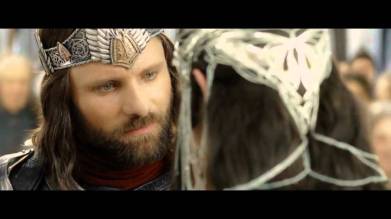
coronationIt is difficult to believe that we are one full month into 2016.  At the end of last year, there were a couple of good articles/essays about things like The Lord of the Rings and Star Wars- The Force Awakens that reminded us of the on-going nature of the story we are in.  The church, of course, retells its story in various and sundry ways.  More often than not (and more frequently than before in evangelical circles), that story is retold through the church calendar.

In his reflection on starting 2016 (along with Advent in general), author Stephen Williams had this to say (and this in light of JRR Tolkien):

It is against the backdrop of these reflections – and questions – about our human history that I find myself reaching for the wise words of an old friend. J.R.R. Tolkien needs no introduction, but perhaps these two passages do, so bear with me. The first may be familiar to some; the second, while more obscure, clarifies the first in breathtaking fashion. In The Fellowship of the Ring, Tolkien quietly reveals his historical vision through the words the immortal elf Galadriel, who, speaking of her husband Celeborn, makes this observation about their time in Middle Earth: “Together through ages of the world we have fought the long defeat.”

Anyone who has read Tolkien will know that he is no pessimist, so why would he use a phrase like “fought the long defeat” when the word “defeat” carries with it an almost automatic connotation of hopelessness? Time and space and my own poor intellectual giftings prohibit me from giving these words the treatment they are due, but thankfully, perhaps Tolkien answers the question himself in a parallel passage buried deep in the appendices of The Lord of the Rings. Aragorn, the King Ellesar, having come to the end of a long reign of peace and renewal, speaks tenderly from his deathbed to his queen, Arwen, of their imminent parting; indeed, these are his last recorded words to her: “In sorrow we must go, but not in despair. Behold! we are not bound for ever to the circles of the world, and beyond them is more than memory.”

This eminently poignant scene deserves far more readership than it likely receives, for in a mere two sentences it addresses the very real sorrows of this present life while still communicating the hope that lies in the next. Tolkien wisely recognized that no lot in this old world would ever leave us wishing to stay here; he recognized that no lot would prevent us from facing the agonizing wait appointed to those who are on a pilgrimage to a land beyond circles of their current existence.

Christians have always felt the tension between this life and what comes next, all that business of earthly good and heavenly good.  Living between the two is a necessary good just as much as it can be perceived to be a necessary evil.  One of my favorite lines of dialogue from The Two Towers that didn’t make it into Jackson’s series was upon Gandalf’s return.  “Beyond hope you return to us in our time of need!” Aragorn said.  Always good to be mindful of the Power that exists beyond hope.

You can read the rest of Williams’s reflection here.

(image from youtube.com)

Posted in Books, Faith, Internet | Leave a comment