Sentences for Lent

A couple of days ago, I quoted an article by Peter Leithart about the nature of the Christian calendar (particularly in light of the season of Lent).  He recently posted “a murder of tweets” about the season.  I share my favorites below.

To observe Lent rightly, we have to be persuaded that we already stand in God’s favor.

Ash Wednesday reminds us to number our days. It helps us gain a heart of wisdom (Psalm 90:12).

We keep Easter to manifest and deepen our prior share in resurrection. We observe Lent to manifest and deepen our share in the cross.

Lent is the season of blood and guts and flesh. It is the supremely anti-Gnostic season.

Israel sought out and purged old leaven once a year. Lent is the Christian feast of unleavened bread.

For Christians, death is not end but beginning. Lent is an extended meditation on that good news.

Life is a Lenten journey through death toward resurrection.

Without Lent or something like it, the church risks falling into a victoryism without the cross, which is the weapon of victory.

Lent is training in the fundamental Christian discipline of waiting.

Lent is preparation for martyrdom. Nothing is more politically potent than a martyr.

Lent is not for doing things we never do otherwise. Like Sunday, Lent is for intensifying things we do all the time.

Lent inoculates against sentimentalism.

Lent tells us what time it is – the time between resurrection and resurrection.

You can find the full list here and an abbreviated list here.

Posted in Faith, Internet | Leave a comment

Lent and the Move from Light to Life


Ash-WednesdayToday Christians from all over the world will commemorate Ash Wednesday.  They will have ashes drawn on their foreheads, will be reminded that they are dust first and last, will be called to repentance because God’s kingdom is near.  They will commit to giving up certain things (often “worldly” in nature) and will strive to live a life of more positive spiritual discipline as they move towards the Easter season.

I really like how Robert Webber talks about Lent in light of what has happened previously in the church calendar with Advent-Easter-Epiphany.  That “cycle of light” moves into a “cycle of life.”  From Ancient-Future Time:

The emphasis of the cycle of light is on incarnation, whereas the central motif in the cycle of life is the death and resurrection . . . One accents God coming among us in the person of Jesus of Nazareth; the other recalls the purpose for which he came– the self-giving sacrifice of his life to free the world from the domain of Satan and thus secure forgiveness and healing for the peoples of the world . . .

There is another way the cycles of light and life are brought together: both follow the pattern of expectation, fulfillment, and proclamation.  Advent is expectation, Christmas is fulfillment, and Epiphany is proclamation; Lent is expectation, Easter is fulfillment, and Pentecost is proclamation.  Thus there is a historical progression into both Christmas and Easter as well as spiritual procession from each.  When we recall and relive the experience of God’s people who pilgrimage into and out of the incarnation or into and out of the death and resurrection, we mark our own spirituality with expectation and fulfillment . . .

. . . Lent is a journey into death, a death that will result in a new birth, a spiritual beginning again, for during Lent we journey into an event that not only happened in history as an actual occurrence that changed history but an event that happens within us. Christ conquered death, turning our death to sin into a resurrection to the fullness of life in the Spirit, which is available to us through faith.  But this new life is not a mere proposition or a thing out there to be observed, analyzed, and systematized; it is to be experienced.  It is a real, life-changing experience that shaped our vision of reality, informs our relationships, forms our values, puts us in touch with transcendence, and causes us to experience the spiritual dimension of life itself.

I think that’s a good bit about why the church calendar has such potential for guiding the rhythm of the Christian life.  It’s a reminder of the connection and flow of the entire biblical story, which comes to its climax in Jesus and continues in the life of the Spirit lived out by people like you and me.

Webber begins his chapter on Lent with a quote from John Chrysostom that quotes Paul’s letter to the Romans.  When I reread it yesterday, it struck me in a nicely ambiguous-yet-obvious way.  From Romans 5:

For if while we were enemies we were reconciled to God by the death of his Son, much more, now that we are reconciled, shall we be saved by his life.

Lent, of course, is a strong reminder of the life that saves us.  And it saves us in so many ways, from our everyday graves, from our zombie-like existence, into that which truly is life, even and especially in the here and now.

(image from pineshorepres.org)

Posted in Books, Faith | Leave a comment

Lent and Life Between Calendars

Image: Ash WednesdayMany of us spend our lives shuttling between different calendars.  We live by the Gregorian calendar: Tuesdays and Februaries.  As teachers and students, we live by the school calendar: quarters, semesters, grade-check periods.  And as Christians, we often live by a church year/Hallmark hybrid: Christmas and Easter, Valentine’s Day and Halloween.  This can produce an odd relationship with our perception of time.  Enter Peter Leithart and his thoughts on time:

We organize our lives by organizing our times. We schedule our days for waking, preparing, eating, working, relaxing, talking, sleeping. We orchestrate our weeks in a rhythm of work and leisure. We compose our years with holidays, anniversaries, birthdays, vacations.

And we do this collectively. Every society has a liturgical calendar. Every people punctuates time, italicizing this moment and underlining that. In the U.S., we have national holidays like the Fourth of July and Thanksgiving. Nearly every American celebrates Christmas, even if they are not Christians. Other countries have other holidays, and organize their year differently.

But should there be more for Christians than that?  Leithart, who comes from a liturgical tradition, continues:

More deeply, many Christians have accepted the flattening of time characteristic of modernity. If we acknowledge that we organize our time, we still believe that real time is the mechanical movement of the clock. Diverting as they are, our holidays and festivals and celebrations are wispy fantasies, epiphenomena dancing along the hard surface of time itself. We should ask: Is this too an accommodation to the world?

And we should wonder: Should a Christian arrangement of time be stamped with Christ?

The church has long answered Yes to that question.

Many Christians will continue that “Christ-stamped” calendar tomorrow when they commemorate Ash Wednesday, which marks the beginning of Lent.  This has always been the more awkward event for me (when compared to Advent, at least).  Part of that is its absence from my faith experience growing up.  The other part has been trying to navigate the slow and awkward assumption of the “season” by the evangelical Protestant church.  What starts in ashes ends in fasts from social media or television or other time-consuming practices, a kind if do-it-yourself holiday that works as a way of refocusing on “ashes to ashes” and “discipline before celebration.”

I’m still trying to process a plan for the season myself, particularly by reflecting on Robert Webber’s discussion of the time in Ancient-Future Time, his look at the Christian year.  More on that tomorrow.

You can read the rest of Leithart’s article (which was originally posted to Patheos for Advent) here.

(image from nbcnews.com)

Posted in Books, Faith, Internet | Leave a comment

“The TARDIS Awakens”

Journey back to a time when the Doctor returned, when Rose met the Doctor, when the Daleks were thought to be extinct.  And all to the sound and tempo of Star Wars- The Force Awakens.

(Tip of the hat to Robot 6 for pointing out the video on their site)

Posted in Internet, Movies, Music, Television | Leave a comment

Hope and the Long Defeat

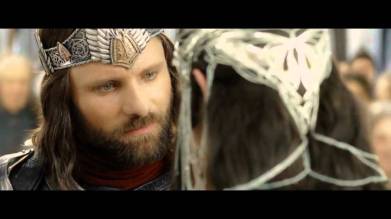
coronationIt is difficult to believe that we are one full month into 2016.  At the end of last year, there were a couple of good articles/essays about things like The Lord of the Rings and Star Wars- The Force Awakens that reminded us of the on-going nature of the story we are in.  The church, of course, retells its story in various and sundry ways.  More often than not (and more frequently than before in evangelical circles), that story is retold through the church calendar.

In his reflection on starting 2016 (along with Advent in general), author Stephen Williams had this to say (and this in light of JRR Tolkien):

It is against the backdrop of these reflections – and questions – about our human history that I find myself reaching for the wise words of an old friend. J.R.R. Tolkien needs no introduction, but perhaps these two passages do, so bear with me. The first may be familiar to some; the second, while more obscure, clarifies the first in breathtaking fashion. In The Fellowship of the Ring, Tolkien quietly reveals his historical vision through the words the immortal elf Galadriel, who, speaking of her husband Celeborn, makes this observation about their time in Middle Earth: “Together through ages of the world we have fought the long defeat.”

Anyone who has read Tolkien will know that he is no pessimist, so why would he use a phrase like “fought the long defeat” when the word “defeat” carries with it an almost automatic connotation of hopelessness? Time and space and my own poor intellectual giftings prohibit me from giving these words the treatment they are due, but thankfully, perhaps Tolkien answers the question himself in a parallel passage buried deep in the appendices of The Lord of the Rings. Aragorn, the King Ellesar, having come to the end of a long reign of peace and renewal, speaks tenderly from his deathbed to his queen, Arwen, of their imminent parting; indeed, these are his last recorded words to her: “In sorrow we must go, but not in despair. Behold! we are not bound for ever to the circles of the world, and beyond them is more than memory.”

This eminently poignant scene deserves far more readership than it likely receives, for in a mere two sentences it addresses the very real sorrows of this present life while still communicating the hope that lies in the next. Tolkien wisely recognized that no lot in this old world would ever leave us wishing to stay here; he recognized that no lot would prevent us from facing the agonizing wait appointed to those who are on a pilgrimage to a land beyond circles of their current existence.

Christians have always felt the tension between this life and what comes next, all that business of earthly good and heavenly good.  Living between the two is a necessary good just as much as it can be perceived to be a necessary evil.  One of my favorite lines of dialogue from The Two Towers that didn’t make it into Jackson’s series was upon Gandalf’s return.  “Beyond hope you return to us in our time of need!” Aragorn said.  Always good to be mindful of the Power that exists beyond hope.

You can read the rest of Williams’s reflection here.

(image from youtube.com)

Posted in Books, Faith, Internet | Leave a comment

On England and Her Many Churches

IMG_0612Something this last fall’s trip to England did not allow that my first trip did was the opportunity to sneak in and have a quiet moment in the many churches we came across.  I still got to walk through York Minster and into the entry area of St. Paul’s.  We even attended a service at a church in Haworth, where the Bronte patriarch had been rector.

Niall Gooch just posted a short essay that captures a lot of what I think about and hope for, and he does it by reflecting on England’s ecclesial landscape.  From the essay:

Christianity has left a powerful mark in the British landscape, just as it has in our laws and culture. Whether or not we approve of or believe in the faith is irrelevant. Its physical legacy in our countryside and towns is a fact. Even non-Christians feel the draw of locations “where prayer has been valid”, as Eliot puts it in Little Gidding. If you doubt this, consider the vast crowds who visit cathedrals each year, and perhaps more significantly the steady stream of visitors to even the most humble of parish churches. It’s not uncommon when perusing the visitor book in churches to come across phrases like “such a peaceful, prayerful spot” or “a wonderful place to just sit and be still”. The feeling of reverence that doubters and sceptics have for such places has never been more beautifully expressed than in Philip Larkin’s masterpiece “Church Going.” Larkin was nobody’s idea of a devout Christian, but many critics have noted his continuing preoccupation with churches and the fundamental religious questions. At the core of Church Going is the insight that churches cannot and will not cease to be places of meaning and exploration, even if they are no longer used for organised Christian worship, “Since someone will forever be surprising/A hunger in himself to be more serious/And gravitating with it to this ground/Which he once heard was proper to grow wise in /If only that so many dead lie round.”

He goes on to talk about the thinking of Rod Dreher (which I need to get to here some time soon), thoughts about culture and buildings and beliefs and rediscovering a necessary rootedness as we move further into the 21st century.

You can read the whole essay here.  I think you’ll like it.

(photo of Saint Paul’s Cathedral in London; hat tip for the essay to Rod Dreher)

Posted in Faith, Internet, Travel | Leave a comment

Redundant Redundancy

redundantOne of the most interesting parts of leading a group of students across England during last fall break was the logistical aspect of things: how do you effectively move four dozen people from one place to another on time and without losing anyone?  That translated into questions like “how often do chaperons check in with their students?” and “how often do I need to repeat even the most basic of instructions?”  Miscommunication (on both ends) is an amazing thing.

In his book The Advantage, Patrick Lencioni tackles the topic of redundancy head-on.  From the chapter on overcommunicating clarity:

Many [leaders] don’t enjoy the reminding role because it seems wasteful and inefficient to them.  They’ve been trained to avoid redundancy in virtually every aspect of their work, so embracing it in communication isn’t easy for them.  But some leaders aren’t so much worried about the wastefulness of overcommunication; they fear that repeating a message might be insulting to their audience . . .

The point of leadership is not to keep the leader entertained, but to mobilize people around what is most important.  When that calls for repetition and reinforcement, which it almost always does, a good leader relished that responsibility.

Repetition is more than just a matter of communicating something again and again in the same way.  Effective communication requires that key messages come from different sources and through various channels, using a variety of tools.

It’s funny.  In the classroom, I’ve definitely learned this.  Repetition in bits and pieces is a way of reviewing in order to turn content into background knowledge.  But it does feel different when being repetitive for peers.  I feel it every time I’m on the agenda in a faculty meeting.  Lencioni is correct, though.  Redundancy isn’t necessarily a bad thing.  More often than not, it’s a necessary and good thing.  We’ve just been trained to think otherwise.

You can read more reflection on The Advantage here, here, and here.

(image from bbc.com)

Posted in Books, Teaching | Leave a comment

The Doctor, the Detective, and Moffat

Moffat.jpgJust over a week ago, fans of Doctor Who were handed three bits of information that brought great joy to some but some sadness to others.  And because show runner Steven Moffat is involved, Sherlock plays into the conversation a little bit, too.

The first bit of information was that the tenth “series” of Doctor Who would not air until the spring of 2017.  That means the stretch of an entire year between “The Husbands of River Song” and whatever comes next for the Doctor.  On one level, this could be a new thing, since the show needs to cast a new companion.  At the same time, that’s a long wait.  Not as long as our wait for Sherlock, mind you, but a wait nonetheless.

The second bit of information was that the tenth series of Doctor Who would be Steven Moffat’s last.  This was met with great excitement by some sectors of Who-dom.  While he hasn’t been the show’s only show-runner since the NuWho reboot, he has been the most prolific.  He was often the writer of the best episodes from the Russell T. Davies era. And while many of his episodes-as-writer were good, fans thought the poor quality of other episodes really brought the show down.  I don’t totally agree with this assessment, but I understand it.  I think series five (his first) and series nine (the most recent) were two of the best of NuWho.  I don’t think, though, that Matt Smith’s Doctor will “age” as well as David Tennant’s.  I’m also not sure how well Amy and Rory Pond will “age.”  I would love to be proven wrong.  Only time (and space) will tell.

The third bit of information was the Chris Chibnall would be taking over with series eleven.  This has left a good amount of Who-dom at least a bit skeptical.  Moffat had some amazing NuWho episode under his belt before taking on the show.  Chibnall?  Not so much.  The thing he has going for him, of course, is Broadchurch, the BBC series that loves to beat its audience emotionally and mercilessly.  Even in the weakest moments of that show’s second season, it carried tons of weight and was wonderfully acted.  I’m not sure how that will translate to the Doctor, though, especially when we have episodes like “Dinosaurs on a Spaceship” to get over.

Count me among those sad to see Moffat go.  When he was “on,” he was really “on.”  He consistently got the pathos right (something I felt Davies did occasionally but not often enough).  There were still too many “interior” or “static” episodes for my taste (trapped in a freaky house, trapped in another spaceship, trapped near the center of the earth), but maybe that won’t be as evident from a safer distance in time (and another viewing).  Miracle of miracles: by the end of her run, Moffatt had made me a fan of Clara.  The first series with Amy was spot-on.  The last series with Clara was, too.  Most of the stuff in-between?  I’ll have to think about it.  Moffatt’s masterful work on the 50th anniversary special, though, makes him deserving of the fan’s gratitude as much as anything else.

We still get Moffatt with Sherlock, of course.  That show has also had something of an issue with getting consistent episodes out.  Last month’s “new year’s” episode was a nice oasis in a three-year desert.  I missed the original air-date of the episode, but that made me all the more excited to see it at the theater that next week.  And I really, really enjoyed it.  I walked in believing that it would be set entirely in the past, with no real connection to the main series beyond the creators and cast.  So when the scene flashed to Sherlock on the plane, I was quite surprised.  I liked the porous nature of the two realities.  Granted, it’s probably easier for me to think of the two stories as different realities instead of one being an egg nested in the other.  I found the “abominable bride” story engaging and just short of heavy-handed in its moral.  And while I’m not sure the “present day” part of the story is ultimately satisfying (let’s face it, it wasn’t), it is good to know that though dead, Moriarty will always have a presence in Sherlock’s mind palace.

And so now “a year without.”  I do hope that when Moffat returns for his final season that it is unlike anything we have seen so far.  I think his “River Song wrap up” from the Christmas special is  actually the perfect “farewell” episode.  I hope they map out something big and brave that doesn’t involve too many psychological episodes and doesn’t bring in the Dalek or the Cybermen (or even the Silence, really).  I hope it’s a season for sowing seeds that new writers will reap for years to come.  With that kind of hope, maybe this “year off” is something of a gift.

(image from doctorwhotv.co.uk)

Posted in Internet, Television | Tagged , | Leave a comment

On Friendship

Friendship is an obstetric art; it draws out our richest and deepest resources; it unfolds the wings of our dreams and hidden indeterminate thoughts; it serves as a check on our judgments, tries out our new ideas, keeps up our ardor, and enflames our enthusiasm. . .

In any case, even if you are materially isolated, seek out in spirit the society of the friends of the true.  Join their assembly, feel yourself in brotherhood with them and with all the seekers, all the creators that Christianity brings together.  The Communion of Saints is not a phalanstery; nevertheless it is a unity.  “The flesh” -alone- “profiteth nothing”: the spirit, even alone, can do something.  The unanimity which bears fruit consists not so much in being together in one place, or belonging to a group with a label, as in this: that each one should labor with the feeling that others also are laboring, that each one in his place should concentrate on the work while others also are concentrating: so that one task be accomplished, that one principle of life and activity be its guiding spirit; and that the parts of the watch, to each of which a home worker devotes his exclusive attention, be put together by God.

from Sertillanges’s The Intellectual Life, trans. by Mary Ryan

Posted in Books, Faith, Teaching | Tagged | Leave a comment

Some Simple Stage Directions

One of the New Testament texts that I use to illustrate “life in the fifth act” to my students is Colossians 3-4.  One particular chunk reads:

Therefore, as God’s chosen people, holy and dearly loved, clothe yourselves with compassion, kindness, humility, gentleness and patience.  Bear with each other and forgive one another if any of you has a grievance against someone. Forgive as the Lord forgave you.  And over all these virtues put on love, which binds them all together in perfect unity. (NIV)

Last week in class, I introduced my students to virtue theory, which often strikes them as strange because virtue-talk isn’t something you hear much these days.  I was pleased to find this video by one of my favorite authors, James K. A. Smith, who talks about “Christian virtues” (which I really shouldn’t have to put in quotes).

The video was put together by an organization called The Colossian Way, which sounds pretty interesting.  You can read more about them here.

Posted in Faith, Internet, Teaching | Leave a comment