One of the things that is clear from the outset of reading For Common Things is that Purdy is a man shaped by a time (perhaps both personal and historic) that has really established his thinking in a fundamental way. His parents raised their family in West Virginia, in what sounds primarily (but not solely, as he adds in an afterword) a real “living off the land” situation. Consider:
Maybe because so much of our talk had to do with [these] stable, certain, solid things, West Virginia was not an ironic place. There was not much talk of trust, hope, or reliance; but there was a great deal of each of those, so thoroughly present that there was no need to name them. They were bound up in the things we did name.
My upbringing was a blend of centuries, with strands of old American idyll and always elements of whatever year the calendar announced. Since leaving that time between times, I have never left behind a sense of betwixtness, of being from somewhere else— another place and, in some measure, another perdiod, another way of living. Wherever I found myself, I came as a visitor, often a willing participant, but never exactly a member. Something in me is always native to another place. But the more I am of these new places and populations, the more imperfectly I am of that anomalous and mainly irretrievable Appalachian childhood.
It is good, I believe, to live in a place where irony is outpaced by “trust, hope, and reliance.” Such a life probably isn’t an easy life, but I believe it must in some deep way be good.
I especially like what he said about always being “native to another place.” As someone who has moved west (and then even more west), I feel that. And that’s as much about location as it is disposition. I am often surprised when I find out idealogical moves in the 90s that I had no awareness of until a decade and an ocean stood between us.
I do not think this part of For Common Things is some unnecessary appeal to tradition, especially taken with thoughts from the book that I’ll get to later in the week. I do think, though, that it is a reminder of the possible dignity of place and of people who know the work of “stable, certain, and solid things.” I can’t help but think that something about that is key to thriving in the next bit of the 21st century.

 From Purdy’s For Common Things:
 One of the basic questions every worldview tries to answer (thank you, James Sire) concerns the nature of humanity. In class we often talk about whether man is good or evil by nature, how much choice we actually have in the decisions we make. And yet there is more to the discussion that that, really.
 Seth Godin
 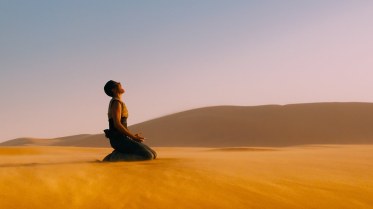 Perhaps the most important question posed by Mad Max: Fury Road was found scrawled on a couple of walls in the movie’s bleak landscape: who killed the world? And while it’s obvious in the movie that man and his greed did the deed, there are other possibilities for the world that we know. Based on Jedidiah Purdy’s For Common Things, irony could be a likely culprit. Consider:
 At the end of the final season of The Newsroom, Jedidiah Purdy and For Common Things get name-dropped. Being a fan of show-runner Aaron Sorkin, I decided to give the book a try. I ordered it from Amazon, only to have it get lost or misdirected for a week or so. When it finally arrived, I jumped right in and was pleasantly surprised and appropriately challenged. I thought I’d take a few posts over the next couple of weeks and talk through some of my favorite quotes from the book.


 Space Enough, and Time