Timing is Everything

Every spring in my Old Testament class I look forward to getting to the book of Ecclesiastes.  On some level, the book upends some of my students’ expectation that everything in the Bible is particularly cheery.  But I also like to see faces when they recognize Scripture having been used in popular music (in this case, “Turn! Turn! Turn!” by the Byrds).  This was the first year where the blank stares significantly outnumbered the “oh yeahs.”  That’s the passage of time for you, I suppose.

Earlier this week I heard a reading of Ecclesiastes 3:1-14 and was reminded once again of how time is both general and particular, immense and specific to each of us.  A time for everything. Everything beautiful in its time.  Eternity set in our hearts as a gift and a frustration to push us towards the God who is beyond time yet so heavily invested in it.  Here’s the passage from the English Standard Version:

For everything there is a season, and a time for every matter under heaven:

a time to be born, and a time to die;
a time to plant, and a time to pluck up what is planted;
 a time to kill, and a time to heal;
a time to break down, and a time to build up;
 a time to weep, and a time to laugh;
a time to mourn, and a time to dance;
 a time to cast away stones, and a time to gather stones together;
a time to embrace, and a time to refrain from embracing;
 a time to seek, and a time to lose;
a time to keep, and a time to cast away;
 a time to tear, and a time to sew;
a time to keep silence, and a time to speak;
 a time to love, and a time to hate;
a time for war, and a time for peace.

What gain has the worker from his toil?  I have seen the business that God has given to the children of man to be busy with.  He has made everything beautiful in its time. Also, he has put eternity into man’s heart, yet so that he cannot find out what God has done from the beginning to the end.  I perceived that there is nothing better for them than to be joyful and to do good as long as they live;  also that everyone should eat and drink and take pleasure in all his toil—this is God’s gift to man.

I perceived that whatever God does endures forever; nothing can be added to it, nor anything taken from it. God has done it, so that people fear before him.  That which is, already has been; that which is to be, already has been; and God seeks what has been driven away.

When talking about what to “do” with the Bible, I think in three categories: application, implication, and prayer.  If you can’t apply it point for point, you look at the implications of the passage for the big picture.  And if that doesn’t work (and even if it does), you bring the words into your prayer.  This passage definitely calls for that.

Posted in Faith, Teaching | Leave a comment

Counting Ordinary Time

Time SpiralsThis past Sunday Christian churches of the more liturgical bent entered into something known as ordinary time.  Robert Webber explains:

The period between Pentecost and the beginning of Advent is called ordinary time.  By contrast the period through Advent, Christmas, Epiphany, Lent, the Great Triduum, and the Easter season ending on Pentecost Sunday is called extraordinary time.  Extraordinary time is so designated because its chief purpose is to celebrate the specific historic, supernatural acts of God in history that result in salvation of creatures and creation. . .

Does that mean that ordinary time is a lesser time and not spiritually formative? Not at all. . . The word ordinary is used in our Christian-year vocabulary because it serves the special nature of extraordinary time by way of contrast.  But ordinary time is anything but ordinary.

For those of us who grew up in or are still a part of non-liturgical traditions, it sounds interesting and, well, kind of normal.  Every day is sacred, all time is sacred, because God is God over time.  Still, I like the concept.  It’s weird to think that six month of the year is full of moments that flow around Christmas and Easter.  And then, suddenly, post-Pentecost, you are back to the everyday-ness of living.  In Ancient-Future Time, Webber argues that Sunday is the key to ordinary time:

In some communities Sunday is the day of revival, the day for the seeker, or the day to teach.  Historically, Sunday is the day of God’s recreation, the day that promises that God will renew the face of the earth.  Historically Sunday worship expresses three truths: It remembers God’s saving action in history; it experiences God’s renewing presence; and it anticipates the consummation of God’s work in the new heavens and the new earth.

While I don’t do the liturgical calendar well at all, I do love things that bring out Scripture and the narrative flow and story of the Bible.  There are a lot of times that my life only makes sense because of the Bible, really.  So I’m kind of glad that we’re settling into six months of “ordinary time.”  Sunday is the “high point,” but the moments in-between matter, too.

Over the next couple of days I’ll be posting some passages that I’ve heard or read over these first few days of ordinary time.  I’m reminded of Psalm 90:12, where the psalmist identified as Moses speaks:

So teach us to number our days
    that we may get a heart of wisdom.

Space enough, yes.  But time, too.

Posted in Books, Faith, The Long Story | Leave a comment

Where Joy Writes the Songs (and the innocent sing them)

It’s been a week since I said goodbye to my last class, but it feels like I’ve spent just as much time doing school stuff as ever.  I’ve been meaning to get a few things posted that aren’t just comics or videos, but I haven’t found that “sweet spot” yet.  I did come across this video today (via tweet from Under the Radar).  It’s one of my favorite Andrew Peterson songs (and I’ve posted another version of this song back in 2012, I believe).

I’ve been thinking a good bit lately about how easily we forget things, how today’s culture is based on an almost necessary long-term amnesia.  I’ve read before that all it takes is one generation of disuse for something significant to be forgotten.  This song (and its many wonderful biblical allusions) is a nice antidote to such thinking.

Posted in Faith, Internet, Music, Teaching | Leave a comment

Unintended Isolation (and the potential for friendship)

Being a single guy living on one of the most remote land-masses on the planet, I know the importance of relationships.  I’m not always good at them. but I’ve always felt something significant and necessary with friendship.  You get that a lot in good literature and thinking (Tolkien’s Lord of the Rings and Lewis’ The Four Loves come to mind).  You also get it in glimpses of Scripture: the stories of David, Ruth, and even Jesus.  Philosophical theologian Samuel Kimbriel tackles the subject in a different way in his book, Friendship as Sacred Knowing.  Like James K. A. Smith, Kimbriel responds to the thinking of Charles Taylor and sees friendship as God’s solution to isolation, especially in our contemporary, “buffered” reality.  Check out the video below for some of Kimbriel’s thoughts on friendship.

Posted in Books, Faith, Internet | Leave a comment

Innocence, Experience, and the Changing Musical Landscape

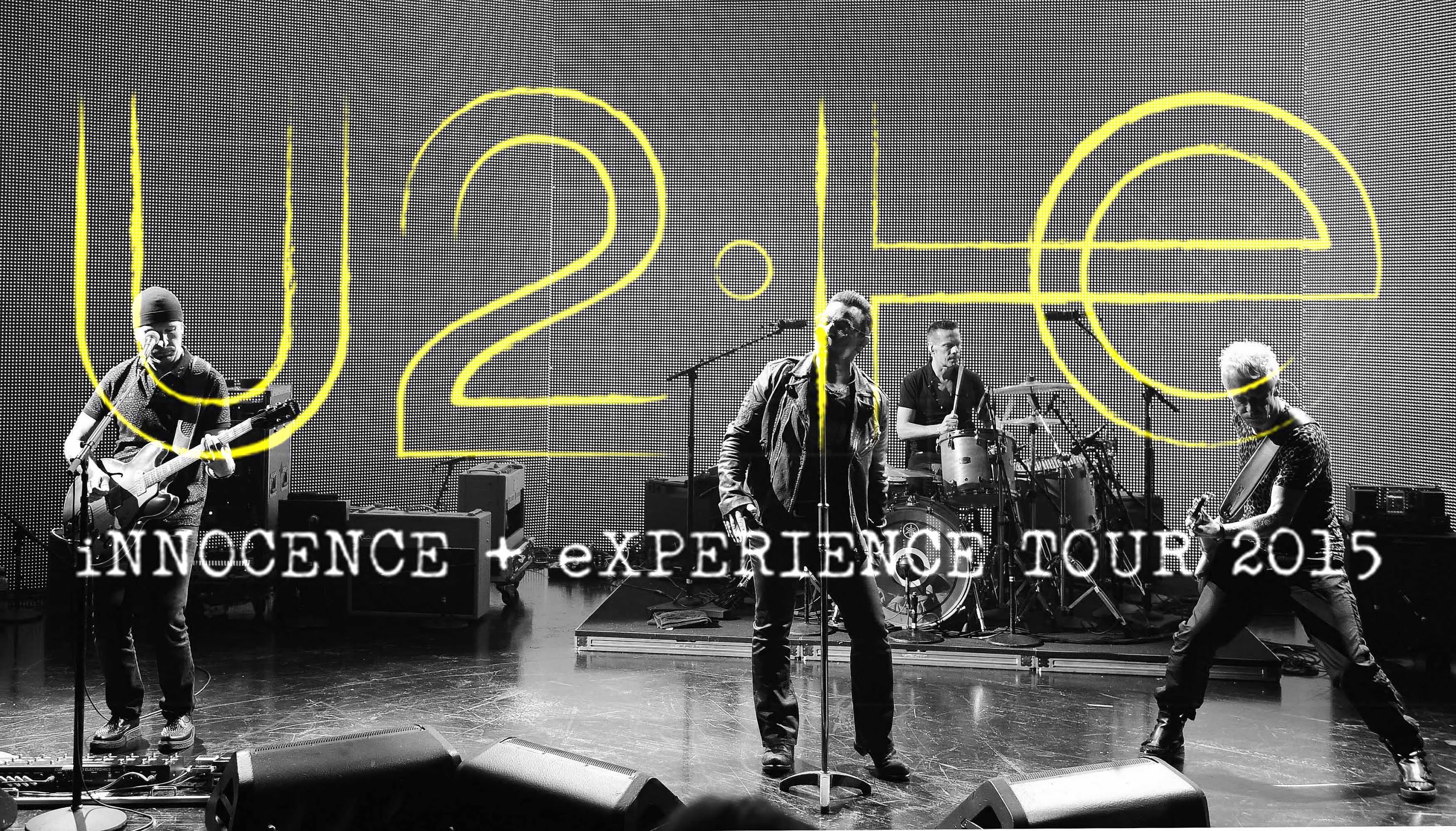
U2 on TourThe folks at Grantland have posted a quality article on U2 after the kick-off of their Innocence + Experience tour.  It’s thoughtful and honest, asking some of the questions that fans and critics alike cannot help but ask as the band pushes on in a musical landscape far different from the one they came of age with.  When asked about that change in light of their recent Vancouver show, Adam Clayton shared:

I do feel part of a different world where we used to see albums come out, we used to see tracks going to radio and those albums would become more and more popular,” Clayton says. “This new way, I don’t really understand. We’re [part of] a generation that no longer gets music the way we like to listen. Does that mean that everyone else that’s getting their music in a different way is not getting as intense of an experience? I don’t really know the answer to that.

I think, sadly, what we’re seeing happen is, albums as collections of music had a cultural significance that told a story and connected people, [and] now have social media filling that role. Music no longer has that social or political place in the community. It’s become a novelty and a soundtrack because I don’t think there’s any real invested loyalty anymore. It’s a different relationship . . .

When asked about different reasons for making music in the new landscape, Clayton adds something of an ominous note (at least in the opinion of the article’s author):

You can make music for different reasons . . .  Up to now, inclusive of this record, we wanted to make music that could communicate to the most people, that could be played on the radio. We were conscious that we wanted to be relevant to this time. That’s not something that we might always want. We have a very loyal, strong, intelligent audience. We might make music just for them in the future. We might not want to connect with other people.

I have to admit, I find that last statement both troubling and encouraging.  It is definitely something of a sign of the times, I’m afraid.

The whole article is worth a read.  It’s got a nice look at the current tour and how the band is bringing in music from its most recent album (which can’t be easy when you have such an amazing catalogue).  You can read the whole article here.

Posted in Internet, Music | Tagged , | Leave a comment

Tolkien Treasure Trove

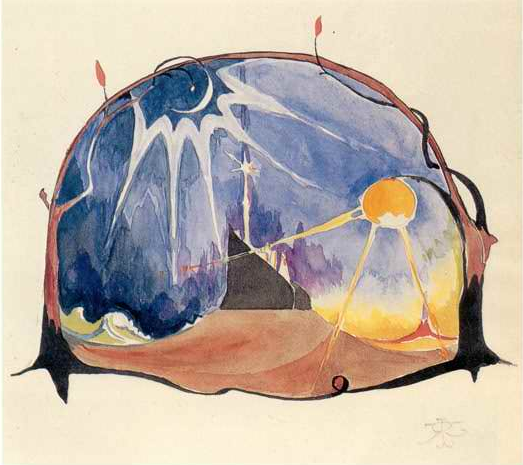
So it turns out that there’s this website called the Tolkien Gateway, and it links to all kinds of interesting and amazing things.  The trove includes over 100 drawings by Tolkien, many based on Tolkien’s Middle Earth.  Here’s one of my favorite, “The Shores of Faery.”

The Shores of Faery

You can check out more amazing Tolkien art here.  Not a bad way to spend some time.

(hat tip to Open Culture and Greg Thornbury on Twitter)

Posted in Books, Internet | Leave a comment

Not Marvin the Martian

A few months ago I finally read Andrew Weir’s The Martian.  Since then, it’s become the work of fiction that I’ve recommended the most.  It’s the simple story of a man abandoned on Mars.  And it was utterly enthralling.

Ridley Scott is directing the movie version, which drops this November.  The movie has a quality cast, with Matt Damon in the lead role.  People magazine and Entertainment Weekly have both posted pictures from the set.  You can check out the collection the folks at aintitcool.com put together here and here.  Let me encourage you: don’t wait for the movie; read the book.  You’ll be glad you did.

A Still from the Martian

Posted in Books | Leave a comment

Preemptive Emotional Processing

I have spent much of the last few months feeling about Disney/Pixar’s Inside Out much the same way I initially felt about Monsters, Inc: total disinterest.  I remember well seeing MI‘s first teaser and thinking that the concept, what little was given then, was boring and not at all like childhood toys come to life.  The first few teasers of Inside Out left me feeling (heh) like it could be a real beatdown of a movie.  Then, today, I saw the most recent trailer.  I am glad to say that the movie has a lot more of my interest now.  The addition of a “journey” into the mix gives it some narrative oomph that felt lacking in the early trailer. In case you haven’t seen it yet, here you go!


Inside Out drops in your local theater in three weeks.

Posted in Internet, Movies | Leave a comment

Pentecost Makes It Personal

This is the day Christians around the world celebrate the coming of the Holy Spirit at Pentecost.  Peter Leithart recently posted an “exhortation” for the day that sums so many wonderful things.  He begins the piece with a simple but always pertinent question:

What do we have when we have the Spirit? We have everything.

All the treasures of God, hidden away in the depths of God from before the foundation of the world, become ours through the Spirit of Pentecost. He is the Gift from the Father and the Son, the Gift above all gifts, the Gift containing all gifts. At Pentecost, God gives God: What more could we ask?

From there, Leithart revisits key moments and actions of the Holy Spirit throughout the biblical narrative.

The Spirit is the Spirit of tongues. He reverses the confusion of Babel and gathers the nations to confess one Lord with one mouth. He is the Spirit of prophecy, who goes from Moses to fill others, who catches up Saul among the prophets, who comes at Pentecost so that old men will see visions and young men dream dreams. Filled with the Spirit, David speaks in rhyme, for he is the Spirit of poetry, the Muse of the Triune God. Relying on the Spirit, the apostles testify to kings and governors; he is the rhetoric of God. Through the Spirit, Mary, Zechariah, and Simeon break into song, for the Spirit is the music of God.

He ends the piece with simple commands taken from the biblical text pointing out the personal possibility of living with the Spirit.

So: Follow the Spirit. Walk in the rhythm of the Spirit. Sing in the Spirit. Pray with the Spirit. Be filled with the Spirit. Sow to the Spirit. Reap from the Spirit. Preserve the unity of the Spirit. Be borne by the Spirit. Cling to the Spirit. Breathe in the Spirit, and breathe him out. Drench yourself in the Spirit. Drink the Spirit, and be drunk by him.

Take a few minutes and read the whole thing here.  You’ll be glad you did.  A wonder way to celebrate the day.

Posted in Faith, Internet | Leave a comment

Simple Sentence, Simple Prayer

Eugene Peterson once said that talking about God is often the total of opposite of talking to Him, which can make teaching the Bible a tricky proposition.  Replacing the former for the latter is a subtle and constant possibility.

A few weeks ago at church the pastor made a quick nod to what Jesus says to the church in Ephesus (always Ephesus!) in John’s Revelation:

I know your works, your toil and your patient endurance, and how you cannot bear with those who are evil, but have tested those who call themselves apostles and are not, and found them to be false.  I know you are enduring patiently and bearing up for my name’s sake, and you have not grown weary.  But I have this against you, that you have abandoned the love you had at first.  Remember therefore from where you have fallen; repent, and do the works you did at first. (ESV from biblegateway.com)

I’ve thought about it a number of times since then, especially when the struggle between the institutional and the personal gets hard.  How easy it can be to abandon “the love you had at first.”  But how simple it can be to move your way back to the better place.  That’s why I love the simple prayer of this old song by Jars of Clay:


Music itself can be tricky waters to navigate, especially when it comes to worship and lyrics and personalities.  I think, though, that this song perfectly captures the tension between love and truth.  That chorus, that one simple sentence, could be a great prayer for the weekend.  I think I might just try that.


Posted in Faith, Internet, Music | Leave a comment