Risky Business Revisited

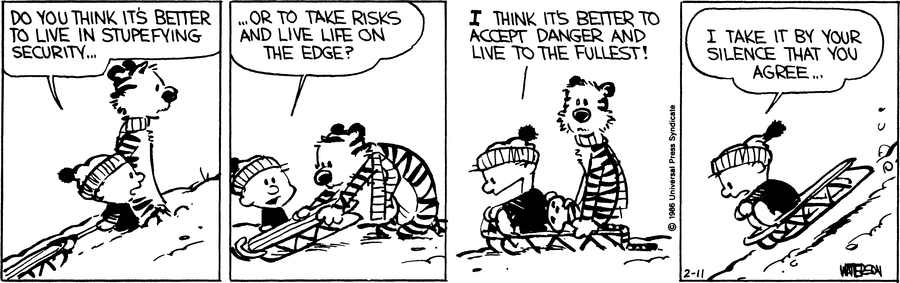
Calvin on RiskOne of the things that I’ve had to keep in mind while reading Donald Miller books over the years is that as a writer, he often works alone.  I know that’s not totally true, though.  He has editors, first readers, critics, and fans that he probably has a strong sense of responsibility for or connection to.  I also know that it’s a little different when you work in a place with dozens  . . . or even hundreds . . . of people, often over the course of each day, and five days each week.  It does something to you, living and working as part of an organization or institution.  I’m keenly aware of the fact that I have become much more of an institutionalized self over the last few years.  So I read Miller’s chapter on “the risk of being careful” with great interest and a strong sense of culpability.

Miller writes of the time he spent in Washington, DC, and how he found himself interacting with others in a way that went against the grain of the culture: “I always felt two whiskeys in while everybody I talked to was as polished as a news anchor.  I kept looking for cameras.”  That’s not an easy thing to handle when you’re used to a certain amount of vulnerability and candidness.  But when you live under a microscope, or when you come to be a representative for something bigger than yourself, the freedom to take risks diminishes.  Too much seems to be at stake.  And so play it safe, and safe has a way of scaling.

Miller writes of the time where he decided, after honest words with a friend, to write again with a sense of risk.  And I remember those moments on his blog where he said controversial things (like his discussion about church-going).  And I read the flak that he got in the comments section . . . and the support he received.  And while I may not always agree with him (or anyone else, for that matter), I have come to a better understanding of (1) the fluid nature of blogging [where everything is always in process] and (2) the fact that we as individuals can always be in process.  As such, we can’t be afraid to risk.  We should always strive to try.  Miller decided to write “as though God thought [his] voice mattered.”  He even made a list of a few things he wanted to feel more freedom in as he worked: the willingness to sound dumb, be wrong, and to express a theory are a few excerpts from the list.

It’s strange, the relationship between identity, institution, and predictability.  You can often be welcomed into the fold of a group or organization because you bring something new or different to the table.  Over time, though, the new and different becomes the predictable and expected.  It’s an inadvertent complacency.  To break out of that odd rut is no small thing (and potentially not something to be undertaken lightly or glibly).  It’s something I’m working on, something hopefully evidenced in a renewed commitment to post something on this site regularly . . . and with something more personal than just a comic strip or video.  I hope to show you evidence of some of my most recent “theories” next week.  But tomorrow will bring my last official “Reading Scary Close” post, my thoughts on the last main image from the book.  Good stuff.  Thanks for reading!
Posted in Reading Scary Close | Leave a comment

Catching Up with Yourself

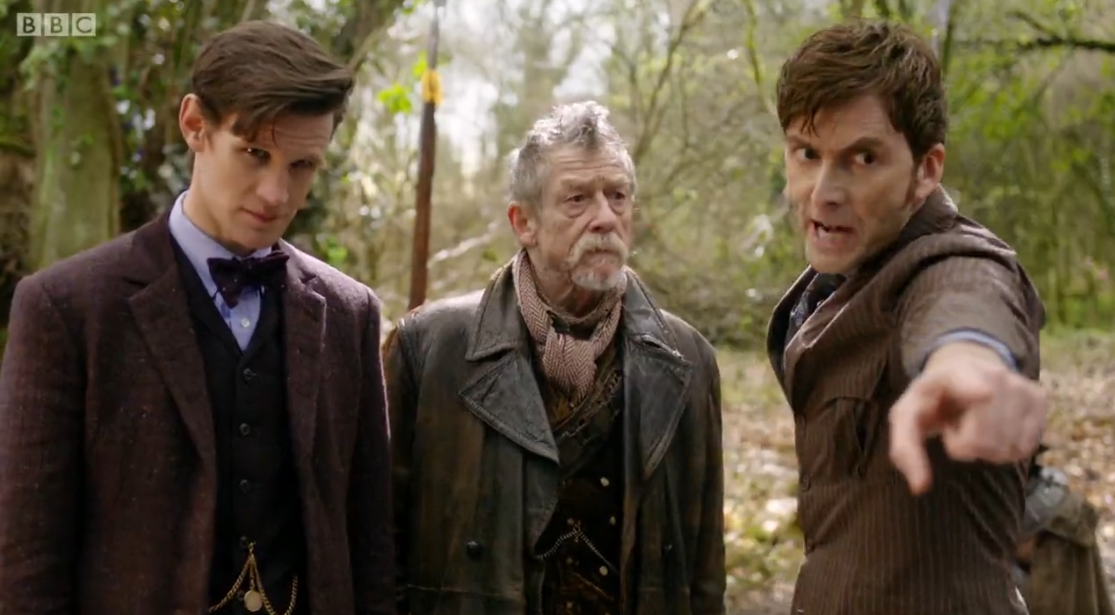
Three DoctorsOne of my favorite “story cycles” in Scary Close begins in the chapter wonderfully titled “Everybody’s Got a Story, and It’s Not the One They’re Telling.”  That part of the book deals with Miller’s struggles with childhood insecurity and self-preservation as he makes peace with his younger self.  It’s an odd mix for Miller, who realizes much of what he has become was a means of protecting that part of himself that first felt shame (“a dog peed on my coat”) while also realizing that for years he had been “sending a nine-year-old out to do all [his] performing.”  People really are amazing complicated, aren’t they?

It’s an interesting question: what do we do with our (many) selves?  We have them based on age, on interests, on geographical location.  I’ve even noticed that I have a differently nuanced self for each class that graduates (if that makes any sense).  And it’s easy to lose yourself in the mix.  I don’t mean “true self” necessarily.  But I do mean that deep and untouchable you, untouchable except for the God who made you.  That part of you that is “hidden in Christ.”  I can’t help but think of one of my favorite fictional characters, the Doctor.  From the moment we meet him (in his 9th incarnation, at least), he is on the run: from his enemies, from his recent past, and from himself.  It really isn’t until the 50th anniversary special, The Day of the Doctor, that he (quite literally) catches up with himself.  The moment is significant and amazing.

From Miller on making peace with that nine-year-old performing self:

The moment was powerful for me.  I’d completely disassociated from the kid who had taken apart his tape recorder.  I hardly knew him.  I’d not raised him to maturity and he’d spent the last thirty years lonely and desperate for attention.  It’s no wonder I hid from the world.  It’s not wonder parties made me tired or I got exhausted after I spoke.  It’s not wonder criticism made me angry or I overreacted to failure.  I think the part of me I sent out to interact with the world was, in some ways, underdeveloped, still trying to be bigger and smarter as a measure of survival.

Heaven help us catch up with ourselves, not to leave our selves behind.  And thank you, Jesus, for reconciling all things.

Posted in Reading Scary Close | Leave a comment

Safe People, Risky Business

Katniss in Mockingjay for NYTimesOne of the benefits of reading is that it helps you find yourself, identify yourself through what you read. Here’s a point where I identified with Miller early in Scary Close:

At some point, I just stopped trusting people. I began to believe everybody viewed life as a contest, a subtle version of the Hunger Games. And to some degree I bought into the lie.

One of the things that angers me (rightly) about The Hunger Games is the sense of implication you get from every single person in the story. Striving to do good means selling out in some way. That includes me. The struggle, then, becomes extricating yourself from the “game” and moving to a better disposition.

Miller spends a good amount of time talking about manipulative people: scorekeepers, judges, false heroes, fearmongers, and floppers. If you’re anything like me, you are one of those each day of the work-week. Then Miller turns his attention to the better way to be: the safe person. These people, like Miller’s wife and friend David, are “truth tellers,” they offer grace, “the kind of grace in which they assume I’m a really great guy who’s just trying to figure things out, and they politely show me the error of my ways.” A safe person, Miller says through the view of authors Cloud and Townsend, is “somebody who speaks the truth in grace.”

I’m still trying to move away from a Hunger Games version of life. I’ve got my own idea of that that kind of life can look like, and I’ll get around to sharing it next week. When your implicated in a rigged game, and the Hunger Games view of life is definitely rigged, it takes both subtle and bold moves to get to a healthier place. That’s something reading Scary Close has reminded me of.

Posted in Reading Scary Close | Leave a comment

The Present Form of the Future

Jetsons from Smithsonian MagazineIt often seems like Douglas Coupland feels things before we do and finds some way to name things well.  From his most recent Financial Times essay:

I’ve spent much of my life waiting for the future to happen, yet it never really felt like we were there. And then, in this past year, it’s become almost instantly and impossible to deny that we are now all, magically and collectively, living in that far-off place we once called the future — and we all know we’re inside it, too. It’s here, and it feels odd. It feels like that magical moment when someone has pulled a practical joke on you but you haven’t quite realised it yet. We keep on waiting for the reveal but the reveal is never going to happen. The reveal is always going to be imminent but it will never quite happen. That’s the future.

I think there are other things that nudge me into feeling that I’m part of the future, usually things like environmental, public health, and cultural concerns, which may mean that I’ve spent too much time in imaginary worlds.  And yet.

But here we are, walking around with super-powered phones, flying across oceans frequently, living is a way-too abstract world.  And, for Coupland at least, it’s a world that is always just about to emerge.  From near the end of the essay:

I try to imagine a world without a present tense — the millennial world where time is a perpetual five seconds from now — and, if I squint my brain (for lack of a better analogy), I can almost sort of get it right. I suspect that abandoning one’s pre-internet brain is the only intelligent adaptive strategy necessary for mental health in the world of a perpetual future.

I’m not sure how I feel about Coupland’s conclusion, but then I’m not sure how much of that is up to me.  I suppose the future is here whether I like it or not.  I wouldn’t necessarily go so far as to say that I just have to live with it, but I definitely have to live in it.

You can read the entirety of Coupland’s essay here.

Posted in Internet | Leave a comment

Saturday Song: Brother’s Keeper

This week I’ve been listening to Rich Mullins’ Brother’s Keeper.  The title track is succinct and wonderfully pointed at something I find extremely difficult but somehow necessary.  “Unless you’re pointing to the truth,” indeed.

Posted in Faith, Music | Tagged | Leave a comment

Reading Scary Close: The Wedding Bride

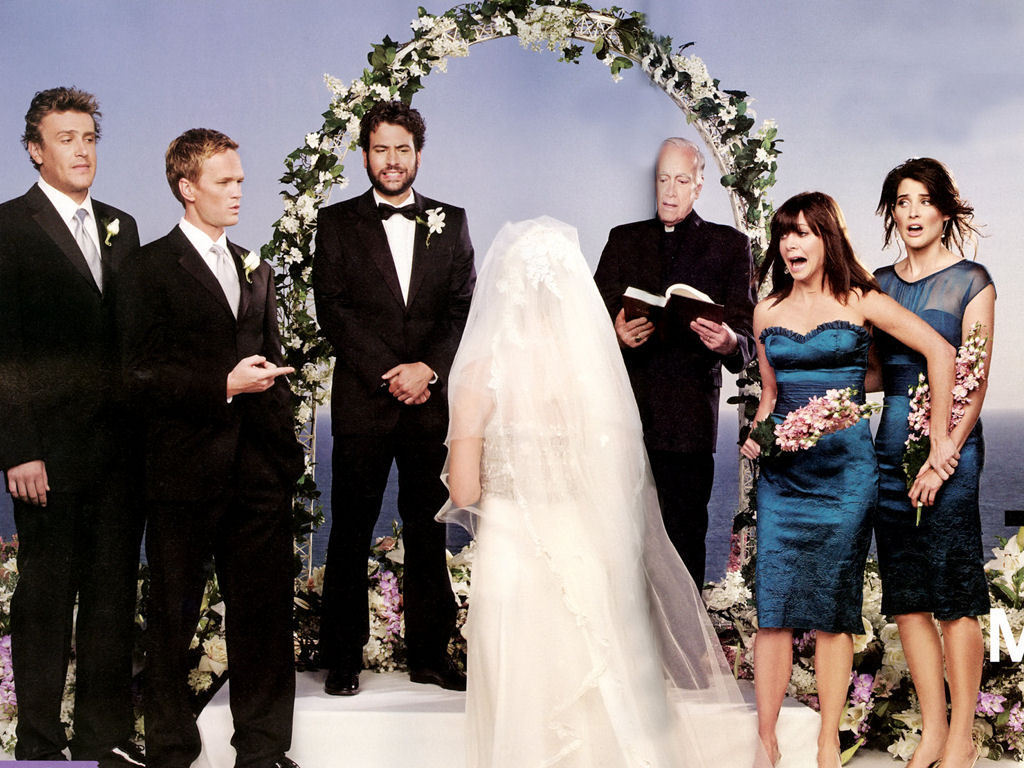
The Wedding BrideThe other relational through-line in Scary Close (beyond the guides) is Donald Miller’s bride.  When we meet her in the book’s beginning, she has just become his fiancee.  It’s a reads like a classic “Miller” moment:

I’d spent more than a year pursuing her, even relocating to Washington, DC to date her, but once the ring was on her finger I went back into the woods.

Miller’s bride is both a through-line and a bookend here, and it’s the stuff he starts off with that caught me by surprise.  I love how this significant person in the author’s life is something almost from another world, someone who makes him rethink many things.  One of the first telling confrontations in the book occurs when Miller makes a comment about a friend of significance to his fiancee, how he’d “rather not spend any more time with that one, if she didn’t mind.  It turns out she did.”

Miller elaborates:

And it wasn’t even my comment that did it.  It was the idea that I could see a person as disposable.  To Betsy, relationships were a life’s work, the sum of countless conversations and shared experiences.  She’d no sooner end a relationship than she’d cut down an old-growth tree.  In the heat of that argument I realized I was only a sapling in the forest of this woman’s life . . . If I was going to win her heart, I’d have to plant myself in the forest and slowly grow the rings that earn loyalty, just as she and her friends had done with each other.

I knew then, this relationship would have to be different.  I knew I’d have to know myself and be known.  These weren’t only terrifying prospects, they were foreign.  I didn’t know how to do either.  And the stakes were high.  I was going to have to either learn to be healthy or I’d spend the rest of my life pretending.  It was either intimacy or public isolation.

This was a reflection packed with truthful punch (and the first sign that I was going to love the book).  It is no small thing to be willing to plant yourself: in a relationship, in a community, in a culture.  But the call to something more real than disposability is something amazing.  While the rest of Scary Close goes this way and that in its discussion of acting versus intimacy, this through-line remains the most potent.  You really get the sense over the course of the book that Miller has grown up well (and that he is calling and challenging his reader to do the same).  “The old me was slowly dying into the new me,” he writes near the end of the book.  It’s the kind of good thing I think God wants for everyone.

I don’t want to quote much more at this point.  I actually really encourage you to check out the book.  I think you’ll find it a worthy read.  Next week I’ll come back to it for three or four more key moments/concepts that have stuck with me since my first read.  As always, Miller has some great one-liners that your could “unpack” in for days and days.  You can also find Miller talking about the book and some of its cornerstone concepts at storylineblog.com.  If you check it out, let me know what you think.

Be sure to come back tomorrow for a song and Sunday for a comic.  Thanks for reading!

Posted in Books, The Long Story | Leave a comment

Reading Scary Close: A Good Guide is Hard to Find

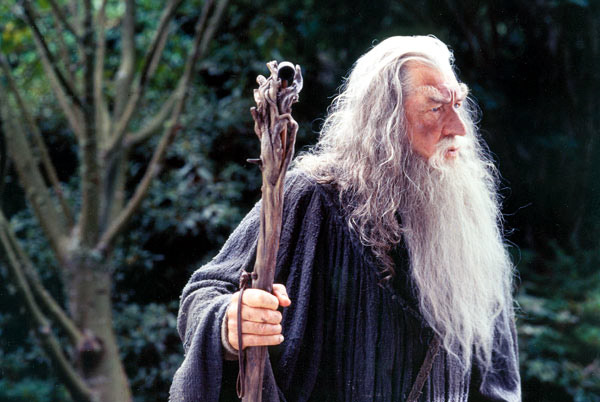
Gandalf from Bleeding CoolDonald Miller spent most of his last book, A Million Miles in a Thousand Years, encouraging readers to tell good stories with their lives, to be heroes of a sort. Early on in Scary Close you get a sense of something a little different going on. You still get the language of story (and it is good), but you also get this:

The strongest character in a story isn’t the hero, it’s the guide. Yoda. Haymitch. It’s the guide who gets the hero back on track. The guide gives the hero a plan and enough confidence to enter the fight. The guide has walked the path of the hero and has the advice and wisdom to get the hero through their troubles so they can beat the resistance . . . The more I studied story, the more I realized I needed a guide.

Miller mentions a number of “guides” throughout the book. Bob Goff appears as a bookend of sorts. Miller also spends a chapter on David Gentiles, who had been an important figure in Miller’s early life. A number of times, though, and in the context of the above quote, Miller talks about the OnSite program in Nashville, which “does nine months of counseling in a week.” And it was pretty effective for Miller.

Good guides aren’t hard to find. At least in flesh and blood. One of the great things about being a reader is getting into the minds of people from all walks of life, from multiple places and times. But books can be poor substitutes for real presence. Miller seems to have gotten that at OnSite in his regular relationships, too. One of Miller’s early admissions in the book is “I don’t trust people to accept who I am in the process.” I think most of us feel that way, and we are looking for guides who can direct us (and call us to repentance) without using or abusing us.

One of the most significant “guides” from my time in Hawaii died unexpectedly in December. I got the call halfway through Exodus: Gods and Kings, which was oddly fitting since one of the first Sunday school lessons my friend Larry taught that I wasn’t sure what to do with concerned Moses and the Exodus. As anyone who was at his memorial service could attest, Larry always made you feel like the most important person in the room. He seemed to work effortlessly to bring out the best in others. I regret not spending more time with Larry in the last couple of years (and that I never got to tell him about my adventures in New Zealand). But I am mindful of his example as a guide and am grateful for what time I did have to learn from him.

Good guides speak truth into your life. They model a kind of clarity. They call you to something better. And they can definitely be hard to find.

But “the guides” aren’t the only part of Miller’s story. There is also “the bride,” which I’ll get to tomorrow.

Posted in Books, Faith, The Long Story | Leave a comment

Anachronistic Allowance (or: Jesus and Calvinball)

I recently (re)heard the story of Jesus’ response to his disciples after they rebuked the parents who brought their children to Him. Jesus, upon seeing the rebuke, is indignant (ESV) and says:

Let the children come to me; do not hinder them, for to such belongs the kingdom of God.  Truly, I say to you, whoever does not receive the kingdom of God like a child shall not enter it.

As I heard that moment again I couldn’t help but have an anachronistic thought.  I imagined a scene played over and over in pop culture: a kid going door to door asking variations of “Can Johnny come out and play?”  Because play is what kids do.  And it is often a play that is rooted in the real world, big day-to-day things made small for little people pleased to try.

In the moments when I most feel like what I am doing is a part of the kingdom of God, I often find myself meeting with a brother or sister in Christ taking ourselves seriously and yet being utterly aware of our lack of competence for the task at hand.  We are, in a real sense, amateurs (and probably more often than not barely more than imitators) at something very big.  I think, though, that the One we emulate, the Father and Son and Holy Spirit, are aware of our weakness in this, and we are truly (and often inadvertently) childlike when we assume this posture.  Too often we treat the work of the kingdom like something we either have complete control of or as a game of Calvinball, where you get to make things up as you go.  I’m not sure the kingdom necessarily works that way, not when we have a Brother who has gone before us and shown us what real abiding and fruit-bearing looks like.  We follow His lead.

I cannot help but think that those parents all those hundreds of years ago were pleased to bring their children to Jesus.  And I am certain that He was pleased with the moment, as “he took them in his arms and blessed them, laying his hands on them.”

May the same be true for us all.

Posted in Faith | Leave a comment

The John Who Loves

From Donald Miller’s Searching for God Knows What:

The way John writes about Jesus makes you feel like the sum of our faith is a kind of constant dialogue with Jesus about whether or not we love Him. I grew up believing a Christian didn’t have to love God or anybody else; he just had to believe some things and be willing to take a stand for the things he believed. John seemed to embrace the relational dynamic of our faith. And he did so in an honest tone, not putting a spin on anything . . . He ended his book by telling the reader he was going to die . . .

This is beautiful and meaningful because John wrote his essay a long time after Christ had left so he was very old, probably nearly ninety years old, and this was back when communities loved old people . . . This was back when you didn’t have to be all young and sexy just to be a person. And it makes you wonder if John sat and wrote that he was going to die knowing within a few days, a few weeks, a month of gentle good-byes, he was going to go home and leave all his friends, and he didn’t want any of them to be surprised or scared.

When you read the book you start realizing that people who were very close to John read this essay and got to the end and started crying because John was telling them we was going to leave, and then I’ll bet at his funeral everybody was standing around thinking about how John knew he was going to die and told them in his book. And I’ll bet they sat around that night at somebody’s house, and somebody who had a very good reading voice lit a candle, and the all lay on the floor and sat on pillows. The children sat quietly and the man with the voice read through the book, from beginning to end, and they thought together about Jesus as the man read John’s book, and when it came to the end where John says he is going to die, the person who was reading got choked up and started to cry. Somebody else, maybe John’s wife or one of his daughters, had to go over and read the end of it, and when she was finished they sat around for a long time and some of the people probably stayed the night so the house wouldn’t feel empty. It makes you want to live in a community like that when you think about the way things were when Jesus had touched people.

Posted in Commonplace Book, Faith | Tagged | Leave a comment

Prefacing Scary Close: The Significance of Place

One of the best parts of Donald Miller’s Searching for God Knows What for me was the preface to the second, expanded edition. One of the significant part’s of Miller’s story that helped me was his simple understanding of place and it’s significance. He moved from Bible-belt Texas to something-different Portland, Oregon. He quickly found himself in a culture almost nothing like what he had known. From the preface:

I’d grown up in a very conservative, Southern Baptist church in Texas. Urban living in Portland stood in stark contrast. Portland, and for that matter the Pacific Northwest in general, is not a place where Christian faith is a social commodity . . .

A person can advance in their career by being a Christian; they can meet a soul mate from a large pool of Christian singles; they can gain social acceptance in their culture by displaying a stable spiritual life. . .

In fact, in the southeast, you could hide from any threat to your faith because Christian culture is so vast. Kids can go to a Christian school; young adults to a Christian university; adults, to a Christian company. You can find a wife at a Christian church, have kids, and reset the cycle by putting your kids in a Christian school.

While the quote might feel a bit extreme for some, it doesn’t sound extreme at all for those who grew up in but now live of outside of a culture with a strong Christian flavor. It has taken me years to understand how far from that culture I have gone myself, with over 4,000 miles between me and the church of my youth and my amazing Christian college.

Miller reminds me that place is important and that the flavor of a culture changes things. Secular cultures (which all of 21st century has quickly become) are never easy to interact with, especially when non-Christian beliefs have deep roots that are easily glossed over with church or institutional Christianity.

I was glad to see Miller bring up his move from Portland to Nashville in Scary Close. I remember feeling sad when I learned during my second trip to Portland that he had plans to leave the city. But Nashville is its own place, too. And it’s a place that seems to be good for him. Granted, everything great has to make it’s way through Tennessee sometime. Place really is a significant thing.

Posted in Books, Faith, Teaching, The Long Story, Travel | Tagged | Leave a comment