Reading Scary Close: The Wedding Bride

The Wedding BrideThe other relational through-line in Scary Close (beyond the guides) is Donald Miller’s bride.  When we meet her in the book’s beginning, she has just become his fiancee.  It’s a reads like a classic “Miller” moment:

I’d spent more than a year pursuing her, even relocating to Washington, DC to date her, but once the ring was on her finger I went back into the woods.

Miller’s bride is both a through-line and a bookend here, and it’s the stuff he starts off with that caught me by surprise.  I love how this significant person in the author’s life is something almost from another world, someone who makes him rethink many things.  One of the first telling confrontations in the book occurs when Miller makes a comment about a friend of significance to his fiancee, how he’d “rather not spend any more time with that one, if she didn’t mind.  It turns out she did.”

Miller elaborates:

And it wasn’t even my comment that did it.  It was the idea that I could see a person as disposable.  To Betsy, relationships were a life’s work, the sum of countless conversations and shared experiences.  She’d no sooner end a relationship than she’d cut down an old-growth tree.  In the heat of that argument I realized I was only a sapling in the forest of this woman’s life . . . If I was going to win her heart, I’d have to plant myself in the forest and slowly grow the rings that earn loyalty, just as she and her friends had done with each other.

I knew then, this relationship would have to be different.  I knew I’d have to know myself and be known.  These weren’t only terrifying prospects, they were foreign.  I didn’t know how to do either.  And the stakes were high.  I was going to have to either learn to be healthy or I’d spend the rest of my life pretending.  It was either intimacy or public isolation.

This was a reflection packed with truthful punch (and the first sign that I was going to love the book).  It is no small thing to be willing to plant yourself: in a relationship, in a community, in a culture.  But the call to something more real than disposability is something amazing.  While the rest of Scary Close goes this way and that in its discussion of acting versus intimacy, this through-line remains the most potent.  You really get the sense over the course of the book that Miller has grown up well (and that he is calling and challenging his reader to do the same).  “The old me was slowly dying into the new me,” he writes near the end of the book.  It’s the kind of good thing I think God wants for everyone.

I don’t want to quote much more at this point.  I actually really encourage you to check out the book.  I think you’ll find it a worthy read.  Next week I’ll come back to it for three or four more key moments/concepts that have stuck with me since my first read.  As always, Miller has some great one-liners that your could “unpack” in for days and days.  You can also find Miller talking about the book and some of its cornerstone concepts at storylineblog.com.  If you check it out, let me know what you think.

Be sure to come back tomorrow for a song and Sunday for a comic.  Thanks for reading!

Posted in Books, The Long Story | Leave a comment

Reading Scary Close: A Good Guide is Hard to Find

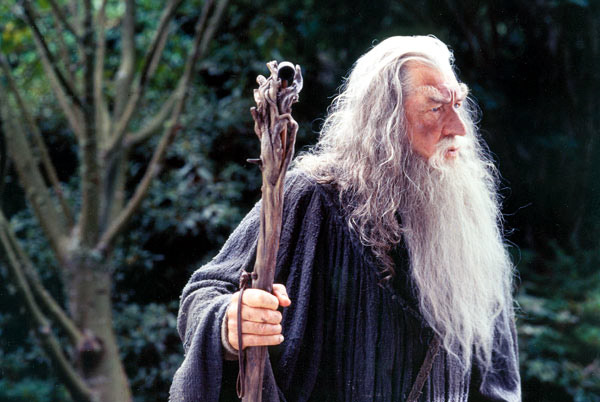
Gandalf from Bleeding CoolDonald Miller spent most of his last book, A Million Miles in a Thousand Years, encouraging readers to tell good stories with their lives, to be heroes of a sort. Early on in Scary Close you get a sense of something a little different going on. You still get the language of story (and it is good), but you also get this:

The strongest character in a story isn’t the hero, it’s the guide. Yoda. Haymitch. It’s the guide who gets the hero back on track. The guide gives the hero a plan and enough confidence to enter the fight. The guide has walked the path of the hero and has the advice and wisdom to get the hero through their troubles so they can beat the resistance . . . The more I studied story, the more I realized I needed a guide.

Miller mentions a number of “guides” throughout the book. Bob Goff appears as a bookend of sorts. Miller also spends a chapter on David Gentiles, who had been an important figure in Miller’s early life. A number of times, though, and in the context of the above quote, Miller talks about the OnSite program in Nashville, which “does nine months of counseling in a week.” And it was pretty effective for Miller.

Good guides aren’t hard to find. At least in flesh and blood. One of the great things about being a reader is getting into the minds of people from all walks of life, from multiple places and times. But books can be poor substitutes for real presence. Miller seems to have gotten that at OnSite in his regular relationships, too. One of Miller’s early admissions in the book is “I don’t trust people to accept who I am in the process.” I think most of us feel that way, and we are looking for guides who can direct us (and call us to repentance) without using or abusing us.

One of the most significant “guides” from my time in Hawaii died unexpectedly in December. I got the call halfway through Exodus: Gods and Kings, which was oddly fitting since one of the first Sunday school lessons my friend Larry taught that I wasn’t sure what to do with concerned Moses and the Exodus. As anyone who was at his memorial service could attest, Larry always made you feel like the most important person in the room. He seemed to work effortlessly to bring out the best in others. I regret not spending more time with Larry in the last couple of years (and that I never got to tell him about my adventures in New Zealand). But I am mindful of his example as a guide and am grateful for what time I did have to learn from him.

Good guides speak truth into your life. They model a kind of clarity. They call you to something better. And they can definitely be hard to find.

But “the guides” aren’t the only part of Miller’s story. There is also “the bride,” which I’ll get to tomorrow.

Posted in Books, Faith, The Long Story | Leave a comment

Anachronistic Allowance (or: Jesus and Calvinball)

I recently (re)heard the story of Jesus’ response to his disciples after they rebuked the parents who brought their children to Him. Jesus, upon seeing the rebuke, is indignant (ESV) and says:

Let the children come to me; do not hinder them, for to such belongs the kingdom of God.  Truly, I say to you, whoever does not receive the kingdom of God like a child shall not enter it.

As I heard that moment again I couldn’t help but have an anachronistic thought.  I imagined a scene played over and over in pop culture: a kid going door to door asking variations of “Can Johnny come out and play?”  Because play is what kids do.  And it is often a play that is rooted in the real world, big day-to-day things made small for little people pleased to try.

In the moments when I most feel like what I am doing is a part of the kingdom of God, I often find myself meeting with a brother or sister in Christ taking ourselves seriously and yet being utterly aware of our lack of competence for the task at hand.  We are, in a real sense, amateurs (and probably more often than not barely more than imitators) at something very big.  I think, though, that the One we emulate, the Father and Son and Holy Spirit, are aware of our weakness in this, and we are truly (and often inadvertently) childlike when we assume this posture.  Too often we treat the work of the kingdom like something we either have complete control of or as a game of Calvinball, where you get to make things up as you go.  I’m not sure the kingdom necessarily works that way, not when we have a Brother who has gone before us and shown us what real abiding and fruit-bearing looks like.  We follow His lead.

I cannot help but think that those parents all those hundreds of years ago were pleased to bring their children to Jesus.  And I am certain that He was pleased with the moment, as “he took them in his arms and blessed them, laying his hands on them.”

May the same be true for us all.

Posted in Faith | Leave a comment

The John Who Loves

From Donald Miller’s Searching for God Knows What:

The way John writes about Jesus makes you feel like the sum of our faith is a kind of constant dialogue with Jesus about whether or not we love Him. I grew up believing a Christian didn’t have to love God or anybody else; he just had to believe some things and be willing to take a stand for the things he believed. John seemed to embrace the relational dynamic of our faith. And he did so in an honest tone, not putting a spin on anything . . . He ended his book by telling the reader he was going to die . . .

This is beautiful and meaningful because John wrote his essay a long time after Christ had left so he was very old, probably nearly ninety years old, and this was back when communities loved old people . . . This was back when you didn’t have to be all young and sexy just to be a person. And it makes you wonder if John sat and wrote that he was going to die knowing within a few days, a few weeks, a month of gentle good-byes, he was going to go home and leave all his friends, and he didn’t want any of them to be surprised or scared.

When you read the book you start realizing that people who were very close to John read this essay and got to the end and started crying because John was telling them we was going to leave, and then I’ll bet at his funeral everybody was standing around thinking about how John knew he was going to die and told them in his book. And I’ll bet they sat around that night at somebody’s house, and somebody who had a very good reading voice lit a candle, and the all lay on the floor and sat on pillows. The children sat quietly and the man with the voice read through the book, from beginning to end, and they thought together about Jesus as the man read John’s book, and when it came to the end where John says he is going to die, the person who was reading got choked up and started to cry. Somebody else, maybe John’s wife or one of his daughters, had to go over and read the end of it, and when she was finished they sat around for a long time and some of the people probably stayed the night so the house wouldn’t feel empty. It makes you want to live in a community like that when you think about the way things were when Jesus had touched people.

Posted in Commonplace Book, Faith | Tagged | Leave a comment

Prefacing Scary Close: The Significance of Place

One of the best parts of Donald Miller’s Searching for God Knows What for me was the preface to the second, expanded edition. One of the significant part’s of Miller’s story that helped me was his simple understanding of place and it’s significance. He moved from Bible-belt Texas to something-different Portland, Oregon. He quickly found himself in a culture almost nothing like what he had known. From the preface:

I’d grown up in a very conservative, Southern Baptist church in Texas. Urban living in Portland stood in stark contrast. Portland, and for that matter the Pacific Northwest in general, is not a place where Christian faith is a social commodity . . .

A person can advance in their career by being a Christian; they can meet a soul mate from a large pool of Christian singles; they can gain social acceptance in their culture by displaying a stable spiritual life. . .

In fact, in the southeast, you could hide from any threat to your faith because Christian culture is so vast. Kids can go to a Christian school; young adults to a Christian university; adults, to a Christian company. You can find a wife at a Christian church, have kids, and reset the cycle by putting your kids in a Christian school.

While the quote might feel a bit extreme for some, it doesn’t sound extreme at all for those who grew up in but now live of outside of a culture with a strong Christian flavor. It has taken me years to understand how far from that culture I have gone myself, with over 4,000 miles between me and the church of my youth and my amazing Christian college.

Miller reminds me that place is important and that the flavor of a culture changes things. Secular cultures (which all of 21st century has quickly become) are never easy to interact with, especially when non-Christian beliefs have deep roots that are easily glossed over with church or institutional Christianity.

I was glad to see Miller bring up his move from Portland to Nashville in Scary Close. I remember feeling sad when I learned during my second trip to Portland that he had plans to leave the city. But Nashville is its own place, too. And it’s a place that seems to be good for him. Granted, everything great has to make it’s way through Tennessee sometime. Place really is a significant thing.

Posted in Books, Faith, Teaching, The Long Story, Travel | Tagged | Leave a comment

Prefacing Scary Close: Intersections

I remember well when my friend Cathy introduced me to Blue Like Jazz and the work of Donald Miller. It was early in my time in Hawaii, and it felt like I was finally settling into some kind of routine. I had become a big reader of contemporary fiction (Eggers et al), but hadn’t expanded much in Christian-living stuff.

I read Blue Like Jazz and loved it, not so much because I needed a salve for contemporary Christian bitterness but because Miller was such a great writer. I tracked down a copy of Prayer and the Art of Volkswagen Maintenance and loved it, too. Here was a guy, a writer, who had no preaching license or ordination certificate but still had vital things to say about Jesus and His church.

I eventually made my way to Portland, Miller’s “home base.” Twice. The first time was for an education conference. I got to visit Imago Dei (a bit too “emerging” for my tastes) and fell madly in love with Powell’s (where that new love of contemporary fiction made every aisle more exciting than the last). One of my co-worker’s family lived in the neighborhood that Miller wrote about in BLJ, and getting to walk through it and read in it and watch people throwing frisbee and enjoying the lake was a real moment for me.

My second time in Portland was to try and meet Miller himself. I had been a supporter of the Blue Like Jazz movie on KickStarter and had the opportunity to see the movie if I attended Miller’s Storyline conference. It was a great weekend: I caught up with some graduates, enjoyed a day on the coast of Oregon, and spent time watching Miller talk about story (along with guests like Bob Goff, who has become a presence in his own right).

All of this to say that Donald Miller’s writings and thinking have been a big part of my growth since moving to Hawaii. I share his ideas on “letting story guide you” each year with my juniors. His talk on story coupled with N. T. Wright’s idea of “the Bible as a five-act play” really helped get my upper-level Bible curriculum sorted. His A Million Miles in a Thousand Years has become a book I often give to graduates. For a number of years his blog gave me good things to share with co-workers and friends. So yes: five years has been a long time to wait for a new book from the guy.

For all that time, though, life has been crissing and crossing, Miller’s writing often a helpful stitch for some wound from daily living. I haven’t known quite what to make of him over the last few years, as he has become something of a “guru” for companies and lifeplans, so I started Scary Close with some uncertainty. And then I read it in just over 24 hours. It was a kind of comfort food and a great challenge for healing. But before I get to that, I want to share a couple of quotes from my other favorite Miller book. That’s for tomorrow.

Posted in Books, Faith, Teaching, The Long Story, Travel | Tagged , | Leave a comment

The Unfinished Line

This past November I spoke at an area church for the beginning of Advent. While I liked the general content of my sermon (and will surely reuse it somewhere down the road), I have to admit that something felt missing to me. As I reflected on the sermon throughout the rest of that afternoon, one word kept coming to mind: unfinished. It wasn’t, though, that the sermon wasn’t well-polished. . . at least not entirely. It also had something to do with my uneasiness to call people to a particular action, a kind of obedience in a particular moment. And that saddened me, because I think all words that come from God should lead to some kind of response.

And so I ended the year with the word unfinished in my head, and in my head it has remained. It has become something of a rabbit hole, a forest trail that I want to pursue this year.¹  The Apostle Paul talked about it in terms of “not that I have already achieved it yet,” which is something all people of faith must struggle with. Truth be told, an awful lot of me feels unfinished, and instead of getting to work on it, I’ve been puttering around like a hobbit knowing he has a journey to make but just can’t bring himself to step out the door. So if it seems like I’m grasping at straws here for the next few weeks, it’s because I’m trying to get things in order, pack the bare necessities, and run. I’ve been saving up a lot of thoughts, waiting for a “right time” to commit to them. I’m thinking the time is now. And by now I mean tomorrow, when I post the first in a series about Scary Close, Donald Miller’s first book in five years.

_____________________________________________________________

¹ A “word of the year” reminds me of my dear friend Beth, who chooses a word each year to focus on.  This year her word is brave, which God gave her before being given a serious medical diagnosis.  You can check out her blog here.


Posted in Faith, The Long Story | Leave a comment

Get On Your Feet, Leslie Knope

In honor of the final season of Parks & Recreation (Tuesday nights on NBC), I’ve taken to revisiting some of my favorite earlier episodes.  I especially like the episode where Leslie, ever the optimist, relies on her friends to help kick-off her campaign after the professional campaigners walk out.  What happens when the team walks out the door, heads held high, is a great example of so many things (optimism, reality, and the awkwardness of peeing, three-legged dogs).  Get on your feet, Leslie Knope.  Make it happen.

Posted in Internet, Television | Tagged | Leave a comment

A Common Confession

Yesterday I rambled on a bit about The Pilgrim’s Progress and starting from a common place (as seen in the story with the Wicket Gate).  How good it is, I think, for us to sing about that which is common amongst us: the core belief we have of who Jesus is and what He has done and is doing still.  I’ve had Andrew Peterson’s After All These Years collection playing for the last few months, and his “The Good Confession” is a great example of singing about the journey and the One who guides us on it.

All I know is that I was blind but now I see that though I kick and scream, Love is leading me. And every step of the way his grace is making me; With every breath I breathe, he is saving me. And I believe.

Posted in Faith, Internet, Music | Leave a comment

How the Way Becomes Common

Christian at the Wicket Gate from a 1778 English edition.  (Thanks, Wikipedia)

Christian at the Wicket Gate from a 1778 English edition. (Thanks, Wikipedia)

There’s one particular idea from Bunyan’s The Pilgrim’s Progress that has stuck with me since I reread it last semester.  Early in the story, Christian is told to go to the wicket gate, that he will receive further instructions there.  After much struggle, he arrives there and receives what is necessary: it is the beginning point of the Narrow Way, the King’s Highway.  Later on, he meets a man named Ignorance, who has decided to go his own way.  Their conversation:

“You may have some difficulty there getting in the Gate.”

“As other good people do,” answered Ignorance.

“But what rolled certificate do you have to show at the [Celestial] Gate?”

“I know my Lord’s will,” replied Ignorance.  “I have lived a good life.  I pay my debts.  I pray, fast, pay tithes, give alms.  And I have left my country for the Celestial City.”

“But you didn’t come in at the wicket gate that is at the head of the way,” worried Christian.  “I fear you will not get into the City.  Instead you will be charged ‘a thief and a robber.'”

“Gentlemen, you are utter strangers to me.  I don’t know you.  Be content to follow the religion of your country, and I will follow the religion of mine.  I hope all will be well, and as for the wicket gate that you talk of, all the world knows it is a great way off.  I cannot think that any men in all our parts do so much as know the way to it.  Nor need it matter whether they do or not, since we have, as you see, a fine pleasant green lane that comes down from our country the way into it.”

For all intents and purposes of Bunyan’s story, you could come from anywhere in the wide world, from any far-off location, to make your way to the road to the heavenly City.  But your journey in earnest had to start at the Wicket Gate.  And while that is true of salvation, it is true of other things for believers by implication.  In our attempts to accommodate the diversity of faith journeys in our Christian communities, we can easily forget the need to reiterate the assertion that for all of our different places of departure, we come by the Narrow Way, the way to and of the Cross, and that’s more than just a devotional truth.  At some point our journeys have joined, the road has become a shared one, and because of that the journey is different.  What we see and how we see are different.  We cringe at the thought of any kind of lock-step faith, as if it destroys our sacred sense of individuality.  But if the way is narrow and we are changed, then so be it and thank God.  Rather we learn to walk it together now than to be astonished when we arrive at our destination but are not allowed entrance because we chose instead to go our own ways (like Ignorance, who was anything but).  That is true of faith and church, in our institutions and our relationships.  All of them (and our work in them) begin in earnest when we start “at the head of the way.”

____________________________________________________

Text from the 2010 Barbour Publishing edition.

Posted in Books, Faith | Leave a comment