Being Mosby: Forty-five Days

As a kind of “prep” for Monday night’s final season premiere of How I Met Your Mother, I took it upon myself to watch some old (seasons 1-4) and some not-so-old (season 8) episodes of what has become the last sitcom I really care about.  I made a point of rewatching season eight’s weirdest episode, “The Time Travelers.”  The episode takes the shows knack for multiple time-lines to the point of credulity as Ted meets both Teds and Barneys from the near and relatively distant future as he tries to decide on whether or not to go to “Robots versus Wrestlers” alone.  Time goes all timey-wimey when we find out that the event has already taken place and that Ted has been trapped in desperate loneliness (which is saying something).  And then, somehow, he makes a run for it:

If it wasn’t Ted, it would be an over-the-top moment.  But he nails it, and necessarily so.  The guy is totally alone, left only with imaginary conversations, while those he loves the most have gotten on with their lives.  Sobering moment, but one worth remembering as the show turns the page and the Mother is introduced.

Posted in Internet, Television | Tagged , | Leave a comment

And Then Seth Godin and Worldview

GlassesIt was great reading N. T. Wright’s slant on the idea of worldview.  It’s even better, perhaps, to see someone outside of the realm of religion write about it.

Seth Godin, marketing thinker, has been posting responses concerning his previous books each week on his blog.  In a recent response to Tribes, he made a point about worldview that many people, especially those who use it in the religious realm, forget about.

In reflection on the fiftieth anniversary on the March on Washington and how change was brought about:

Worldview isn’t sufficient, and worldview isn’t impossible to change. But what worldview does is give you the bridge, the ability to engage people in the tribe, and then, and only then, do you have the privilege to change the conversation.

The goal isn’t to find people who have already decided that they urgently want to go where you are going. The goal is to find a community of people that desire to be in sync and who have a bias in favor of the action you want them to take.

“Worldview gives you the bridge.”  I like that.  Too often, worldview is seen as an end to itself.  “If we can just get everyone to believe the same thing then we’ve accomplished our task.”  Hogwash.  A common worldview is the starting point, not the end point.  A worldview without world-engaging implications is ultimately meaningless.

You can read more of Godin’s article here.  As always, I highly recommend his blog (even if you’re not into marketing).

Posted in Internet | Tagged , | Leave a comment

N. T. Wright and the Question of Worldview

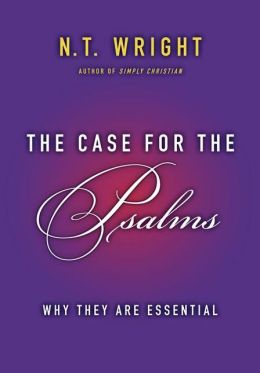
The Case for the PsalmsN. T. Wright’s latest book, The Case for the Psalms, dropped last week without much fanfare.  It’s a little book, small in both page size and page count.  It is also, surprisingly, a brilliant book about worldview.

Worldview has been a part of my vocabulary since my junior year of college, when I intercepted and read a book being passed from one teacher to another. I’ve been able to nurture the concept’s place in curriculum over the last few years, too.  So I was quite glad to see Wright’s take on the book of Psalms as a worldview-shaper.

Early in the book, Wright distinguishes his use of the term from the more Francis Schaeffer-esque view, which is “used to refer to a basic kit of would-be Christian assumptions that for some reason have taken on a particular political slant.”  Instead, Wright employs worldview as “something like a pair of spectacles: it is what you look through, not what you look at. Worldviews . . . are a swirling combination of stories, symbols, habitual praxis, and assumed answers to key questions.”

For Wright, the Psalms are a key component of that swirl.  And, as is so often the case, Wright presents his thoughts brilliantly.  The Law.  Second-Temple Judaism.  Messianic imprints throughout the book.  Regular church practice.  All of it is there.  All of it based on a “creational monotheism” that stands opposite of our own modern Epicureanism.

Christianity Today just posted an interview with Wright concerning the book.  I’d encourage you to read it to get a better picture of his thoughts.  You can read the interview here.  The book, The Case for the Psalms, is available online or at your local Barnes and Noble.

Posted in Books, Faith, Internet | Tagged , | Leave a comment

This Is “What You Want”

If you haven’t done so yet, I strongly encourage you to check out I Was Wrong, I’m Sorry, and I Love You by Derek Webb.  The album has officially dropped and can be purchased in CD or digital form.  I recently came across one of my favorite Webb songs from his Caedmon’s Call days, specifically from Long Line of Leavers.  Below is a live version of “What You Want,” which has some of the best circular lyrics in the business.  I appreciate the joke Webb makes at the beginning as he mentions CCM’s other great band, the Normals.  Wonderfully complicated song for amazingly complicated people.

Posted in Internet, Music | Tagged , | Leave a comment

The World’s End Reconsidered

A Map for the World's EndMost critics agree: the summer of 2013 reminded us of the disposability of blockbuster movies.  It seemed like every few days some new $100 million would-be blockbuster premiered, made a lot of money, and then was replaced by the next blockbuster.  If you were lucky, you stayed in the collective consciousness for a couple of weeks.  If you were unlucky, you were like The Lone Ranger or RIPD: DOA.

While most people will probably never see it, The World’s End has bucked that trend.  Sure, it’s one of almost a dozen movies that featured the end of life as we know it on planet Earth.  But it also has a repeat-viewing factor that blockbusters like Iron Man 3 or Man of Steel don’t necessarily have.  Once you get over the surprise twists of such movies (he has no powers?! he killed his enemy?!), there’s not much to talk about.  On the other end, there’s something like Woody Allen’s Blue Jasmine, which featured Cate Blanchett in an amazing performance.  By the end of the movie, though, you feel bad for laughing at so many things that look like mental illness.  And while TWE features a protagonist with a major problem, there’s an overarching storyline that is big enough to make the discerning viewer want to go back for more.

I say this partly because I’m a big fan of the movie but also because of a recent article posted to HTMLGIANT by AD Jameson.  The article is a brilliant dissection of The World’s End, one that co-writer and actor Simon Pegg tweeted as being “not all right but mostly bang on.”  “25 More Pints” is a twenty-five point consideration of the movie through a couple of different critical lenses: one based on the Cornetto trilogy and another based on the intricacies of the movie itself.  And it is brilliant.  Dialogue, recurrences, allusions to King Arthur, so many things that might seem lazy when used by others adds real depth to a story many might fight unsettling.  Childhood and childhood’s end.  Small town life.  Technology.  Aliens.  It’s all there.  Jameson even brings in big words like polysemy and concepts like the royal we, for crying out loud.  I recommend the article to you, but only if you’ve seen the movie.  And after you read the article, you’ll probably want to see the movie again.  My favorite quote from the article is about how the movie handles adulthood as seen in the juxtaposition of Gary (whose life never got better than the end of high school) and his four friends (who have all gone on to “respectable” work and family life):

The World’s End, then, is an attack on the modern world, and a model of adulthood that necessitates replacing authentic youthful companions with corporate ones—friendships born out of career advancement, and the outward signs of progress, rather than genuinely liking someone, and therefore protecting them.

and

King doesn’t want to sober up, and that is indeed sad. There’s something pathetic about the guy who’s greatest night was some drunken teenage night. But at the same time, King stands firmly opposed to the phoniness of adult life—to the pretense of appearance. That is the way in which he’s heroic: he’s the only one who calls out getting older as “a big lie.” He’s fearless in his honesty, wearing his devotion to his childhood passions proudly.

If your up for some intense British humor, check out the movie.  And check out all of Jameson’s article here.  The language is rough, so be warned.  But for critical thinking about a movie that has some kind of truth to it, you can’t go wrong.

Posted in Internet, Movies | Tagged | Leave a comment

Ego and the Power of the Critic

My students recently completed an assignment where they had to bring in a media clip (audio or visual) that reflects some personal belief.  One student shared the following clip from Pixar’s Ratatouille.  The scene that always stuck out to me was Ego’s (the critic) flashback to his childhood, so I was pleasantly surprised by this clip.

For some (like my student), it’s all about rising above the criticism of others.  For those of us further down the journey, it’s about wielding the weapon of criticism well.  It’s a constant struggle, choosing between picking apart and building up.  And in a world where all kinds of people say all kinds of things demanding some kind of response, sifting through things can be difficult.  So when we find good stuff?  Ego gets it right.  And the clip is a reminder that maybe we can, too.

Posted in Internet, Movies, Teaching | Tagged | Leave a comment

Four Reasons to Watch SHIELD This Fall

This past week, I’ve run some quotes from the Entertainment Weekly Joss Whedon interview.  I held a couple of my favorites back as they pertain to his latest television interest: Agents of SHIELD.  A quote from the interview about serial storytelling:

. . . the thing I brought to the other shows is the thing I still try to do: Have a different reason to tell a story every week and not just have a different story.

It will be interesting to watch the show evolve.  First seasons are always a bit tricky, especially when they can easily become “villain of the week” stories (which is okay for a while).

But it was four simple words used in a series in the short article on SHIELD itself that makes me want to see the show even more.  Not sure if the quote is from Maurissa Tancharoen or Jed Whedon.  The article calls it “the behind-the-scenes mantra” of the show: Funny, sad, wondrous, and beautiful.

Any show that can pull those four things off on a regular basis will be amazing.

And the already-seen-by-millions trailer makes me think they just might do it.

Posted in Internet, Television | Tagged , | Leave a comment

Tonight’s Song and Prayer

As the days pass (especially days like today), I become more mindful of something someone said somewhere back in some book I had read: that every conversation should somehow turn into prayer.  I’m not doing a very good job of that, but I want to.  So many words end up inadvertently hurting someone or simply go no where.  I like the simple prayer caught in an older song by Andrew Osenga, written for one of his Letters to the Editor albums.  Simple and sincere, as so much good prayer can be.  It’s a good prayer for a long weekend, too.  “Let us know You.”

Posted in Internet, Music | Tagged , | Leave a comment

Joss Whedon Quotes the Lord of the Rings

Topher from DollhouseSeriously:  the Entertainment Weekly interview with Joss Whedon is page after page of quality stuff.  For instance: when asked what character would be his alter ego, Whedon said it would be Topher from Dollhouse.  Why?  Because “he’s a nerd who stays up in the attic by himself controlling people’s lives and telling who they’re going to be that week.”  Which really does sound like the life of a writer/director.

Whedon, of course, finds himself in the same place as many go-to directors these days: caught between making new stuff and making variations on old stuff.  He says:

It’s very important that we start creating new content again.  We can only build on nostalgia so much before we have nothing left to build on.  Before we’re rebooting Spider-Man— again.  It’s dangerous to the culture, and it’s boring to me.

What’s his general rule for telling good stories on a weekly hour-long like Buffy or Firefly?

Have a different reason to tell a story every week and not just have a different story.

That is, I believe, a fine but necessary distinction.

But it’s the end of the interview that really gets me.  He is asked about his own somewhat nihilistic view of life and how his writing counteracts that:

My stories do have hope because that is one of the things that is part of the solution– if there can be one,  We use stories to connect, to care about people, to care about a situation.  To turn the mundane heroic, to make people really think about who they are. . .  We create to fill a gap– not just to avoid the idea of dying, it’s to fill some particular gap in ourselves.  So yeah, I write things where people will lay down their lives for each other.  And on a personal level, I know many wonderful people who are spending their lives trying to help others, or who are just kind and decent . . . But on a macro level, I don’t see that in the world.  So I have a need to create . . . I want to be wrong more than anything.  I hate to say it, it’s that line from The Lord of the Rings— “I give hope to men; I keep none for myself.”  They say it in Elvish, so it sounds supercool.

The “Joss Whedon” issue of Entertainment Weekly is on sale now.  I highly recommend it.

Posted in Movies, Television | Tagged | Leave a comment

Dave Eggers Completes The Circle (before anyone notices)

The Circle from Dave EggersMissing my book-buying radar is one thing.  But a major author holding off on the release of a 500-page tome til just over one month until said tome drops?  That’s something only someone like Dave Eggers could accomplish.

Turns out that Eggers (of Heartbreaking Work of Staggering Genius and You Shall Know Our Velocity! fame) will release a book called The Circle from Knopf in early October.  After writing fiction about Saudi Arabia and mostly non-fiction (about the Lost Boys of Sudan and Hurricane Katrina) over the last few years, The Circle sounds like an interesting departure: it’s the story of a new employee at a mysterious tech-giant some are comparing to Google or Facebook.  From the end of the publisher’s write-up:

What begins as the captivating story of one woman’s ambition and idealism soon becomes a heart-racing novel of suspense, raising questions about memory, history, privacy, democracy, and the limits of human knowledge.

I’m a little surprised that McSweeney’s (the maker of great hardbacks and Eggers’s own company).  Even still, October 8 can’t come fast enough.  You can read the little that anyone else has to say at the LA Times or the Atlantic Wire.  WIth other new books by N. T. Wright and Jonathan Lethem dropping in September, this fall is shaping up to be a great time for quality reading.

Posted in Books, Internet | Tagged , | Leave a comment