“I’ve Got a Feeling”

Letters of LewisIn the spring of 1921, some eight years before his conversion to Christianity, C. S. Lewis said this about death:

I have seen death fairly often and never yet been able to find it anything but extraordinary and rather incredible.  The real person is so very real, so obviously living and different from what is left that one cannot believe something has turned into nothing,  It is not faith, it is not reason– just a “feeling.”  “Feelings” are in the long run a pretty good match for what we call our beliefs.

True and not true, of course.  More than a feeling, but definitely something that involves feelings.  It’s interesting, particularly in light of Lewis’s lifelong quest for Joy, which must in some way subsume death, too.

+ + + + + + +

I’ve decided to spend some time reading the letters of Lewis and Tolkien as much “in tandem” chronologically as possible.  The big problem with that, I’m realizing, is that my collection of Tolkien letters doesn’t kick in for a good while when compared to Lewis’s.

In the quote above, Lewis is responding to the death of William Kirkpatrick, who was something of a giant and patron in Lewis’s early life.  An early letter from Tolkien to Geoffrey Smith, a dear friend and fellow member of the “Tea Club and Barrovian Soiety,” also deals with death loss.  One member of their group, Rob Gilson, had died in July of 1916 i the war.  It brings out thoughts of “greatness” in Tolkien, and a real sense of loss early on.  He wrote:

God grant that this does not sound arrogant– I feel humbler enough in truth and immeasurably weaker and poorer now.  The greatness I meant was that of a great instrument in God’s hands– a movie, a doer, even an achiever of great things, a beginner at the very least of large things.

The greatness which Rob has found is in no way smaller– for the greatness I meant and tremblingly hoped for as ours is valueless unless steeped with the same holiness of courage and suffering and sacrifice– but is of a different kind.  His greatness is in other words now a personal matter with us– of a kind to make us keep July 1st as a special day for all the years God may grant any of us . . .

It is interesting to read young Lewis alongside young Tolkien, particularly as Tolkien’s faith was steady and pronounced early on.  His is a long obedience in the same direction earlier on than with Lewis, which makes their connection later in life such a promising and hopeful sign.

Posted in Books, Commonplace Book, Faith | Leave a comment

“This Is the Day; Let Us Be Glad”

This week has been crazy.  Beyond classes, we’ve had student council elections, some kind of chapel each morning, classes, meetings and assemblies, and the pressure of a short week to handle.

But the chapels in the morning have been nice thing.  We’ve had a simple liturgy: a selection from Psalm 118, a second reading from the Psalms or a Pauline Epistle, prayer and reflection time, and a reading from the Gospel of Luke.  It’s been nice to see the overlap of emotions and themes from the different texts as well as experience a song or two that sticks with you through the day.  Today’s song was by Stuart Townend:

How deep the Father’s love for us,
How vast beyond all measure,
That He should give His only Son
To make a wretch His treasure.

And then:

Why should I gain from His reward?
I cannot give an answer;
But this I know with all my heart –
His wounds have paid my ransom.

The work day ended, giving me the chance to drop in with the neighbors to celebrate a birthday.  Then, after some errands downtown, I headed to Kailua for a Maundy Thursday at the church of friends.  It’s my third year doing that.  A great way to end a crazy week and begin  weekend of real significance.

Posted in 43 | Leave a comment

Lent-towards-Easter

This Lenten-towards-Easter season has had readings from the Old Testament prophet Jeremiah.  Jeremiah’s story was always a bit obscure for me growing up; I was never quite aware of the book’s narrative arc and interconnectedness to the stories of the fall and subsequent exile of Judah.

Today’s reading (Jeremiah 15:10-21) included a key part of “Jeremiah’s Complaint” before the Lord:

Your words were found, and I ate them,
    and your words became to me a joy
    and the delight of my heart,
for I am called by your name,
    O Lord, God of hosts.
I did not sit in the company of revelers,
    nor did I rejoice;
I sat alone, because your hand was upon me,
    for you had filled me with indignation.
Why is my pain unceasing,
    my wound incurable,
    refusing to be healed?
Will you be to me like a deceitful brook,
    like waters that fail?

And then God’s response:

“If you return, I will restore you,
    and you shall stand before me.
If you utter what is precious, and not what is worthless,
    you shall be as my mouth.
They shall turn to you,
    but you shall not turn to them.
And I will make you to this people
    a fortified wall of bronze;
they will fight against you,
    but they shall not prevail over you,
for I am with you
    to save you and deliver you,
declares the Lord.
I will deliver you out of the hand of the wicked,
    and redeem you from the grasp of the ruthless.”

+ + + + + + +

Today was another busy day, with two meetings before the school day actually started, two classes, an assembly, a meeting . . . and that’s all before a meeting at church in the early evening.  Things should calm down after tomorrow, just in time for my own little version of the Easter Triduum.

Posted in 43, Scripture | Leave a comment

43: Against Abstraction

This week I started reading the letters of C. S. Lewis.  I’ve skimmed them many times before.   But I’ve never done a full reading like I did with Tolkien a few years ago.  So as I start a new cycle around the sun, I thought I’d try and recapture some of the own concrete details of my life, much like Lewis (and so many others) did in the letters that they wrote.  It is definitely one way to fight off the odd abstraction of the single adult in contemporary society.

+ + + + + + +

The last day of 42 was actually pretty sweet.  As usual, I met a friend for breakfast before heading to church.  I helped with the worship team.  After service, I made a quick call home to check on the parents before heading over to the pastor search committee (which I’ve been a member of for some time now).  On the way home, I decided to stop by Raising Cane’s Chicken to get lunch for both Sunday and Monday (because Monday’s are crazy).  The afternoon was full of pastor search duties and getting ready for Monday’s chapel time at school.  I spent the evening over in Kailua and Kaneohe.  I hadn’t visited my friends’ church in Kailua in a while.  Even though we have some theological differences, I quite love the church and the things that God is doing there.  After church, I grabbed some dinner and dropped in on a friend I had not seen in some time.  We had a good conversation about life and the changes it brings (and our difficulties in understanding and navigating such changes).  It was a full day, one that was topped off with a quick load of laundry.

+ + + + + + +

The first day of 43 was equally packed.  I was up to school and early as usual on a Monday.  After hearing from the parents, I proceeded to get ready for chapel and classroom.  Classes were good today.  The gift of a wonderful lei by a friend made my day smell much better than usual.  We also had a guest speaker in chapel, which is always interesting.  I had a good conversation with my brother in between classes (you could hear the birds in their yard over the line: so jealous!).  After classes and a couple of meetings, I made my way down to the gym before heading over to the neighbors for a birthday celebration.  Hot pot-style food all around!  Music and culture trivia!  Amazing birthday cake!  It was a great time with good friends, which is always nice.  Then it was back home to prepare for tomorrow morning’s “Holy Week” devotional time and for other things that will make tomorrow good and full.  Spent some time responding to a few texts and Facebook birthday messages, which is one of the best things Facebook allows for.  Now it’s time to get some sleep.  Looking forward to reading some good, friendly emails before shut-eye.

Posted in 43, Books, Friendship, Teaching | Leave a comment

The Lonely Pilgrim’s Regress

Pilgrim's RegressOne of the best parts of C. S. Lewis’s The Pilgrim’s Regress is the afterword to the book’s third edition.  The book, the first Lewis wrote after his conversion to Christianity, is a fantastical retelling of his journey to the Christian faith as told in a vein similar to The Pilgrim’s Progress by John Bunyan.  What is interesting about the third edition’s afterword is this.  After a quick articulation of his move from “popular realism” all the way to Christianity via idealism, pantheism, and theism, Lewis admits:

I still think this a very natural road, but now I know that it is a road very rarely trodden.  In the early thirties I did not know this.  If I had had any notion of my own isolation, I should either have kept silent about my journey or else endeavored to describe it with more consideration for the reader’s difficulties.

It’s an interesting and vital conundrum: articulating the particular in a way that speaks well to a general audience.  Much of the remainder of the afterword concerns Lewis’s approach to Romanticism and how it differs from the many other ways the term had been used by others. He continues:

What I meant [by Romanticism] was a particular recurrent experience which dominated my childhood and adolescence and which I hastily called ‘Romantic’ because inanimate nature and marvelous literature were among the things that evoked it.  I still believe that the experience is common, commonly misunderstood, and of immense importance:  but I know now that in others minds it arises under other stimuli and is entangled with other irrelevancies and that to bring it into the forefront of consciousness is not so easy as I once supposed.

It’s almost a sorry/not sorry moment for Lewis.  He understands the significance of the thing while also acknowledging that the thing itself isn’t quite as accessible or understandable as he had hoped (and for many reasons, probably).

The question of how each of us was might have been brought to the Christian faith is important and too easily understated. Part of that is the result of “safeguards” in regards to language and experience rooted in the need for things line up well with the narratives and truths of the New Testament. It’s part of why conversion is such a vital part of the Christian experience for many throughout church history.

Two things come to mind as I reflect on this.  The first is our willingness to articulate the particulars of how God drew (and draws us still) to Himself, particularly if certain parts of the narrative aren’t as clear-cut as a Damascus Road experience.  The second is our unwillingness to draw these stories out of one another, to sit (or walk) and listen and ask good questions to better understand just how the “springs of living water” bubble up in our own lives.  (Which is why John’s lengthy conversation with the hermit History is of vital importance, particular in his articulation of the Rules and the pictures.) I’m beginning to see such conversations as a sign of spiritual maturity, of learning to walk the Road well with one another.

Posted in Books, Faith | Tagged | 1 Comment

A Rule for Embracing, Resisting, and Attending

the common ruleMy first week of spring break is quietly and quickly coming to an end.  And while I haven’t gotten as much done as I’d hoped, I have been able to do some quality reading.  This afternoon, I finished Justin Whitmel Earley’s The Common Rule.  And while I hope to write more about it later, there was one thing that I wanted to get down before the week comes to an end.
I really like the way that Earley frames the content of his book (and let’s face it, books about habits are easily found these days).  Part of that framing comes with the concepts of embracing and resisting.  We embrace the good things that God has done through some habits; we resist the bad things that exist as a result of the sin through others.  Today I read through the four weekly habits: conversing, curating media, fasting, and resting.

About halfway through the chapter on fasting, Earley asserts that

Fasting is to let your desires hang out in the open, where you can observe them.

This is, of course, a kind of attending.  And while “observing your desires as they hang out” is particularly true of fasting, it can come with any self-imposed limitation on things (which really brings the remainder of the book into the conversation).

Over the last year and a half, I’ve tried to do a better job of attending to my reactions to things.  Most of the time, I feel like I’ve done a sorry job at it, but on my best days (and hopefully a few of my worst), I’ve tried to be aware of what brings out the anger and the frustration (both with  myself and with others).  I haven’t gotten to the place where I’ve sat down to deeply reflect on my findings.  And I haven’t gotten to the place where I can respond and pivot quickly when I find myself in a tense moment.  But this book has been a good reminder of that.  And it’s a good reminder to think well about what needs nurture and what needs pruning in our lives.

Posted in Books, Faith | Tagged | Leave a comment

(Digital) Platform Jam

One thing I appreciate about Baylor professor Alan Jacobs is his willingness to process his digital practices publicly.  Jacobs recently posted an update to his ongoing attempt to make sense of various digital platforms and their effects on a life well-lived.  His end goal?

Mainly I want to eliminate day-to-day use of a smartphone. I don’t imagine that I can do without one altogether — they’re too valuable when traveling and in other special circumstances. But for my everyday life I want to get back to a dumbphone like the one I was using three years ago — before it stopped working with my network and the iPhone dragged me back in.

It’s been a while since I even countenanced such a possibility in my own life.  But I have tried to make some peace with social networking platforms and apps in my own little ways.  I removed the Facebook app from my phone and tablet a couple of years ago, which has been great for me in terms of distraction (perhaps not so great for communal connectedness).  I do keep Twitter on both devices and visit it frequently.  Twitter is almost a kind of professional development for me: it’s where I find out about recent online postings by my favorite authors and thinkers.  I also follow some pop culture accounts on Twitter, which sweetens the pot a little for me.  Twitter never became part of the framework for most of my friends.  The same can be said for blogs, really.  Both of these things have caught me by surprise at least a little bit.  Beyond that, the only social media platform I use is Instagram, and I only actively use that when I am traveling and posting pictures of things that are new to me.  I keep up with friends that way, of course, but that’s often with just a simple scroll.

I’m pretty ambivalent about social media.  Facebook often feels like an “all-in or all-out” platform for me.  I feel like I could use it more often in connection with this site, but I just don’t.  I had meant to post pictures of last year’s many trips, but it just didn’t happen.  I’m not very good with Instagram, either.  I’m pretty bad about “follow requests” on both ends.

It’s also interesting to track social media sites based on particular periods in my career.  When Facebook hit big, around 2008-2009, it was something of a deal to follow/be followed by recent graduates.  There was a little bit of that with Instagram.  But then I kind of drew a line at Snapchat.  I’m always surprised when I hear current students talk about their use of Twitter because it feels like such a “professional” thing for me.

+ + + + + + +

Jacobs’s other goal seems to be to remove the influence of Google from his life, which is a truly admirable thing.  Google is ubiquitous.  To be “at home” online basically means that Google has at least one or two dedicated rooms in the building.  But he’s found alternate ways to email and store documents and navigate maps, which seems cool.  After years of obstinance, I find that GoogleDocs has become a cornerstone of collaborative work at school, both with my peers and with me students.  A necessary evil, I suppose.

+ + + + + + +

I like Jacobs’s musing because they remind me that the question of being “locked in” to a platform is always at least a little bit at play.  Wiggle room is still possible with social media, though not without a cost.  I toy with leaving Facebook completely, but there’s an awful lot of life that “happens” there.  Beyond that, the sense of simply knowing the connections exist, however subtle, is worth something.

Posted in Internet | Leave a comment

On Writing the Right Way

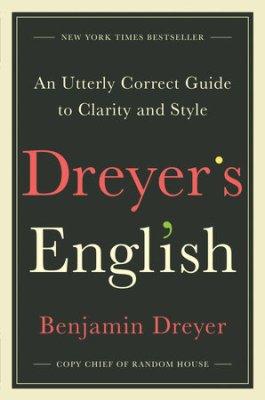
Dreyer's EnglishA few weeks ago, a dear friend who also happens to oversee our student publications, recommended the work of Benjamin Dreyer.  The recommendation probably came up as she was working on a piece and we were talking about proofreading, something I’ve had the chance to do many times over the last few years (you have to use that English degree every chance you get).  She mentioned the humor of Dreyer’s Twitter feed.  And she pointed out that he had a writing style book out.  The next day, I snatched up the only copy that Barnes and Noble had at the time.  I read as much of it as I could before passing it on to the one who suggested it (and ordered my own copy as soon as I realized what a treasure the book was).

I finished Dreyer’s English a few days ago (oddly enough while at a Starbucks watching the filming of a scene for Hawaii Five-O.  I’m not totally sure why it took me so long.  Part of it was the chance to savor an enjoyable read.  Another part of it was the busyness of the season.  It’s the kind of book you want to revisit often, though, particularly if you find yourself writing and reading often.

The Paris Review posted an excerpt from the book close to its publication date.  “Three Writing Rules to Disregard” is a great example of what makes the book both enjoyable and challenging.  Dreyer writes with an amusing authority, often drawing on pop culture great works of literature.  In this particular piece, he tackles some things that most English teachers bring up every chance they get.  From the piece:

A good sentence, I find myself saying frequently, is one that the reader can follow from beginning to end, no matter how long it is, without having to double back in confusion because the writer misused or omitted a key piece of punctuation, chose a vague or misleading pronoun, or in some other way engaged in inadvertent misdirection. (If you want to puzzle your reader, that’s your own business.)

As much as I like a good rule, I’m an enthusiastic subscriber to the notion of “rules are meant to be broken”—­once you’ve learned them, I hasten to add.

From there Dreyer tackles the questions of beginning a sentence with a conjunction, splitting infinitives, and ending a sentence with a preposition.

Dreyer’s English is the kind of book that both makes you appreciate the nuances of good writing and makes you want to become a better writer.  You can read the whole article here.  And the book can be bought wherever great books are sold (though you might have to search for the reference section to find it).

Posted in Books, Teaching | Leave a comment

The Apparent Endgame

Now that Captain Marvel has made its way into theaters, the final push for Avengers: Endgame can begin.  This morning’s new (final?) trailer was a nice surprise.  If you haven’t yet, check it out:

The callbacks to previous moments were nice.  And the trailer does a great job of showing things without giving away anything to defining or clear (case in point: who is the young woman Hawkeye is teaching to shoot a bow and arrow?).  I think genuine surprise will be vital for viewing this movie.  It will probably also be impossible.  Six weeks to go . . .

Posted in Movies | Leave a comment

Memory and the Season

Hans Boersma, whose Heavenly Participation I hope to write through over the next week or so, just had a short piece published over at First Things.  While it is tied to the season of Lent, it definitely has implications for other areas of life.  The piece, “Memorization and Repentance,” says much about the human condition in the 21st century, particularly as it relates to the digital real.  In many ways, it reads like a theological gloss on another book I recently read, Douglas Rushkoff’s Team Human.  From Boersma:

All animals have storage capability. Only humans, however, have the ability not just to store things in the mind but also to recollect them. Aristotle therefore distinguished between memory (memoria) and recollection (reminiscentia). Past experiences shape who we are and enable prudent decision-making. In other words, virtue depends on memory.

From there, Boersma brings up memory and the nature of God in a way that dips deep into the Old Testament.  Then he pivots back to the human condition:

Nothing is as toxic to the mind as distraction. Monastic writers devised all sorts of mnemonic devices to assist in memorizing Scripture and eliminating distraction. For Hugh of St. Victor, Noah’s ark became a storage place whose innumerable cabins contained biblical events, doctrinal truths, and moral practices that offered safety in the storms of this world. For Bonaventure, the twelve branches on the tree of life contained fruits of Jesus’s life, passion, and glorification. Savoring these fruits would revive and strengthen the soul. Meditating on the ark’s cabins or the tree of life’s fruits gave stability in an age of distraction. As Hugh put it: “If, then, we want to have ordered, steady, peaceful thoughts, let us make it our business to restrain our hearts from…immoderate distraction.” Ordered thoughts make for ordered lives.

The language of the “ordered life” has root today thanks to the writings of ancients like Augustine and contemporary writers like James K. A. Smith (see You Are What You Love).  It even, at least for me, goes back to an early reading of Gordon MacDonald’s Ordering Your Private World (at least on some level).  From there, Boersma makes a final pivot to the season of Lent:

Memorization is a Lenten practice, reshaping our memories to be like God’s. When our memories are reshaped and reordered according to the immutable faithfulness of God in Christ, we re-appropriate God’s character—his steadfast love, his mercy, his compassion.  Repentance, therefore, is a turning back to the virtues of God as we see them in Christ.  Being united to him, we are united to the very character of God, for it is in the God-man that God’s virtue and human virtue meet. The hypostatic union is the locus of our repentance: In Christ human memory is re-figured to the memory of God.

It’s an interesting read, one that hits on a lot of different aspects of living a particular kind of good life in “an age of distraction.”  I encourage you to read the whole piece here.

Posted in Books, Faith, Teaching | Leave a comment