2016 has been a good year for reading. These days I’m wrapping up N. D. Wilson’s Outlaws of Time and Hauerwas’s The Work of the Theology. I’m also making good progress through Merton’s No Man is an Island (which I’ll blog about soon). And it looks to get even better as we get closer to the mid-year mark. Here are some books on the way that have my attention.
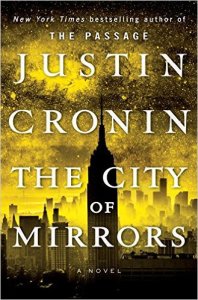 I had no idea what I was getting myself into when I picked up Justin Cronin’s The Passage a few years ago. It quickly became one of my favorite reading experiences (back when Aloha Tower and McDonald’s were part of my summer routine). The Passage is one of those “first books in a trilogy” that could totally stand on its own. While I enjoyed the sequel, The Twelve, it didn’t hold together quite as well as the original. Now, after three years, the final book in the series is ready to drop. I’m curious to see what happens in this world of vampires (not the kind of sentence that I often write) as it comes to a (hopeful) end in The City of Mirrors. Blurbs for the book mention a final battle between Amy and Zero amidst a world trying to rebuild itself. Should make for some great early summer reading.
Turns out that Dave Eggers has another “out of nowhere” book dropping in late July. The book doesn’t have a cover yet, but it’s titled Heroes of the Frontier, which sounds both hopeful and challenging. From the preview blurb:
Josie and her children’s father have split up, she’s been sued by a former patient and lost her dental practice, and she’s grieving the death of a young man senselessly killed. When her ex asks to take the children to meet his new fiancée’s family, Josie makes a run for it, figuring Alaska is about as far as she can get without a passport. Josie and her kids, Paul and Ana, rent a rattling old RV named the Chateau, and at first their trip feels like a vacation: They see bears and bison, they eat hot dogs cooked on a bonfire, and they spend nights parked along icy cold rivers in dark forests. But as they drive, pushed north by the ubiquitous wildfires, Josie is chased by enemies both real and imagined, past mistakes pursuing her tiny family, even to the very edge of civilization.
Jonathan Lethem has a new novel coming out in October. While I’m a fan more of his non-fiction, I’ll probably give A Gambler’s Anatomy a shot. As with The Fortress of Solitude, it seems to be a down-to-earth story with a (super-powered) twist. It’s a slim 300 pages compared to what looks to be a 400-page Eggers tome.
 There for a while it seemed like Michael Chabon was everywhere (maybe it’s because I saw him in person twice in one week a few years ago). Lately, though, he’s been silent. That silence breaks with November’s Moonglow. I really like the cover of the book, which is all about matches. The book sounds like an odd mix of history and speculation rooted in Chabon’s family experience. From the blurb:
Moonglow unfolds as the deathbed confession, made to his grandson, of a man the narrator refers to only as “my grandfather” . . . A gripping, poignant, tragicomic, scrupulously researched and wholly imaginary transcript of a life that spanned the dark heart of the twentieth century, Moonglow is also a tour de force of speculative history in which Chabon attempts to reconstruct the mysterious origins and fate of Chabon Scientific, Co., an authentic mail-order novelty company whose ads for scale models of human skeletons, combustion engines and space rockets were once a fixture in the back pages of Esquire, Popular Mechanics and Boy’s Life. Along the way Chabon devises and reveals, in bits and pieces whose hallucinatory intensity is matched only by their comic vigor and the radiant moonglow of his prose, a secret history of his own imagination.
In between Lethem and Chabon, though, there’s an opportunity for some good theological reflection in N. T. Wright’s latest work on Jesus and the church in context. Titled The Day the Revolution Began, the book copy blurb lays out the general argument:
In The Day the Revolution Began, N. T. Wright once again challenges commonly held Christian beliefs as he did in his acclaimed Surprised by Hope. Demonstrating the rigorous intellect and breathtaking knowledge that have long defined his work, Wright argues that Jesus’ death on the cross was not only to absolve us of our sins; it was actually the beginning of a revolution commissioning the Christian faithful to a new vocation—a royal priesthood responsible for restoring and reconciling all of God’s creation.
Wright argues that Jesus’ crucifixion must be understood within the much larger story of God’s purposes to bring heaven and earth together. The Day the Revolution Began offers a grand picture of Jesus’ sacrifice and its full significance for the Christian faith, inspiring believers with a renewed sense of mission, purpose, and hope, and reminding them of the crucial role the Christian faith must play in protecting and shaping the future of the world.
I’m sure other books will creep onto the shelf throughout the year, but these are definitely some “tentpole” releases to keep things moving throughout 2016.

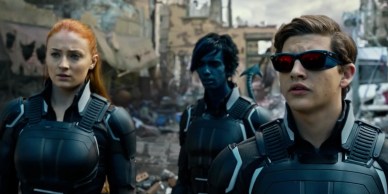 It’s unfortunate, really, that X-Men: Apocalypse is one of the lowest-reviewed X-Men movies. On a number of levels, it’s the X-Men movie that many of us have been waiting for. It might lack the gravitas of Days of Future Past and the cool sixties vibe of First Class, but it makes up for it by being an actual X-Men movie (and not just a Wolverine vehicle or the continuing adventures of the Pre-X-Men).
 I remember well when I bought my first album from The Normals. I remember reading about Coming to Life in CCM Magazine. I remember making the connection in my head to the song “Everything (Apron Full of Stains)” from an earlier album. I remember the trek to Mardel’s to see if they had a copy. And I remember the time a friend at school let me borrow a pre-release copy of their third and final album, A Place Where You Belong. I’ve tracked down most of the band frontman’s work. I remember emailing him early in my time in Hawaii because I wanted to get digital copies of some songs I couldn’t find anywhere else (“The Longing” and “The Moral of the Story” and “The Phoenix”). He graciously complied. Andrew Osenga has been a part of the soundtrack of my life for a huge chunk, moving from The Normals to a solo slot and even to time spent in Caedmon’s Call. So a kind of “retrospective” of Osenga’s work over at foundlinghouse.com is pretty cool.
 Few things serve the break between comic book movies as well as a good financial thriller, right?


 Space Enough, and Time