What You Love and How You Love It

One of the biggest blessings in my understanding of things over the last couple of years has been the writings of James K. A. Smith.  His Desiring the Kingdom was a real “right place, right time” scenario for me.  He’s got a couple of new books dropping over the next few weeks (one on relativism and another on culture) that might be a little heady, but that’s okay.  Heady can be a good challenge.  I especially like his work on “cultural liturgies.”  It’s something we all know to be true but too often take for granted.  Here’s a sample of his thinking from 2013.

Posted in Books, Faith, Internet, Teaching | Tagged , | Leave a comment

Acknowledging Emergence

One of the best things I took away from David Brooks’ The Social Animal is his thinking on emergent systems. His definition:

Emergent systems exist when different elements come together and produce something that is greater than the sum of their parts. Or, to put it differently, the pieces of a system interact, and out of their interaction something entirely new emerges.

In The Social Animal, Brooks calls poverty an emergent system because “the difficult thing about emergence is that it is very hard . . . to find the “root cause” of any problem” because there are multiple roots entwined.

Brooks calls marriage an emergent system. Culture is one, too. I think you can add institutions like churches and schools into the mix as well. I’ve spent years trying to figure out why students are tired all of the time. The problem could be homework, it could be social media, it could be sports, it could be some learning disability, it could be perfectionism, it could be online gaming. “Solving the problem” in one area doesn’t guarantee any kind of success because the problem is bigger than its “constituent parts.”

Brook’s solution? You “surround the person with a new culture . . . an immersive environment” that tells a different and better story. I think the early church got this right: an old world reordered around the real truth of the resurrected and ascended Jesus. And way too many people suffer unnecessarily because we can’t see bad things inadvertently caused by supposedly good systems.

Posted in Books, Teaching | Tagged , | Leave a comment

Can Wright Be Wrong?

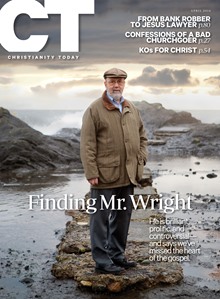
Christianity Today in AprilN. T. Wright is the subject of this month’s Christianity Today cover story.  Tuesday they opened up the lead article online.  From the opening editor’s quote from Wright, you get a good sense of some quality, trust-worthy thinking:

When you really do business with the Bible at the fullest historical and theological level, then it is passionately and dramatically relevant, life changing, and community changing.

I wholeheartedly agree.  And few people besides the pastors and youth workers I have loved the most have helped me understand the story God is telling through the Bible and through life as well as N. T. Wright has.  Thankfully, though, the article (which you can find here) doesn’t skirt some of the very real concerns of Wright’s views.  The article’s author, Jason Byasse, catches it: according to Wright, “the church has misread Paul so severely, it seems, that no one fully understood the gospel from the time of the apostle to the time a certain British scholar started reading Paul in Greek in graduate school.”  Is it possible that one man sees the truth that so many Christians have missed for almost all of church history?  It’s a good question that I can admit to wondering myself.

Controversies aside, Wright has really helped me build some quality historical context for the New Testament.  His thinking has also helped me find ways to better articulate the Old Testament’s connection to the New.  It’s a “big picture” view that has helped me see parts in connection even as they remain parts.  And he does it with a tone (at least in the books of his that I have read, which are not necessarily his larger or more encyclopedic tomes) that really is pastoral (which the interview brings out as well).  The words of Byasse on Wright:

He insists that any theory advanced about Paul must be tested with actual exegesis, and he reads the Scriptures as someone happy to be doing so.  Most scholars talk about other scholars.  Only a blessed few talk about the Bible. Fewer still talk about God.

There are a dozen things I want to say about loving God and reading the Bible and talking well about Scripture, and Wright has helped me hold onto the Bible in a Christian culture that seems to get along well without it (or doesn’t get along well because it doesn’t know what to do with it).  I encourage you to give the article a look.  You don’t have to agree with everything it says (I’m still undecided on some of his views myself), but I think you’ll find the article’s perspective and its subject at least a little enlightening.

Posted in Faith, Internet | Tagged | Leave a comment

Muppet Intern Today; CEO Tomorrow

The latest Muppets movie, Muppets Most Wanted, has been out for a couple of weeks now.  And while it doesn’t pack the sentimental punch that the 2011 reboot did, it still has a nice amount of laughs.  If anything, they had a strong emotional story that wasn’t played up nearly as much as it could’ve been.  The folks over at BuzzFeed put together a fun little “what if you had Muppets for interns” clip that has some nice moments, too.

Posted in Internet, Movies | Tagged | 1 Comment

Spufford and a Different Kind of Apologetic

Spufford from The GuardianI’ve been meaning to write about Francis Spufford’s Unapologetic for some time.  I read the book at the end of last year and loved it.  It takes an interesting approach to the Christian faith, focusing on the emotional side of things.  In many ways, the eleventh grade class that I teach is an apologetics class that takes a more logical approach to things (because Christians aren’t just feelers; they are also thinkers).  I remind my students that logic is a tool, that it can only take you so far.  In an interview posted on Christianity Today‘s website last week, Spufford takes the other side of that:

I don’t really believe that the truth of Christianity can be demonstrated in public by logical tools. What can be done is for false claims about the improbability of Christianity to be pushed to one side, so that we have, once again, a clear space in which the conversation can happen . . . That is the contemporary European situation, where justification and defense are the wrong tools. What you need is a quiet, imaginative introduction of those things in the first place. You need to appeal to people’s existing knowledge about their lives. You need to say, “This stuff, far from being the far-off stereotype of which you have only distantly heard, is actually a recognizable way of talking about the heart you already possess.”

I kind of relate to Spufford’s European perspective on things.  In many subtle ways, I work in my own “post-Christian” environment.  He has a lot to say about things, and he says them all well  I highly encourage you to read the rest of the interview, which you can find here.

Posted in Faith, Internet, Teaching | Tagged , | Leave a comment

No Joe Like “Yo Joe!”

Community, the show that no one seems to watch, just did an episode based on the 80s G.I. Joe cartoon.  The episode played the way I imagine most adult-satire shows do these days, which means it was equal parts funny and disturbing.  Two of the best parts of the episode? First, the opening sequence:


Second, one of the commercials made for the “toys” from the show:


Childhood was never quite like that.

Community has had a good season whose run ends with a two-part finale starting next Thursday.  Six seasons and a movie, though, right?


Posted in Internet, Television | Tagged , | Leave a comment

Save the Day in Outer Space

I suppose well-made and funny videos are a dime a dozen these days.  Even a twelve second vid like this kid with a lightsaber is a nice, simple daydream come to life.

I kind of like this one though.  I enjoyed Gravity for what it was: a simple story of a woman in the fight for her life.  The twist is great, a nice nod to another great character.  Check it out.


Posted in Internet, Movies | Leave a comment

Being Mosby: Unending Story

Final MotherA series finale can be a tricky thing. Do you take the approach of The Sopranos, cutting to an ambiguous black screen? Do you wrap things up neatly in bow like Everwood? Do you end on a sad note like Friends, leaving the audience to speculate about everything beyond that one last cup of coffee? Maybe you have to go the Smallville route, bound your “no flight, no tights” rule until the finale. And there’s always the LOST option: go for emotional resonance without answering any viewer’s nagging questions. Series finales are tricky, which is why I’m willing to give Carter and Bays the benefit of the doubt with How I Met Your Mother.

As I see it, there are two characters from the show with strong narrative impulses as the series comes to an end. The first, of course, is Ted. He wants love, real love. And he waits what seems like forever to get it (and her name is Tracy). And then there’s Lily. What she wants the most (and you’ve seen this in her throughout the series) is for the group-of-five to be together forever. So viewers want Ted to be happy, want Lily to be happy. But you kind of know there’s a good chance that won’t happen. And if it does, it won’t last forever.

In fact, if there’s one thing How I Met Your Mother has taught me (insomuch as a television show can teach you something), it’s that the story never really ends. You get milestones. You get markers. And then life happens. It moves forward, falls in on itself, picks itself up, and goes on. That’s part of the beautiful frustration of it.

In the end, How I Met Your Mother is a lot like The Matrix series. It’s about a worthwhile and necessary battle. And there’s a reason for all of it, the good and the bad. But it’s like the Matrix within the Matrix, a kind of full circle device that both moves you forward and starts you over simultaneously. There’s a glimmer of more hope with HIMYM, though, with Ted older and wiser. But there are no guarantees.

The folks at Grantland posted a pretty solid reflection on the series. I don’t agree with everything the writer says (the same goes for the comments the article inspired). The writer does say that the theme of the series is failure as much as it is hope, and I can sort of see that. You can read the article here.

I suppose one sign of success for a series finale is how much it teases you to go back to the beginning to watch it all again. On that account, I think the finale works. For one, it does make me want to watch all of the final season over at a faster pace. And the last scene, of course, is a call-back to a key moment from the pilot, which is always a nice touch.

And so it turns out that there’s a bigger story being told than just “this is how I met your mother.” It’s a sobering thought, maybe even a painful one. But if there’s one thing we’ve learned from Ted Mosby, it’s that it doesn’t have to be defeating.

______________________________________________________________________

This is, I must admit, a horribly weak review for a wonderful show.  It was a show about five people and their quirks and how those five people somehow transcended those quirks, if only for brief moments.  The show did so many things right.  It does make me wonder about how different life looks when viewed with a microscope (seasons one through nine) as opposed to a telescope (which the finale does).  If anything, the finale had a real jarring effect that other time-distorting episodes didn’t.  It is much easier to take when you look at the finale as two separate episodes.

I really liked the “end credits” of the main cast.  A nice touch.  Just had to say that.

Posted in Internet, Television, The Importance of Being Mosby | Tagged | Leave a comment

Being Mosby: The Best Thing We Do

Big night tonight.  After nine seasons, Ted finally meets his match.  Lots of fun little “retrospectives” for a show that many thought wouldn’t make it past two or three seasons have been popping up.  Here’s TV Guide‘s article looking inside and back.  Here’s Entertainment Weekly‘s top fifty episodes.  And below is a great clip from last week’s episode that hits an important nail on the head.

I’m not sure what to expect tonight.  Lots of viewers are concerned about the final fate of the mother (that didn’t even cross my mind until I read about it online a couple of weeks ago).  I’m hopeful, but that’s a big part of why I’ve followed the show for so nine years.  I’m sure I’ll have something more intelligent to say tomorrow.  But for now this: love is the best thing we do.

Posted in Internet, Television, The Importance of Being Mosby | Tagged | Leave a comment

Quo Vadis?

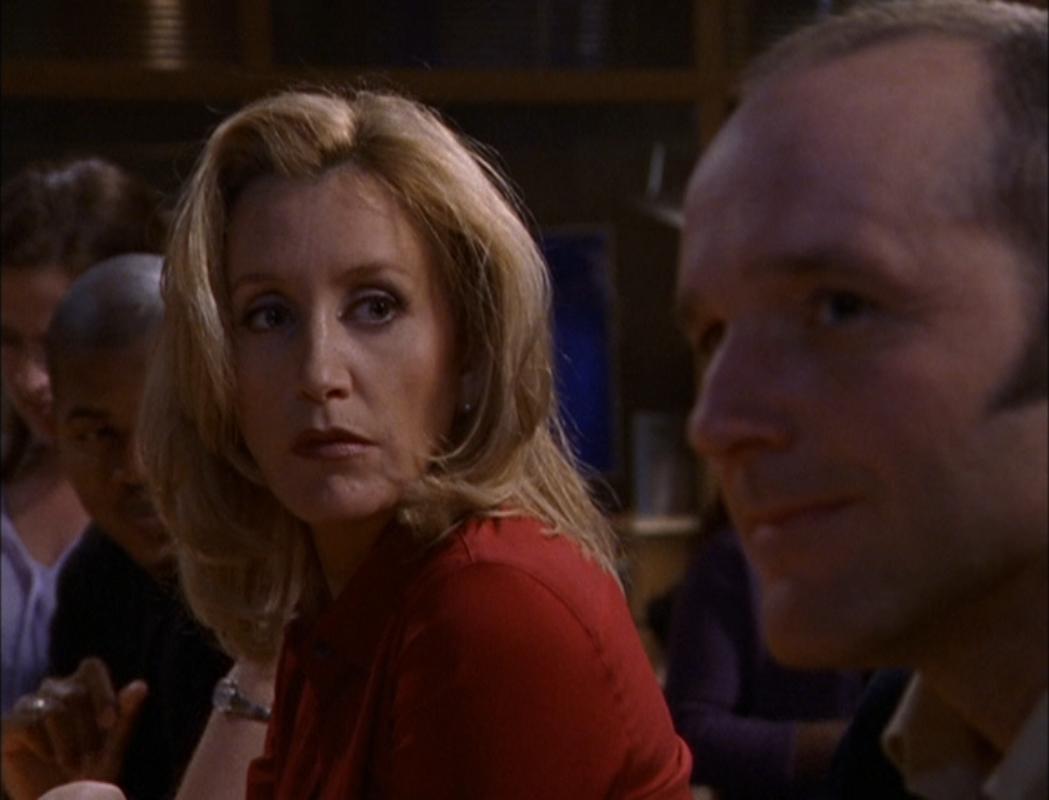
clark gregg sports nightLong before he helped bring the cinematic Avengers together as Agent Coulson, Clark Gregg played Calvin Trager, a mysterious entrepreneur who held the fate of Sports Night in his hands.  “Where are we going?” he would ask Dana, the fictional show’s producer. It wasn’t until a co-worker told her the Latin rendering of the question, “Quo Vadimus?” that Dana realized that the show had been saved and that she and her crew actually had somewhere to go beyond the unemployment line.

Christian tradition suggests that Peter asked the same question to the resurrected Jesus.  As the story goes, Peter was fleeing for his life from Rome when he sees Jesus on the road.  “Where are you going?” Peter asks the Messiah.  “Quo Vadis?”  Jesus’ reply: “To go to Rome to die again.” In a moment of clarity, Peter repents, returning to Rome to lose his life for the sake of the Gospel.

Inquiring about destination is a potent and tricky thing, especially for a group or organization. If Peter’s story is any indication, it’s a conversation you can’t afford to dismiss.  We’ve gotten so used to “the joy is in the journey” and “it’s not the destination, it’s the journey” talk that we’ve minimized, become uncertain of, the ultimate reason for why we do what we do.  Starting strong is vital, as is traveling well. But having the right destination? That gives you the reason for everything, not the least of which is  your reason for leaving in the first place.

(photo from formidnight.blogspot.com)

Posted in Faith, Internet, Television, The Long Story | Tagged | Leave a comment