The Big Picture for Beginners and Forgetters

ONE OF THE STRANGE DIFFICULTIES of twenty-first century Christian faith in America is that it is so flat.  In our attempt to make and keep things simple, we have committed a unfortunate reduction.  The “heaven or hell gambit” has been very powerful in conversion, and rightly so.  More and more, though, I find people (students in particular) using my own beliefs against me.  We have taught them, on some level, to strain for gnats.  A big draw for me concerning N. T. Wright has been his ability to “re-inflate” the balloon of historical Christianity for me, something deeply rooted in the covenants to Abraham and Moses and David and that has been fulfilled in Jesus and now invites people like you and me to be a part.

The frustrating thing is that many Baptists (and Christians in general) are so content with the cart that they’ve forgotten the necessity of the horse.  That horse, I think, is a vital and viable view of the kingdom of God.  So it was with great surprise that I flipped through the most recent issue of Christianity Today and found an article by Russell D. Moore of Southern Baptist Theological Seminary about the broad strokes off the Gospel message and its implications for all of creation.  Let’s face it, caring for a world that will go up in flames sometime soon is not a very encouraging thing, and it’s been the inadvertent view for many of us for too long.

Sure, the article reads a lot like N. T. Wright-lite, but that’s okay.  It’s a step in the right direction.  Is it something new?  Yes and no.  The language has always been there, but the thrust has not.  At least not in my own experience.

I strongly encourage you to check out the article, “A Purpose-Driven Cosmos,” here.  Can’t wait to share it with my students next quarter.

Posted in Faith, Internet | Leave a comment

Learning and Lent

HOPEFULNESS seems like a strange way to start the season of Lent, I suppose.  With a closer look, though, I think we’d find every religious impulse, every act of faith, so somehow rooted in hope.  Even discipline.  Perhaps with discipline the most.

I started last Wednesday hopeful in the belief that I could manage my schedule more effectively, read more for the heart and soul, and be more aware of everything around me through the Lenten season.  Like this overcast sky, life hasn’t let up much since then.  Dinners with friends thinking about serious issues.  Coffee with friends processing work.  Sad news from far away and home.  School things on the weekend and church things in the time that remains.  Now that odd crunch that catches you unaware at the end of the quarter (even though you always knew it would happen).

All that hope and discipline for what?

We do it to dance.  At least that’s part of what Donald Miller suggests in an excerpt from his first book, Prayer and the Art of Volkswagen Maintenance.  While it may be more than what Miller was going for, it’s this dance that discipline promises.  Learning the steps, the moves this way and that. “For a while we glide and swing our practiced sway, God crowds our feet, bumps our toes, and scuffs our shoes . . . So we learn to dance with the One who made us.  And it is a taxing dance to learn.”

In one of her early songs, Sara Groves sings of girl who “hears a rhythm calling, the echo of a grand design.”  Steven Curtis Chapman sang “I am the heart, He is the heartbeat.  I am the eyes, He is the sight. . . I am the dancer, I need the Lord of the Dance.”  Take the image and sentiment for what you will, but at it’s heart is true and truth and a good thing to reflect on this rainy Monday evening.

“But once learned, don’t we glide.  And don’t we sway.  And don’t we bury our head in His chest.  And don’t we love to dance.”

You can read the rest of Miller’s entry here.

Posted in Books, Faith, Music, The Long Story | Tagged | Leave a comment

Shades of Blue

OVERLAP between two of my favorite websites or areas of interest can be fairly rare.  Sure, the genre of LOST makes it a little more likely to have shown up on a “comic book” website, but it’s almost unheard of for one of my favorite non-fiction (almost niche) writers to mentioned on a “comic book/geek culture” site.  And yet it happened Tuesday, when Donald Miller’s soon-to-be-released movie Blue Like Jazz got a mention and a link over at aintitcool.comBLJ just got picked up as a selection at SXSW, which is a major opportunity for a relatively small movie (small enough for fans like me to contribute to it, really).  The movie, the AICN blurb mentions, also just got picked up by Roadside Attractions.  Here’s the first trailer for the movie.  It’s party sharp, I think.  It gives me great hope for a solid and engaging movie.  The movie, by the way, should make it to theaters by April 13.  That would be a great birthday present (as if the release of Whedon’s Cabin in the Woods wasn’t enough).

Posted in Faith, Movies | Tagged , | Leave a comment

The Importance of Being Mosby

The First in an Occasional Series of Reflections on a Monday Night Television Show

GOOD NETWORK SITCOMS aren’t easy to come by these days.  Some are quite popular but also pretty flat.  Others find themselves revolving around overly-obnoxious characters a little too much.  Many these days rely on the single-camera/documentary style, which is well and good in small doses.  And while there may be a place for all of them, a special place in my television schedule is set aside for How I Met Your Mother.  True, it has moments of being as guilty of the above criticisms, too, but something about it echoes what is best in any series about a set of friends making their ways through a crazy world.

How I Met Your Mother, now in its seventh season, follows Ted Mosby (architect) on his quest to find the woman who will be the love of his life and the mother of his children.  Along for the ride are college friends (engaged, separated, and finally married) Marshall and Lily, resident ladies’ man Barney, and the one that got away Robin.  For seven seasons now, we’ve seen relational permutations, break-ups, and reunions.  We’ve seen red herrings and yellow umbrellas.  We’ve gotten good  hints that have only led us deeper into the mother of all mysteries.

A couple of articles over the last few months have reminded me of how great a show HIMYM is.  Both speak well of what makes the show stand out from the dwindling crowd of viable sitcoms.

Back at the beginning of this TV season, Spinoff Online columnist Graeme McMillan suggested that the search for “the next LOST was over, and that it ended with the gang at McLaren’s Pub: Ted and friends.  LOST, of course, was known for many things: an over-arching mystery, trips in time that went backwards, forwards, and sideways, and the promise of a decent resolution.  All of these qualities, this “playing with narrative convention,” are present in HIMYM.  I thought it was a brilliant assertion, and am glad to see the connection.  It’s intelligent storytelling with a pay-off.  Actually, like LOST, you get lots of little pay-off moments along the way if you just pay attention.  You can read more of McMillan’s thoughts here.

The second article that makes a great point about the show saw print after the episode last December where Robin discovers she cannot have children.  Linda Holmes’s discussion of “Symphony of Illumination” in the context of the show’s broad narrative sweep was quite thought-provoking.  Infertility is a heady issue, one that Holmes thought the show handled well.  In the episode, the regular narration of “future Ted to his children” is replaced by a narration of “future Robin to her children.”  As the final moments of the episode end, the image of Robin’s imaginary children fades, and we are left feeling something of her loss.  And yet, Holmes asserts, the show can pull it off (even as it did the death of Marshall’s father in season six) because of the overall narrative thrust of the show. The future-narration of Ted reminds us of “everything turning out okay is part of the story; it’s the underlying philosophy of the narrator.  The story is a story of how things work out.”  Holmes goes on: “This is a show that embraces sadness precisely because everything fits together to take the characters somewhere . . . “[It’s] part of [each character’s] story.  It fit into a larger picture of their lives and Ted’s life; that’s the intriguing happy-sad mix that this show has always been able to pull off. . .  [The show] believes in signs, in the power of coincidence and the broader meanings of things that seem unimportant.  It’s not afraid of fairy dust and the idea that if the sad, difficult things hadn’t happened, the good things wouldn’t have happened either, because everything is part of a whole.”  You can read more of Holmes’s thoughts here.

For many of us, life is a long story.  It’s not some television series that ends after six episodes or one season.  And many of us believe that the long story is going somewhere, that it has both direction and destination.  It’s good to have something like a sitcom to remind us of that.  If you get a chance, watch the show.  You may not love it; you may not even appreciate it.  But if you’re lucky, you just might catch the glimmer of a better, deeper story being told.

Posted in Television, The Importance of Being Mosby, The Long Story | Tagged , , | Leave a comment

The Enduring Question of Race

THERE ARE A NUMBER OF TOPICS that I really have no business talking about.  One of those is racism.  The other is sports.

Don’t get me wrong: I know about racism, though I’ve rarely experienced it.  I think it’s one of those deep-seated things  rooted in the nature of man.  I remember racial tension growing up, especially when it came to certain places near where I lived.  Now, of course, I am a minority more often than not, living in a culturally-diverse but highly-Asian part of America.  On some level, race is something I don’t really see at this point in my life (at least not as some deciding factor or anything).

And sports.  I appreciate them.  I’ll even play them if I have a friend whose up for playing without getting too serious.  But I don’t identify with teams much, can’t really get into the collective-consciousness associated with most sports today.  I enjoy seeing my students play, too, which is something that I don’t do often enough.

And so Jeremy Lin.  I’ve been keeping up with the buzz around him on some basic level.  He is something of a sensation, there’s no way around it.  But thanks to Grantland, one of my recent favorite sites, I’ve read something interesting stuff about the effects of his recent rise to fame.

I’m not sure what you’ll think of the article I’m about to link to, but I think it’s worth reading.  Race, I fear, will always be an issue, and in multiple ways and arenas.  Growing up, it was about black and white.  Now and everywhere, it is about so much more.

Grantland’s Rembert Browne has an interesting perspective and a thought-provoking article here.  Agree or disagree, it’s a challenging conversation.

Posted in Uncategorized | Tagged | Leave a comment

What Do You See?

PROCESS is something that everyone goes through, everyone takes part in.  Growth, change, pruning, beginning again.  Sometimes it’s personal; often it’s professional.

For the last year, I’ve served on my church’s pastor search committee.  When you’re in a process that will knowingly affect others, you have to wonder about the issue of transparency in process.  Confidentiality, of course, is key. But there’s also that strong sense of letting others know how things happen.

Transparency is something of an organizational buzzword.  It also pops up often in political or presidential discussions: transparency allows for a stronger sense of trust, a better sense of awareness.  And yet. . .

I really like what Seth Godin has to say about a middle way.  One need not be opaque and mysterious, but one also need not think that transparency is the ultimate goal.  He suggests the way of translucence.  He puts it in market terms this way:

The market, though, often seeks out the translucent.  Things that glow.  We’re drawn to the glow, to the illumination and warm feeling it brings.

He goes on to say:

The brands and experiences and legends that lead to stories and affection and connection — it would be better if they glowed instead.

I like this distinction.  There are times and things where transparency are required (he cites the bank and the radiologist).  Other things, though, deserve and maybe demand a glow, a sheen, an aura of sorts.  It’s one thing to present a project or idea that works in an obvious way; doing something that resonates, reaches and resounds deeply and truly is something else entirely.

You can check out more of Seth Godin’s always-interesting thoughts here.

Posted in Internet | Tagged | Leave a comment

Can You Begin Again?

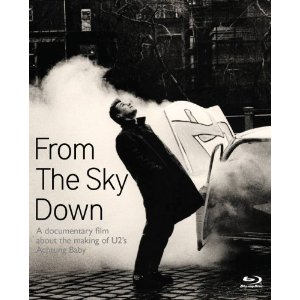
TWENTY YEARS AGO, U2 released Achtung Baby, the album that would surpass The Joshua Tree as the band’s best in the eyes and ears of many.  Last year, Davis Guggenheim released a documentary about the period of time between those seminal albums and how the band went from being one kind of band to something completely different (and about how they almost didn’t survive the process).  In the video, Bono talks about that in-between place, where you don’t quite know who you are or what you’re going to become.  All you can hope is that you will become something.

The band made the cover of Q: The Music magazine at roughly the same time (where they were named “the greatest act of the last 25 years”).  When asked about whether anyone “needs” a new U2 album, Bono said:

Oh look. . . U2 has been on the verge of irrelevance for 20 years.  We’ve ducked and dived and dodged it.  We’ve made some great albums, some great songs; laid a few eggs, not that many.  Turkeys, I mean.  Lots of people have U2 albums – why they would want another is a reasonable question.  I don’t know if it is possible for us to make something current that is meaningful, not just to our audience but to the times we live in.  But that’s kind of the job for me, and I’m not ready to give it up.  I think it’s unlikely that we’ll pull it off, but then so has the last 20 years been unlikely.

I’ve not been teaching school or writing things for long, teaching just under a decade, and can’t imagine the stamina such a band would require.  But I understand the struggle, the challenge.  How do you speak to your time?  How do you see yourself in the time you are in?  The cover of the magazine asks the band’s pertinent question, which it asked before Achtung Baby and again now in this new time after No Line on the Horizon: Could we possibly begin again?  That’s the way I feel this rainy February evening.  I’ve blogged for almost nine years, have taken the last few months off not sure of what to say.  But that is true for me as a teacher, too.  At the beginning of June, I will watch  my sixth group of seniors cross the stage.  What’s next?  What’s left?  I like Bono’s sentiment: not ready to give it up.  That comes from a deeper place, a deep sense of vocation.  That’s worth delving for.

Can you begin again?  I certainly hope so.

You can check out the Q: The Music interview here.

Posted in Music, The Long Story | Tagged , | 1 Comment