
Hans Boersma, whose Heavenly Participation I hope to write through over the next week or so, just had a short piece published over at First Things. While it is tied to the season of Lent, it definitely has implications for other areas of life. The piece, “Memorization and Repentance,” says much about the human condition in the 21st century, particularly as it relates to the digital real. In many ways, it reads like a theological gloss on another book I recently read, Douglas Rushkoff’s Team Human. From Boersma:
All animals have storage capability. Only humans, however, have the ability not just to store things in the mind but also to recollect them. Aristotle therefore distinguished between memory (memoria) and recollection (reminiscentia). Past experiences shape who we are and enable prudent decision-making. In other words, virtue depends on memory.
From there, Boersma brings up memory and the nature of God in a way that dips deep into the Old Testament. Then he pivots back to the human condition:
Nothing is as toxic to the mind as distraction. Monastic writers devised all sorts of mnemonic devices to assist in memorizing Scripture and eliminating distraction. For Hugh of St. Victor, Noah’s ark became a storage place whose innumerable cabins contained biblical events, doctrinal truths, and moral practices that offered safety in the storms of this world. For Bonaventure, the twelve branches on the tree of life contained fruits of Jesus’s life, passion, and glorification. Savoring these fruits would revive and strengthen the soul. Meditating on the ark’s cabins or the tree of life’s fruits gave stability in an age of distraction. As Hugh put it: “If, then, we want to have ordered, steady, peaceful thoughts, let us make it our business to restrain our hearts from…immoderate distraction.” Ordered thoughts make for ordered lives.
The language of the “ordered life” has root today thanks to the writings of ancients like Augustine and contemporary writers like James K. A. Smith (see You Are What You Love). It even, at least for me, goes back to an early reading of Gordon MacDonald’s Ordering Your Private World (at least on some level). From there, Boersma makes a final pivot to the season of Lent:
Memorization is a Lenten practice, reshaping our memories to be like God’s. When our memories are reshaped and reordered according to the immutable faithfulness of God in Christ, we re-appropriate God’s character—his steadfast love, his mercy, his compassion. Repentance, therefore, is a turning back to the virtues of God as we see them in Christ. Being united to him, we are united to the very character of God, for it is in the God-man that God’s virtue and human virtue meet. The hypostatic union is the locus of our repentance: In Christ human memory is re-figured to the memory of God.
It’s an interesting read, one that hits on a lot of different aspects of living a particular kind of good life in “an age of distraction.” I encourage you to read the whole piece here.
 What follows in the essay is a nice distilling of some aspects of the Christian journey that seasons like Lent can help clarify for us. Beyond that, props to the writer for bringing in Tolkien and Lewis. I like the essay’s first point quite a bit:
 For some time now I’ve been meaning to post this quote from the beginning of Leah Libresco’s Building the Benedict Option:
 The season of Lent begins this week. It’s also one of the craziest weeks of the school year for me, which is a way of saying that there’s a good chance my mind won’t be too much on Lent. Beyond that, my recent readings in Boersma have me thinking in good ways about my own faith tradition and the broader Christian tradition, but that’s a tale for a later post or two. Either way, this entry will post on Mardi Gras, which is an interesting concept in every way. And then tomorrow is Ash Wednesday, when many Christians will attend a service to be reminded of their mortality through the imposition of ashes. (Already I’ve seen people on Twitter asking people NOT to post #ashtag selfies from the day’s events.)
 While it wasn’t acknowledged much in my own church besides the children’s literature for the morning, yesterday was celebrated as “Transfiguration Sunday” in many churches across the world. It’s a little like the “last breath before the plunge” that is the season of Lent. The day is a remembrance of Jesus and his friends on a mountain for the appearance of Moses and Elijah and a theophany from heaven. As we cover it in class, it’s one of the moments that turn Jesus towards Jerusalem for His passion.
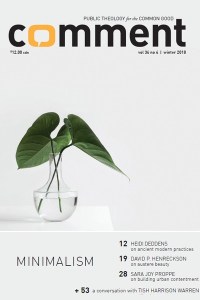 Near the end of 2018, James K. A. Smith announced his departure from Comment Magazine as its editor. Each quarter, Smith would write about his perspective on some in-the-moment issues using his “World View” column, something he called “an annotated reading for your world.”
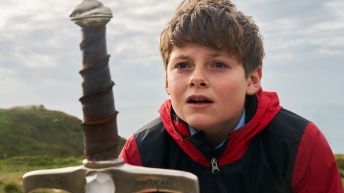 I should start by going on record as saying that one of my favorite moments in Aquaman was at the end when someone says “Hail, King Arthur!” While the world of Middle Earth is key for me, the world of Arthur’s England isn’t too far behind.


 Space Enough, and Time