Augustine and the Compelling Character of God

From Book One of Henry Chadwick’s translation of Augustine’s Confessions:

Who then are you, my God? What, I ask, but God who is Lord? For ‘who is the Lord by the Lord,’ or ‘who is God but our God?’ Most high, utterly good, utterly powerful, most omnipotent, most merciful and most just, deeply hidden yet most intimately present, perfection of both beauty and strength, stable and incomprehensible, immutable and yet changing all things, never new, never old, making everything new and ‘leading’ the proud ‘to be old without their knowledge; always active, always in repose, gathering to yourself but not in need, supporting and filling and protecting, creating and nurturing and bringing to maturity, searching though even though to you nothing is lacking: you love without burning, you are jealous in a way that is free from anxiety, you ‘repent’ without the pain of regret you are wrathful and remain tranquil.  You will a change without change in your design.  You recover what you find, yet have never lost.  Never in any need, you rejoice in your gains; you are never avaricious, yet you require interest.  We pay you more than you require so as to make you our debtor, yet who has anything which does not belong to you?  You pay off debts, though owing nothing to anyone; you cancel debts and incur no loss.  But in these words what have I said, my God, my life, my holy sweetness? What has anyone achieved in words when he speaks about you? Yet woe to those who are silent about you because, though loquacious with verbosity, they have nothing to say.
Posted in Commonplace Book | Leave a comment

Put It In A Common Place . . . Book

This semester I’m getting to teach my Faith & Literature class.  I require my students to keep a commonplace book throughout the semester that includes significant quotes and reflections.  The last time the class ran, my students had to take the idea of a commonplace book “on faith.”  This time around, though, I had a solid essay by Alan Jacobs about the history of the concept and its mutation throughout recent history.  Consider:

It was in the sixteenth century, especially in England, that the practice of such recording became widespread and recommended by the learned to all thoughtful and literate persons. This happened for two reasons. First, in that time paper became more widely available and considerably cheaper than it had been”developments prompted by the invention of the printing press but that benefited the private scribbler as well. And the printing press had another consequence: By making it so much faster and easier to disseminate texts of every kind” from Bibles (and commentaries thereon) to ghost stories, breathless accounts of notorious murders, and scurrilous poems on leading politicians”the world of print created a panic, the kind of panic distinctive to people who feel swamped by information.

Jacobs draws a line from commonplace books to journals to blogs and often revisits the idea of “information overload” and the need to keep record of “the most important things.”  Sometimes its quote with commentary; often it’s the quote alone.  Either way, the essay is a quality read and a worthy endeavor for all of us.  You can read it here.  And check back here later in the week for some of my favorite quotes from Augustine’s Confessions, the first thing read in class this semester.

Posted in Books, Internet, Teaching | Tagged | Leave a comment

Apes and a Time That Will Not Return

When the sun sets on the cinematic summer of 2014, Dawn of the Planet of the Apes will stand out as one of the season’s best. Like so many of the best sequels, it moves the story forward in a way that honors what happened previously while telling a story all its own.

The film-makers decided to take a ten-year leap with the story, which leaves a lot of space for between-story (as opposed to back-story). Online video and magazine Motherboard worked to put together three film shorts to help fill in the gaps between the two movies. All three are well-made. Here’s “Struggling to Survive,” the briefest of the three. It’s always good to be reminded that short stories can still be powerful.

Posted in Internet, Movies | Tagged | Leave a comment

Unfolding Gloriously (and in a beautiful country, too)

In reflecting on the loss of his wife, C. S. Lewis considered which was worse: ceasing to believe in God or believing bad things about him.  His conclusion:

Not that I am (I think) in much danger of ceasing to believe in God. The real danger is of coming to believe such dreadful things about Him. The conclusion I dread is not ‘So there’s no God after all,’ but ‘So this is what God’s really like. Deceive yourself no longer.¹

Lewis isn’t alone with the tension between a good God and harsh things happening in life.  It’s easy to let your heart grow hard when things go bad.  Here’s a song (with a nice video) to consider that comes from a songwriter who has experienced hard times himself.

_______________________________________________

¹ Lewis’s A Grief Observed is a must-read.  It’s terse, honest, and hopeful.  I read parts of it with my students each fall when we discuss the problem of evil.

Posted in Books, Faith, Internet, Music | Leave a comment

One Minute and the New Doctor

I imagine that Clara Oswald won’t start the new season of Doctor Who with “run you clever boy and remember” seeing as how the new Doctor is a good bit older and possesses a questionable memory.  Even still, the new series is just over a month away and the BBC has released its longest trailer yet.  Looks like we’re going “into darkness.”

The TARDIS takes off again August 23rd on BBC America.

Posted in Internet, Television | Tagged | Leave a comment

New Zealand Dispatch: South Island Dispatch

Readers often speak of Tolkien’s gift for creating a “fully-realized world” with Middle Earth: you feel like every little path could lead to somewhere fantastic. The same could be said for New Zealand, the South Island especially.

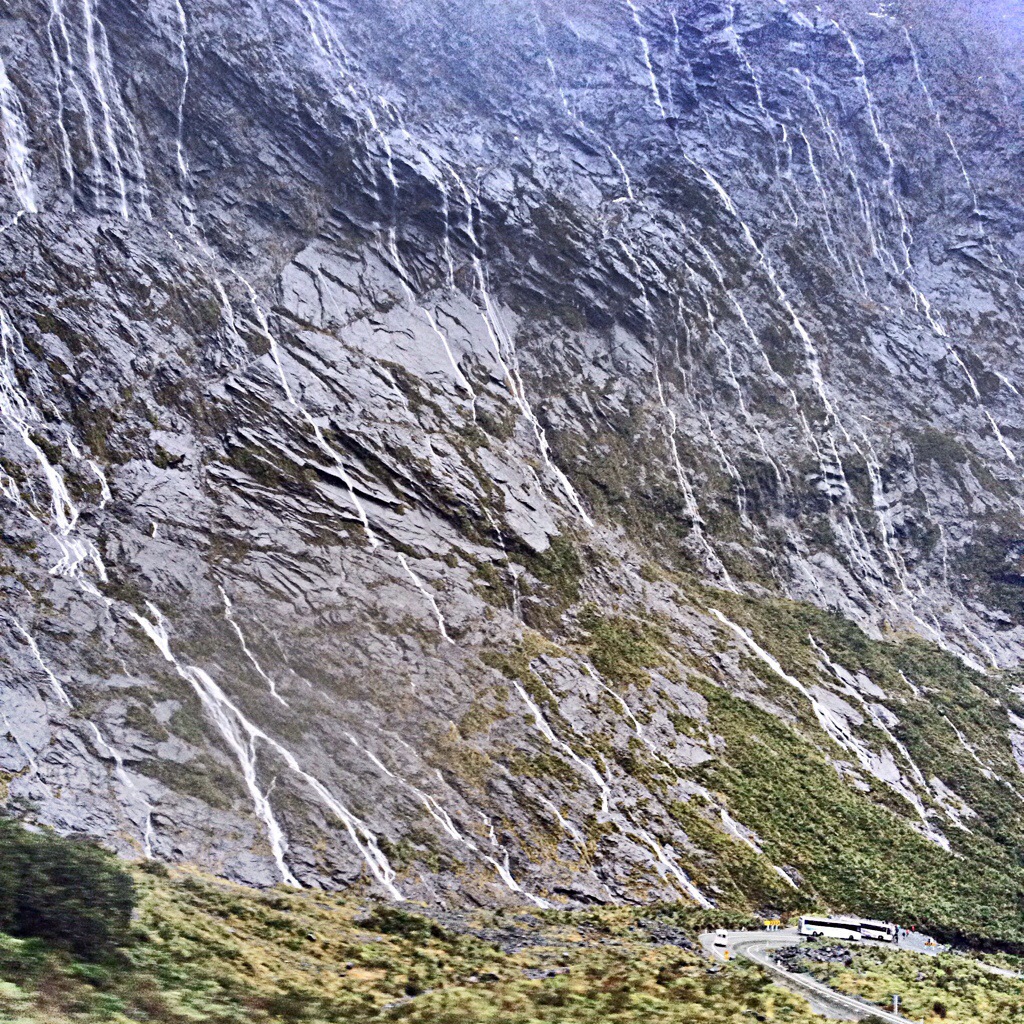
The last leg of my trip has included glacier walks and boating through fjords. The weather has been great, with one day starting with a serious frost. And even though it rained during my Milford Sound trip, it was okay: we got to see waterfalls turned back around by strong winds. So many good moments that photos can’t do justice. Here’s a multiple waterfall shot.

20140625-072909-26949152.jpg
Now it’s back to the North Island before heading East for good.

Posted in Uncategorized | Leave a comment

New Zealand Dispatch: North Island Edition

I’m one island in on my two island journey through New Zealand. Yesterday morning I boarded the ferry in Wellington and made my way to Nelson via Picton.

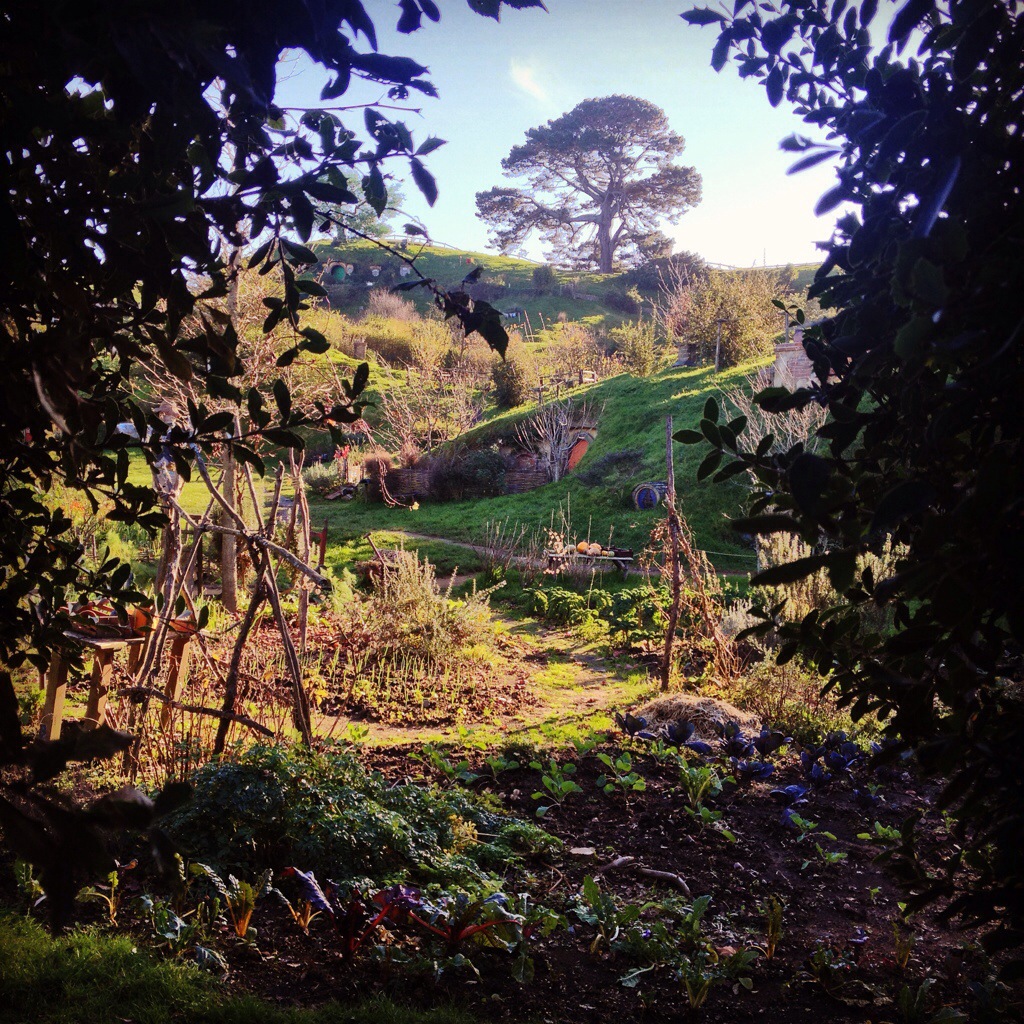
New Zealand is beautiful. Every turn you make on the road yields some great surprise. The food is good: lamb kebabs and steak for me. The weather has been good: sunshine at all the good moments. The sites, of course, are amazing. I’ve posted some pictures to Flickr, so you should be able to see them to the right. Here’s one of my favorite camera-phone pics:

20140618-202743-73663063.jpg
What is it? Why, it’s Hobbiton before sunset from the bottoms of the hill (which means Bag End is topside).

Time flies, and I’m really glad that I took this trip. It’s an interesting way to make yourself fully present, for sure.

Posted in Travel | Tagged | Leave a comment

One Month and Then New Zealand

A few months ago I found a cheap flight to New Zealand and booked it.  It’s something I’ve wanted to do for a long time (thanks, Lord of the Rings and the Amazing Race), and it’s something that has given my thinking some focus these last few weeks.  I think about it in different terms each day: time in a beautiful place, a chance to see where some of my favorite movie moments were filmed, my first time leaving the country alone (sorry, Canada), a break from my ten-year summer routine.  And while I will be traveling alone, I feel like I’ll be carrying many good things with me.

Here’s a brilliant time-lapse video of the country by photographer Shawn Reeder.  If I see beauty half as good as he has captured on film, I will consider myself doubly-blessed.


Posted in Internet, The Long Story, Travel | 1 Comment

A Flood of Holiness

Don’t let the title of N. D. Wilson’s latest essay fool you.  “Lighten Up, Christians: God Loves a Good Time” sounds a little frivolous, but it has a real seed of truth inside it’s fun-loving shell.  And while there’s nothing wrong with fun, there’s something really good about where the essay ends up.  From the article’s beginning:

We Christians are the speakers of light. We are the proclaimers of joy. Wherever we go, we are the mascots of the gospel, the imagers of the infinitely creative Father, and the younger brothers and sisters of the humbled and triumphant Word. We speak in this world on behalf of the One who made up lightning and snowflakes and eggs.

Or so we say.

Wilson spends much of the article calling us on our stodginess, which is well and good and often appropriate.  He contrasts our disposition with that of God, creative and whimsical.  Then, in a brilliant turn that echoes Peterson and Lewis:

We should strive for holiness, but holiness is a flood, not an absence. Are you the kind of parent who can create joys for your children that they never imagined wanting? Does your sun shine, warming the faces of others? Does your rain green the world around you? Do you end your days with anything resembling a sunset? Do you begin with a dawn?

He ends by moving from question to command:

Speak your joy. Mean it. Sing it. Do it. Push it down into your bones. Let it overflow your banks and flood the lives of others.

A tall order, of course, striving to be like God.  Holiness is probably both the best and the worst word for it.  At it’s best, holiness is robust and mesmerizing.  At it’s worst, it is twisted and deflated by human self-righteousness.  The way Wilson puts it, though, makes we want to strive to be like the God with the flood of holiness.

Posted in Faith, Internet | Tagged | Leave a comment

A World of Bad Poets

Identity from smu.eduEven at its best, technology is a strange master.  It’s the kind of master that blinds you to your own submission, really.  The level of submission is different for everyone, of course.  Sometimes the people you think would buy in the most barely touch things like social media.  And there are so many options, so there’s always at least one good venue for expression.

Nicholas Carr is one of the tech-thinkers I read in order to process technology issues.  Over spring break I read one of his slightly older books, The Big Switch.  And even though some of the tech-names used were dated, much of what he said was a real help in locating contemporary life on the media map.  He often blogs at roughtype.com.  A recent entry, titled “Identity Overload,” is a nice distillation of one of technology’s effects: the demands it often makes on our sense of self (or selves, as the case may be).  Connecting T. S. Eliot and writer Rob Horning, Carr writes:

Social media turns us all into bad poets . . .

Personality wants to expand to fill all available space. Resisting the self’s inclination to artificially inflate what’s inside, and thereby overwhelm what’s inside, has always been hard, but it becomes much harder when the available space for the self is made both explicit and infinite, as happens with social media and other documentary systems of self-expression.

And is there a good escape from a world of bad poets?  I’m not sure.  But you can read more of Carr’s thoughts here.

Posted in Books, Internet | Tagged | Leave a comment