We’re just under two months away from the Doctor Who 60th Anniversary adventure. Crazy to think it’s been ten years since Tennant and Smith and Baker celebrated the 50th. There’s a lot at stake in the 60th anniversary story, as Russell T Davies returns and brings Tennant and Catherine Tate along with him as an “in between” moment before the next Doctor takes over. And Davies is telling the one story really left to tell from Tennant’s time: what happens if Donna Noble remembers her time traveling across space and time. Here’s the trailer:
What’s also interesting to me is that as much as I enjoyed Tennant’s time as the Doctor, I didn’t always track well with RTD’s storytelling approach. I was much more of a Moffat guy in that regard. So it will be interesting to see how RTD does. And I’ll also be interested in seeing how this all sets up the next Doctor, as I kind of lost interest with the last one (and I was a fan of Whitaker and Chibnall going into things). The other factor to consider is the role that Disney will (or won’t) play into things. I imagine the show will remain as smooth as the Chibnall years. But maybe it can get back some of the frantic heart of the show that I felt was missing (even near the end of the Capaldi run, really).
Last week I was talking to a co-worker about Made for People who then recommended to me Hua Hsu’s Stay True. Stay True is a biographical account of college life for Hsu, who attended Berkley back in the 90s. And while there are a lot of things going on in the narrative, the main thread is about Hsu’s friendship with a fellow student named Ken, who at some point in the narrative dies tragically.
Every now and then, Hsu writes about friendship in general, which dovetails nicely with Made for People (and why my co-worker suggested the book). From early in the book:
There are many currencies to friendship. We may be drawn to someone who makes us feel bright and hopeful, someone who can always make us laugh. Perhaps there are friendships that are instrumental, where the lure is concrete and the appeal is what they can do for us. There are friends we talk to only about serious things, others who only make sense in the blitzed merriment of deep night. Some friends complete us, while others complicate us. Maybe you feel as if there were nothing better in the world than driving in a car, listening to music with friends, looking for an all-night donut shop.
He then goes on to quote Aristotle, which matches allusions to his three kinds of friendship (or at least two of them). He goes on to say:
We learn as children that friendship is casual and transient. As a structure, it’s rife with imbalance, invisible tiers, pettiness, and insecurity, stretches when we simply disappear. For some, friendship needs to be steady and rhythmic. For others, it’s the sporadic intimacy of effortlessly resuming conversations or inside jokes left formant for years.
But before all that: a moment that brings you together.
I’m just short of halfway through the Pulitzer Prize-winning autobiography. There are a few more riffs on friendship, particularly in relation to Derrida. It’s a real slice-of-life memoir that captures something about pre-smart phone living that feels like a lifetime ago. It’s not quite the same as Earley’s “covenant friendship,” but it definitely points to something good about life together.
As Aristotle tells it, there are three kinds of friendship: the pleasing friendship, the useful friendship, and the friendship pointed toward the good (see also Victor Lee Austin’s Friendship). So friends that are fun, friends that help us get something that we want, and friends who key us towards a more virtuous life (see also Lewis’s The Four Loves). In Made for People, Justin Whittle Earley goes deeper with the idea of the virtuous friend.
The crux of Earley’s “argument” in Made for People is what he calls covenant friendship. Rooted in vulnerability and honesty, covenant friendship is the kind of friendship that makes “an audacious claim on the future.” From a faith perspective, the future is key: “. . . despite the mess of our present circumstances, Jesus took at action to secure a future. That future is not here yet, but the promise of it changes everything about the present!”
Earley does a quality job pointing out the differences between acquaintances/companions, convenient friendship, and marriage, particularly in relation to vulnerability, commitment, exclusivity, and sacrifice. And while covenant friendship isn’t for every friendship, it is something worth always moving towards and working at. Earley states:
Promising in friendship is a terribly dangerous business . . . Life is an ocean of uncertainty. Friendship over the long haul is the same . . . So we might fairly wonder, with all this danger, why do it?
Because covenant takes messy things and makes them beautiful. To promise friendship is to fight for an island of trust and stability in this ocean of uncertainty called life.
The rest of the book, then goes into the arts and habits that cultivate such a friendship.
Yesterday I shared an initial post about Justin Whitmel Earley’s Made for People. It’s not the first book from Earley that I’ve enjoyed. A few years ago, The Common Rule captured the zeitgeist of the “routines and habits” emphasis (that seemed to flow out of James K. A. Smith’s work in Desiring the Kingdom and You Are What You Love). Earley is a great writer: he knows how to turn a phrase and bring a sense of practicality to deep and important things. I wasn’t sure about picking up Made for People, though, as there have been quite a few (Christian) books about friendship out these last few years. But when I saw it was down at the local Barnes & Noble, I decided to take the chance. I’m really glad that I did. (And I highly encourage others to grab a copy and read a copy.)
One thing Earley does particularly well is how he walks the line between personal life and church life. The two are never far removed, even when Earley is at his most personal. After setting things up in the introduction via America’s loneliness epidemic and Jesus as the ultimate model of friendship (in multiple ways), Earley moves on to very intentional ways to “fight for friendship.” The first is vulnerability. Two things from the chapter stand out most to me. First: Earley asserts that no one should be surprised when someone reveals themselves to be a sinner. That’s a significant part of what it means to be human and to need forgiveness and reconciliation. Earley writes:
This gets to the essence of what it means to live as a body of believers: living with one another in a way that mirrors how we live with Christ.
Being a sinner around others Christians, though, is one of the most difficult things to do. It often feels like most churches aren’t built for that: they are more about “getting things done” than anything else. And we don’t always have a good way of talking about “how we live with Christ” either, especially if the Christian life is more about “getting things done” like Martha instead of sitting at Jesus’ feet like Mary.
A second thing that I like from the chapter is Earley’s distinction between sharing and vulnerability:
Sharing is what we do to update people on our lives. Vulnerability is what we do to let people into our lives.
What Earley calls “sharing” I often call “reporting.” It’s much easier to share than to be vulnerable. And you can’t be vulnerable with everyone (or just anyone). But what Earley does so well is he calls you into the possibility of things.
Of the many great things about Justin Whittle Earley’s Made for People (and there are many great things), the greatest is the assertion Earley makes early in the book about Jesus and friendship:
It may seem odd to cast the story of Jesus’ salvation in terms of friendship. But that is exactly how Jesus himself tells it. In his final evening with his disciples, Jesus describes his act of salvation as an act of friendship. “Greater love has no one than this, that someone lay down his life for his friends . . . No longer do I call you servants, for the servant does not know what his master is doing; but I have called you friends, for all that I have heard from my Father I have made known to you. You did not choose me, but I chose you.”
And then:
Spiritually speaking, friendship is our final destination.
Earley asserts this truth after talking about the contemporary reality of loneliness and the context of our current predicament as the result of both creation and fall in the opening chapters of Genesis. And while he could have spent more time on the image of friendship throughout the Old Testament, he gets straight to the point, for which I am grateful.
For some years now I have been making connections through the Old and New Testaments and the idea of friendship. Earley’s new book puts it front and center in a way that I hope catches on, in a way that will maybe “shift the conversation” some when it comes to the work of God amongst people. Because I firmly believe that whatever else it is, friendship is a real mark of the the resurrection. It is an open door that God invites all of us through, first with the Triune God and then with one another. Earley continues:
When we understand Jesus’ life as an act of friendship, the word suddenly leaps from some luxury on the periphery of life to a necessity at the center of life.
Earley has much to say about friendship in Made for People, and I think I’ll spend some time unpacking some of his larger points. But for now I’m glad to note where he starts: with the example of Jesus.
A couple of days ago I mentioned spending the summer with some saints. In that entry, it was St. Francis of Assisi through the writings of G. K. Chesterton. At the same time I was reading about Francis, I was also reading about Augustine via The Augustine Way by Joshua Chatraw and Mark D. Allen. Augustine has been on my radar in different ways over the years: I’ve taught parts of Confessions, I’ve read some of his shorter works and dabbled in some of his longer works. He was the subject of one book by James K. A. Smith. And he pops up in a number of places in Christian thought today because of his place in church and world history.
Which is a major thread for Chatraw and Allen, who seek to help readers understand how Augustine’s unique place in history (and his own personal history) how we might (re)think how we communicate with others, especially those who are not Christians. From early in the book:
Augustine is swimming in and against a current that looks surprisingly familiar [to our own contemporary current]. And because Augustine has to navigate these waters himself and instruct doubters and believers on how to make it through them, he is uniquely equipped to speak into contemporary apologetics.
Why? Because
… if we do not sufficiently grapple with our culture’s growing denial of the goodness and beauty of Christianity and the impact that this has on how people reason as an apologetic issue, ministers on the ground will often be flat-footed.
And apologetics is the chief concern for the book: how to we talk to those outside of the Christian faith about why they should get inside it. What follows in the book is a consideration of both Confessions and The City of God as pertinent pictures of a Christian thinker using (1) his personal story of conversion and (2) the story of “the city of God” moving through history as means to help us consider the weakness of a presuppositional approach to arguing for God’s existence and the truth of Scripture (think “arguments for God’s existence” and arguments for the nature of the Bible), not because those arguments are wrong but because many people just don’t think that way. Those kind of arguments, the authors suggest, “lack mass.”
Chatraw and Allen synthesize some of the great thinkers of the last few decades. You’ve got Alasdair MacIntyre and Peter Kreeft, Peter Brown and Charles Taylor, James K. A. Smith and C. S. Lewis all in the mix. And you’ve got lots of Augustine. So many great experts from his various works.
The book is divided in two parts, with the first (shorter) part looking back at Augustine, his circumstances and story and the second part focusing on a potential “vision” for today. That vision includes two “p” words: posture and pilgrimage and ends with a lengthy “therapeutic approach” that is more robust than one might think when considering that phrase. I really like the two “p” words used. Posture is a word that people get that also challenges us to think about how we situate ourselves in the world around us. And pilgrimage (which here is called a “pilgrimage of hope”) is a reminder of a key image for the church as it moves through history. Chatraw and Allen assert:
The church is to be a community of pilgrims on a journey home; the journey together is part of that healing process (the process that “puts back together fragmented souls and redirects disordered loves and longings toward the love of God and others”).
They continue:
[Augustine] models for his congregation how the story of Scripture and its lived narrative in the church can refashion their lives as they walk along the pilgrim way. The church helps the seeker of truth trace the hand of God in their life as a part of their pilgrimage homeward. Here, seeking lovers believe in order to understand.
There is much to learn from Augustine (and from Chatraw and Allen and the many who have written about Augustine before they did). I found the book encouraging to me as a teacher, both as an affirmation for things already being done but also as a challenge to think differently and engage those around me lovingly and well.
A decent bit of my reading this summer has been “saint-centric.” Right now I’m slowly working through Fire Within by Thomas Dubay. The book is a consideration of prayer through the works of Teresa of Avila and John of the Cross. It’s a stretch for me, but a good one.
Earlier this summer, I spent some time reading G. K. Chesterton’s St. Francis of Assisi, a topic mainly inspired by a podcast. The book is pure Chesterton, of course, which means you get more about his view of history and the world than you do of Francis himself. But Chesterton is usually great regardless of topic. I didn’t know much about Francis before reading this, but now at least I know a fuller sketch of his life and times (and how easy it can be to co-opt someone like Francis to an agenda other than what and Who Francis was about). A quote from early in the book:
The first fact to realize about St. Francis is involved in the first fact with which his story starts; that when he said from the first that he was a Troubadour, and said later that he was a Troubadour of a newer and nobler romance, he was not using a mere metaphor, but understood himself much better than the scholars understand him. He was, to the last agonies of asceticism, a Troubadour. He was a Lover. He was a lover of God and he was really and truly a lover of men; possibly a much rarer mystical vocation. A lover of men is very nearly the opposite of a philanthropist; indeed the pedantry of the Greek word carries something like a satire on itself. A philanthropist may be said to love anthropoids. But as St. Francis did not love humanity but men, so he did not love Christianity but Christ.
An interesting distinction.
Chesterton has a good bit to say about Francis as the “next step” in the movement of history from one age to another (which is why it is so easy to co-opt him for any of a number of causes). Near the end of the book, Chesterton asserts the interesting idea that “what St. Benedict had stored St. Francis scattered,” which makes a good deal of sense and says the work of God through both men was good.
One last quote and then a song. A third of the way through the book, Chesterton writes:
… the whole philosophy of St. Francis revolved round the idea of a new supernatural light on natural things, which meant the ultimate recovery, not the ultimate refusal of natural things.
That’s a good word, too. The phrase “ultimate recovery,” in particular.
+ + + + + + +
Many years ago, Rich Mullins and friends did a concept album called Canticle of the Plains, which was loosely based on the story of St. Francis. As best I can tell, there was only one song from the work released to radio, and it wasn’t even sung by Rich. The song, “Heaven is Waiting,” was performed by Mitch McVicker and casts the love Francis had for God in the life of man named Frank. From what I can tell, it captures the basics of Francis quite well.
Even when it isn’t summer, my mind often wanders to Laity Lodge. It wanders there in the summer, of course, because the two times I’ve visited the retreat center have both been in late June/early July. I visited the first time back in 2018 for the “Attending to God in an Age of Distraction,” which was led by Alan Jacobs and James K. A. Smith. Worship that week was led by Claire Holley, whose version of “God Be In My Head” I still listen to frequently. It was a real moment for me, to have a conversation or two with Jacobs and Smith, as both of them have influenced my ways of thinking and feeling (and who have shown up in my teaching). My second visit took place last summer, when “Beginning Afresh in the Deadly End” was led by Wes Hill and Kirsten Johnson with worship led by Andy Gullahorn and Jill Phillips, whose music I have followed for over twenty years.
The folks at the Lodge, led by Steve Purcell, get many things right. The greatest of those things, though, is the Lodge’s sense of rest and hospitality. The people of Texas have a real blessing in that spot on the Frio River.
Earlier this year, Alan Jacobs wrote a nice piece about his time at the Lodge, where he often visits as both a speaker and one in need of rest. A nice passage from the piece:
When I get to my room at the Lodge, I re-focus on my plan. I set out the books on the desk. I open the notebook and put the pen across it. But then, because I’ve been in the car for a long time, I need a walk. So, I strap on the hiking shoes and head out onto one of the trails, and as I do, with the Frio below me, the birds above me, and the cedars around me, something happens.
Gradually, and without meaning to, I start to let go of my plan. It no longer seems to matter that much. I take a deep breath of the clean air, and then another. I walk; maybe I stop and just breathe for a while.
Thus, I begin—for the first time in a long time, I perceive—to listen. And when I start to listen, God begins to speak to me … or maybe it’s better to say that when my own mental babble quietens for a moment, I realize that God has been speaking to me all along.
I’m not sure when I’ll get back. It definitely adds a leg to an already long trip. And spaces are often limited and go quickly, But I’ve made at least one good friend from my time at the Lodge, and my personal library has benefited greatly from what I’ve encountered there. It’s a good picture of what rest can be, of what hospitality can look like. It’s a great picture of making space to find and listen again to the God we too often lose in the noise.
It’s been a while since I’ve visited a neighbor island (beyond an airport layover). It’s amazing to me how different each island is, how each island inspires the visitor in different ways. And while the islands mentioned in this piece from SFGate are off-limits, they definitely stoke the imagination. The photos in the piece are amazing.
(Forced) Forgetfulness was a theme in this week’s Star Trek: Strange New Worlds. Here’s the trailer for the episode, which gives some hint of the price of forgetfulness.
Forgetfulness (forced or otherwise) is also a key thread in The Silver Chair, the Narnia book that I just finished rereading. Memory and forgetfulness show up in two main ways in the story. First, upon meeting Aslan, Jill Pole is instructed to commit four “signs” to memory: tell Eustace to greet an old friend, journey to a ruined city of ancient giants, do what some stone writing tells them, and they will know they have found the lost prince because he will speak in Aslan’s name. Much of the story is what happens when Jill often doesn’t remember the signs (but also the good things that happen when she does). She is, of course, distracted by the adventure around her, just as she is also distracted by the desire for comfort when the adventure gets difficult,
The other kind of forgetfulness shows up in the climactic confrontation near the end of the book, when Jill and friends confront the Witch-Queen. She sets some magical green powder ablaze and then plays a mandolin that entrances its listeners. And as she speaks to them, she leads them to question the most basic things about who they are and what they know of the world, including the reality of Narnia itself. Lewis writes:
Puddlegum was still fighting hard. “I don’t know rightly what you all mean by a world,” he said, talking like a man who hasn’t enough air. “But you can play that fiddle till your fingers drop off, and still you won’t make me forget Narnia; and the whole of Overworked too. We’ll never see it again, I shouldn’t wonder. You may have blotted it out and turned it dark like this, for all I know. Nothing more likely. But I know I was there once. I’ve seen the sky full of stars. I’ve seen the sun coming up out of the sea and sinking behind the mountains at night. And I’ve seen him up in the midday sky when I couldn’t look at him for brightness.”
It reminds me a good bit of this scene from The Return of the King:
For Frodo, of course, the forgetfulness comes from the weight of his burden and his proximity to evil’s source.
+ + + + + + +
What is the “solution” to the forgetfulness (forced or not)? In “Among the Lotus Eaters,” Captain Pike has one object that serves as a touchstone for remembering what he as forgotten (in an alien culture that encourages the forgetfulness). For Frodo, it’s Sam’s help and the destruction of the Ring that can remedy his forgetfulness. It is Puddlegum’s bravery with foot and fire that sets his companions free in The Silver Chair.
For the Christian, it can be a number of things, but definitely it is the remembering that takes place with the Lord’s Supper. In 1 Corinthians 11 (ESV), Paul writes:
23 For I received from the Lord what I also delivered to you, that the Lord Jesus on the night when he was betrayed took bread,24 and when he had given thanks, he broke it, and said, “This is my body, which is for you. Do this in remembrance of me.” 25 In the same way also he took the cup, after supper, saying, “This cup is the new covenant in my blood. Do this, as often as you drink it, in remembrance of me.”26 For as often as you eat this bread and drink the cup, you proclaim the Lord’s death until he comes.
It often feels that today’s world is designed to have us forget the most important things for the sake of the more immediate things. It is good to remember that the there is more to the world around us that what we might hold in our short-term memory. And it’s nice when pop culture and literature can remind us of the deeper truth, too.

 Of the many great things about Justin Whittle Earley’s Made for People (and there are many great things), the greatest is the assertion Earley makes early in the book about Jesus and friendship:
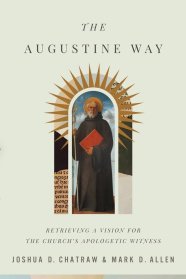 And apologetics is the chief concern for the book: how to we talk to those outside of the Christian faith about why they should get inside it. What follows in the book is a consideration of both Confessions and The City of God as pertinent pictures of a Christian thinker using (1) his personal story of conversion and (2) the story of “the city of God” moving through history as means to help us consider the weakness of a presuppositional approach to arguing for God’s existence and the truth of Scripture (think “arguments for God’s existence” and arguments for the nature of the Bible), not because those arguments are wrong but because many people just don’t think that way. Those kind of arguments, the authors suggest, “lack mass.”


 Space Enough, and Time