Summer with Some Saints (part two)

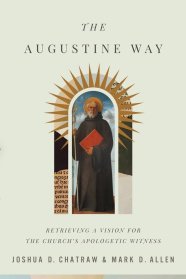
A couple of days ago I mentioned spending the summer with some saints.  In that entry, it was St. Francis of Assisi through the writings of G. K. Chesterton.  At the same time I was reading about Francis, I was also reading about Augustine via The Augustine Way by Joshua Chatraw and Mark D. Allen.  Augustine has been on my radar in different ways over the years: I’ve taught parts of Confessions, I’ve read some of his shorter works and dabbled in some of his longer works.  He was the subject of one book by James K. A. Smith.  And he pops up in a number of places in Christian thought today because of his place in church and world history.

Which is a major thread for Chatraw and Allen, who seek to help readers understand how Augustine’s unique place in history (and his own personal history) how we might (re)think how we communicate with others, especially those who are not Christians.  From early in the book:

Augustine is swimming in and against a current that looks surprisingly familiar [to our own contemporary current].  And because Augustine has to navigate these waters himself and instruct doubters and believers on how to make it through them, he is uniquely equipped to speak into contemporary apologetics.

Why?  Because

… if we do not sufficiently grapple with our culture’s growing denial of the goodness and beauty of Christianity and the impact that this has on how people reason as an apologetic issue, ministers on the ground will often be flat-footed.

Augustine WayAnd apologetics is the chief concern for the book: how to we talk to those outside of the Christian faith about why they should get inside it.  What follows in the book is a consideration of both Confessions and The City of God as pertinent pictures of a Christian thinker using (1) his personal story of conversion and (2) the story of “the city of God” moving through history as means to help us consider the weakness of a presuppositional approach to arguing for God’s existence and the truth of Scripture (think “arguments for God’s existence” and arguments for the nature of the Bible), not because those arguments are wrong but because many people just don’t think that way.  Those kind of arguments, the authors suggest, “lack mass.”
Chatraw and Allen synthesize some of the great thinkers of the last few decades.  You’ve got Alasdair MacIntyre and Peter Kreeft, Peter Brown and Charles Taylor, James K. A. Smith and C. S. Lewis all in the mix.  And you’ve got lots of Augustine.  So many great experts from his various works.

The book is divided in two parts, with the first (shorter) part looking back at Augustine, his circumstances and story and the second part focusing on a potential “vision” for today.  That vision includes two “p” words: posture and pilgrimage and ends with a lengthy “therapeutic approach” that is more robust than one might think when considering that phrase.  I really like the two “p” words used.  Posture is a word that people get that also challenges us to think about how we situate ourselves in the world around us.  And pilgrimage (which here is called a “pilgrimage of hope”) is a reminder of a key image for the church as it moves through history.  Chatraw and Allen assert:

The church is to be a community of pilgrims on a journey home; the journey together is part of that healing process (the process that “puts back together fragmented souls and redirects disordered loves and longings toward the love of God and others”).

They continue:

[Augustine] models for his congregation how the story of Scripture and its lived narrative in the church can refashion their lives as they walk along the pilgrim way.  The church helps the seeker of truth trace the hand of God in their life as a part of their pilgrimage homeward.  Here, seeking lovers believe in order to understand.

There is much to learn from Augustine (and from Chatraw and Allen and the many who have written about Augustine before they did).  I found the book encouraging to me as a teacher, both as an affirmation for things already being done but also as a challenge to think differently and engage those around me lovingly and well.

Posted in Books, Faith, Life in the Fifth Act, Scripture, Teaching | Tagged | Leave a comment

Summer with Some Saints (part one)

A decent bit of my reading this summer has been “saint-centric.”  Right now I’m slowly working through Fire Within by Thomas Dubay.  The book is a consideration of prayer through the works of Teresa of Avila and John of the Cross.  It’s a stretch for me, but a good one.

Earlier this summer, I spent some time reading G. K. Chesterton’s St. Francis of Assisi, a topic mainly inspired by a podcast.  The book is pure Chesterton, of course, which means you get more about his view of history and the world than you do of Francis himself.  But Chesterton is usually great regardless of topic.  I didn’t know much about Francis before reading this, but now at least I know a fuller sketch of his life and times (and how easy it can be to co-opt someone like Francis to an agenda other than what and Who Francis was about).  A quote from early in the book:

The first fact to realize about St. Francis is involved in the first fact with which his story starts; that when he said from the first that he was a Troubadour, and said later that he was a Troubadour of a newer and nobler romance, he was not using a mere metaphor, but understood himself much better than the scholars understand him.  He was, to the last agonies of asceticism, a Troubadour.  He was a Lover.  He was a lover of God and he was really and truly a lover of men; possibly a much rarer mystical vocation.  A lover of men is very nearly the opposite of a philanthropist; indeed the pedantry of the Greek word carries something like a satire on itself.  A philanthropist may be said to love anthropoids. But as St. Francis did not love humanity but men, so he did not love Christianity but Christ.

An interesting distinction.

Chesterton has a good bit to say about Francis as the “next step” in the movement of history from one age to another (which is why it is so easy to co-opt him for any of a number of causes).  Near the end of the book, Chesterton asserts the interesting idea that “what St. Benedict had stored St. Francis scattered,” which makes a good deal of sense and says the work of God through both men was good.

One last quote and then a song.  A third of the way through the book, Chesterton writes:

… the whole philosophy of St. Francis revolved round the idea of a new supernatural light on natural things, which meant the ultimate recovery, not the ultimate refusal of natural things.

That’s a good word, too.  The phrase “ultimate recovery,” in particular.

+ + + + + + +

Many years ago, Rich Mullins and friends did a concept album called Canticle of the Plains, which was loosely based on the story of St. Francis.  As best I can tell, there was only one song from the work released to radio, and it wasn’t even sung by Rich.  The song, “Heaven is Waiting,” was performed by Mitch McVicker and casts the love Francis had for God in the life of man named Frank.  From what I can tell, it captures the basics of Francis quite well.

Posted in Books, Faith, Music | Tagged , | Leave a comment

Laity Lodge on My Mind

Even when it isn’t summer, my mind often wanders to Laity Lodge.  It wanders there in the summer, of course, because the two times I’ve visited the retreat center have both been in late June/early July.  I visited the first time back in 2018 for the “Attending to God in an Age of Distraction,” which was led by Alan Jacobs and James K. A. Smith.  Worship that week was led by Claire Holley, whose version of “God Be In My Head” I still listen to frequently. It was a real moment for me, to have a conversation or two with Jacobs and Smith, as both of them have influenced my ways of thinking and feeling (and who have shown up in my teaching).  My second visit took place last summer, when “Beginning Afresh in the Deadly End” was led by Wes Hill and Kirsten Johnson with worship led by Andy Gullahorn and Jill Phillips, whose music I have followed for over twenty years.

The folks at the Lodge, led by Steve Purcell, get many things right.  The greatest of those things, though, is the Lodge’s sense of rest and hospitality.  The people of Texas have a real blessing in that spot on the Frio River.

Earlier this year, Alan Jacobs wrote a nice piece about his time at the Lodge, where he often visits as both a speaker and one in need of rest.  A nice passage from the piece:

When I get to my room at the Lodge, I re-focus on my plan. I set out the books on the desk. I open the notebook and put the pen across it. But then, because I’ve been in the car for a long time, I need a walk. So, I strap on the hiking shoes and head out onto one of the trails, and as I do, with the Frio below me, the birds above me, and the cedars around me, something happens.

Gradually, and without meaning to, I start to let go of my plan. It no longer seems to matter that much. I take a deep breath of the clean air, and then another. I walk; maybe I stop and just breathe for a while.

Thus, I begin—for the first time in a long time, I perceive—to listen. And when I start to listen, God begins to speak to me … or maybe it’s better to say that when my own mental babble quietens for a moment, I realize that God has been speaking to me all along.

I’m grateful to say that I can echo the experience.  The whole piece is worth reading.

I’m not sure when I’ll get back.  It definitely adds a leg to an already long trip.  And spaces are often limited and go quickly,  But I’ve made at least one good friend from my time at the Lodge, and my personal library has benefited greatly from what I’ve encountered there.  It’s a good picture of what rest can be, of what hospitality can look like.  It’s a great picture of making space to find and listen again to the God we too often lose in the noise.

Posted in Books, Faith, Music, Travel | Leave a comment

In the Neighborhood

It’s been a while since I’ve visited a neighbor island (beyond an airport layover).  It’s amazing to me how different each island is, how each island inspires the visitor in different ways.  And while the islands mentioned in this piece from SFGate are off-limits, they definitely stoke the imagination.  The photos in the piece are amazing.

Posted in Hawaii, Internet, Travel | Leave a comment

On Forgetting

(Forced) Forgetfulness was a theme in this week’s Star Trek: Strange New Worlds.  Here’s the trailer for the episode, which gives some hint of the price of forgetfulness.

Forgetfulness (forced or otherwise) is also a key thread in The Silver Chair, the Narnia book that I just finished rereading.  Memory and forgetfulness show up in two main ways in the story.  First, upon meeting Aslan, Jill Pole is instructed to commit four “signs” to memory: tell Eustace to greet an old friend, journey to a ruined city of ancient giants, do what some stone writing tells them, and they will know they have found the lost prince because he will speak in Aslan’s name.  Much of the story is what happens when Jill often doesn’t remember the signs (but also the good things that happen when she does).  She is, of course, distracted by the adventure around her, just as she is also distracted by the desire for comfort when the adventure gets difficult,

The other kind of forgetfulness shows up in the climactic confrontation near the end of the book, when Jill and friends confront the Witch-Queen.  She sets some magical green powder ablaze and then plays a mandolin that entrances its listeners.  And as she speaks to them, she leads them to question the most basic things about who they are and what they know of the world, including the reality of Narnia itself.  Lewis writes:

Puddlegum was still fighting hard. “I don’t know rightly what you all mean by a world,” he said, talking like a man who hasn’t enough air.  “But you can play that fiddle till your fingers drop off, and still you won’t make me forget Narnia; and the whole of Overworked too.  We’ll never see it again, I shouldn’t wonder.  You may have blotted it out and turned it dark like this, for all I know.  Nothing more likely.  But I know I was there once.  I’ve seen the sky full of stars.  I’ve seen the sun coming up out of the sea and sinking behind the mountains at night.  And I’ve seen him up in the midday sky when I couldn’t look at him for brightness.”

It reminds me a good bit of this scene from The Return of the King:

For Frodo, of course, the forgetfulness comes from the weight of his burden and his proximity to evil’s source.

+ + + + + + +

What is the “solution” to the forgetfulness (forced or not)?  In “Among the Lotus Eaters,” Captain Pike has one object that serves as a touchstone for remembering what he as forgotten (in an alien culture that encourages the forgetfulness).  For Frodo, it’s Sam’s help and the destruction of the Ring that can remedy his forgetfulness.  It is Puddlegum’s bravery with foot and fire that sets his companions free in The Silver Chair.

For the Christian, it can be a number of things, but definitely it is the remembering that takes place with the Lord’s Supper.  In 1 Corinthians 11 (ESV), Paul writes:

23 For I received from the Lord what I also delivered to you, that the Lord Jesus on the night when he was betrayed took bread, 24 and when he had given thanks, he broke it, and said, “This is my body, which is for you. Do this in remembrance of me.” 25 In the same way also he took the cup, after supper, saying, “This cup is the new covenant in my blood. Do this, as often as you drink it, in remembrance of me.” 26 For as often as you eat this bread and drink the cup, you proclaim the Lord’s death until he comes.

It often feels that today’s world is designed to have us forget the most important things for the sake of the more immediate things.  It is good to remember that the there is more to the world around us that what we might hold in our short-term memory.  And it’s nice when pop culture and literature can remind us of the deeper truth, too.

Posted in Books, Faith, Movies, Scripture, Television | Tagged , , , | Leave a comment

Summer-Time Fictions

It’s been a good summer of fiction for me, though I haven’t moved through anything too quickly.

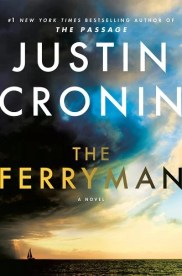
ferryman 3The latter half of June was all about The Ferryman by Justin Cronin.  Some of my favorite moments reading during the summer involved Cronin’s The Passage, so I was surprised and excited to find The Ferryman at Barnes and Noble just before leaving on my trip to Tennessee.  I can’t say much about the book without spoiling it.  I will say that, as evidenced in The Passage trilogy, Cronin is a master of juggling multiple plots while also making great cuts between those plots (like a movie maker in so many ways).   While The Ferryman doesn’t quite fly as high as The Passage (it definitely isn’t as dense as most of that series), it is entertaining and does keep you guessing, which is nice for a summer read.

I had meant to start the summer off with a reread of C. S. Lewis’s The Silver Chair, but it got pre-empted by The Ferryman.  I’ve read The Silver Chair before at least once, if not twice.  I chose this Narnia book from all the series because of this post by Richard Beck over at Experimental Theology.  The story picks up some time after Dawn-Treader, with Eustace Scrubb being the connecting link to the earlier stories.  Jill Pole, a schoolmate of Scrubb, also plays a lead role.  I’ve got about two chapters left, which is pretty good for being my morning bus-reading.  I like what Beck said about “the signs” of the story.  That theme works on a couple of other levels, too, I think.  In fact, as I read the story I feel and share some of Jill’s pain at botching the signs.  It’s an easy thing for people to do.  It was just announced, but the way, that Greta Gerwig (of Little Women and Lady Bird) is set to direct two Narnia movies for Netflix.  The Silver Chair would be a good one to work with, I think.

After Lewis, I’ve got one more novel to read.  Or in this case, a novella.  Every now and again, Ben Aaronovitch writes a novella set in the broader world of his Rivers of London series.  This time, he’s brought it to the United States to follow a story with Agent Reynolds.  I read the series as much for the British flavor as anything else, so I’m curious to see how Winter’s Gifts fares without it,

Posted in Books | Tagged , , | Leave a comment

A Song for the Day

A classic song from Rich Mullins to close out the day.

Like so many of Rich’s songs, it balances the beauty and the tension that can come with life as we know and experience it.  Always a good thing to keep in mind.

Posted in Faith, Music | Tagged | Leave a comment

Seen and Believed

It’s crazy to me that it’s been three months since Apple TV+ dropped this teaser trailer for the third (and supposedly final) season of Ted Lasso.

It’s been three months, yes, and the background song hasn’t played a role in the actual show, which is unfortunate.  There’s one more chance this week, though.  It would be great if it did.  But even if it didn’t, I’m grateful that the trailer introduced me to the song playing in the background: “I Still Believe” by Frank Turner.  Here’s the music video from twelve years ago:

It’s an ode to the power of rock’n’roll.  But it’s also been something of a gateway song for me, which I’ll get into later this week.  Just wanted to post this before the final episode of Ted Lasso drops tomorrow night.

Posted in Music, Television | Tagged , | Leave a comment

On the Remarkable Ordinary

Buechner Remarkable OrdinaryThese last couple of weeks, my morning reading has been a slow (mostly re-)read of Frederick Buechner’s The Remarkable Ordinary.  It was one of the last two books of Buechner’s to be published before his death last August.  I started the book back in 2017 when it was published, but I didn’t make it past the first few pieces.  Buechner has been a part of my story since college, when I found him through the liner notes of a Wes King album,  Since then, I’ve read most of his sermons but not enough of his fiction.  The Remarkable Ordinary, which I’m about to finish, includes some talks that he gave at Laity Lodge (one of my favorite places ever), back in 1990 (long before I had heard of either person or place).

The collection has a lot to say about faith, but mostly through the arts.  He says a good bit about his own life story, which always feels fresh no matter many times you have read similar pieces of his.  “Stop, Look, and Listen for God” is the title of the first part of the collection.  It’s a good summation of his approach to faith, too.  He wrote about attention long before it became an early 21st century buzzword.  And he often and effortlessly brings what he thinks of art or his own life back to the presence of God, to the God revealed in Scripture, and to Jesus.  And then, in the middle of it all, he reminds us:

Love each other knowing that you are loved.

Such a simple statement.  It’s a reworking of a key New Testament teaching that I’d not really heard that way (or that well) before.

Buechner is definitely a product of his time (or times, as the case may be).  The third part of the book is the most obviously biographical.  And he starts it with the assertion that “the twentieth century comprised three worlds”: pre-World War II, the world of the war, and the post-World War II world (which he still lived in when he penned the piece).  He brings those different eras to life well without indulging in nostalgia.  And he practices what he preaches: listening to God in the story of his life.

I really thought there’d be more quotes from the book in this piece, but they just didn’t materialize.  There are a number of lines that I marked in the book, but they make the most and best sense in the context of all the other words and phrases on the page.

Revisiting Buechner these last couple of weeks has been nice.  The times they are a-changing, with things happening both at Home and in the Neighborhood.  It is good to be reminded that God is at work around us, and more often than not in many less-obvious ways.  Still in the obvious, of course, but often the obvious gets lost in the mix.  Early in the book, Buechner writes about the reading of books:

You can escape the little world that’s inside your skin and live inside the world the writer produces for you.

That’s especially true for the world that Buechner wrote with his life.  It has so many little tributaries, too, with people like Lewis and Chesterton and other writers he has either led me to or helped me enjoy. It’s good to be reminded, every day really, of the remarkable ordinary of our lives.

Posted in Books, Faith, The Long Story | Leave a comment

“Because We Are Written”

Brad East has been blogging a bit more recently.  His take on academics and AI is pretty genius (and something I’ve shared with a number of co-workers).  He also recently posted a piece on fantasy literature, comedy, and the question of God’s existence (and His allowance of evil).  His reference is a series I’ve not heard of anywhere else except in one or two of his posts.  But he says something about (fantasy) literature in general that I really like, the middle paragraph in particular:

For modern fantasy to avoid theodicy, it would have to embrace tragedy. Not darkness, not “grittiness,” not violence and sadism and gratuitous sex and playing footsie with nihilism. Actual, bona fide tragedy. I’ve not encountered fantasy that does that. And even then, if there’s a human author doing the tragedy-writing, there’s a case to be made that it can’t fully escape the pull of theodicy. It seems to me you’d have to go full Sartre and write a fantasy akin to La Nausée. But what world-building fantasist wants to do that? Is even capable of stomaching it?

We write because we are written. We make because we are made. We work providence in our stories because providence works in ours. We give the final word to the Good because the Good has the final word in our world—or will, at least; we hope, at least.

This is why every fantasy is a theodicy. Because every fantasy is a comedy. And comedy is a witness to our trust, howsoever we deny it or mask it, of our trust that God is, that God is good, and that God will right all wrongs in the End.

It reminds me of a quote from Anthony Thiselton that I fear I have totally misremembered but love anyway: history reminds us of what is possible; fiction reminds us of what is necessary.

Posted in Books, Faith | Leave a comment