Traction and Distraction

If you can’t already tell, I’m trying to use this two-week “break” to find my way back to posting here regularly.  This last quarter has been a lot busier than I had anticipated.  And while I’ve mostly been able to keep up with regular reading, regular writing has been more difficult for me.

The two thinkers who helped me most at the beginning of the pandemic have gone a little more quiet over these last few months.  Andy Crouch’s pieces from the beginning of Covidtide really helped me think institutionally and broadly, particularly his images of blizzard and ice ages.  The other thinker, Ephraim Radner, helped me think a lot about the life of faith (and the communal life of faith) in light of The Current Moment.  I think often of his First Things piece titled “Theology after the Virus” from just over a year ago.  He teases out some of the ideas that he had introduced earlier in 2020 about churches and the quick move to online services, this time wondering about the future of theological education and training across the board “after the virus.”

I think it’s because of these two thinkers that I’ve tried to make clear adjustments to work over these last few months.  Working with our school administration (and knowing that gathering everyone back in the gym for weekly chapel wasn’t an option), I pushed for a more “small groups” model to chapel time, where there is still a “chapel talk” and worship/reflection song and even student “micro-interviews” but that also had a greater “conversational” component.  This is because conversation is easily lost in a digital (and particularly concurrent) learning environment.  And so this quarter has seen my team (my wonderful team) helping with videos but also with slides and scripts to equip our teachers to engage in better conversations with their students.  We’ve also been given time to do some of that “faculty equipping” in person, which has been good (I hope).

Church has been in-person for a good while now.  Our pastor left back in May.  I preached for three weeks in July.  Well, I suppose I tried to lead them in some conversations more than anything else.  I tried to bring to mind potent New Testament images of the church that are as much about being as they are about doing.  They did some talk and turns, some writing and reflecting.  I’m now serving again on the pastor search committee, which is mostly meeting via Zoom.  Much of the old committee is back, which gives us a decent amount of familiarity.  But I’m also trying to ask some questions to build some community and make some connections.  We’ll be meeting in person soon (at least once), which I’m looking forward to quite a bit.

Now that we are this far into the pandemic (and now that I’m involved with approximately three search committees), I am more mindful of wondering about “what has been learned” from these last 18 months.  Perhaps learning something isn’t the most important thing.  Perhaps surviving these days is the more important thing.  But I can’t help think that a good stewardship of This Moment would bring some fruitful reflection that could lead to some intentional action.

Having said all of that, I’ve got a stack of articles to post about over these next few days.  It’s a hodgepodge ranging over the last few months (with nothing from Crouch or Radner).  So consider this the warning.  While I’m grateful for things learned and done this last quarter, I’m also hopeful about getting some traction back here (and with getting my thoughts down again, in general).  Not that one thing is a distraction from the other- in the best of all possible worlds everything works together well.  Maybe the next few days will allow a course-correction for that.

Posted in Notes for a World's End, Teaching | Leave a comment

Tome Reader

I spent the first half of 2021 mostly reading short books, books that hovered nicely around the 200 page mark.  Since the summer, though, I’ve been in a season of (two) longer books, some of the longest I’ve ever read.

The first, whose image has graced the “currently reading” space for months now, is A Secular Age by Charles Taylor.  As I’ve likely mentioned before, I’ve been reading around it for almost a decade.  It was part of the content of a course that I took this summer, though the course was only reading selections of the book.  I decided to bite the bullet and read the whole thing.  As of this morning, I passed the “page 600” mark, which means I’ve got a bit less than 200 pages to go.  The book is brilliant in so many ways.  Taylor attempts to trace the story of Western Civilization’s stance on religious belief and why it has become such an optional thing over the last 500 years.  He goes down lots of interesting roads to arrive at his destination, so it’s both an interesting look at history as well as a kind of Rorschach test for how each of us understands that journey.  I’ve already tried incorporating some of his language into my junior-level Bible class (mostly the porous and buffered selves at this point).

The other long work I’m reading, also tied to that summer course, is Hartmut Rosa’s Resonance.  Rosa showed up in the summer course primarily for his work on social acceleration (which I need to read more about).  I previously read a short book by Rosa earlier this year, The Uncontrollability of the World, and quite enjoyed it.  Where Taylor takes a sweeping look at post-Reformation religious history, Rosa takes a sweeping look at how we feel our way through the world around us.  It feels like a kind of catalogue of sensations and relations akin to what Marshall McLuhan achieved with Understanding Media.  Taylor has obviously influenced Rosa (as he gets mentioned often), but Rosa is definitely working on his own trajectory here.  I’m about halfway through the book’s 450 pages.

I am reading one more longer work this fall.  I’m about 13 cantos into Dante’s Inferno.  I’m reading through the entire Divine Comedy via 100 Days of Dante.  It’s a program run by a number of “honors colleges” across the country.  We read about three cantos a week and get to watch a video reflection on each one (done by any number of humanities professors from across the country).  I’m enjoying the read so far.  I think I only read sections of the story back in college, so it’s mostly new for me.  I’m reading the Penguin Classics translation by Robin Kirkpatrick throughout the week and then doing a weekend re-read with Anthony Esolen’s translation (which is so much easier to follow for some reason).

My goal is to finish Taylor and Rosa over the next couple of weeks (fall break goal!).  Finishing Taylor is more likely for me than finishing both, but I can dream.  Dante will take me up to Easter, which is pretty cool.  I’ve got other books in line, too.  I need to jump back into MacDonald’s Alec Forbes of Howglen.  And then there’s Eggers and Card waiting in the wings.

It’s good to be a reader.

Posted in Uncategorized | Leave a comment

Look! New Photos!

If you look to the right side of this page, you’ll notice that I’ve updated my Flickr account with some new photos- the first new batch in over a year, I think.

This past weekend I took a quick trip to Dallas-Fort Worth for a wedding.  It’s the quickest trip to the mainland I’ve ever taken, I think.  I spent the first day in Fort Worth in an attempt to revisit my old stomping grounds.  It’s amazing how much you can forget!  The first thing I noticed (at the car rental station) was the existence of a number of toll roads that weren’t there the last time I drove the “mix master.”  I got in my rental Kona, took a deep breath, and made a bee-line for south Fort Worth.  I found Seminary Drive but actually had a difficult time finding the seminary.  It didn’t help that the weather was gray and overcast.  I eventually found the school and then James Street, where World Relief was before it relocated a few years ago.  Then I wound my way over to Hulen Street via Trail Lake.  So odd: so much had changed (at least two apartment complexes I had known were completely gone) while my old comic shop was still around.  I landed at Barnes and Noble to look for a new Tolkien book (none in stock) and to get my bearing a little more.  Went to Macy’s to get a couple of things for the wedding.  The place was dead . . . the whole mall, it felt.  Then I made my way to Half-Price Books (which had also moved).  Then I made my way to my favorite Mexican restaurant in town: Fiesta (not to be confused with the grocery store).  When I got there, it was almost empty.  By the time I was done with the best lunch-time chimichanga in the world, the place was busy and more Fiesta-like.  The waitress said “see you next time,” and I found myself hopeful that they would still be around whenever that “next time” happened.

Knowing that I would have a chunk of time before I could check into my hotel, I bought a ticket (?!) to the Botanical Gardens, which was a favorite place from years ago.  That’s where the pictures to the right are from.  The drizzle had abated by then.  Sure, the sun wasn’t out, but that was okay.  It was nice just to be in a beautiful and familiar place.  I wove my way back to the Japanese garden.  I found myself way too excited to see squirrels (something we don’t have in Hawaii).  And when the time was right, I headed south and east to the hotel.

After unpacking and cleaning up, I made my way to Cousin’s for dinner with a friend, which was really good.  It really made the whole day feel worth it.  From there, I made a quick Kroger run and then hit the sack.  Slept a full 10 hours.  Ate breakfast at the hotel and checked out. Dropped off some gifts at a friend’s house.  Grabbed a Route 44 cherry-vanilla Coke from Sonic and then made my way to Malakoff, TX.

I took the long way, or a way longer than I had intended.  I ended up spending some quality time on some backroads- not because I was lost but because I wanted to see more of the scenery that the other route provided.  And I also had to get to a Chicken Express, the hidden jewel of Texas that I had not enjoyed since driving through Kerrville a few years ago on the way to Laity Lodge.  So I pulled into the Chicken Express in Gun Barrel City, TX (I kid you not) just as soon as a thunderstorm came through town.  Lightning, thunder, flooded roadways.  The workers had no clue where the storm came from.  I sat and scarfed down some chicken tenders before braving the rain and hoping that the wedding venue had dodged the bullet, which it had.

+ + + + + + +

It was good to see the old places.  It was interesting to see what I remembered (how easy it was to get to my friends’ house in Fort Worth) and what I had forgotten (McCart Avenue- how could I forget?!).  And I was surprised at how my mood was affected by travel fatigue (one hour of sleep?) and the gloomy weather.  But the dinner-time conversation and the time at the wedding made it all worth it.

All of this to point out that there are new pictures on the side of the page.  Not sure when that will happen again.  Hopefully sooner rather than later.  We’ll see.

Posted in Travel | Leave a comment

An Unexpected Reading Journey

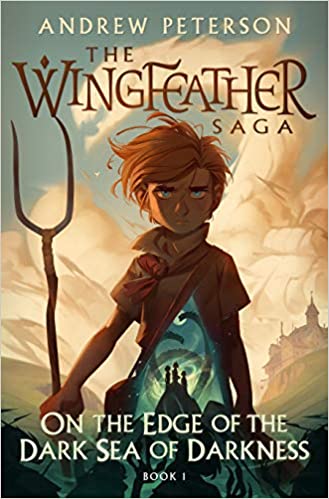
Wingfeather 1So last week I looked into purchasing an old novel by George MacDonald (an inspiration of C. S. Lewis).  When it arrived, I realized that I had not read the “fine print” well- the “scholar’s edition” that I had purchased (on sale) was a replication of the original text in its original setting.  Translation: they had made copies of an original printing and had bound it.  Which meant, old book that it was, many pages weren’t even legible.  So I ordered another copy, a modern resetting of the text.  In the meantime, to balance out the heavy reading of A Secular Age, I broke down and cracked open my copy of On the Edge of the Dark Sea of Darkness by Andrew Peterson.  I’ve been a Peterson fan for years, just primarily for his music.  I’ve known about his Wingfeather Saga for years but just haven’t been ready to cross media like that.  But I had some time (at least until Thursday), and I had a copies of books one and two at hand, so I took the plunge.

I’m really glad that I did!  It’s not just easy to read . . . it’s pleasant to read.  It reads quickly, but Peterson has inserted footnotes that add texture and humor.  Plus, at times, the narrative voice shines well.  The characters are formed just enough and the mysteries are parsed out at a good pace.  I’m over halfway through, and I still don’t quite know where things are headed (which is really nice in a world where you know how so many stories are going to go before the curtain falls).  And while the main young characters (Janner, Tink, and Leeli) are a joy to read, it really is the adult cast that adds the mystery and the depth.

The other book will come in Thursday.  There’s nothing fantastical about it: no sea dragons or Fangs, no mysterious jewels with their treasure maps.  But it will be a story about Scotland, which should be nice.  But until then, it looks like I’ll be learning about the town of Glipwood and the world of Aerwiar.

(image from amazon.com)

Posted in Books | Tagged | Leave a comment

A Kind of Summer Ending

It’s June 30th, which means I’m unofficially bringing a certain phase of “summer vacation” to an end.  June has been good: a quality trip home, a few weeks to (re)establish some daily and weekly rhythm and routines, good sleep and good time with friends.  And minimal work: mostly emails and the occasional in-person, on-campus conversation.  I’ve got responsibilities, though, that require the school year start a little earlier for me than for others, and I prefer easing my way into that instead of crashing and burning at the last minute.

Which isn’t to say that I’m ready to go back.  My mind is still a little scattered, my attentions a bit distracted.  I recently, I’m not sure how, got directed to this April 2021 blog post by Austin Kleon about the late-April New York Times article on languishing.  The title says it all: “I’m not languishing; I’m dormant.”  It’s a good read, and a necessary perspective when trying to make sense of the last 15 months.  Lots of gardening imagery, which falls in line with our school’s recent theme of Cultivate.  In the weeks leading up to the end of the school year, I pressed for some kind of conversation about the fall.  I got dismissed and rebuffed, which was not a surprise.  But I pressed for the early conversation because I knew the summer would need to be for re-charging.  I implored those I spoke to at the end of the school year to put things away and to rest.  And I’ve tried to do that myself.  Perhaps a kind of dormancy?

Kleon writes:

I’m not languishing, I’m dormant.

Like a plant. Or a volcano.

I am waiting to be activated.

I like the idea of “waiting to be activated.”  And I think it works on a deeper level than just just getting work done.  Something, perhaps, about coming alive in a deeper way?  Maybe, maybe not.

Kleon continues:

It seems to me that the reason that so many of us feel like we’re languishing is that we are trying to flourish in terrible conditions. It is spring outside — or the “unlocking” season — but it is still “Winter in America,” and, as any gardener knows, if you try to wake a plant out of dormancy too soon, it will wither, and maybe die . . . It is a mistake and a misreading of nature to think that you, a living creature, will be flourishing all the days of your life.

It’s a great post with lots of links, quotes, and images to help us see things just a bit more clearly.

+ + + + + + +

I recently had lunch with a staff-member from church.  One question asked: do you see the summertime as a chance to prepare for the fall or a chance to do other things?  They are connected, in a way, but not in an immediate-fruit-production kind of way.  Part of that is because whatever sense of calling or vocation that I have isn’t strictly about what job I have.  I’ve been fortunate that it all connects, but the two are not totally synonymous.  It can be easy to forget that.  So sure, as I read The Problem of Pain or A Secular Age, things I talk about in class come to mind.  But I’m not reading them solely (or mainly) for using them in class.

+ + + + + + +

So the plan starting tomorrow is to keep my morning routine (with modifications for Mondays) and to use the afternoon to get things done on-campus.  That should be a nice balance of things.  And I imagine I’ll still get a little bit of the afternoon for some summer vacation.  The nice thing is that the work needing to get done isn’t all that verbal: it’s mostly putting things together, ordering things.  So while it’s work, it isn’t as draining as verbal communication often ends up being.

Posted in Books, Teaching | Leave a comment

Short Season of Sequels

I finished Andy Weir’s Project Hail Mary a few days ago.  It’s the kind of novel that almost demands a sequel (or at least a second novel that dovetails with missing but intriguing plot points).  Sequels are always a little tricky.  When I read The Passage back in the day, I was so pleased with the overall reading experience that the need of a sequel didn’t even cross my mind (and even though a sequel made perfect sense).  I’m glad Cronin continued Amy’s story in The Twelve and City of Mirrors.  But reading that first book was reading bliss for me.

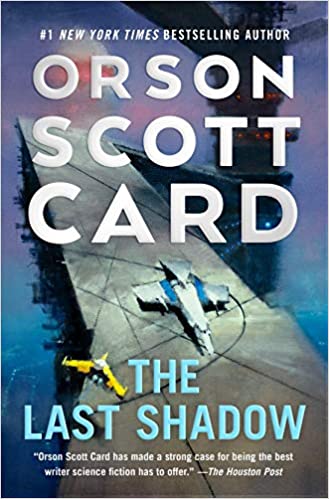
Last ShadowI’m not sure we’ll get a follow-up to Project Hail Mary, but I am aware of two other sequels that I’m excited about.  One will bring to a close one of the most fascinating science fiction reads ever for me.  Ender’s Game was a game-changer for me.  I read the first book over twenty years ago (and even then didn’t see that ending coming).  Speaker for the Dead was a sequel so much better than it had to be.  It was a novel that moved Ender’s story in a direction that made total sense, even though the story was completely different in nature.  And then Card went back and told a totally different story by following Bean’s perspective  . . . and it was a fascinating read!  Orson Scott Card brings the series to a close this fall with The Last Shadow.  It brings the threads of Ender’s story and Bean’s story together one last time.  (Which is a real bummer to me because the events of the previous novel made the one thing I really wanted to see impossible).  The book drops in October.

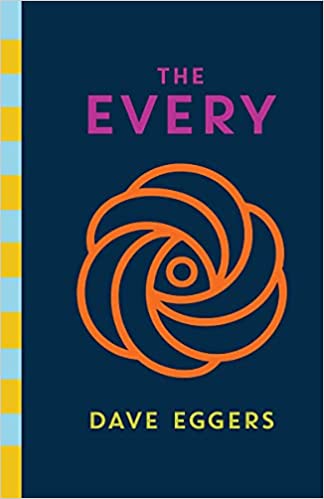
The EveryThe other sequel is from Dave Eggers and picks up threads from The Circle (a somewhat misunderstood thriller that became a better-than-you-remember movie).  The Every brings e-commerce to the world of social networking in way, I hope, that really gets us to think.  I also hope it’s a good page-turner.  The Every drops in November.

It’s been a good summer of books for me so far.  After a series of shorter books, I’m now ankle-deep in Charles Taylor’s A Secular Age.  Brilliant thinking.  I’ve been reading around the book for years now (thanks to James K. A. Smith and Andrew Root).  It’s good to finally read the book for myself (and for the online class I’m currently “taking” each week).

Posted in Books | Leave a comment

What We Might Have Given

Yesterday I wrote a bit about the “work” that I had set up for myself this summer using some thoughts from an Ephraim Radner article from March 2020.  At almost the same time, the folks at First Things also posted a piece by Radner titled “The Time of the Virus.”  Some of Radner’s thinking in the first article rightly shows up here.  But he also asks about what Christians might bring to the table for the time of Covid:

What Christians may perhaps offer is a special sense of the times we are traversing. Cities are locked down, borders closed, schools shuttered; production and distribution lines have unraveled; work and retirement income is threatened. These disruptions have cascaded in ways that seem novel and imaginatively overwhelming. All of a sudden, we see before us something we have perhaps talked about before, but never really faced: the way, as societies, we have allowed our personal lives to become enfolded in and seemingly dependent upon intricate and vast networks of collective construction that have diminished our humanity. Suddenly we must “go home,” stay with our families, turn to ourselves. And we are, surprisingly, afraid!

He then goes on to call the potentially good things that Covidtide could offer “fallow time,” thus drawing a line to the Old Testament concept of Jubilee, which was to be a time of deep rest and reset for both God’s people and the land.  Radner continues:

The Jubilee is not simply a time of rejoicing. It is not simply a time to play enforced Scrabble games, let alone turn on the gaming console. It is a time to turn to God, to reckon God’s gifts, to tend and cherish common responsibilities and the life given through birth, children, and parents. No flying about the globe, no boardroom deals, commercialized sociality, mass political campaigns, pushing to get ahead, or making one’s mark. Instead, this is a time for living with the gift of life God has provided. In doing so, God’s own being and grace is unveiled to the otherwise distracted and self-absorbed creature. “You shall fear your God; for I am the LORD your God.” Dare we say that it is providential that the Time of the Virus has come in Lent? Not for penitence alone, but for the sabbath of sabbaths—for a place where prayer and thanks are actually nurtured and where they can flourish. This is something Christians should not only ponder, but embrace and share, in a posture not of resignation, but of joyful hope.

While I wouldn’t go as far as Radner in making the Jubilee connection, I do think that he was onto something we might have missed: the opportunity to pro-actively reorient ourselves, to reset our habits and practices and communities, in a way that points to our deep and “joyful hope.”

By the end of the article, Radner calls “the Time of the Virus” “both a gift and a provocation for Christians– not only for our personal faith, but for what we have to offer others.”  Looking back, I’m not sure how well we were able to see it as either.  Necessary, perhaps, but unfortunate.

+ + + + + + +

I imagine it might seem odd for me to be writing about articles from over a year ago, articles that I probably wrote about back then, too.  It’s a kind of context-building for the rest of my “summer work.”  Last year I had started a new “tag” for this site: Notes for a World’s End.  Even though a good portion of that world is returning to normal, the effects of moving from one world to the next (and back again) still linger.  And they are an opportunity to learn.  And that’s both a personal and an institutional thing.  But if our institutions won’t learn, perhaps we as individuals can.

Posted in Faith, Notes for a World's End | Tagged | Leave a comment

The Work of (This) Summer

After a good trip back home to Tennessee to see family and friends, I’m back in Honolulu adjusting to mostly-free days and evenings.  For many years, summer vacation was difficult for me (and summer school almost a necessity) because of my need for structure and flow.  And while that concern still remains, I’d like to think that I’ve matured some in this respect.  Covid has made it difficult, of course, because I like to work at coffee shops (most of which aren’t available for early hours).  But there’s been some loosening of that practice, which has been good for me.

+ + + + + + +

This summer is a particularly interesting one because we are, it seems, on the other side of Covid.  As such, we have the opportunity to ask all of the questions that we could have asked during early Covid but didn’t have the energy for (because we were busy adjusting and surviving).  Most people, I think, just want to get back to normal as quickly and easily as possible, which is a sentiment I understand completely.  At the same time, seize the moment people, ask the hard questions that God might be calling us to in this quickly-closing window.

+ + + + + + +

I suppose it’s primarily because of this article by Ephraim Radner from March 2020 that I keep coming back to thinking through “things learned.”  The article itself is a time capsule that feels like a hundred years ago to some.  It’s a reminder of the good and necessary scramble that church leaders were going through as things shut down.  He wrote of things that he saw church leaders saying and doing: an “insistent call to comfort and be comforting,” the “infantilization” of church members because of the “maternalization” of the church in such a time, and “the siliconization” of the church.  It was this last item that ultimately spilled over into (or was it from?) education, and the one that I felt the affects of most.  It was the question of whether or not to live-stream worship that crystallized Radner’s thoughts:

Should we live stream worship at this time? Maybe not. At least we should think about why, to what end, and with what consequences. We cannot, nor should we, seek to give the impression that life “goes on as normal.” It never did, after all. Our lives are fragile, vulnerable, and ultimately subject to the power and grace of God who has made us and will finally take us. Their maturity is marked by obediently living into the death of Jesus, with a hope of sharing in his resurrection (Rom. 6:5; 8:17; Phil. 3:10-11; 2 Tim. 2:11). That is the goal of anything that the church seeks to do as a formative and worshipping body. It is also the case that maternalizing, infantilizing, and siliconizing the church probably doesn’t add much to this goal.

Near the end of the article, Radner wrote:

When it comes to worship, we might learn to pray alone. We might learn to use the prayer book with our families, aloud, regularly — using an actual book, turning pages, touching paper. We might learn to sing hymns together, rather than listening to them broadcast through the computer. We might learn to become lonely (or finally to admit that we already are) and to cry out. We might learn to hunger and thirst even for the Bread of Life, for the Body of Christ, as many have done over the centuries in this or that place of desolation or confinement. We might learn to read the Scriptures audibly, for ourselves and with others in our homes. We might let clergy and others make home visits, one on one. We might — I might! — stop telling everybody what to do, and let them grow up.

We might. But we might not.

This sentiment was articulated in the present day wonderfully in yesterday SBC presidential address by J. D. Greear.  In his speech, which made good mention of the difficulties of the last year, Greear spoke of what his initial hopes had been for himself and for his church at the advent of Covidtide . . . and of how many of those hopes didn’t quite happen.  (I really hope a post-able version of the sermon becomes available soon.)

But now we’re at the place where we find ourselves wondering “what now?”  Some things will go back to normally quickly.  Other things won’t change back at all.  What do we do about online learning?  What do we do about Sunday schools where people from all over the country gathered with old friends in their virtual Sunday school classes?  How do we (or even do we) re-learn how to gather together?  These are just a sample of the questions we should be asking ourselves as we make our way out of the cave or the tunnel of Covid. 

That, for me, is the “work” of this summer: to think and pray and question things along these lines.  I’ve mostly made peace with the fact that many don’t have the time or bandwidth to ask such questions.  But I know I need to.  It’s a good work, I think, and I’m looking forward to it.

Posted in Notes for a World's End, Teaching | Tagged | Leave a comment

Continuing Cultivation

From James K. A. Smith’s recent newsletter over at Image:

In May and June, my hands are dirty and I spend a lot of time thinking about sanctification.

After the danger of Michigan frost is past, usually after Mother’s Day, we return to Hillcrest Community Garden here in Grand Rapids. It always feel like emerging from a winter cocoon. Planting is making a promise to stay near. Only care and attention will coax out the remarkable potential latent in these tiny orbs we call “seeds.” So the garden keeps us placed, obligated to this patch of earth.

I’m really more of a sous-gardener; Deanna is the master. But thanks to her patient instruction, I have grown in my horticultural abilities over the past decade. For example, over the past couple of years, I’ve finally become able to distinguish plants from weeds. As you might imagine, the inability to do so is rather disastrous. Sometimes while aggressively fending off invaders, I uprooted the tender shoots of plants just emerging. In other cases, my ignorance meant I left weeds to flourish, choking out what we planted. Can you see why I keep thinking about sanctification? There is something focal about weeding. Often as I have my head down, focused on a square of garden between the peppers and eggplant, my fingers plunged into the soil, my mind wanders into metaphors I learned from parables and I’m thinking about the state of my soul.

I’ll start musing, for example, on the fact that the same conditions that cause our tomatoes grow also help weeds to flourish. As long as there is a garden, there are weeds. If planting seeds is promising to stay near, the hope of a harvest means a commitment to be here each night, weeding in the evening light while killdeers chirp and run, from May to September. Get used to it.

These last two years at school we’ve had the theme of “Cultivate,” which comes from our Expected Schoolwide Learning Results.  And while I haven’t spent much time in a garden lately, I’ve spent a decent amount of time reflecting on some of the parables that Smith alludes to.  It’s good to be reminded of the day-to-day task of cultivation and care, not just of the soil but of the soul.

Posted in Faith, Scripture, Teaching | Tagged | Leave a comment

Sunday’s Best: Spacial Intelligence

Turns out there’s intelligence on both sides of the console, Caulfield and Frazz . . .

FrazzToday’s outer-space Frazz reminds me of my current fiction read: Project Hail Mary by Andy Weir.  I was lucky to read Weir’s first book, The Martian, before the movie trailer spoiled things.  I didn’t read Weir’s second book, Artemis because it sounded a lot like The Martian.  But I was at Books-A-Million last week and saw that he had released a new story.  Knowing that I had 11 hours in the air coming up, I made the purchase.  It’s a good read, well-paced and interesting.  And, much like The Martian, it’s the kind of book where you feel like you’re learning stuff all along the way.

(image from gocomics.com)

Posted in Books, Travel | Leave a comment