This is the song that always comes to mind when I think of Nashville and the many cities and towns around it. They’ve been on my mind all day.
Currently Reading:

-
Recent Posts
Search Space Enough, and Time
Categories
Flickr Photos
This is the song that always comes to mind when I think of Nashville and the many cities and towns around it. They’ve been on my mind all day.
This year Mark provides the Gospel through-line for the season of Lent. When I realized this, my mind went straight to something written by Eugene Peterson many years ago (and anthologized in his collection Subversive Spirituality). I thought it might be fitting to revisit it some throughout the next few weeks as we make our way to Easter.
+ + + + + + +
Much of Peterson’s work exists in a weird chronological space for me: mostly in seminary and early Hawaii times, definitely pre-NT Wright for me. He shows up in my biography around the time of Frederick Buechner, though I have a clearer sense of Buechner’s entrance into my story than Peterson (maybe it was The Message?). Either way, Peterson has been something of a pastoral plumb line for me. Phrases like “subversive spirituality” and “the contemplative pastor” really opened up a better understanding of the possibilities of the pastoral role in a church. That’s one reason why his “Saint Mark: The Basic Text for Christian Spirituality” came to mind for this Lenten season.
+ + + + + + +
Peterson frames his discussion of Mark’s Gospel in the context of “spiritual theology.” That’s something that’s resonated with me for many years, mostly because I’ve never been as systematic as many of my peers but also because of the way the story of the Bible has caught my attention. And while it was Wright that solidified it for me, there are strong hints of it in Peterson’s thinking.
And so spiritual theology from a book that started off a new literary genre: the gospel. But for all its newness as a genre, Peterson asserts, it’s necessarily connected to the overarching story of the Bible. Peterson asserts:
The Bible as a whole comes to us in the form of narrative, and it is within this large, somewhat sprawling narrative that St. Mark writes his Gospel. “We live mainly by forms and patterns,” Wallace Stegner, one of our great contemporary storytellers, tells us, “. . . if the forms are bad, we live badly.”1 Gospel is a true and good form, by which we live well. Storytelling creates a world of presuppositions, assumptions, and relations into which we enter. Stories invite us into a world other than ourselves, and, if they are good and true stories, a world larger than ourselves. Bible stories are good and true stories, and the world that they invite us into is the world of God’s creation and salvation and blessing.
Within the large, capacious context of the biblical story we learn to think accurately, behave morally, preach passionately, sing joyfully, pray honestly, obey faithfully. But we dare not abandon the story as we do any or all of these things, for the minute we abandon the story, we reduce reality to the dimensions of our minds and feelings and experience.
We learn, then, how to live our lives fittingly when we understand the story that we are in. And we enter into that story with a sense of awe and wonder, as it is a story that includes us but is immensely bigger than us. Or, as Peterson says, it is a story that reminds us that we aren’t experts at controlling it.
It is significant, I think, that in the presence of a story, whether we are telling it or listening to it, we never have the feeling of being experts – there is too much we don’t yet know, too many possibilities available, too much mystery and glory. Even the most sophisticated of stories tends to bring out the childlike in us – expectant, wondering, ing, responsive, delighted – which, of course, is why the story is the child’s favorite form of speech; why it is the Holy Spirit’s dominant form of revelation; and why we adults, who like posing as experts and managers of life, so often prefer explanation and information.
And so the challenge is to re-enter a story we know so well with a better sense of wonder, with an expectant (un)knowing about where things are going. We may read the four gospels multiple times in a given year, but to read them at particular times in that year can allow for connections and challenges unseen. This season, the way is open for us through the Gospel of Mark.
(You can purchase a copy of Peterson’s Subversive Spirituality here.)
30 Rock is the only show that I can recall doing much of anything with Leap Day. And I only recall that because I’d been watching older episodes during the down-time between fall and winter season on television. Here’s one way the show “did right” by the day: a “Leap Day Carol” about Jack and his daughter:
And then there’s the story of Leap Day Williams himself, a gag played throughout an episode by Jim Carrey. All wonderfully absurd (with a bit of Peter Jackson’s Bilbo Baggins at the end).
It’s been a week. And now that it’s coming to an end, it’s nice that we’ve got a cool night with a good breeze here in Honolulu. And more than that, I just found this video from 1994 of Rich Mullins singing “Here in America,” the opening track from A Liturgy, a Legacy, and a Ragamuffin Band. The lyrics are poetry, and the piano work is perfect.
Today is Ash Wednesday for many Christians around the world. It is a time to remember our mortality and to repent of sin. It begins the season of Lent, which is a time of preparation for the celebration of Easter. For the first time in a few years, I’m mindful of not attending a service. I’m mindful of not really giving something up for the time. I confess to being sad about that, but I think it’s okay. I will be doing the readings each day and doing my best to look forward to Easter in the fullness it allows.
I am also back to listening to Andrew Peterson’s Resurrection Letters: Prologue. It was the soundtrack of my morning today. Here’s the first song on the EP, which is an arrangement of the last words of Jesus on the cross.
The last few days have been crazy. Lots of things rolling together. Today was our big freshman year service project day. I was able to visit six of the seven sites in our community where students were working. It’s the last “big” coordination thing for me this year. Granted, the next two days will be packed with grading and meetings, but that’s a different story.
I hope to get back to The Relational Pastor tomorrow. From there, I’d like to spend some time with Ephraim Radner’s recent book on the Holy Spirit.
Today was packed. Thankfully, it ended with some good conversations, some time out in the evening air, and the news that Netflix had gotten ahold of the 2019 Shaun the Sheep movie: Farmageddon. Definitely something to look forward to this weekend when the schedule opens up some. Here’s the original UK trailer, which is much better (and classically British) when compared to the Netflix ad.
These days I’ll take any good slice of British life that I can get. Heh.
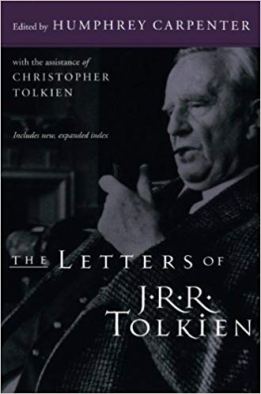
About fifty letters into The Letters of J. R. R. Tolkien edited by Humphrey Carpenter we get a series of letters to Tolkien’s third son, Christopher. The letters move back and forth wonderfully and soberingly between the events of World War Two and the writing of The Two Towers, being the second part of The Lord of the Rings. And while I will get to some of the best parts on the writing of The Two Towers, I think it best to start with one of the many great articulations of life in war-time (which is part of what it means to be human, some might say). From the letter to Christopher on April 30, 1944:
I sometimes feel appalled at the thought of the sum total of human misery all over the world at the present moment: the millions parted, fretting, wasting in unprofitable days– quite apart from torture, pain, death, bereavement, injustice. If anguish were visible, almost the whole of this benighted planet would be enveloped in a dense dark vapour, shrouded from the amazed vision of the heavens! And the products of it all will be mainly evil– historically considered. But the historical version is, of course, not the only one. All things and deeds have a value in themselves, apart from their ’causes’ and ‘effects.’ No man can estimate what is really happening at the present sub specie aeternitatis [under the aspect of eternity]. All we do know, and that to a large extent by direct experience, is that evil labours with vast power and perpetual success– in vain: preparing always only the soil for unexpected good to sprout in. So it is in general, and so it is in our own lives . . . . . But there is still some hope that things may be better for us, even on the temporal plane, in the mercy of God. And though we need all our natural human courage and guts (the vast sum of human courage and endurance is stupendous, isn’t it?) and all our religious faith to fave the evil that may befall us (as it befalls others, if God wills) still we may hope and pray. I do. And you were so special to a gift to me, in a time of sorrow and mental suffering, and your love, opening at once almost as soon as you were born, foretold to me, as it were in spoken words, that I am consoled every by the certainty that there is no end to this.
It is interesting to me that Andrew Root gives his better definition of the office of pastor in a chapter titled “All the Lonely People.” Search the terms pastor and lonely online and you’ll find at least one article a year from a religious news site about the struggle of the lonely pastor. The ubiquity of the topic doesn’t make it any less real. Nor does it help congregations that might be full of lonely people, too. But Root weaves these threads together in The Relational Pastor.

Before he gets to redefining the pastor from a ministerial perspective, though, Root adds to the significance of personhood (as opposed to individualism) by talking about loss:
Loneliness reveals personhood because loneliness is the confession of lost relationship; it is clutching to find your personhood. And it can be so radical that some psychologists actually say that the hardest thing to get clients to discuss is loneliness; they hypothesize that this is so because the feeling of loneliness is the closest experience we have to death. It is to be dead to all others; it is to be alone.
The sharing of a life with another, then, is friendship. If anything, Root’s work ensconces the following truth in my mind: one of the best and greatest gifts of the church, and the thing it can lack the most, is friendship. In fact, I’m convinced that church as it exists today for many actively works against friendships. But that’s a post for another time. Root acknowledges great significance to Jesus’ calling his disciples friends by the end of his ministry as recounted in John’s Gospel. How, though, does a pastor fit into this?
Root tries to stay away from a more functional definition of the term for as long as he can. But he starts with this:
You can only be called pastor, as a mother can only be called mother, because there is a reltionship that gives you this personal reality, this identity.
A pastor has to be more than simply a priest, what Root calls “the projector and distributor of divine things, the true reader of the sacred texts.” He continues:
A person is a pastor because … he is called by the Spirit to open … his own spirit to the spirit of the flock. The pastor does this by preaching the Word of the God who encounters our persons, and by being present through the personal act of sharing in the sacraments, prayers and the story of … his people. What pastors do is pastor, and pastoring is the brave action of leading by opening your person to the person of others so that together we might share in the life of God.
By chapter’s end, Root acknowledges that he’s left a few loose ends, including the goals of evangelism/conversion as well as the day-to-day practical expectations of a pastor. Two wonderfully terse responses:
Yes, as pastors we still have things that must be taken care of; we still take on goals to get the institutions to function . . . But it is bad, or at least warped, when the functional wants of our job drown out or can’t support the reality of the personal . . . Pastoral ministry is filled with busy functions, but they are stillborn if they ignore the personal.
And:
To confess the incarnate Christ is to confess the centrality of the personal to ministry . . . Salvation is finding your person bound to God through the person of Jesus Christ . . . The goal of evangelism is not to convince people to take on a Christian interest in the world but to help them open their very person to the person of Jesus Christ.
If you’re interested, you can purchase The Relational Pastor here.
(image from pophistorydig.com)
As he does in some other books, Andrew Root attempts to give some historical context to what being a pastor has looked like throughout history. This is also true for The Relational Pastor. Early in the book, Root traces the role of pastor (and, by default, ministry) from via “energy practices from “hunter-gatherer” to “steam and coal” to “electric and managed oil” up to what might be “a new day.” It’s an interesting and brief survey that at least gives some food for thought, though it might not give as much bang-for-buck as other surveys. But it does get us up-to-date and prepared to see what pastoral ministry looks like beyond “self-help entertainer.”
+ + + + + + +
In the last post on this thread, we ended with the idea of the person versus the individual. And it might sound like a splitting of hairs, I gut-level feel the distinction that Root makes. Person is the better way to be, the best way to go. It’s the self in multiple dimensions, where individual is a kind of shifting caricature. And because persons are involved, there must be some way to move towards empathy and understanding. The pastor stands at the heart of whatever this looks like going forward:
Pastoral ministry in our new era must surround the practice of facilitating personal encounter, of setting a space for people to be in relationships not of individualized self-help but of human person to human person. Relationship in ministry cannot be for the purpose of influencing people (a blind spot of the era of pseudo-therapeutic self-help programs in the oil era), because such a motivation blinds us from personhood. The other person becomes a problem to solve, something to fix, someone to win loyalty and resources from rather than another to encounter, a person to see and be with and for.
That last part reminds me of something my former pastor tried to articulate to us occasionally from Scot McKnight’s A Fellowship of Differents: that love is a rugged commitment to be with and for another person unto godliness (you can see a summary of that thinking here). While I liked the concept, it didn’t seem to get much traction, possibly because there was no easy way to see a transition to that kind of love actually happen. The mechanism just wasn’t there.
We are often too busy at church to get a sense of this. We have too many lots to fill, too many pressing institutional/organization needs to meet, to see beyond the individual to the personal. Because being personal means needing space for the messes that we are:
Personhood demands that the other see me, and see me not as a will that decides, not as someone to get to a program or a church, but as a human being bound to others in love and fear. Personhood demands that I see the other as mystery to encounter, not as a will to mold through influence.
And so the question is posed:
Will a pastor be one who can win the loyalty of individuals or one who opens space in preaching, teaching, liturgy, study and fellowship for persons to encounter persons in the confession of God’s own incarnate person?
+ + + + + + +
It is worth thinking about the various “mechanisms” in church life that can help people see others as persons and not as individuals needed to fill slots. Surely preaching and liturgy (or whatever you call the “order of service at church) play a role. That’s kind of where the official take on things gets communicated. For many, then, a place like Sunday School or a small group is where you are most likely to encounter persons. Except that many Christians are also leading other groups like children or youth and therefore not easily connected with. Or they are involved with committees and planning groups that are Spirit-sanctioned but also instrumental. Beyond that, Sunday School is primarily didactic, which can weirdly enforce the individual while giving some airplay to the personal. Add the fact that many churches tend to be “commuter churches” that meet Sunday only and you’ve got a real confusion of hopes and possibilities.
You can purchase The Relational Pastor here.
(image from app.emaze.com)
Last week I started looking at some of the concepts articulated by professor Andrew Root in The Relational Pastor. I’d like to continue to unpack some of his thinking this week, particularly as it relates to the shared life of Christians in community.
I think it’s significant that Root contextualizes things in terms of ministry. While he gets theological and ecclesiological, Root reminds us that there is also a necessary place for ministry within the church. And possibly moreso than more specific things like preaching and teaching and leading in worship at church, ministry is messy (and maybe difficult to define). In most churches, ministry manifests through programs and acts of compassion. In his thinking, Root wants to “place [ministry] again on the Christian concession of personhood.” He continues:
… relationships in ministry are an end. Relationships are the very point of ministry; in and through relationships people encounter the person of Jesus Christ and are therefore given their own personhood– a true personhood free from sin and death.
And so we come together, we relate to one another as people who have encountered Jesus Himself. And that changes everything for us . . . and between us. This serves as a potent contrast to a culture, our culture, that has capitulated to an unhealthy individualism. Root asserts that our views on something as fundamental as conversion have been effected by it.
But even the theological concept of conversion has been overtaken by individualism. In our churches we desire ministries that change people, that transform and convert people from death to life, from the old to the new. But too often, caged by individualism, we contend that transformation or conversion is solely an epistemological reality. Even when we dress it up with personal language, like saying we want people to “have a personal relationship with Jesus,” what we actually mean is not something personal but something individual; we want them to individually, in their own minds, assimilate knowledge about Jesus and become loyal to the idea of Jesus. We use our relationships as leverage to get people to know things about their own individual ideas or behaviors, to change to new ideas and behaviors. We use the relationship to convince them that our Christian subculture is better than another. And so often in ministry we become burned out or discouraged, or burned out because we are discouraged, because transformation never seems to stick. People can individually be be converted to an idea, only later to be individually captivated by another competing perspective. Bound within individualism, transformation is like fashion, it is important for the now, but eventually we’ll move on.
“Relationships as leverage” is sobering enough. Root’s inclusion of “transformation” as something affected by individualism is also a shock . . . because I don’t think he’s wrong. There was a time when conversion meant personal encounter and change because of the revelation of Jesus and the power of the Spirit. And transformation was towards a likeness of Jesus Himself. That’s a big part of what I thought Christian maturity always pointed to. But maybe transformation really is like fashion. And we are expected to roll with the punches, change with the times, and trade out one style for another even if some of the substance gets lost.
That last part I don’t actually believe. But I do believe that we have lost a sense of “the long story” with Jesus and what that “long obedience” can and should look like.
You can purchase Root’s book here.