Concerning the Second Sunday of Lent

ancient-future timeWe are now well into the second full week of the Lenten season.  Last week I wrote a bit about the first Sunday of Lent and the two sermons that I heard that day (connecting them with some of my own hopes for the season).  According to Robert E. Webber in Ancient-Future Time, the second Sunday of Lent is intended to focus on “the call to deny sin.”  This, of course, builds off of the temptation of Jesus from the first week of Lent.  After seeing the pioneer and perfecter of faith confront Satan, we, too, are challenged fight back against sin.  Webber asserts:
The temptation to sin, to do what we know to be fundamentally wrong, to live a life oriented toward our own self-centeredness, sustains a powerful hold on our lives.

Sin is, all too often, utterly insidious.  Which makes taking the time to think and feel through these things so vital for the Christian life.

+ + + + + + +

One sermon that I heard this past Sunday was the third in  series on the “seven deadly sins” (or what fans of Shazam! would call “the seven enemies of man.”).  The sermon was rooted in the language of the ancient virtues, which was cool because that’s part of Lewis’s argument in Mere Christianity as well as a key approach taken by many when talking about ethics (in the arena of virtue theory).  It’s always good to see connections between the pulpit and the classroom.

Posted in Books, Faith | Leave a comment

A Song of Significant Days

It’s a good (but all too rare) thing to find good music that you just have to sit with for a while.  That’s the case with this second song from Andrew Peterson’s Resurrection Letters: Prologue ep.  Plus it’s a nice nudge as we enter into the second week of the Lenten season.

Posted in Faith, Music | Tagged | Leave a comment

Moving Like Lightning

This week’s DC’s Legends of Tomorrow (besides being the only scripted show for me to watch this week) was a nice, Groundhog’s Day episode that worked well at humanizing one of the “colder” members of the cast.  And while the deus ex machina reveal at the end was okay, it was far from necessary.  But then the episode’s final scene moving things forward in a completely different direction.

The Flash returns this week, which is good.  But it’s also nice to see a character thread from that show speed over to Legends.  Here’s the “trailer” for this next week’s episode of Legends, which takes us to yet another moment in time.

Posted in Television, Uncategorized | Tagged , | Leave a comment

Calendar, Man

Yesterday I posted some reflections on the first Sunday of Lent and how even my own mental picture the Christian season of preparation before Easter might have to change . . . or not.

At the heart of this, as I’ve mentioned in this space before, is the church, the Christian church, calendar.  This “calendar” (also called the liturgical calendar) is made up of two major cycles: the Christmas cycle (which includes Advent and Epiphany) and the Easter cycle (which includes Lent and concludes with Pentecost).  And while pretty much every Protestant church worth its salt acknowledges “the big two” of Christmas and Easter, many of those same churches have done little to nothing with the remainder of the cycles.  From a recent Barna Group survey about the liturgical calendar:

Barna poll on Liturgy

There are reasons for that, of course, many of them (right or wrong) rooted in church history and lived experience.  And yet the older I get, the longer I’m around, the more I am drawn to at least some version of the practice.  Part of that, I have learned, is a personality thing: something about the need for structure and common language/practice.  And while most Baptists are far from “liturgical,” we definitely have our favorite forms of worship.

+ + + + + + +

I recently came across an organization called the Center for Baptist Renewal, a group “of conservative, evangelical Baptists committed to a retrieval of the Great Tradition of the historic church for the renewal of Baptist faith and practice.”  The organization recently posted an article about the benefit of the liturgical calendar for Christian community and practice.  It’s a nice summary of the issue.  I particularly like this excerpt from the second  point, that “everyone has an organizing principle”:

In fact, everyone organizes their worship, and usually in large calendric chunks. Even those who are adamantly opposed to the calendar but also insist (rightly, in my view) on expositional preaching through books of the Bible take time to organize their preaching schedule. Every pastor I’ve ever had, and many of the ones I know personally (but not as a congregant), take annual or semi-annual retreats to pray about and solidify their preaching schedule each year. Sometimes this is simply organizing how one will continue to preach through the same book as the year before; other times it includes deciding which new book or books to preach through in a given season. The point is that everyone has an organizing principle for how they preach, even expositional, book-by-book preachers and teachers. The calendar is not antithetical to this, but is merely one way of providing an organizing schema. The calendar is not used because it is commanded in Scripture; it is used because it helps the church throughout space and time organize its exposition of God’s Word to his people.

So if I seemed a little crotchety in my reflection yesterday, it’s because I’m aiming for something in my own life and practice, trying to put some things in place that can help me as I press on (and particularly as I try to push back on the individualism that seems to have infected so many Christian churches and organizations).

I’ll return to this topic a few times over the next few weeks, I hope.  It’s a journey that I’m definitely hoping to learn from.

(image from the Barna Group)

Posted in Faith, Scripture | Tagged | Leave a comment

The Many Deaths of Lent

ancient-future timeTurns out the first casualty of Lent 2018 was Jesus.

Let me explain.

I heard two high quality sermons on the first Sunday on Lent.  On Sunday morning, I heard a great sermon rooted in the prophet’s vision in Isaiah 6.  Well-rendered, thoughtful, and an eye on sin and forgiveness (“for I am a man of unclean lips and live among a people of unclean lips”).  That night I heard a sermon on the deadly sin of envy (after an Ash Wednesday sermon on pride).  Great stuff about a topic rarely spoken about (the Gospel reading, which involved laborers working differing amounts of time for the same wage was worth any price of admission).  But it wasn’t quite about Jesus.

Bear with me.

According to Robert E. Webber in Ancient-Future Time, the season of Lent is “a time to travel the road with Jesus toward his death.”  This plays out over the five Sunday’s before Palm Sunday with different emphasis (much like each week of Advent focuses on a particular disposition or connection to preparing for the first and second comings of Jesus).  “The first Sunday after Ash Wednesday asks us to mark our spirituality by the temptation of Christ,” Webber asserts.  Building off of the images of the first and second Adam, Webber continues:

The church fathers saw the temptation as a turning point in the process of reversing the human situation.  For here, the fathers tell us, is the exact counterpart to Adam.  Adam yielded to the temptation.  Christ overcame the temptation . . .

The serpent in the Garden of Eden and the tempter in the wilderness represent the enticement to sin that lies in the very structure of the world itself . . .

Lent is a time to intentionally confront all the ways the first Adam continues to control our lives, to carry these ways to the cross, to let them be crucified with Jesus, and to bury them in the tomb never to rise again.

In light of this, there was absolutely nothing wrong with the approaches to the two sermons I heard on the first Sunday of Lent.  The challenge of the two cycles of the Christian calendar, though, is to learn to live in the rhythms of the stories of Jesus.  Travel as far back in the Old Testament and as far ahead in the New as we may, we must always come back to the life and love of Jesus.  One Sunday, much like one Lenten season, does not make or break anything.  But as I’ll explain in tomorrow’s post, there’s something about the Christian calendar that really appeals to me (and to my great hope for a life long in Christian belief and practice.

That or maybe even my own expectations about the Christian life and the Christian calendar have to die a kind of death, too.

(image from goodreads.com)

Posted in Books, Faith | Tagged | Leave a comment

Lewis and the “Nasty People”

Mere ChristianityA few days ago I was reflecting on the place of the (Christian) seeker in the midst of other Christians who may no longer really be seeking much of anything (at least in some existential way). This is not to question orthodoxy and orthopraxy; it is simply to assert that event amongst believers, dispositions differ in significant but often easily-ignored ways.

I finally finished my “Advent” rereading of Lewis’s Mere Christianity (before Ash Wednesday, so I don’t feel too bad). It held up much better than the last time I read it, particularly the ending. And I found something there that could also speak to that disposition all difference. It comes in a passage about “the nasty people,” which is such an odd descriptor. These “nasty people” are juxtaposed to the “nice people,” who all too easily fit well into the church because of simple and natural social And yet . . . From the chapter titled “Nice People or New Men “:

It is very different for the nasty people— the little, low, timid, warped, thin-blooded, lonely people, or the passionate, sensual, unbalanced people. If they make any attempt at goodness at all, they learn, in double quick time, that they need help. It is Christ or nothing for them. It is taking up the cross and following— or else despair. They are the lost sheep; He came specially to find them. They are (in one very real and terrible sense) the ‘poor’: He blessed them. They are the ‘awful set’ He goes about with— and of course the Pharisees say still, as they have said from the first, “If there was anything in Christianity those people would not be Christians.

I think most of us, at least those who view themselves as relatively well-adjusted, would reluctantly qualify themselves as Christians of the “nice” kind.  Faith might be a big step, but once that leap is made, the life of the “parish” is an easy one, a real kind of fraternity. But for others, for reasons various and sundry, a number of us might feel on the outside, even if only for finite chunks of time or during particular stages in life.  We’re a little “warped,” a little lonely, uneasy in our own skin, a little too far out to ever feel on the “inside.”  For some of us, that can be as much about culture as it is about disposition.  Lewis goes on about “nice” people.

. . . But we must not suppose that even if we succeeded in making everyone nice we should have saved their souls. A world of nice people, content in their own niceness, looking no further, turned away from God, would be just as desperately in need of salvation as a miserable world— and might even be more difficult to save.

For mere improvement is not redemption, though redemption always improves people even here and now and will, in the end, improve them to a degree we cannot yet imagine. God became man to turn creatures into sons: not simply to produce better men of the old kind but to produce a new kind of man.

It is perhaps a small leap, but it’s one that makes all of the difference.  “Nasty,” of course, isn’t something to aim for, just like “nice” isn’t the final word you want said about yourselves and your faith (all too “Church Lady,” I think).  And while “nasty” may not completely line up with my previous posts about life in the church, I think it’s a step in a good and right direction.

+ + + + + + +

I’m hoping to get back to some more thoughts from Walker Percy before week’s end.  I also hope to take a quick detour to Lent and the liturgical calendar.

(image from amazon.com)

Posted in Books, Faith | Tagged | Leave a comment

Imagination Under Fire?

After the fourth grade-level camp of the year, I made my way to the theater to catch a showing of (the very well-made) Black Panther.  Lots of good trailers beforehand.  One that wasn’t there, though, was the March-dropping Ready Player One (which I’ve mentioned here before).  Here’s a recent trailer that definitely brings in more of the “stakes” of the story without giving away some of the greater specifics of the book.  I’m very hopeful that Spielberg does the story justice.  I’m also glad that the movie is just over one month away.

Saw the Solo trailer on the big screen for the first time, too.  The big screen moment is always good (because as good as they are, laptop screens just can’t do what the big screen can).  I’m hopeful with this, too.  But I also think my expectations have sobered up some.

Posted in Books, Movies | Leave a comment

As the Journey to Resurrection Begins

Andrew Peterson will be releasing his long-awaited Resurrection Letters: Volume One at the end of March (and in time for the beginning of the Easter season).  For the season of Lent, though, he has released a “prologue” EP, which dropped a few days ago.  They are five diverse tracks intended to act as real encouragement for the season of Lent, which leads up to Easter.  Here’s one of those songs (and one of my favorites): “Always Good.”

You can read more about the story behind the Resurrection Letters here.  It’s an interesting and encouraging read.

Posted in Faith, Music | Tagged | Leave a comment

Walker Percy and the 98%

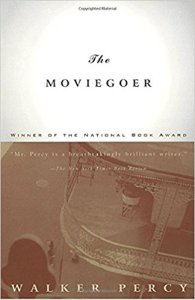
The MoviegoerEarly in The Moviegoer, Binx Bolling starts talking about “the search” that he finds himself on when he is not too “sunk” into reality.  Soon after that initial talk of the search (which I mentioned here), Bolling continues:

What do you seek– God? you ask with a smile.

I hesitate to answer, since all other Americans have settled the matter for themselves and to give such an answer would amount to setting myself a goal which everyone else has reached– and therefore raising a question in which no one has the slightest interest.  Who want to be dead last among one hundred and eighty million Americans?  For, as everyone knows, the polls report that 98% of Americans believe in God and the remaining 2% are atheists and agnostics– which leaves not a single percentage point for a seeker . . .

Truthfully, it is the fear of exposing my own ignorance which constrains me from mentioning the object of my search.  For, to begin with, I cannot even answer this, the simplest and most basic of all questions:  Am I, in my search, a hundred miles ahead of my fellow Americans or a hundred miles behind them?  That is to say: Have 98% of Americans already found what I seek or are they so sunk in everydayness that not even the possibility of a search has occurred to them?

I mention this passage from Percy’s classic because it asks something good and vital about community and belonging.  How do you ask a question and seek an answer when most around you have already answered it or can’t even acknowledge the question even exists?  Are churches full of people who are members of (what was then) the 98%?  And if so, what changes has this belief brought about in the lives of these believers?

+ + + + + + +

Every week at the church some of my closest friends attend, the priest acknowledges the church’s approach to communion.  If the person present is a baptized believer, they are welcome to partake of the bread and wine.  If the person is not a baptized believer, if they are still seeking God and asking questions, they are welcome to come to the front (arms crossed) and receive a blessing.

I often wonder if there is a way to do both at once.

Because to have found God, or been found by Him, is not to stop asking questions, to stop seeking.  This isn’t about orthodoxy or orthopraxy, either.  It’s something, I think, like this scene from The Hunt for the Wilderpeople.

How do we work with the genuine seeker in our midst?  And is it possible for them to fit in community when they understand the significant questions in slightly different ways, in ways that still ring true and maybe ringer louder and in a tone we have too easily and often ignored?

Continued tomorrow with something from Mere Christianity . . .

Posted in Books, Faith, Movies | Leave a comment

Friendship or Community

I’ve spent the last few days thinking about this post by Rod Dreher and the comments that it inspired.  The post, which consists almost entirely of a letter written by one of Dreher’s readers, was intended to be a kind if show-of-solidarity from a middle-class guy with so many others who are struggling in key ways.  Only one comment that I saw made note of this.  The rest of the comments were either condemnations or recommendations for the man.  A sobering paragraph:

I thank God for my dear children and my religious faith, because I could not endure this otherwise.  I am a Catholic who is faithful to the sacraments, but my experience of parish life is profoundly lonely. We attend a relatively large but shrinking suburban parish. The priest is a decent man, but his homilies are terrible, and it looks as if he sees his job as trying to get through the days and weeks without offending anyone. I try not to judge him harshly. I could not do what he does . . .  We are a gathering of strangers in that parish. We don’t know where we are going, or why we are going there. When my family first began attending it, I tried to get involved in the parish’s life, but I couldn’t sustain my efforts in the face of so much religious lethargy and indifference.

A few weeks ago my church entered into an unexpected time of concern and reflection.  The reflection, of course, is happening on multiple levels from multiple directions.  In the midst of this, many seem to be handling things well (though the question should be asked: what does it look like to genuinely handle difficult times as a church?).  Different people have different coping systems and different splinter communities to help process these things.

I, on the other hand, probably relate a bit too much with the Dreher reader (which would probably put me at odds with many of the people responding to the original post).  What’s interesting about institutions in general is the lack of a healthy, verbal framework to genuinely process difficult things.  Maybe there is some good to this (of course there is, right?).  But maybe there is a price to pay, too.  And that price is relational.

Friendship and formation, I think, are at the heart of this situation.  I can’t help but think, though, that many (most?) churches might be doing something deeply and categorically wrong with how we are being formed and (as a result) forming one another.  I cannot help but think that we have traded the possibility of genuine friendship for a kind of anemic community that rarely transcends its parts.  (Don’t get me wrong: it is good and right to step up when things are falling apart, when the budget is in shortfall, when the wheels have come off the wagon.  But dramatic surgery is intervention, not health). We might be dutifully starving ourselves of something vital.  We might be inadvertently silencing those with something to say, whose experience and concern might not line up with the verbalized concerns of the day.  And we press on even though (perhaps) almost a whole generation (or two) has supposedly walked out the door with no intent to return.

If you get a chance, I strongly encourage you to read the original post to Dreher’s site and the comments that it inspired.  A great picture of a very sad reality for many (but not that we could tell because most of those that have “moved on” are out-of-sight, out-of-mind).  We should be very careful of condemning the guy, for sure.  If we were more honest, we’d see ourselves feeling like him more than we’d care to admit.  And we’d find some way for those thoughts and concerns to see the light of day in something more like healthy community.

Continued tomorrow in “Walker Percy and the 98%” . . .

Posted in Faith, The Long Story | Leave a comment