We’re just over three months into the “Desert Fathers in a Year” series. So far, my favorite saying comes from the section on hesychia, which relates to the idea of deep peace. The saying comes from Abba Arsenius:
Abba Mark said to Abba Arsenius, ‘Why do you run away from us?’ The elder said to him, ‘God knows that I love you, but I cannot be with God and with people. The thousands and ten thousands above have one will, but people have many wills, so I cannot forsake God and come among people.’ (from Wortley’s systematic collection)
I imagine this is the kind of quote that most of us can relate to. You step out of the door and suddenly find yourself on the receiving end of the demands of many (neighbors, students, co-workers, church leaders, you name it). And that is not an easy place to be, definitely a difficult place to nurture the “purity of heart that wills one thing.”
I love the wording of the initial question: running away. We can all likely imagine ourselves doing the same. And I love Arsenius’s heartfelt response: you know that I love you.
It does make me wonder if there is a way to be with others and still be with God. I suppose worship is a key way to nurture that reality. But even then we may find ourselves demanding something from others (or having a demand placed on us). I still think there’s something significant about the placement of Jesus’ pronouncement in Matthew 18 that when two or three agree in his name that he will be there being right after difficult words about sin and stumbling in the church . . . that such an agreement is hard won and precious. It’s not easy to know what to ask for when others are involved in the asking, too. Everyone, it turns out, brings their own will to the table.
We’re getting closer to the July release of the new Superman movie. The team behind the movie released an extended look at the movie that adds more to the Krypto “take me home” scene. Krypto is definitely a dog . . . and the movie continues to look amazing.
And just like that, spring break has come to an end. For all intents and purposes, the turn of the calendar from Saturday to Sunday brings with it a change in disposition, of direction, when conversations and thoughts turn in earnest to the fourth quarter of the school year.
It’s been a good break, with the first week being particularly productive and the second week being a little more restful and reflective. The “big read” for the break was Andrew Root’s Evangelism in an Age of Despair. I’ve been following Root’s thinking for a good while now (probably through 10 to 12 books) and have been greatly challenged and encouraged by his “spin” on life in “a secular age” (much of his work has been connected with Charles Taylor’s book that bears that name). The general premise is that God meets us in our sorrows. that Jesus (the Man of Sorrows) brings consolation to us (and therefore we are called to bring it to one another). There’s more to it than that (and he uses a historical trail that starts with Michel de Montaigne as a thread), but that’s enough for now.
Beyond that, I also finished a much shorter book, Silence and Honey Cakes by Rowan Williams. The book is about the sayings of the monks and nuns of the desert, so it tracks nicely with the “Desert Fathers in a Year” podcast that I started following back on January 1st. The book is a good summary of some major things of the desert literature. The chapters on feeling and staying were wonderfully time for me, too. From here, I turn my attention to Soul Making by Alan Jones, which also speaks of “the desert way of spirituality.” I’m also about halfway through Curt Thompson’s Anatomy of the Soul. I finally dipped my toe into Justin Whitmel Earley’s Made for People podcast, which started up just over a month ago. Thompson was the guest in the first episode that I listened to, and it was brilliant. Funny enough, I’ve tried reading Thompson before but to no avail. This book (and Thompson’s podcast) are a good way to check out an interesting (and Christian) approach to the soul and neuroscience.
The break was a bit dry cinematically. I did watch 28 Days Later at the beginning of break with the neighbors. The movie is straight out of 2002, and every moment on the screen feels like it. It was fun (?) seeing Christopher Eccleston have a role in the movie (which predates his one-season run as The Doctor). I did take a couple of hours to watch the final Bridget Jones movie on Peacock, which was both funny and sad (which is the way of things). I did end up seeing two movies in the theater: Black Bag starring Blanchett and Fassbender and then Novocaine. Black Bag was a “spy on the spies” story that was wonderfully small and twisty. Novocaine was about a guy who cannot feel pain and who goes to extreme lengths to save the woman he loves. It was good, too, though I found myself wishing the movie had a narrator to give things a little more depth (which Mickey 17 had, which I saw just as break started).
We’ve got three weeks from now until Easter Sunday. It’s always weird to start something new so near then end (like the final quarter of a school year), but that’s the way of it. On some level, this moment in time makes a good pivot point for moving from Lent to Easter. I’ve been listening to some older Poco a Poco podcasts. Their Lent series from 2023 has so far moved from the desert temptations of Jesus to His transfiguration and most recently to His conversation with the Samaritan woman at the well. All pictures of Jesus having specific moments that help us better understand our own journey with Jesus.
Erik Varden just posted a homily he gave to some Benedictine nuns at the end of a retreat, when they take time to renew their vows. He says this about the ascetic life (of which Lent is a picture). I’ll bold the line I like the most:
The purpose of asceticism is not to combat nature, but to order it in view of flourishing and fruitfulness.
Such a project calls for perseverance, which at times spells combat.
‘Your fidelity’, says the Lord, ‘is like a morning cloud, like the dew that quickly disappears.’ If we surrender to the pursuit of facile, passing preferences, this is how it is.
We must root ourselves, therefore, like trees, like majestic Breton beeches, in order that our nurtured faithfulness will correspond to God’s, as vast as the sea.
This indeed is the foundation of all spiritual life: the interaction of God’s fidelity with ours.
The Good News, as Paul wrote in his second letter to Timothy, is that regardless of our faithfulness, He remains faithful because He cannot disown Himself (2 Timothy 2:13). We see the faithfulness of Jesus in desert and on the mountain and at the well just like we can see His faithfulness in our own lives, which is a great blessing.
Finally: a song. I was reminded recently of this great song by Andy Gullahorn that captures something good about this and every moment if we (at least on good days) have the eyes to see it.
I have a bit of an odd relationship with breaks from school. I love breaks as much as the next teacher, but from almost the beginning I have had difficulty being at ease with the time. That’s part of why I spent my first decade teaching taking up a summer school class- unstructured time isn’t easy for me. I often travel fall break, which is wonderful. But I usually stay “close to home” for spring break (which is odd because it’s the break when every seems to travel).
So I do my best to establish some kind of routine, one that is similar to a work routine while allowing for a bit more freedom. That means going to the gym or taking a walk up into the valley each morning followed by breakfast downtown and some time at the state library. Then I usually grab some lunch and head home until later in the afternoon, when I’ll often head downtown again to grab a drink at Starbucks to read before heading home for dinner, tv, and some time in the neighborhood.
I also try to schedule more “adult responsibility” stuff for breaks. This break, I’ve gotten most of it done in the first week, which is great. Oil change for the car, dermatologist visit, new windshield wipers, car safety check. All done this week, along with getting grades done and doing some basic planning for the fourth quarter. Next week will probably involve a couple of afternoons in the classroom getting ready for the fourth quarter (finalizing handouts and slides), and that’s okay. I’ll have a little more time (and less internal pressure) with this week’s appointments all taken care of.
This morning after the safety check, I made my way to Longs Drugs to gather some items for a birthday gift. As I pulled into the parking structure, I was amazed by how empty it was. It wasn’t quite 9 AM, so stores were still closed and the structure mostly empty. It was a nice reminder of the blessing of a break, and it made me more hopeful for the week to come.
This recent post by Seth Godin is too short to share a snippet here, so you should take a minute to read the whole thing.
Discernment is an important thing, perhaps more important with each day that passes. In yesterday’s reading from Jeremiah 3, God makes this promise to Israel:
And I will give you shepherds after my own heart, who will feed you with knowledge and understanding.
It’s a good promise (because God Himself is good), and a reminder of our lack of knowledge and understanding. And even if we have lots of knowledge, as many probably do, understanding is also a good and necessary thing.
We’re about three weeks from getting a full, new album from Mumford and Sons. While I’ll always be grateful for their 2018 release, Delta (it was part of the soundtrack to my Scotland trip), I’m also grateful for what sounds like a back-to-basics sound for the band. Don’t get me wrong, back-to-basics doesn’t always work out in the long run, but it can be a nice change for a time.
Here’s the second “release” from Rushmere: “Malibu.” I’m sure there’s an interesting story behind it. It’s definitely got some scriptural nods in it. I also like the turn of direction in waiting. “I Will Wait” was all about waiting for someone (or Someone) else. “Malibu” turns that around some, which is nice. Check it out:
It’s not every day that you see a post online that (inadvertently) has something to do with the title of this blog. But that happened a couple of days ago over at Seth Godin’s blog. Here’s how his post called “Across and within” starts:
Media theory pioneer Harold Innis saw it 70 years ago:
Some cultures and ideas are built to spread across SPACE.
And some spread across TIME.
It’s the tension between space and time that lead to the rise and fall of societies and cultures, and they’re worth understanding.
It’s an interesting post, one that I can follow for the most part. My favorite snippet, apart from the opening lines is this:
Systems under stress expose themselves, and when you feel the stress, it’s worth looking for the juxtapositions that are causing it. In this case, it’s worth asking whether the idea that’s changing things was built to last or built to spread.
That’s a great diagnostic tool, one that could definitely lead to some interesting conversations.
Marked on the front end with Ash Wednesday, the season of Lent begins today. Here’s a recent song by Andrew Osenga that captures today (and everyday) wonderfully.
It won’t be long until Ash Wednesday begins a new Lenten season. And while deep roots for neither of these moments exist in my own tradition, I am grateful for the opportunity they supply for both reflection and action. And, as with many such times, they are great for trying to tie up loose ends in preparation for whatever is next.
I’ve been working on Nicholas Carr’s Superbloom for a few weeks now. I’ve got three chapters left, which I’d like to finish by the end of next week. I’m almost done with Truly Seeking God by Bernard Bonowitz, ocso. I came across the title a few weeks ago over at Erik Varden’s blog and am very glad that it is everything Varden said and more. The book is a nice primer on monastic life, both in the abstract and the personal. It helps that the chapters are short and can be read between stops on the bus.
I just finished up season two of The Recruit on Netflix. I started the show a few weeks ago thinking it was The Night Agent. It is not. But I actually enjoy The Recruit more. I’m hoping that the show gets picked up for a third season, but the season two finale was much better than the season one finale, which wasn’t much of an ending at all. I’ve got one episode left of The Night Agent, which I’ve also enjoyed (but which is also a more straightforward show compared to The Recruit). It’s already been picked up for another season, which is good. Community viewing these days is Severance on Apple+. The second season has been worth the wait, and every episode packs just enough punch to keep the questions coming.
The third quarter of the school year is wrapping up. We’re done next Thursday. Things are planned out well for the next week-and-a-half, but “the best laid plans of mice and men” and all that.
I’m still formulating things when it comes to Lent (and spring break) plans. I’ll definitely keep as much of my routine going as possible. Beyond that, there’s car work to be done as well as dermatologist and chiropractor visits to take care of. I need to attempt a perpetually-pushed-back deep clean of the apartment, too.
My more liturgical friends recently asked me what I was doing for Lent. I’m more of an “add things in” and a “shape what’s already there” guy than a “give this up” guy. I think I’m okay with that, though I could be wrong. I like how one Franciscan friar put it: we are journeying with Jesus as a reflection of his own time in the desert, and that time in the desert was above all a time of intimacy with the Father. I find great comfort in that.
Discernment doesn’t mean that you are responsible for the result of your own choices. It means that at the end of your life, your choices tell a story.
The whole piece is Frederick Buechner-level good, but that quote has a nice turn to it, a turn that happens in the second sentence.
Every choice we make, good and bad, tells a story. A story that isn’t finished yet, for sure. But a story in the making nonetheless. The results are often beyond us, if not immediately then ultimately. And that’s okay. “Not even the wisest can see all ends,” Gandalf once said. But God knows, just as He knows our hearts, and there is great comfort in that.

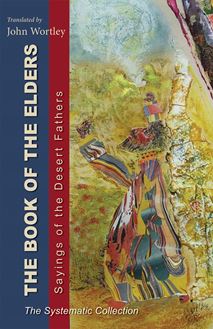 We’re just over three months into the “Desert Fathers in a Year” series. So far, my favorite saying comes from the section on hesychia, which relates to the idea of deep peace. The saying comes from Abba Arsenius: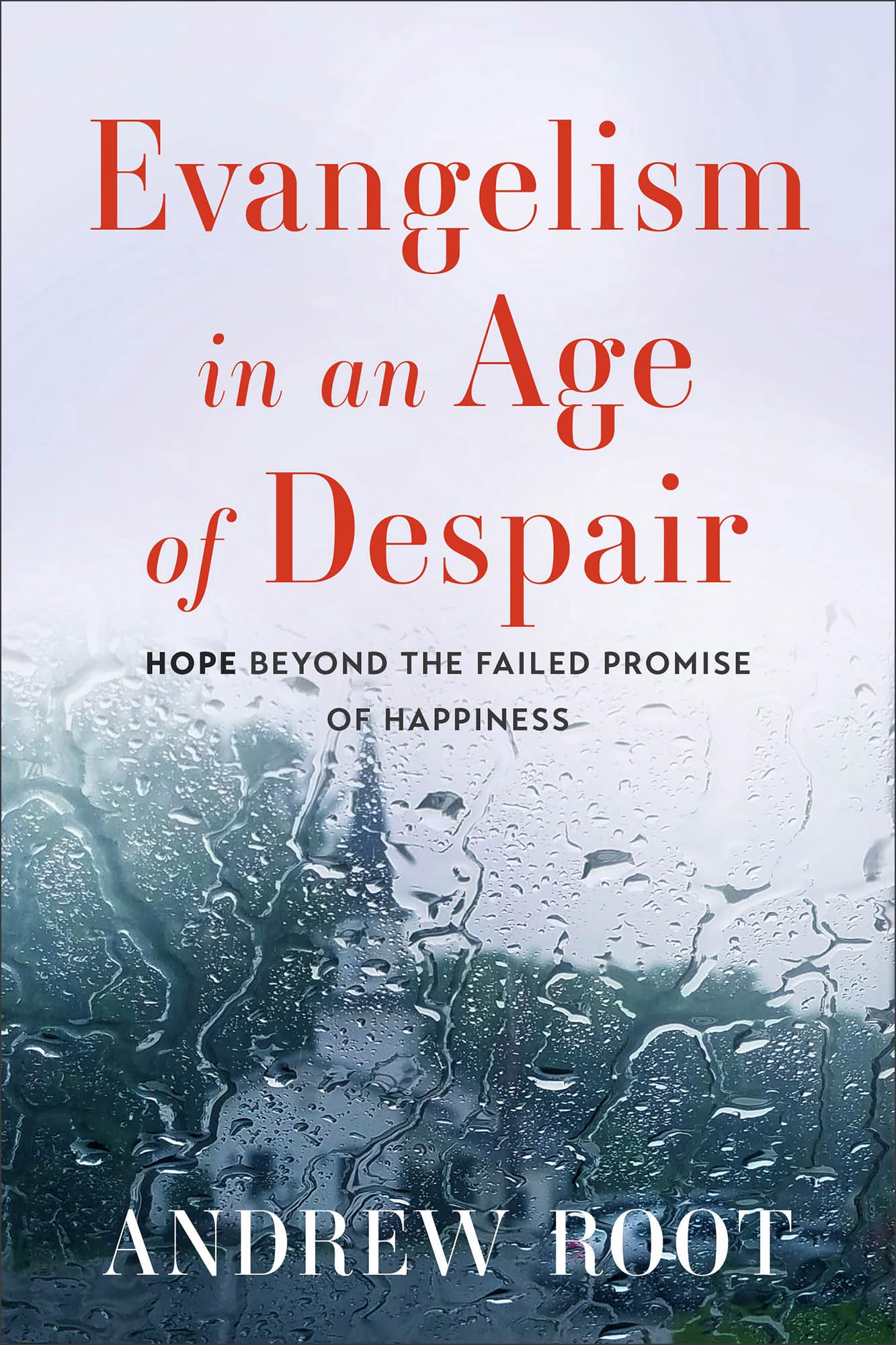
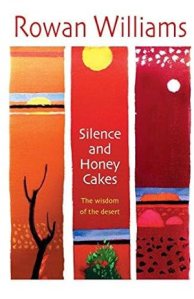 Beyond that, I also finished a much shorter book, Silence and Honey Cakes by Rowan Williams. The book is about the sayings of the monks and nuns of the desert, so it tracks nicely with the “Desert Fathers in a Year” podcast that I started following back on January 1st. The book is a good summary of some major things of the desert literature. The chapters on feeling and staying were wonderfully time for me, too. From here, I turn my attention to Soul Making by Alan Jones, which also speaks of “the desert way of spirituality.” I’m also about halfway through Curt Thompson’s Anatomy of the Soul. I finally dipped my toe into Justin Whitmel Earley’s Made for People podcast, which started up just over a month ago. Thompson was the guest in the first episode that I listened to, and it was brilliant. Funny enough, I’ve tried reading Thompson before but to no avail. This book (and Thompson’s podcast) are a good way to check out an interesting (and Christian) approach to the soul and neuroscience.


 Space Enough, and Time