Time Strikes Back

We’re just over a month away from the return of The Flash on the CW.  The kind folks in charge have released a quick trailer for the season premiere.  We’re smack-dab in the middle of a major time paradox.  Check it out.

Posted in Internet, Television | Tagged | Leave a comment

For These Days

Posted in Faith, Internet, Uncategorized | Leave a comment

Spectacle and Arrival

A recent article at The Ringer pointed out that one of the reasons movies like the recent Ben-Hur remake has failed is because movies that once had the upper hand on spectacle of epic (biblical) proportions no longer have a corner on the market.  That and such movies often seem to try and NOT be big image movies.  While I’m not totally convinced, it is an interesting thing to reflect on.  Others might cite the failure of Independence Day: Resurgence as a reminder that bigger no longer means better.

Which brings me to the recent trailer for Arrival, an upcoming science fiction story starring Amy Adams and Jeremy Renner.  It is a visually stunning trailer, mostly because of its sparse approach to spectacle.  I love what they do with the “ships.”  Simple and yet stark against the beautiful landscape.

It will be interesting to see if the movie can transcend our lowered expectations of alien arrival movies.  It’s a story we see retold every few months, it seems.  Based on this trailer, though, I think we can be at least a tad bit hopeful.

Arrival hits theaters November 11th.

Posted in Internet, Movies | Leave a comment

Animated and Shiny

Running into a fan of Joss Whedon’s Firefly is always a good thing (and nowhere near as rare as finding a fan of Dollhouse, but I digress).  The show caught has caught a lot of people’s fancy, especially in light of its poor treatment for the one short season it had on FOX.  This past week, a super-fan with animation skills released what amounts to a trailer for a potential “animated adventures” series for Mal and crew.  Looks like an interesting way to continue the story.

Posted in Internet, Television | Leave a comment

Love, Friendship, and Destiny

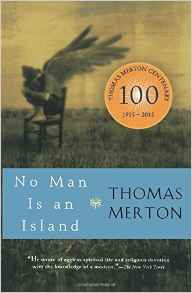
merton islandDuring one of my first summers in Hawaii, I taught a course at church using Larry Crabb’s Soul Talk.  The basic premise of the book was that Christians should be able to communicate with one another in such a way that the Holy Spirit can bring real encouragement and even healing through how we listen and what we say.

I am convinced more now than then that Crabb was on to something.  Unfortunately, many Christians aren’t at a place where they can imagine such things as possible.  Our busyness is a big part of of our lack of imagination.  Our anemic language is another.  As I mentioned yesterday in the quote from Bonhoeffer, I can’t help but feel that the biblical story can help us move in a better direction.

In No Man is an Island, Thomas Merton attempts to articulate the struggle people might experience trying to live by the “supreme importance that we consent to live not for ourselves but for others.”  This is a struggle because

Man is divided against himself and against God by his own selfishness, which divides him against his brother.  This division cannot be healed by a love that places itself only on one side of the rift.  Love must reach over to both sides and draw them together.  We cannot love ourselves unless we love others, and we cannot love others unless we love ourselves.  But a selfish love of ourselves makes us incapable of loving others.  The difficulty of this commandment lies in the paradox that it would have us love ourselves unselfishly, because even our love for ourselves is something we owe to others.

And so what of love?  How do we learn to talk about love?  Merton speaks of love (charity) and friendship in a way that I think is illuminating.

Charity must teach us that friendship is a holy thing, and that it is neither charitable nor holy to base our friendship on falsehood.  We can be, in some sense, friends to all men because there is no man on earth with whom we do not have something in common.  But it would be false to treat too many men as intimate friends.  It is not possible to be intimate with more than very few, because there are only very few in the world with whom we have practically everything in common.

Many of us do not think of friendship as anything like something holy.  And while we might not be able to hold many close in the embrace of intimate friendship, there still is something to consider when it comes to how we relate to one another in the church.

There is, however, one universal basis for friendship with all men: we are all loved by God, and I should desire them all to love Him with all their power.  But the fact remains that I cannot, on this earth, enter deeply into the mystery of their love for Him and of His love for them.

Merton is, of course, writing from a monastic perspective.  From what I understand of such traditions, there is a sense of spiritual advocacy in how monastic orders view their work between God and the world.  Perhaps their particular stations help them be acutely aware of God’s love for His creation.

When all has been said, the truth remains that our destiny is to love one another as Christ has loved us.  Jesus had very few close friends when He was on earth, and yet He loved and loves all men and is, to every soul born into the world, that soul’s most intimate friend.  The lives of all the men we meet and know are woven into our destiny, together with the lives of many we shall never know on earth.  But certain ones, very few, are our close friends.  Because we have more in common with them, we are able to love them with a special selfless perfection, since we have more to share.  They are inseparable from our own destiny, and, therefore, our love for them is especially holy; it is a manifestation of God in our lives.

And so we must learn to live in the balance of those we love because they are like us (and like us, presumably) and those we may not know well but are loved by God regardless because they know the love of Christ.  Both are a kind of friendship; both are a kind of love.  And both have a precarious place in a society where marriage is seen as the ultimate sign of blissful maturity and where those outside of familial bonds are meant mostly to be used as receptacles for whatever message we are offering or as pawns for whatever task we might need done.

(image from amazon.com)

Posted in Books, Faith | Tagged | Leave a comment

Learning the Language

A quote from Bonhoeffer’s Meditating on the Word recently crossed my Twitter stream that I thought was interesting:

Grounded in the Scripture, we learn to speak to God in the language that God has spoken to us.

It’s a wonderful sentiment, and true.  I can’t help but wonder, though, if the thought behind it can be extended to how we speak to one another.  True: the Psalms and the prayers of Jesus give us framework and focus for prayer.  And the words of Paul help us reimagine the cosmos as subject to the authority of Jesus.  But one another?  We tend, I think, to view one another in terms of have and have not, of user and used.  But Jesus is clear that that His followers are sons and daughters of God and brothers and sisters to one another.  We are to love one another as friends because Jesus has shown us the life-giving love of friendship.

The language of Scripture shouldn’t stop with the songs we sing in worship or the stories we tell to those who have not heard.  Grounded in Scripture, we can learn to speak to one another in the language that God’s people have spoken to one another all throughout the biblical story.

Posted in Books, Faith, Uncategorized | Tagged | Leave a comment

The False Distinction of Religion and Relationship

churchOne of the most frustrating things that I hear in conversations and sermons is the idea that Christianity is “not a religion; it’s a relationship.”  Don’t get me wrong: I totally understand what those who say such a thing are intending.  They are trying to cure believers of legalism and the empty practices that often seem to get in the way of a vibrant, growing life of faith.  I have yet to hear someone take the other side of the argument, that it’s a religion and not a relationship.  I can imagine it, but I have yet to see it.

Here’s the thing: it’s both.  And to say otherwise is ultimately and extremely dangerous.  I think the New Testament makes it clear that something intensely personal and soul-changing takes place in the life of the believer when they repent and being life on the narrow road.¹  The presence of the Spirit brings us into relationship with the Father and the Son, who are themselves in relationship.  This is the part of the life of faith that seems experiential and even contingent on day-to-day life.  Left to our own devices, though, we end up exhausted, bewildered, and numb (at least that’s been my experience).

But there is an ontological reality implied in the truth claims of the Christian tradition that transcend my quiet time with God.  At its best, religion is the incarnational framework that reminds us of that reality.  I forget who said it (probably multiple people), but the saying is true: the Christian faith is a personal thing, which isn’t the same as saying it’s a private thing.  There’s nothing private about it.  At it’s best, religion brings individuals in relationship together into a community rooted in history and time.  Here we realize that we are not alone, that we can bear one another’s burdens, that we cannot be what God truly intends without loving one another in the same way that we have been loved.  Religion at its best can be personal and institutional: we wash one another’s feet, we take the supper together, we shake hands and utter prayers and listen to the Story read and learn to speak in hymns and spiritual songs to one another both to strengthen weak knees and to run the race of faith together.

Both terms, both approaches when promoted as the singular way forward, are prone to abuse and misdirection.  We should be careful, though, of embracing a vision of one without the other.  As people intended to be rooted in history and community, we should not settle for less than a healthy embrace of the two, of relationship rooted and nurtured in religion.

__________

¹ Coined by Jesus, the idea of “the narrow road” is something that Larry Crabb has picked up on in his latest book, which I’ll get to writing about sometime soon.

(image from feelgrafix.com)

Posted in Faith | Tagged | 2 Comments

Be the Body, Eat the Body

cup and breadThe church, both universal and local, has been a big part of my thinking for a long time now.  For as long as I can remember, the church has been central to my experience as a person and as a follower of Jesus.  Which is not to say, of course, that it’s been a trouble-free relationship.  Often the “church universal” steps up to the plate when the “church local” has been abstracted and frustrating.

This past weekend, while visiting a friend’s church, I heard one of the best (most moving?) sermons of my young middle-adulthood.  The priest wove from addiction theory to Smith’s You Are What You Love to the writer of the letter to the Hebrews enjoinder to go forward together in the faith.  It stirred my heart in a way that a sermon had not for some time.

I’m almost always reading a book that has something to do with the church.  A few months ago, I “overheard” some online chatter about Robert Jenson’s A Theology in Outline, a short transcription of lectures that begins with the professor’s take on “the church as community.”  He writes:

Obviously, then, the first thing I have to do is to say what sort of community the Christian church is.  Is it more like the Elks Club or a corporation?  Like a family or like a nation?  What is it?  It must be admitted right from the start that different communions propose different descriptions of what kind of community the Christian church is– at least as their first and preferred description.  The more catholic varieties of Christianity are likely to insist that the church is a sacramental community.  Where the church is real, they will say, is where people are gathered around the bread and the wine of the Lord’s Supper, the water of baptism, and even minor sacraments like the sign of the cross.  The Baptists, on the other hand, will tell you that the church is a community of prayer, praise, and proclamation.

For all of the cross-pollination that has taken place in the last decade between liturgical and non-liturgical churches, I still find Jenson’s distinction between churches Baptist and “more catholic” spot-on.  When I attend a service at a liturgical church, part of the draw is the knowledge that its not geared up to be some ultra-personal, emotionally heavy service.  And yet I am certain to see some ancient practices on display, which connects me to something, for lack of a better term, roomier.  The “prayer, praise, and proclamation” that Jenson thinks Baptists experience at church might not live up to the expectation, but the sentiment is true.  Such services often seem geared to be extremely personal, too, which is great if you show up with a built-in sense of community and belonging.  As I read that particular “lecture” in the book, I felt like two kind of churches exist: churches who eat the body (the more catholic tradition) and those who try to be the body (the more Baptist, non-liturgical tradition).  It’s a false distinction, I know.  And yet one could easily push and argue in the direction.  What might be best is a bringing together of the two.

Over the next few days, I’m going to be posting thoughts through the lens of Thomas Merton’s No Man is an Island.  Much like Jenson’s Outline, I discovered the book by seeing online quotes.  I’m not stranger to Merton.  Much like others in the monastic tradition, Merton has occasionally helped me process being a single Christian in a married, American Christendom.  In the book, which I think is earlier in Merton’s writing career than later, I found a number of thoughts that resonated with both my experience and my hopes for the local church.

(image from patheos.com)

Posted in Books, Faith | Tagged | Leave a comment

The Empire Goes Rogue

This past weekend, I posted the latest trailer for Rogue One, the first stand-alone Star Wars movie of the Disney era.  Now a fan with skills have taken the trailer and story beats from that trailer and brought them together with The Empire Strikes Back for a pretty awesome product.

(hat tip to the folks at Relevant Magazine)

Posted in Internet, Movies | Leave a comment

Who Needs a Patronus When . . .

The nostalgia factor of Pokemon Go could lead anyone to think that the whole strategy has been planned for years.  Which makes you think something like this could be right around the corner (especially for those unsatisfied with The Cursed Child).

It’s not real, of course.   At least not yet.

(hat top to the folks at comicbook.com)

Posted in Books, Internet, Movies | Leave a comment