Church of Simon

Yesterday Lifehouse’s “Simon” played while my music was on shuffle.  I hadn’t heard it in a while.  I was quickly reminded, though, of why I love the song (and the entire No Name Face album).  It’s not a perfect song, mind you, but it twists and turns in good ways.  Above all, it is a reminder of the damage we do to one another when our main goal is to manipulate.

Here’s a clip of a live performance from the early 2000s.  The vocals are pretty strong here, which is nice.

The world, of course, is full of Simons.  Like the song implies, many of us can’t help but feel the same.  That’s something worth keeping in mind.  The world is full of the wounded; and we are often both the wounded and the one wounding others.  Perhaps the song is less about personal empowerment and more a reminder for community and work that is healthy and right.  Worth thinking about.

Posted in Faith, Internet, Music | Leave a comment

Jeff Winger on Becoming a Community

The last couple of days I’ve shared some excerpts from a Plough Quarterly interview with Stanley Hauerwas on the idea of community, particularly as it can be “played out” in Christian faith and practice.  Now for something related and yet completely different.

At the end of the first-ever episode of Community, Jeff Winger (played by Joel McHale) has to find some way to bring a disparate group of people together in some significant way.  True: his motives are all off.  But also true: what he says about our ability to empathize and connect (and even to extend forgiveness to one another) has a certain inspiring quality to it.  Here’s the clip.  See if you feel what Abed feels, too.

Posted in Internet, Television | Tagged | Leave a comment

Joy from Being a Part

Yesterday I quoted and linked to a recent interview with Stanley Hauerwas from Plough Quarterly concerning Christians and community.  And while I don’t agree with everything that he has to say, Hauerwas has definitely reminded me of the unique nature of the church in the world (elsewhere he speaks of the task of the church being “to make the world the world,” which is interesting).  One of my other favorite quotes from the article has to do with churches and the concept of mission:

The church doesn’t have a mission. The church is mission. Our fundamental being is based on the presumption that we are witnesses to a Christ who is known only through witnesses. To be a witness means you bear the marks of Christ so that your life gives life to others. I can’t imagine Christians who are not fundamentally in mission as constitutive of their very being – because you don’t know who Christ is except by someone else telling you who Christ is. That’s the work of the Holy Spirit.

Therefore it is the task of Christians to embody the joy that comes from being made part of the body of Christ. That joy should be infectious and pull other people toward it.

That’s a pretty high standard, one that should make those of us with tight connections to more “institutionalized” churches take pause for a moment’s reflection.  You can read more of the interview here.

Posted in Faith, Internet | Tagged | Leave a comment

When You “Can’t Make a Community Up”

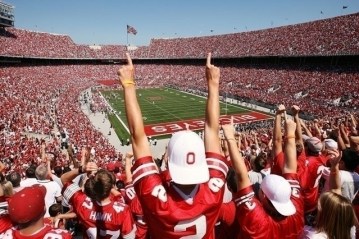
football fanOver the last year, I’ve slowly added a couple of professors/theologians to the list of authors that I “follow.”  One of those, Kevin VanHoozer has helped me articulate “next steps” when thinking about the biblical story as a “drama” that calls us into faithful action.  The second, Stanley Hauerwas, hasn’t made it into my classroom thinking just yet, but he’s definitely challenged the way I think about Christian practice in a “post-Constantinian” world.  He recently had a substantial interview with Plough Quarterly in which he answered questions about the Christian faith and community.  Here’s an interesting set of comments about the connection between the two.

My hunch is that you don’t just make a community up. You discover that you need one another because you’re in danger. We need to figure out how to reclaim the disciplines that are necessary for building a communal life in a manner that indicates that we are a people who need help. We need to pray to God to help us, because we’re not quite sure anymore where we are – we’re not quite sure what the dangers are. We need all the help we can get from one another, and we need God in order to know how to be accountable to one another . . .

First, community for community’s sake is not a good idea. Sartre is right: hell is other people! Community by itself cannot overwhelm the loneliness of our lives. I think we are a culture that produces extreme loneliness. Loneliness creates a hunger – and hunger is the right word, indicating as it does the physical character of the desire and need to touch another human being.

But such desperate loneliness is very dangerous. Look at NFL football. Suddenly you’re in a stadium with a hundred thousand people and they are jumping up and down. Their bodies are painted red, like the bodies that surround them. They now think their loneliness has been overcome. I used to give a lecture in my basic Christian Ethics class that I called “The Fascism of College Basketball.” You take alienated upper-middle-class kids who are extremely unsure of who they are – and suddenly they are Duke Basketball. I call it Duke Basketball Fascism because fascism has a deep commitment to turning the modern nation-state into a community. But to make the modern state into a kind of community – for the state to become the primary source of identity through loose talk about community – is very dangerous. It is not community for its own sake that we seek. Rather, we should try to be a definite kind of community.

(image from bloomberg.com)

Posted in Books, Faith, Internet | Tagged | Leave a comment

Laughter in High Definition

I’ve recently been re-watching the fourth season of 30 Rock, and I’m pleasantly surprised at how much I’ve been laughing.  In many ways, the show is a total opposite of what I think is the funniest short-lived sitcom ever, Arrested Development.  AD worked by building in gags that would percolate over entire seasons (or the entire series), making it wonderfully quotable by fans.  30 Rock, on the other hand, is an example of every episode being packed with one-off jokes, jokes that move so fast you might not catch them.

Here’s one of my favorite gags from the fourth season.  It’s from the time that Liz Lemon had the chance to host her own talk show, Dealbreakers.  Turns out that high-definition cameras don’t always bring out the best in you.

Posted in Internet, Television | Tagged | Leave a comment

X-Men: The Long Way Home

x trioIt’s unfortunate, really, that X-Men: Apocalypse is one of the lowest-reviewed X-Men movies.  On a number of levels, it’s the X-Men movie that many of us have been waiting for.  It might lack the gravitas of Days of Future Past and the cool sixties vibe of First Class, but it makes up for it by being an actual X-Men movie (and not just a Wolverine vehicle or the continuing adventures of the Pre-X-Men).

The movie picks up ten years after the events of DoFP.  Everyone has gotten on with things . . . things that many of them will lose by movie’s end.  Xavier’s school is doing well, all things considered.  In this movie, Scott Summers is our (ironic) set of fresh eyes on things.  As he-who-is-Apocalypse is awakened and gathers his four horsemen, we also see the core of the X-men start to gel (primarily Scott and Jean and Kurt).  The tension builds well.  Things that could easily be distractions end up adding some depth to the larger narrative.  And while those four horsemen might seem slighted in personalities and screen time, I think it’s to make room for more important (and relatable) dynamics.  Things are both fresh and fun with the core group of heroes (and once again, with Quicksilver in particular).  And while he definitely lacks the personality of the comic book version of himself, the movie version of Apocalypse is serviceable and not overly-distrating.  Visually, the movie is beautiful, with the best use of 3-D for a superhero movie in recent memory.

I do hope that people make their way to the theater to see X-Men: Apocalypse.  It’s no where near the train wreck that was X-Men: The Last Stand.  Even though the cast is large, there’s a good and necessary kind of restraint at work.  You really do get to meet familiar characters again for the first time.  The end of DoFP led us to believe that we would eventually get to a great place with Marvel’s most successful underdogs.  X-Men: Apocalypse is the first step in making good on that promise.

(image from io9.gizmodo.com)

Posted in Movies | Tagged | Leave a comment

Grit and Bear It

I’m about halfway through Angela Duckworth’s Grit.  It’s not quite the kind of book that I’d normally read, really. David Brooks praised it in his column last week, though, so I thought I’d give it a shot.  It’s a good read: still a little too anecdotal for my taste, but I’m finding that her point-for-point analysis of the topic itself is really good (and quite helpful).  Here’s a brief video introducing the book.  Anything longer would give too much away.

Posted in Books, Internet, Teaching | Leave a comment

The Novel-ty of Andrew Osenga

Osenga PhotographsI remember well when I bought my first album from The Normals.  I remember reading about Coming to Life in CCM Magazine.  I remember making the connection in my head to the song “Everything (Apron Full of Stains)” from an earlier album.  I remember the trek to Mardel’s to see if they had a copy.  And I remember the time a friend at school let me borrow a pre-release copy of their third and final album, A Place Where You Belong.  I’ve tracked down most of the band frontman’s work.  I remember emailing him early in my time in Hawaii because I wanted to get digital copies of some songs I couldn’t find anywhere else (“The Longing” and “The Moral of the Story” and “The Phoenix”).  He graciously complied.  Andrew Osenga has been a part of the soundtrack of my life for a huge chunk, moving from The Normals to a solo slot and even to time spent in Caedmon’s Call.  So a kind of “retrospective” of Osenga’s work over at foundlinghouse.com is pretty cool.

One of the best things that the article brings out is the novel-ty nature of much of Osenga’s solo work.  Consider:

One could accurately say that Osenga’s writing grew up through years of musical experience. That tends to be the way of artistic endeavors, of course. People learn by doing. It might be better said, however, that his writing matured under the tutelage of Hemingway and Steinbeck. Osenga’s songs—and, in turn, his solo projects—often play out like novels, peopled with crooked or broken characters, worldly struggle, and otherworldly yearning. “The Priest and the Iron Rain,” off of his Souvenirs & Postcards EP, comes directly out of Hemingway’s A Farewell to Arms, and Osenga has cited Steinbeck’s The Pastures of Heaven as inspiration for “Early in the Morning,” an ode to his neighborhood that appeared online as an acoustic demo and then on his full-length record The Morning. Other, less prefigured creations emerge from the milieu of Osenga’s literate mind as well. There’s Kara, the girl from a small town in Indiana, and her album-mates: Stanley, the butcher; Frank, the washed-up Baptist pastor; and Michael Brown, the divorced professor. These are followed by an entire cast of desperate smiles in “Broadway Bartender.” After that come the “Farmer’s Wife” and the unrequited love of “Marilyn.”

It is distinctly the classic American novel that feels most present in Osenga’s back catalog. Our national schoolchild regimen of postwar requisites—essentially every author from the Lost Generation onward—hinges on protagonists and anti-heroes who hover on the brink of dystopia, longing for a paradise that was promised but has not come . . .

I must admit: I read The Pastures of Heaven because of Osenga’s opinion of it.  It’s the only Steinbeck novel beyond The Grapes of Wrath that I’ve finished.

The article, which can be found and read here, is a nice way of putting Osenga’s musical career in grateful perspective.  His solo career was key in helping me anchor my musical collection with the Square Peg Alliance, which gives me a kind of root and link to Tennessee.

Here’s Osenga singing “Kara” from back in 2008.  Cool seeing Andrews Peterson and Gullahorn playing and singing background vocals.

(image from tollbooth.org)

Posted in Faith, Internet, Music, The Long Story | Tagged | Leave a comment

Feed the Money Monster

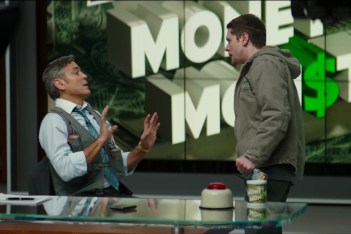
money monster from hitfixFew things serve the break between comic book movies as well as a good financial thriller, right?

In between the shield-slinging of Captain America: Civil War and X-Men: Apocalypse neatly stands Money Monster.  It’s the latest in a short string of recent financial movies (the best being The Big Short).  And while it’s more thriller than commentary, it’s a movie that handles both kinds of moments well.

George Clooney plays Lee Gates, a tv personality whose overconfidence in a safe stock that ends up losing millions, is taken hostage by Kyle Budwell (played by Jack O’Connell), who lost all of his savings in the “glitch.”  Julia Roberts plays the show’s producer, who has to keep things from falling apart long enough for the mystery of the “glitch” to be solved.  The acting walks the line between muted (Roberts) and almost maniacal (O’Connell and Gates), but they find a steady, believable tone for most of the movie’s mid-section.

While I’m not sure how believable the scenario is in a general sense, I was totally invested the entire time.  Granted, I was approaching the movie from a few different perspectives (including gauging audience reaction).  There’s the angle of talking about a financial system that is fast and has little to do with actual cold, hard cash.  There’s the approach of seeing how a movie by Hollywood elites would handle a blue collar worker like Budwell (which has been a topic of some interest to conservative bloggers over the last week or so).  There’s the muted but percolating relational drama playing out between Gates and the many people (producer included) that he has burned as an over-bearing personality.  So yeah: lots of levels to think about.

What I liked best about the movie, though, is a stylistic device that almost always moves me: when the personal drama somehow becomes a public spectacle, or when the line between the imagined and the real gets blurred.  You get it best in movies like the original Muppet movie or in something like Moulin Rouge, where the audience witnesses a true thing thinking it is something else.  The scene where Gates and Budwell move from the studio to a meeting place a few blocks away encapsulates something right (and also sad) about our current state.  People reveal themselves by how they respond to what they think they are seeing.

Money Monster ultimately belongs in the same category of movie as Side Effects or Contagion: a little too close for comfort, a little too awkward to do much more than stick in the brain for a while, but a valiant effort nonetheless.  The solution to the “glitch” ultimately serves as a swerve from the deeper issues of our current financial system, which is unfortunate (and which is one of many reasons why The Big Short is the better movie).  The movie may be a stretch, but it’s one worth trying.

(image from hitfix.com)

Posted in Internet, Movies | Leave a comment

Returning to Wayward Pines

One of the highlights of last summer was Fox’s Wayward Pines.  The 10-episode run took what was (supposedly) the best of three books and turned them into an eery, chilling story of a man who wakes up very, very far from home.

While I wasn’t all that pleased with the final episode (it felt necessarily rushed), it did a great job of setting up a potential second season.  That season now begins May 25.  And while it looks like a bit of a rehash, I’m interested to see how they move the story forward (especially since readers of the book assert that season one used up all of the main plot points).

Posted in Internet, Television | Leave a comment