Shakespeare’s Hint

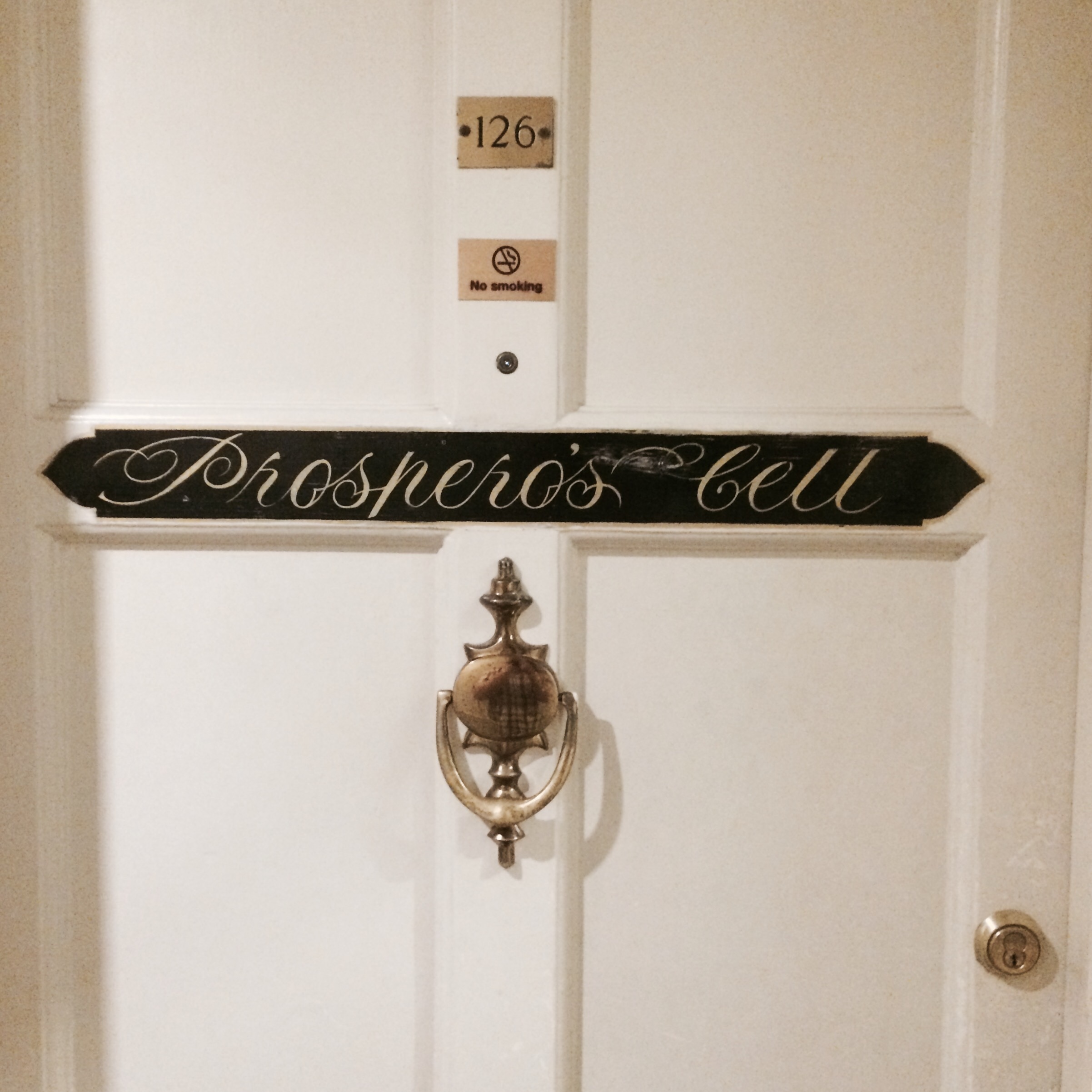
Last night we stayed in Stratford-upon-Avon. In our hotel, many of the room’s were named for people and places from the Bard’s many tales. This was my room. Not quite sure what Shakespeare might be trying to say. . .  

Posted in Uncategorized | Leave a comment

Ambleside Ramble

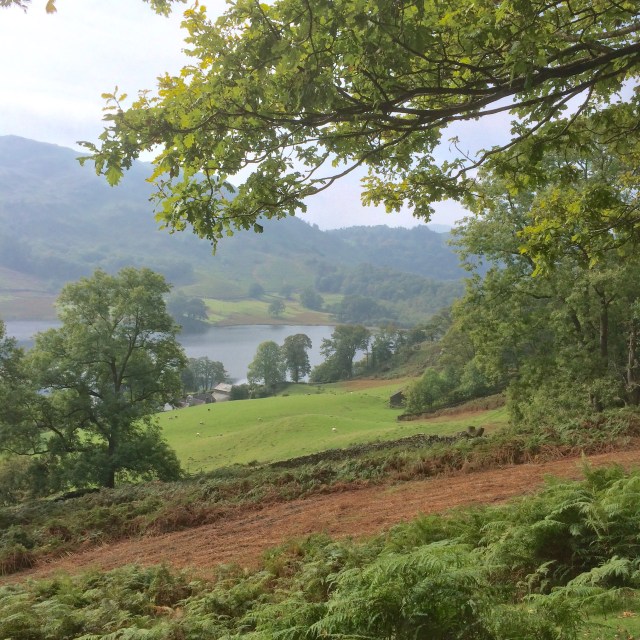
The last two days have been spent in the Lake District, ye olde stomping grounds of Wordsworth and Beatrix Potter. The weather has been great, even if the fog kept us off Lake Windermere until the afternoon. We did get to go for a two-mile ramble in the country-side, which was great.

Two things I’m learning: the struggle of focus and expectation management. It’s no small thing to try and focus the attention of others when there are a dozen comments to make and a million things to see. “I’d like to direct your attention” is such a quaint 20th century notion, really. Corral would be a better word, perhaps. Having been to this area before, it’s also interesting to handle my own expectations of what we can and cannot do: what gets added to the itinerary and what gets cut. Every side street tells a story, which means there are a million good things you’ll  ever hear.

Still and all, this land with its lakes and little lambs is beautiful. Now it’s on to a castle and some Sunday roast.

I’ve added some pics from the area to my Flickr stream. You can check them out by clicking on the three bars in the top right corner of the page.

IMG_0124

Posted in Uncategorized | Leave a comment

Big Sky over Texas

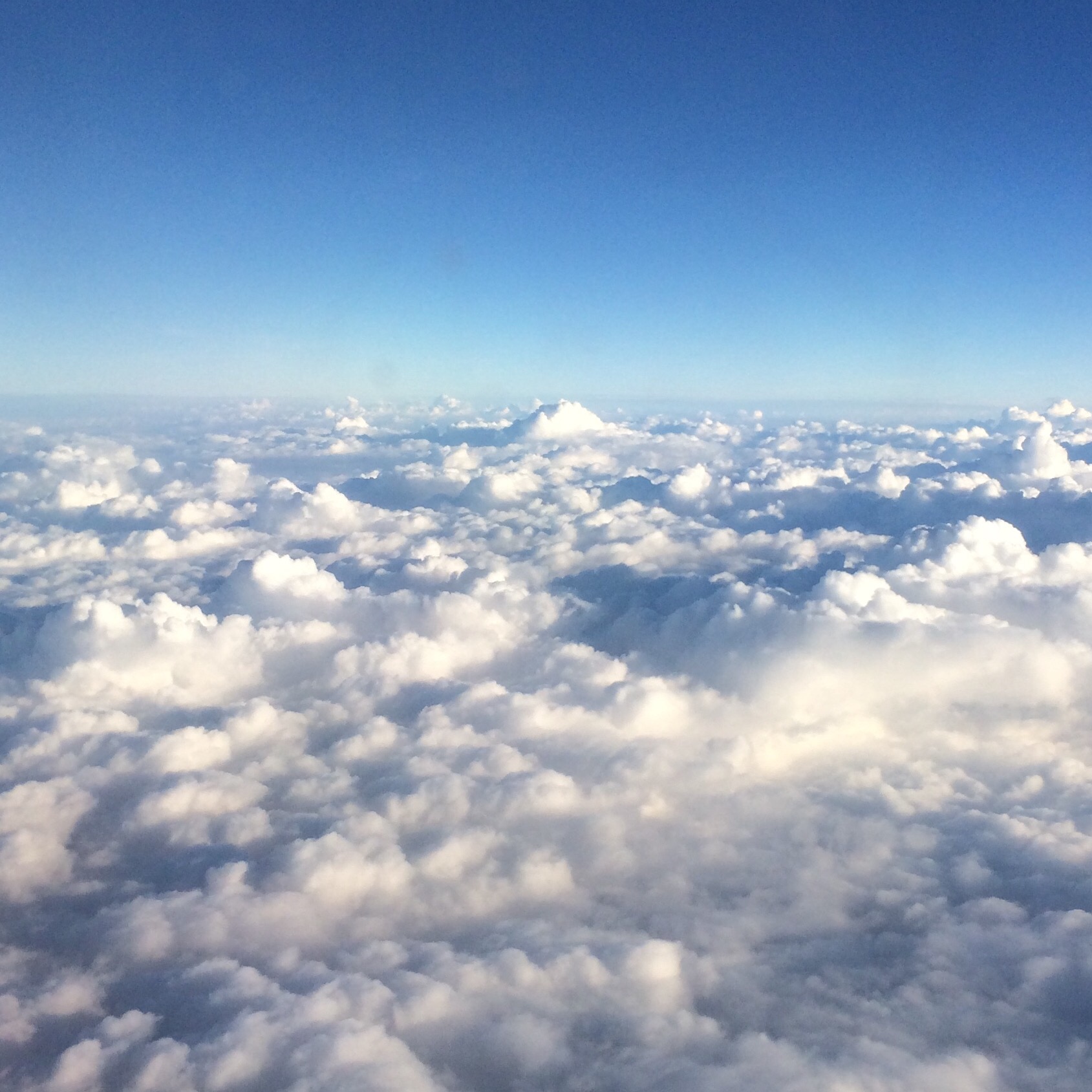
So I’m on my way to England with a gaggle of students and chaperones.  Our first layover is in Dallas-Fort Worth. Was nice flying over the Ballpark at Arlington and Six Flags. Good times. And now the promise of some Cousins BBQ and sweet tea while we wait.

Posted in Uncategorized | Leave a comment

Final Prep for the Doctor

Doctor Who series nine premieres this weekend.  Earlier this week, the BBC released a “prelude” to the season that takes us back to an interesting location and gives us some interestingly vague dialogue.  Love the line at the end about friends.

Posted in Television | Leave a comment

The Last Will and Testament of the Doctor

We’re just a few days away from the beginning of the fall television season.  It kicks of for me on the 19th with the new season of Doctor Who (BBC America via iTunes).  A new trailer for the series was recently released that included a nice bit about “the last will and testament of the Doctor.”  That kind of thing never goes particularly well.

In other Who news from the last week, the folks over at Ain’t It Cool reported that River Song (played by Alex Kingston) will return for the show’s Christmas special.  Not sure how that’s going to go down.  Part of me thinks that Moffatt might be wrapping things up on his run.  We’ll have to wait until Christmas to see.

Posted in Internet, Television | Leave a comment

The Joy of Teaching

What started out as a quote about the particular love of teaching turned into a call for something more from pastors.  From VanHoozer and Strachan’s The Pastor as Public Theologian:

Stanley Woodworth, my high school French teacher, once described the peculiar passion for his own vocation in the following terms: “The joy of teachings lies not in one’s own enthusiasm for the students, or even for the subject matter, but rather for the privilege of introducing one to the other.”  If this is true of French, chemistry, or history, how much more is it true of the pastor’s passion, which is not simply love of God or love of people, but rather the love of introducing the one (people) to the other (God)?  The pastor’s special charge is to care for the people of God by speaking and showing and by being and doing God’s truth and love.  Success in ministry is determined not by numbers (e.g., people, programs, dollars) but by the increase of people’s knowledge and love of God.  This is the only way “to present everyone mature in Christ” (Colossians 1:28).


Posted in Books, Commonplace Book, Faith, Teaching | Leave a comment

The Form of a Good Life

Author and blogger Rod Dreher has spent the last couple of weeks reflecting on and writing about the passing of his father.  Dreher returned home to Louisiana a few years ago (after a number of years abroad) because of the illness and passing of his sister.  He has, for me, joined the ranks of a handful of artists and writers who have connected me to the life I left by moving to Hawaii.  One reflection just after his father’s passing spoke of the feeling that he was living in a Wendell Berry story.  And while I haven’t read any of Berry’s fiction, I have become a great fan of his non-fiction.  His thoughts about “a life well-lived” from the essay “Quantity vs. Form” came to mind in light of Dreher’s loss, and I thought they were worth sharing.

The issue of the form of a lived life is difficult, for the form as opposed to the measurable extent of a life has as much to do with inward consciousness as with verifiable marks left on the world.  But we are already in the thick of the problem when we have noticed that there does seem to be such a thing as a good life; that a good life consists, in part at least, of doing well; and that this possibility is an ancient one, having apparently little to do with the progress of science or how much a person knows.  And so we must ask how it is that one does not have the know everything in order to do well.

The answer, apparently, is that one does so by accepting formal constraints.  We are excused from the necessity of creating the universe, and most of us will not have even to command a fleet in a great battle.  We come to form, we in-form our lives, by accepting the obvious limits imposed by our talents and circumstances, by nature and mortality, and thus by getting the scale right.  Form permits us to live and work gracefully within our limits. . .

What is or what should be the goal of our life and work?  This is a fearful question and it ought to be fearfully answered.  Probably it should not be answered for anybody in particular by anybody else in particular.  But the ancient norm or ideal seems to have been a life in which you perceived your calling, faithfully followed it, and did your work with satisfaction; married, made a home, and raised a family; associated generously with neighbors; ate and drank with pleasure the produce of your local landscape; grew old seeing yourself replaced by your children or younger neighbors, but continuing in old age to be useful; and finally died a good or a holy death surrounded by loved ones.

There’s more to Berry’s thinking, a reminder of how far so many of us have traveled from that norm.  So many things to mourn and remember and maybe even recover.  I am reminded of Psalm 131 (NIV), one of the psalms of ascent:

My heart is not proud, Lord,
my eyes are not haughty;
I do not concern myself with great matters
or things too wonderful for me.
But I have calmed and quieted myself,
I am like a weaned child with its mother;
like a weaned child I am content.
Israel, put your hope in the Lord
both now and forevermore.

You can read Dreher’s reflections here.  The bottom of the post includes a list of all of the other reflections.

Posted in Faith, Internet | Leave a comment

A Close Reading of David Foster Wallace

Reading non-fiction in a big deal in high school these days.  It’s a large part of what the testing is all about.  And as a child of the 80s and 90s, I’ve always understood that reading was fundamental.  But teaching reading and comprehension is far from easy.

So I was kind of excited to find this video of a professor doing a “close read” of an essay by the late David Foster Wallace.  It’s good teaching and it’s good literature.  I’m so thankful for teachers who taught me how to mark things up when reading.  This guy (and the man he’s reading) is a good example of it.

By the way: go see The End of the Tour if you get the chance.  It could be the best couple of hours you’ll spend in a theater at the tail end of this summer.  It’s in a totally different category than dinosaurs and sentient robots.

Posted in Books, Internet, Teaching | Tagged | Leave a comment

A Sort Of Wizards Duel

Gandalf in the DesolationThis week some of my students will start to read C. S. Lewis’s “The Weight of Glory.”  Every year I read it with my students, I seem to find something new or just askew enough to strike me deeply.  The best part, or one of the best, is when he talks of a far-off country and casting spells:

In speaking of this desire for our own far-off country, which we find in ourselves even now, I feel a certain shyness. I am almost committing an indecency. I am trying to rip open the inconsolable secret in each one of you . . .

Our commonest expedient is to call it beauty and behave as if that had settled the matter. Wordsworth’s expedient was to identify it with certain moments in his own past. But all that is a cheat. If Wordsworth had gone back to those moments in the past, he would not have found the thing itself, but only the reminder of it; what he remembered would turn out to be itself a remembering. The books or the music in which we thought the beauty was located will betray us if we trust to them; it was not in them, it only came through them, and what came through them was longing. These things– the beauty, the memory of our own past– are good images of what we really desire; but if they are mistaken for the thing itself they turn into dumb idols, breaking the hearts of their worshippers. For they are not the thing itself; they are only the scent of a flower we have not found, the echo of a tune we have not heard, news from a country we have never visited. Do you think I am tying to weave a spell? Perhaps I am; but remember your fairy tales. Spells are used for breaking enchantments as well as inducing them. And you and I have need of the strongest spell that can be found to wake us from the evil enchantment of worldliness which has been laid upon us for nearly a hundred years. Almost our whole education has been directed to silencing this shy, persistent, inner voice . . .

Oh to cast some spell that the darkness might flee!  How strong the enchantment is that has fallen on us in these days, leaving us half-blind and utterly smitten with things that would bring us to an end.  And yet . . . Heh.  I guess that’s part of why I love the works of Tolkien and Lewis: how they contribute to the “and yet” that we also find in the biblical narrative.  They help keep that necessary space open, keep that heart from getting that much harder. The scent of a flower, the tune of a song, news from a far off country.

Posted in Books, Commonplace Book, Faith, Teaching | Leave a comment

The (Star Wars) Land We Leave Behind

Tauntaun SleeperOne of the odd sensations of apocalyptic storytelling comes from seeing normal places you have known transfigured by whatever forces have defeated the world.  The Statue of Liberty.  The White House and Washington Monument.  Mount Rushmore.  The Eiffel Tower.  Big Ben.  Any and all of the above will do.

What would it be like, decades of destruction from now, for survivors to come upon our recent obsession with recreating imaginary worlds?  Wanderers come across Hobbiton in New Zealand and wonder if little folk with hairy feet really walked the earth.  What is this strange place called Diagon Alley?  Did Asgard somehow come to planet earth?  And is this really a region of space known as Tatooine?

That last one is part of what resonates in a recent Grantland article by Bryan Phillips about the gobbling up of intellectual properties that are becoming a kind of real people and places.  The article focuses primarily on the recent announcement concerning the creation of Star Wars Land.  He starts out by talking about playing the Star Wars Galaxies video game at a particular place in his adult life.  Then, halfway through the article, he gets to this place when thinking about what Star Wars land might really mean:

For a series in which the ultimate act of heroism involves not surrendering to the will of an authoritarian central planner, Star Wars certainly encourages surrender now, or at least patient acquiescence to the corporate expansion-timeline being drawn up in Burbank. You’re going to get what you get. It will probably involve R2-D2. Might as well try to enjoy it.

This has been true of other creative ideas for some time . . . most of them tied to Disney and our very human-in-the-20th-century desire for our entertainment faith become sight.  It’s part of the DNA of commercialism, especially if you grew up in the 80s watching cartoons of the toys you wanted more than just about anything else.  It’s all over the movie theater these days: so many comic book ideas turned into major theatrical epics that make every few months at the theater feel like a normal Wednesday at the local comic shop..

From near the end of the article:

Maybe Star Wars Land will be great. But it’s hard not to see it as a further imaginative contraction, the literalization of my Galaxies experience. Visit the same five planets, take your picture with the same 12 characters. Keep talking the way you always talk. Only now you get to sit on the flume log next to the mildly depressed twentysomething writer and guy with the heart condition and secret cigarettes — which is fascinating in its own way, more fascinating than Star Wars, even, but again, presumably not what brought you to Hoth in the first place.

We are navigating strange times, indeed.  It makes you wonder if they’ll have near-authentic tauntauns that you can slice open with your own personal light saber in an attempt to survive the coming apocalypse.  For so many of us, I fear, that would be a trap.

You can read the whole article here.  It’s a good read.

Posted in Internet, Movies | Leave a comment