David Foster Wallace and “This is Water”

David Foster Wallace has been popping up a lot lately, so much that I’m contemplating making 2013 the Summer of Infinite Jest.  We’ll see.

A few years ago, DFW gave a commencement address that has become quite the sensation.  A couple of years ago the speech became a nice gift book.  Then, just this past week, an abridged version of it became a YouTube hit.  “This Is Water” gives some great perspective not just on education, but on living life plain and simple.  There’s something sincere and true in what he says, something worth thinking about for a good, long while.

Tomorrow: another piece of my absent-mindul mix- something from David Brooks.

Posted in Books, Internet | Tagged , | Leave a comment

Absent-Mindfulness, Distance-Learning, Nicholas Carr, and the Internet

I wonder if anyone has tried to coin the term absent-mindful.   Absent because I haven’t been very present here lately (some might also not very present in other places, but more on that later).  Mindful because in my absence I’ve been trying to figure some things out.  I suppose it could be considered a different kind of distance learning: in this case it’s more about learning from things from distance-for-perspective instead of distance-as-geographical-reality.

And yet I’ve been doing a lot lately: teaching a full line, prepping and leading a couple of faculty meetings, writing a nice 900-word piece for the school paper, and reading a chunk of non-fiction about technology and habits and what in the world has been happening to our world without most of us thinking about it.  And while I don’t feel fully formed, and while it’s been more of a hill-top than a mountain-top experience for me, I’d like to think maybe I’ve got a few things to offer, a couple of fingers left to point in particular directions.

So let me direct your attention to this short video based on Nicholas Carr’s The Shallows.  It seems that it is possible for our context to change even if our geography remains the same.  This clip on “What the Internet is Doing to Our Brains” is a nice place to understand the shift.

I’ll be putting a few more pieces out here over the next few days, kind of like what Mitch Hurwitz is doing with the upcoming run of Arrested Development episodes on Netflix.  Tomorrow: that really cool video of David Foster Wallace’s Kenyon Commencement Address.

Posted in Books, Internet, Teaching | Tagged | Leave a comment

Proposing a Liturgical Tweak

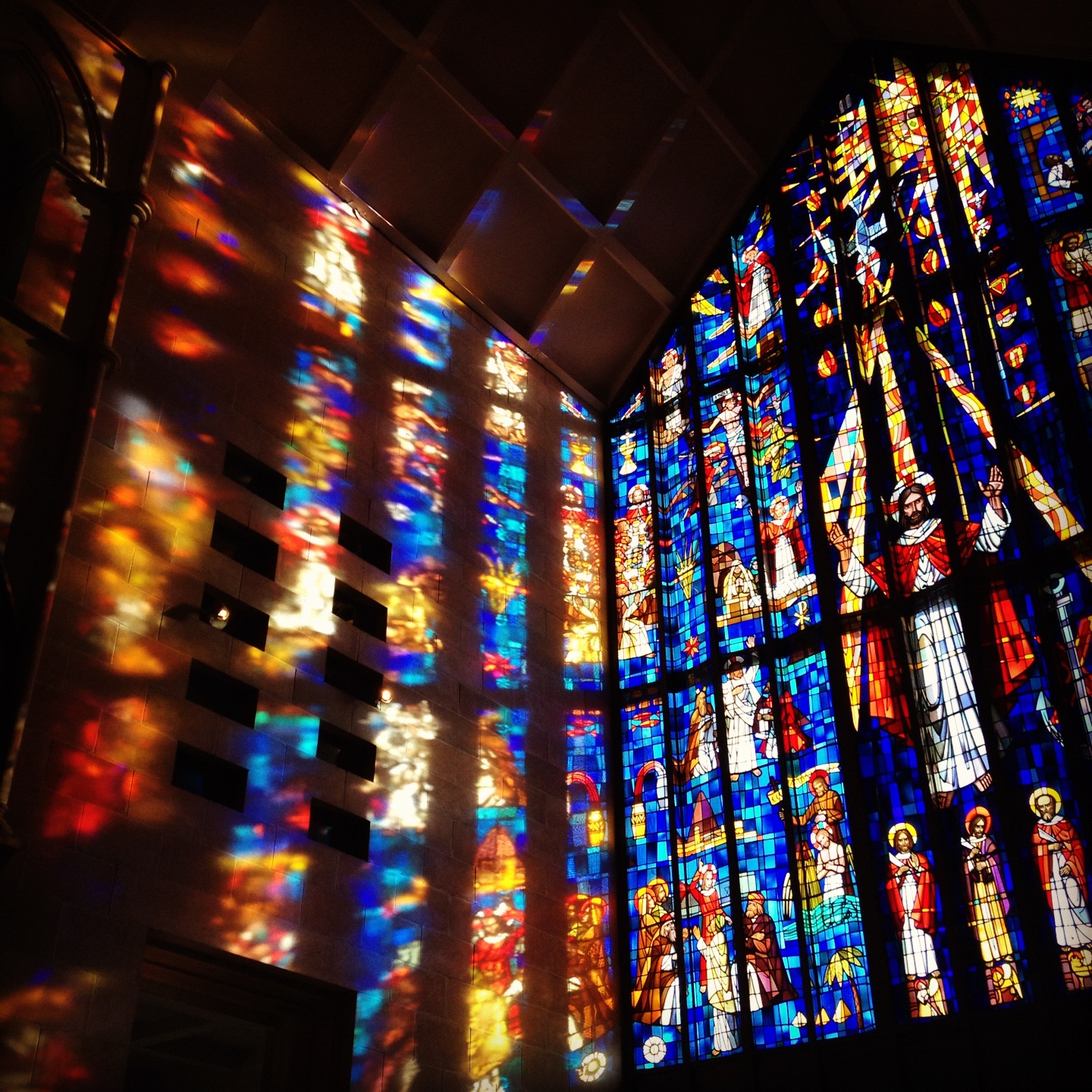
Cathedral at SunsetWhatever shortcomings my non-liturgical self sees in liturgical services, the frequent and uneditorialized reading of Scripture is not one of them.  Over the last couple of years, I’ve tried to attend a local evensong service.  Psalms and songs, Old and New Testament readings: the thirty minutes is almost completely Scripture.

If I could change one thing about that short liturgy, it would be the sentence fragment that comes at the end of each Scripture reading and is followed by “thanks be to God.”

The fragment?  “The Word of the Lord.”

Instead I would say: “This is the story we are in.”

Why?  Isn’t the text the Word of the Lord?  Of course it is.  I have no problem with that.  What I do have a problem with is remembering that the story of the Bible locates me, acts as a sign and signal of my . . . of our . . . place in things.  So many stories every day to get sucked into, to tell and be told.  And all of those stories, good or bad, are parts of a larger story that draws us into it that we might live out of it.  A God who loves and rescues and reveals Himself so that we might live like Him.

“This is the story we are in.”

“Thanks be to God.”

Posted in Faith, The Long Story | Leave a comment

Being Mosby: Straight As of a Different Kind

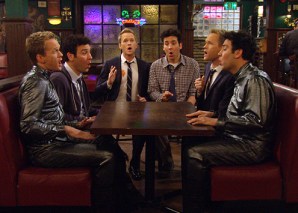
The Three Tenses from EW.comThe ending of last night’s How I Met Your Mother was brutal.  The show often uses Ted Mosby as a way to communicate something about the single life: it comes at it from almost every direction and isn’t afraid of going from humorous to heart-breaking in a moment.  If Ted got a report card for the episode, it would have given him all As, but not necessarily of the succeeding kind.

The crisis of the episode began when all of Ted’s friends Abandoned him for different life concerns.  Turns out that “Wrestlers versus Robots” wasn’t as high on everyone’s list of priorities when children and wedding plans are at play.  Life does that, of course, but knowing that doesn’t lessen Ted’s feeling of abandonment.  And because that abandonment is more systemic than personal (in a truly weird way- things change; his friends’ feeling for Ted don’t), it leads to a weird kind of Alienation.  It creates a kind of deficit that pushes Ted further away than his friends might even realize.  And yet that doesn’t mean that Ted is completely removed from everything from what has become his “previous” life.  He makes the rounds, visits all parties, tries to be present. The difference is that those around him demand his Attention without any hint of reciprocal Affection.  Those who have been a source for his sanity don’t have the emotional capacity to reach much beyond their present moment.  And so that leaves Ted feeling very, as imaginary Barney told him, Alone.  But it’s a tragic kind of alone (maybe a uniquely 30-something alone?) because as the episode ends you realize that Ted has become a victim of Abstraction: unable to be fully present to the moment at hand, Ted has found himself trapped in the world of ideas and imagination.  He’s having conversations within conversations, and all of them in his mind.  It’s almost the only way he can process what’s going on around and in him.

But Ted is a romantic, and so he doesn’t end the episode without a fight.  Unfortunately it’s an abstract fight, and one of the last things we see before the credits roll (and you get the Three Tenses [pictured above] singing) is Ted walking away, probably the most dejected he has been portrayed in a long while.

Abandonment. Alienation. Attention without Affection. Alone.  Abstraction.  Those are six As for sure.  They are marks that are never easy to take in life.  Ted handles them well, and we handle them well for him, because we know how his story ends.  But being alone in a world that has moved on, which is what last night’s episode captured perfectly, is no easy thing.  Believe me: I’ve been trying for the last year. So as difficult as an ending as it was to watch, it was also a knid of blessing.¹

For a more coherent and plausible review of the episode, this one over at Entertainment Weekly will suffice (plus the author adds another A term into the mix).

________________________________________________________________________________

¹  Thanks for to “White Blank Page” from Mumford & Sons for their connection of affection and attention.

Posted in Television, The Importance of Being Mosby | Tagged | Leave a comment

Spring Break Reading Detour

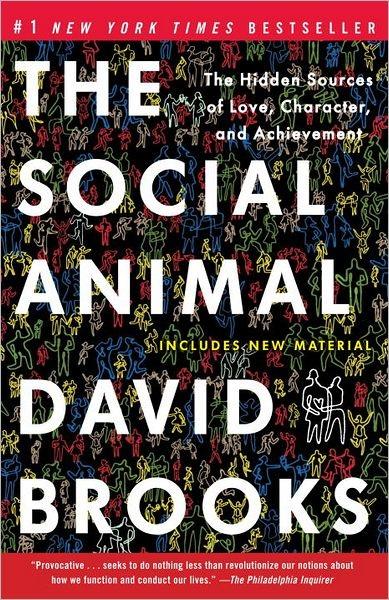
Social Animal by David BrooksSpring break starts for me in less than 24 hours.  And while I’ll probably take my time getting my grades done and will even go work in my classroom some over break, it’s the fact and the feeling of a kind of freedom that’s so exciting.

A few days ago I mentioned my spring break reading list: a nice and tidy collection of novel, sociological-ish, and educational stuff.  I even had a movie on order.  Well, that list has grown some, and all thanks to what Alan Jacobs calls “reading upstream.”  And so now I’ve also started on Brooks’ The Social Animal and Turkle’s Alone Together.  I’m already a good chunk into both, and both are fascinating and strangely convicting.  I’ve even added a second movie to the mix: Bright Star.  It’s about a writer, John Keats, but it’s also unabashedly romantic, which will be out of my zone.  But it got name-dropped in something I was reading and was also on sale and Barnes & Noble, so there you go.

I’m oddly excited about break.  It looks to be the only break this year where I don’t travel, so I’m hoping to get a good routine down quickly.  I’ve been getting through a cold all week, which has also made tomorrow’s “light at the end of the tunnel” more exciting.  I’d love to wake up soon and be done with the sniffling and sneezing.

Money quote from the mind of Donald Miller: “I used to think I needed stuff and status to be content.  But all I needed was faith, a good project, and a loving friend.”

Let the break begin!

Posted in Books, Faith, Movies, Teaching | Leave a comment

TV Sitcom in a Coma

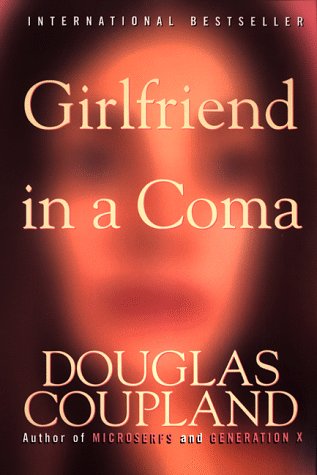
Girlfriend in a ComaIt’s not every day that one of your favorite books becomes a television sitcom.  This, of course, is probably a good thing.

When word got out that NBC was developing Nick Hornby’s About a Boy into a television show, I was pleasantly surprised.  The novel was solid, and the movie held its own as a romantic comedy back when rom-coms were plentiful and pleasant.  The show makes sense, really, and I’m looking forward to it.  It’s NBC’s development of a show based on Douglas Coupland’s Girlfriend in a Coma that I’m worried about.

The part of Coupland’s apocalyptic novel that is TV-friendly is obvious: a young girl (Karen) gets pregnant and ends up in a coma.  She wakes up seventeen years later to find that she has an almost-grown daughter (Evie).  I’m guessing that they plan on leaving out all of the apocalyptic, which is a shame.  You leave out the drug-addicted friends, the angelic friend-figure, the quest for “the noble and the holy.”

I hope that I’m surprised.  Christina Ricci is a good choice to play Karen.  I haven’t heard of Miranda Cosgrove, who has been cast as Evie.  I guess we’ll see if Rick gets to be around at all.  I’m guessing there will be no scenes on the dam at the twilight of the world.

You always hope that the things you love will cross mediums, become a bigger part of the broader culture.  I didn’t see this one coming.  Regardless of how the show turns out, I can’ recommend the source material highly enough.  It’s brilliant.  You can check out more on Douglas Coupland at coupland.com.

Posted in Books, Television | Tagged , | Leave a comment

Spring Break Reading Two Weeks Early

Imagining the KingdomMy order from Amazon got here a little earlier than I expected.

Over the last few weeks I’ve been plotting and planning my spring break reading.  As it stands right now, I’ve got three books and one movie to make the most of.

Usually there’s a new Eugene Peterson or N. T. Wright book to read through during my breaks.  This time around, my “developmental” book is James K. A. Smith’s Imagining the Kingdom, which is the second in his Cultural Liturgies series.  The first book, Desiring the Kingdom, helped me fill in some of the gaps that my “worldview education” inadvertently missed.  Smith admits that he has written this series in a way that tries to meet the needs of both church and academic institution, which can make it a frustrating hybrid for some.  In many ways, his work strikes me as being in the same vein as Steven Garber: serious philosophy mixed with cultural touchpoints (in the introduction alone we’ve got Wendell Berry and David Foster Wallace).

Simon Garfield’s On the Map was the first book I purchased for break.  It kind of fits my “anthropological” book fix.  The book is “a mind-expanding exploration of the way the world looks.”  I’ve got maps on my mind because some of my students are working on their own (in the same vein as those based on Pilgrim’s Progress).  I’m always in need of understanding how to represent things graphically.  Maps seemed like a good place to start.

My fiction for the break is a brand new novel with a good bit of buzz: Ned Beauman’s The Teleportation Accident.  Besides the buzz, all I know about the novel is that it is supposed to be a wonderful blend of multiple genres.  I’ll see how that goes.

And the movie?  Thanks to 50/50 and Warm Bodies, I’ve become a fan of Jonathan Levine.  So I tracked down a copy of his first movie: The Wackness.  It’s been called “hilarious and heartfelt.”  The heartfelt part is pretty evident in Levine’s other movies, so I’m hope that stands true for this one as well.

I’m sure other things will pop up in the two weeks leading up to break, and I’ll take those as they come.  But these three books and one movie are my goals.  I’ve already started in on one, and I’m loving it.  I may not be going anywhere for break this time around, but I’m ready for good things anyway.

Posted in Books, Movies | Tagged | Leave a comment

Ten Years of Reading and Believing

The Believer StackMarch 2013 marks the tenth anniversary of The Believer.  Originally named The Optimist, The Believer was founded by McSweeney’s with the intent to be a positive presence in the literary world.  No snark here, in other words.  I came across the journal a short while after I moved to Hawaii and joined a contemporary fiction reading group.

The biggest draw of the journal for me was Nick Hornby’s mostly-consistent “Stuff I’ve Been Reading” column.  Each month, the writer of books like A Long Way Down and Juliet, Naked wrote through the best of what he had been reading that month (and inspired me to finally read Great Expectations).  Authors I met through other means would drop by the journal often, too.  It’s because of The Believer that I read things like The Book of Disquiet and Mr. Penumbra’s 24-Hour Bookstore.  So I’m glad to hear that the journal has made it to the ten-year mark.

If you have some free time today, here are three articles from The Believer‘s ten-year catalog that I’ve enjoyed and been challenged by:

I may not always agree with The Believer, but I have always appreciated its optimism and sense of engagement with a culture we all-too-often don’t hear because of the clammer of today’s pop culture.  I think it’s well worth our time to listen to its voice a little more.

Posted in Books, Internet | Tagged | 1 Comment

Commitment versus Being Locked-In, a Thin and Blurry Line

Locked-In from Flickr.comA friend once told me of a church that starts each year by recommitting to their beliefs, their church, and one another.  It’s a brilliant way of staying or or opting out that many long-standing systems could adopt and adapt.

A thin, blurry line stands between commitment and being locked-in.  We commit to things for many reasons, though I think the two greatest reasons are people and mission.  We find people who share similar core convictions or who bring us challenge and joy.  We find a cause that we believe and can invest in.  But what do you do when the people change?  What if the sense of mission, of direction, changes?  That’s when you look around, see different people and priorities, and find yourself locked-in.

What happens next is tricky.  Do you stay in hopes of waiting things out?  How do you summon the energy to do repetitive emotional labor?  Or do you bail, call it quits because the people and purposes around you have changed?  Is it possible to find and use a key that reverses the effects of being locked-in, or is that just a kind of whistling in the dark cell?

Posted in The Long Story | Leave a comment

Creativity and Content

Writing Pen from Flickr.comI recently met a friend for breakfast soon after he started advising a college newspaper.  As glad as I was to hear his news, I was especially excited about a phrase he used at least twice: it was important for his students to start “creating content.”

Content is a regular part of the academic experience.  Teachers pass on content through lectures and assigned readings.  And while I didn’t understand it as such until a few years ago, student writing (papers or poems) are also content of a kind.  It might not all get published, but it is putting thought and information together for the purpose of sharing with others.  Anyone who has survived high school knows that content can be a killer, especially if you want it to be meaningful.

Donald Miller recently posted something about creativity and content.  Like many of us, Miller seemed to take the phrase “write what you know” as an imperative to write on what is inside us without necessarily seeking out more things to “bring in.”  It was Jon Foreman (musician and writer) who helped him understand otherwise.  Miller concludes:  Rather than the words being in me, the words were out there. The inspiration was out in the world, and all I had to do was go digging for it. All I had to do was brush away the dirt and sand and keep an eye out for anything that could be polished.  I encourage you to check out more of his thoughts here.

Robin Sloan, of Mr. Penumbra’s 24-Hour Bookstore fame, recently posted a few words from the teacher that helped him be a more effective writer, too.  The 2002 article by Chip Scanlan gives the best part away in the title: writing is all about rewriting.  I remember hearing years ago that “the art of art is revision.”  Same thing said slightly differently.  You can read the whole article here.

Writing well is rarely an easy thing.  The important thing is to persist and to say something.  I’d like to think that over time you learn to say things well.  But to persist at saying something, often something from beyond yourself, is a great place to start.  The world would be a better place if we all took some time to create some real content.

Posted in Books, Teaching | Tagged , | Leave a comment