Between Stories and Ages

In his discussion of churches and “the therapeutic gospel,” Brad East writes this about a possible generational difference in retelling the Gospel:

Boomers, Gen X, and even some older Millennials do not want to reproduce what they understand themselves to have received: namely, an imbalanced spiritual formation, whereby believers of every age, but especially youth, are perpetually held out over the flames of hell, rotting and smoldering in the stench of their sin, unless and until God snatches them back—in the nick of time—upon their confession of faith and/or baptism. Such ministers and older believers do not want, in other words, young people to feel themselves to be sinners, tip to toe and all the way through. Instead, they want them to feel themselves beloved by God. For they are. They are God’s creatures, made in his image, for whom Christ died.

He goes on to say:

But there’s the catch. Why would Christ die for creatures about whom all we can say is, they are beloved of God, and not also, they have sinned and fallen short of God’s glory? The more sin drops out of the grammar of Christian life, the more the cross of Jesus becomes unintelligible. So much so that children and teenagers can’t articulate, even in basic terms, why Jesus came to earth, died, and rose again.

The story we tell matters.  And I don’t mean “story” in a fictional sense.  I mean “story” in the narrative that we live by.  And a story that should be able to hold together “sin” and “love” may seem impossible, but I have to believe that it is possible and true.

+ + + + + + +

There are other stories that the church tells (and that it tells itself).  East mentions some essential elements in the remainder of his post.  What I want to do, for a paragraph or two, is redirect attention to something I learned from reading A Secular Age by Charles Taylor, which is itself a story of how the West went from a Christian understanding of the world to one in which disbelief in a transcendent God has become the new default.  It’s a story involving two different ages.

The first age Taylor calls the Age of Mobilization.  About the time that Luther nailed his theses to the Wittenberg Cathedral door, a shift was occurring that decentralized that Catholic Church and its social imaginary from its dominant position.  Things were splintering (perhaps in slow motion, but still splintering).  What that does is create an opportunity for new forms of things (or re-freshed forms of old things).  Such opportunities were often led by cultural elites and involved recruitment into something new: a new denomination or church, a new social movement, a new scientific field.  And so mobilization became the dominant note for some time.  All cards on the table: it’s clear to me that some level of mobilization is built into the Christian Story.  You see it in Jesus sending out his disciples, in the Great Commission, and throughout the book of Acts.  What the Age of Mobilization does (in my estimation) is it acts as a kind of “hot house” that accelerates things on multiple levels.  And organisms (and organizations) can’t live long that way.  (For more on that, see the writings of Andrew Root, who writes about this a lot and has obviously influenced me.)

Then, thanks to the expressive individualism found in the Romantic movement amongst other areas, the West moves into a second age: the Age of Authenticity.  It’s a kind of interior turn, one that rejects the idea that you are defined by what is outside or beyond you; instead, who you really are is determined by what is on the inside.  You see it in lots of areas of life, of course.  It’s “your best life now” married to “telling your own truth.”  And while it has had seriously negative or disastrous consequences (same as some aspects of the Age of Mobilization), Taylor suggests that there are also some positive things to come from the shift.  I think some of the talk of a “therapeutic church” has its roots in the Age of Authenticity.  And many churches, especially those still driven by the Age of Mobilization, don’t know what to do about it.  Ultimately, both Ages fall short of the full Christian story.

As a member of an evangelical Christian church in the Baptist tradition, I feel the tension all of the time (and have for some time, so this isn’t just about one church . . . the same can also be said of para-church ministries, too).  The people in charge are always trying to get people to do something.  There are many needs in the world around us (of this there is no doubt), and people are needed to help meet those needs (to be the hands and feet of Jesus, some would say).  But drumming up participation can ultimately beat everyone down.  One almost can’t blame people who leave “mobilizing” churches for churches who seem to take a real “interest” in the hearts, minds, bodies, and souls of people.  Enter the “therapeutic church.”  Enter care for people who are on a quest for “authenticity” who want to be all God wants them to be (and who don’t have to be on three committees to do so).

+ + + + + + +

Both ages are, of course, incomplete.  They are parentheticals in a bigger bracketed equation.  But I imagine it is difficult to do both well and in balance (just like it can be difficult to hold sin and love together, it seems).  (I also imagine that I have grossly miss-summarized Taylor’s argument.)  But the Christian story, with Jesus at the heart, calls us reconcile lots of things that might seem irreconcilable.  The sunk costs of the Age of Mobilization are huge, though, just like the promises of the Age of Authenticity my prove to be phantasms.

+ + + + + + +

I’ve got more to think through with East’s essay.  But before I return to it, I want to say one more thing about Taylor’s work in A Secular Age.  But I’ll save that for tomorrow.

Posted in Books, Faith, Life in the Fifth Act, Notes for a World's End, Organizations and Institutions, The Long Story | Leave a comment

On the Twelfth Day of Christmas . . .

For some time, I’ve been meaning to write something about this blog post by Brad East of Abilene Christian University.

+ + + + + + +

I discovered East’s blog through Twitter some time in 2022.  It was a great find for me, as he writes as both a teacher (at the college level) and someone invested in the Bible.  I had unexpected pleasure of meeting him this summer while at Laity Lodge.  He was there as a guest of one of the speakers.  When I saw his name on the guest list (which everyone receives upon arrival), I was super-excited.  It was a real joy to talk with him a couple of times, both as Christians and as teachers.

+ + + + + + +

East wrote the above-linked-to post near the end of an online discussion about what actually gets preached in most churches these days.  There has been great concern about churches and pastors taking more of a “therapeutic approach” to the Christian life, one that focuses on the wellness of life without much connection with the Gospel.  East begins his piece with lots of links to previous moments in the discussion.  Then he adds his own thoughts, which amount to five big ideas.

+ + + + + + +

Before he gets to the list of his five big ideas, East spends some time talking about sin and the shift that has occurred in churches, likely as a response to what he calls the “imbalanced spiritual formation” from previous generations.  I want to start there tomorrow and take a detour into one of the most important books I’ve read over the last few years.

But more than anything else on this twelfth and final day of Christmas, I wanted (at the very least) to link to the East blog post that I’ve been thinking about for some time now.  There are lots of wonderful things to unpack with it.

Posted in Faith, Notes for a World's End, Scripture, Teaching, The Long Story, Travel | Leave a comment

Rivers and Years

A new year started Sunday, but a new semester starts today.  Sometimes it’s difficult to tell which is the most daunting.  The last two semesters (spring 2022 and fall 2022) were different yet draining, so I’m not sure what to expect this time around,  Once again, though, I think Caulfield is onto something.

Frazz RiversYesterday was one of those logistical/routine-maintenance days that breaks allow for.  Took the car into the shop, had a visit with the dermatologist, spent some time at the gym before heading into school to get some work done.  Lots of little, necessary things that will hopefully make the next few days go well.

But there’s always the detritus that Caulfield mentions, the stuff that clings to the bottom of the shoes you wore as you walked through the river.  Often, it’s a matter of habits or dispositions frustrations that don’t go away just because a ball drops when a clock strikes midnight.  But there are also new things in the mix: new students, new routines, new tasks to craft and execute.  That’s a good thing.  And I’m hoping that today is the start of a good semester.

(image from gocomics.com)

Posted in Teaching, The Long Story | Leave a comment

One Word (of many) for the Year

ImplosionYears begin and end with words . . . or, more fittingly, one word each.  Over the last few years, many people have taken to the idea of “claiming” a word for the new year, a word they would like to focus on and live into.  At the other end of the year, though, is the annual quest to choose the word that best fits what has actually happened, which is a good challenge in its own way.

Over at Vanity Fair, Kenzie Bryant has gone for the latter, year-end task.  In her look-back piece, Bryant declares that 2022 has been “the year of the implosion.”  And she has interesting proof to back up her claim.  She wisely starts, though with defining the term:

An implosion can occur because the middle is hollow. There is no there there, and nothing can’t support something, so it’s all done in. Collapsed. It’s categorically different from an explosion—those take out everything around them. With an implosion, if anything was relying on the imploded thing for support, it too would topple. With enough of them, it adds up to a general atmosphere—a vibe even!—of broader social flimsiness. A tension that barely holds. Entropy.

Bryan is most concerned with the “frauds” that fell through this year, which I understand but also find a little frustrating.  Things don’t have to be fraudulent in order to implode.  But the point is well-taken, and the “social flimsiness” that she mentions is true on multiple levels.  “The centre cannot hold,” Yeats wrote.  The same is true for many organizations and institutions and relationships and habits, even.

+ + + + + + +

Like many others, I’ll likely spend the next couple of weeks reflecting on the year.  Like some, I’ve been doing it for a while now.  I don’t think 2022 will easily boil down to one word for me.  It would be wise, I think, to take Bryant’s assertion as a warning, as an opportunity not so much to dance on the remains of the implosion, but to consider the foundation and infrastructure we have lived this last year with, to check on the soundness of things before we build more in the new year.

(image from news9live.com)

Posted in Notes for a World's End | Leave a comment

On Stalling

A good word from Seth Godin about organizations and stalling, because “the challenge of a stressful day is rarely directly related to today, it’s about tomorrow or years from now.”

Posted in Organizations and Institutions | Leave a comment

Three “Working” Suggestions for Churches

Today’s post by Seth Hedman over at First Things is an interesting take on post-pandemic church culture (which also puts it in line with this piece by Ephraim Radner from the spring of 2020).  In the post, Hedman challenges churches to make make two broad shifts: from white collar to blue collar and from pandemic church to post-pandemic church.

It’s an interesting blend of thought, really.  Hedman cites his time in carpentry and DoorDash driving as a way of realizing how “white collar” the church has become.  In many ways, he’s not wrong, particularly in those who are most prolific in writing and in being read in certain circles.  And his observation lines up with suggestions that the rise in the “nones” has a lot to do with economic and vocational factors as such as anything else.

Hedman gives three suggestions for what “the real work of the church” should look like moving out of the pandemic.  First, ministers should revisit the work of “the Daily Office.”  This isn’t something familiar for most Baptists from my background, but it has entered my experience over the last decade.  The Daily Office is rooted in the ancient practices of “prayer hours,” when religious figures would stop regularly for prayer.  “Every morning and evening,” Hedman asserts, “the work of God should be [the pastors and churches’] primary daily responsibility, through public prayer and reading Scripture.  No more event planning and screen time.  No more closed church buildings during the week.”  In particular, that last part resonates with me.  I’ve never really had a “neighborhood church” experience as such, but I do not that having a place to “rest” in a particular way was an unfortunate consequence of church closures during Covidtide.  “Sacred space” is hard to come by.

Second, Hedman suggests a popping of the “ministry bubble.”  This is where the author brings in more of the “blue collar” perspective.  He suggests churches make a priority of hiring pastors with blue-collar working experience and that seminaries should have requirements for students to do manual labor.  Why? Hedman adds: “Too often, pastors who have only known the ‘ministry bubble’ have little vision for discipleship in the working world.  A pastor disciplined in the mixed life of prayer and work will better be able to minister to his working congregants and invite them to ‘follow me as I follow Christ.'”  That’s a gutsy final sentiment, taken right from the letters of Paul.  The general suggestion is well-taken: regardless of the color of your collar, how great it would be for your pastor to step into the world of your own work to better understand his sheep.

Finally, Hedman suggests a “sacramental revival.”  He mentions things like communion, baptism, kneeling for confession.  Then there’s the the removal of screens and the idea of no longer “catering” to an online audience (though still streaming if necessary).  This is where a lot of church are, I imagine, as there are still senior adults or families who have yet to return in-person.  Hedman suggests making the service more embodied, more physical and less digital.

It’s a piece worth reading and reflecting on, if only because it can help us reflect on our current condition in necessary terms.  I’d like to hear more about the “blue collar appeal” of things.  What he suggests can sound more “high church” than “low church,” which is something most of us aren’t really equipped for.  Either way, these are some things that church leadership should be thinking about, should be talking to their congregants about, especially as we move into “whatever is next.”

Posted in Faith | Tagged , | Leave a comment

Doctor’s (Return) Visit

Just about nine years ago, we got this hum-dinger of a scene at the end of the Doctor Who 50th Anniversary Special:

And yesterday, with Jodie Whitaker’s final episode, we got this:

Time will tell just how gimmicky the move to bring Tennant back is.  It will be for a short while, obviously.  And it was one last, nice twist in the episode after a number of other twists involving former iterations of the Doctor and various companions.  All together, this regeneration elevated a decent episode that capped off a frustrating run that was at its best when it embraced the frenetic and jumbled (here’s looking at you, Flux).

We’ve got a year to think about things and sift through rumors, rumors, and more rumors.  With the supposed return of Donna Noble, how could you expect anything less?

Posted in Television | Tagged , | Leave a comment

On Galadriel and Celeborn

We’re just a few hours away from the season one finale of The Rings of Power on Amazon Prime.  Much of the conversation over the last couple of months has been about which character is Sauron in disguise.  Not really at the top of my list of things to learn, but it’s always good to end a season with a big reveal.

Episode Seven’s big reveal came in an almost-throwaway line of dialogue between Galadriel and Theo, when Galadriel mentioned that her husband had been lost in battle and had never returned.  This, of course, is Celeborn.  Certain slices of Tolkien fandom went wild with the revelation, since this was the first mention of the character (and because he’s quite significant to the overall picture of the Lord of the Rings).  Celeborn is around, of course, in The Fellowship of Ring.  Here’s the evidence:

Celeborn and Galadriel

It’s an interesting conundrum, one that I hope the show-runners handle well.  There’s always room for creative license.  But you also have to careful of what names you drop and how you drop them.  You can find some reflections on the series, Galadriel, and Celeborn here.

+ + + + + + +

Which brings me to my reading of Unfinished Tales.  It’s been a slow read for me, mostly because I’m not in a hurry.  Just yesterday I finished the tale of Aldarion and Erendis.  A beautiful tale, even if it was left “unfinished.”  It’s a tale of the Second Age set in Numenor, so there are some ties to the broader Tolkien story.  As with every other piece in the collection, there are footnotes and endnotes and a weaving together of various scraps and scripts that show us how Tolkien often rearranged and rewrote his stories.

Aldarion’s story is followed by a list of the line of kings of Numenor, which reads like a version of the Old Testament book of Kings (at least the last paragraph that sums up each king’s reign).  Now I’m in the long section on “The History of Galadriel and Celeborn.”  And it’s pretty interesting.  Tolkien had her story going in various directions as he was putting his Tale together.  Celeborn is in the writing some, but not much.  So even though Amazon doesn’t have the rights to Unfinished Tales, I am curious to see if this section of the book could shed some light on things for me.

It’s easy to see The Hobbit primarily as the story of Bilbo Baggins, especially since Gandalf disappears for a large chunk of the narrative.  But The Lord of the Rings is a story with so many primary characters, especially when seen in light of the broader Tolkien narrative.  It’s about Frodo, but it’s also so much about Sam.  And it’s about Gandalf and his long burden and about Strider and his coming to kingship.  And it’s also, in some way, about Galadriel, who is given the test and who passes it.  I do hope that whatever else The Rings of Power may be (and whatever stories the show does and doesn’t tell), it ends with a real sense of this particular time in the long life of Galadriel.  That would be a real gift.

(image from nerdiest.com)

Posted in Books, Movies, Teaching | Tagged , , | Leave a comment

“For Tomorrow”

I’ve been thinking about this post by Seth Godin for a good while now.  I’m guessing that Godin is thinking about the topic of how we respond to organizations on a scale larger than the simply-personal.  But ultimately, organizations are people.  And like it or not, everything is personal (in some way or another).  Organizations can’t learn lessons unless the people in them do.  And too often, there are no viable feedback loops for those who most need to learn something.  Godin writes:

Perhaps it makes sense to embrace, “now that I know what I know now, I can make a new decision based on new information and do this instead.”

“Now that I know what I know now” is a great idea.  I mentioned something similar to this back in this post from January.  In that instance, it was more about self-knowledge, but even self-knowledge is connected to organizations.  That’s especially true if this assertion by Godin holds up:

We often become what we do, as opposed to simply doing what we say we would when under duress.

It is possible, I believe, to do and become something good, but the first step taken is important and every step after that should be as much in the right direction as possible. And most people leading most organizations are probably too busy making sure the boat doesn’t sink to care about steps in even a slightly wrong direction.

Posted in The Long Story | Tagged | Leave a comment

Between Vigilance and Vengeance

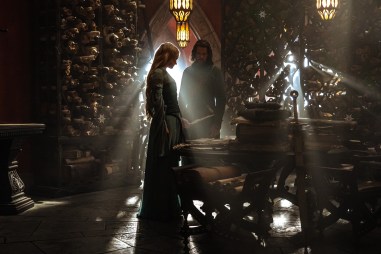
Galadriel in the LightWe’re two episodes away from the end of the first season of The Rings of Power on Amazon Prime.  It’s been a fun 6 episodes so far, putting to the screen characters and locations that have mostly only resided in text and pictures.  The show has not been without its critics.  (Let me say that I am so glad that the Peter Jackson trilogy came out before Twitter was a thing.). That’s been true of every other adaptation of Tolkien’s work, so it’s nothing new.  As I might have mentioned before, it’s just nice being able to step into Tolkien’s world in a way like this.  It’s not something that happens often.  And it’s fun to see the show’s creators find interesting ways to pace things and slow-burn certain mysteries.  (I’m glad we’ve had a couple of episodes without the Harfoots.)  It’s also be interesting to see how the show-runners have brought in echoes (or almost direct quotes) from the Tolkien story and media (like the Harfoot song “This Wandering Day” or Bronwyn’s use of a Samwise Gamgee quote).

I think the thing that stands out to me this far into the story is the balance of the promise of the trailers with the realities of each episode.  And it mostly centers on Galadriel, since she’s the show’s true lead and the most significant thread tying things into Lord of the Rings.  The trailers (and the first episode) brought out a strong sense of the important of vigilance.  Is Sauron back or not?  Either way, what do we do about it?  Vigilance is a good word for everyone.  But for Galadriel, the other side of vigilance’s coin is vengeance.  She really wants to get back at Sauron for what has happened to her loved ones.  Which is understandable and likely sells more than the slow work of vigilance.  I hope that vigilance comes back to the foreground as the season comes to an end.  This first season has had the benefit/curse of evil being “unseen” (thus little action from the elves). But based on this last episode, evil is about to be more fully seen, which requires a vigilance all its own.

+ + + + + + +

I’m still slowly rereading Tolkien’s Unfinished Tales (and mostly out of order).  Yesterday I finished the the story of Turin from the First Age.  And it’s all about vengeance (or at least it felt like it).  I think maybe the strength of both The Hobbit and Lord of the Rings is that vengeance isn’t very present as a motivation.  Maybe that’s why Galadriel both “takes and passes” the test when the Ring is presented to her.  Almost everyone else is focusing on vigilance or on prevention or protection.  As others have said before, maybe this is the arc of Galadriel’s journey in the series.  If so, it will be a good arc to witness.

(image from imdb.com)

Posted in Books, Movies, Television | Tagged , , | Leave a comment