Doing Until Done

It’s been nice having the Resurrection Letters: Prologue to listen to throughout this Lenten season.  Of the four tracks with vocals, here’s the fourth: “Well Done, Good and Faithful.”  As with the other songs from the EP, the song is a sobering reminder and encouragement.

Tomorrow we celebrate Palm Sunday and begin the final turn towards the cross and the tomb.  Even this morning, as I was reflecting, coffee in hand, over the last few weeks, I was reminded of the struggle of being consistent and following through with expectations and plans.  I am thankful that God can do what I, too often, cannot.

Posted in Faith, Music | Tagged | Leave a comment

Stranger Things and Friendship

I’m slowly but surely working through some of Ephraim Radner’s thoughts on singleness and the church found in A Time to Keep.  I’ve gotten to the “good stuff,” which means I’m trying to process it well and not say stupid things. So, until then, here’s a clip of perhaps my favorite scene from two seasons of Stranger Things.  From season one: Mike and Dustin talk about the messy nature of friendship, particularly when new people enter the picture.  A great conversation.

Posted in Books, Faith, Television | Tagged | Leave a comment

Towards the Gift of the Individual

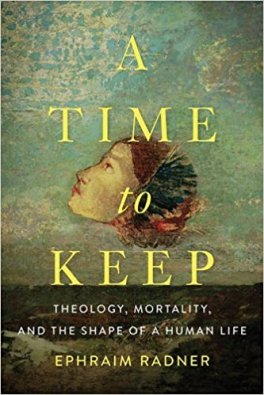
A Time to KeepOver the last few days I’ve tried to work through some of Ephraim Radner’s A Time to Keep, particularly as it connects with the the plight of the single adult navigating a marriage-and-family-centric church.  On Tuesday I looked at Radner’s approach to “the arc of life,” particularly in light of what Radner calls “the Great Transition.”  Yesterday I made a quick “aside” in considering the single adult as an “invisible” in the church (knowing that such invisibility makes for an image of indivisibility in many contemporary churches).  Today I’d like to take a moment to jump back into Radner’s picture of “the vocation of singleness” as it relates to Scripture and our sociological moment.

+ + + + + + +

First, Radner wisely sets singleness in the context of other non-generative paradigms: “married couples without children [and] older persons who have married late in life,” to be exact.  This is a great move to make in his argument, as the whole-to-part fallacy can often come into play when considering the composition of churches.  “Churches are all about family.  Churches are full of families.  Here’s how you can be an effective member of your family.”  And while general truths can be extracted by all people from such an approach, it doesn’t necessarily allow for the full flourish of the relational diversity in God’s kingdom.

Second, he acknowledges the sociological reality “that traditionalist Christian emphases on “family” . . . leave single persons adrift.  Churches are often the last place single people like to spend time, certainly not in terms of congregational activities.”  He does make mention of the “singles group” approach saying that “these [groups] often end up being places whose existence is governed by a hidden ideology of stigmatization.”  Ouch.  I’ll be the first to admit that I benefited a great deal from the “singles group” I was a part of during my seminary years.  Part of that was because we were able to establish our own kind of “culture-within-a-culture” that did not depend on the institutionally-sanctioned events to be the arbiter of our existence.  The other thing that helped us what that there were older adults who were willing to make space and befriend us.

Beyond that, Radner asserts that, thanks to the changes brought by the Great Transition, “there is little sense of clarity about how a person might understand their creaturely being within this trend’s confused dynamics . . . Virtually all social entities we know that have survived (even the Shakers) have all and always been based on integrated forms of living arrangements, where individuals seek and are given ways to exist with others, not apart from them.”  I think that’s one way that the college experience is set apart from so much of the rest of adulthood: the close proximity to peers is something that is almost entirely unreproducible.  The “living alone” has been one of the most difficult part of being single for me.  I was fortunate to live in the same apartment complex as a friend my last year in Texas.  These last few years in Honolulu have been good because I’ve had neighbors that I could connect with: share a meal, go for a walk, watch some TV.  Minus that, the world can look kind of bleak.

+ + + + + + +

What, then, might Scripture have to say about the trajectory of the single life as we await the return of Jesus?  While touching on a number of scriptural images and figures, Radner ultimately settles on the Pauline challenge found in 1 Corinthians 7:32-35.  From the English Standard Version:

32 I want you to be free from anxieties. The unmarried man is anxious about the things of the Lord, how to please the Lord. 33 But the married man is anxious about worldly things, how to please his wife, 34 and his interests are divided. And the unmarried or betrothed woman is anxious about the things of the Lord, how to be holy in body and spirit. But the married woman is anxious about worldly things, how to please her husband. 35 I say this for your own benefit, not to lay any restraint upon you, but to promote good order and to secure your undivided devotion to the Lord.

With this passage as the gateway into a discussion of “the things of the Lord” and “undivided devotion,” Radner concludes:

Undividedness” or “attention” to God, in this perspective, is the special realm of the single person, in the sense that the “things of God” are not so parceled up into their bundled uses as they are for others: their “wholeness is visible in their discreteness.

Then, working through the ideas of individuals and “individuation,” Radner concludes:

singleness, in its life form of individual engagement, is a responsibility taken up and offered to the human collective, part of whose gift is, in return, the shaping of individual “beauty.”

With that, the “vocation” of singleness is “a form of life in which God calls out the particularity of his creation so that it can “color” the praise of the whole.”  This vocation, rooted in a “state of chastity” is manifested in two things common to all but of particular focus for the single adult: friendship and work.

I want to take these two things apart in separate posts and then put them back together again.  I want to discuss both of them in the context that Paul so easily assumed: the things of God waiting for the culmination of God’s own kingdom in history.  I particularly want to think about the idea of singleness being a “responsibility taken up and offered,” as that differs from what is the church’s usual approach of singleness as something “accidental” and whose work in service to the church community is unquestionably “assumed.”

Posted in Books, Faith, Scripture | Leave a comment

World Poetry Day via Middle Earth

In honor of today as “World Poetry Day,” some poetry from Middle Earth commemorating the fall of Gandalf at Khazad Dum in The Fellowship of the Ring.  Frodo, nephew of the great story-teller, writes:

When evening in the Shire was grey
his footsteps on the Hill were heard;
before the dawn he went away
on journey long without a word.

From Wilderland to Western shore,
from northern waste to southern hill,
through dragon-lair and hidden door
and darkling woods he walked at will.

With Dwarf and Hobbit, Elves and Men,
with mortal and immortal folk,
with bird on bough and beast in den,
in their own secret tongues he spoke.

A deadly sword, a healing hand,
a back that bent beneath its load;
a trumpet-voice, a burning brand,
a weary pilgrim on the road.

A lord of wisdom throned he sat,
swift in anger, quick to laugh;
an old man in a battered hat
who leaned upon a thorny staff.

He stood upon the bridge alone
and Fire and Shadow both defied;
his staff was broken on the stone,
in Khazad-dûm his wisdom died.

And then Sam, feeling that something was missing, adds the following.

Posted in Books, Movies | Tagged , | Leave a comment

Invisible or Indivisible (An Awkward Aside)

Yesterday I made some headway in articulating some thoughts about church and community through the lens of Ephraim Radner’s A Time to Keep (and that the culmination of some sporadic posts over the last month or so).  At the root is something about connection and community and what that looks like in our contemporary context, particularly for a single guy.

+ + + + + + +

A Fellowship of DifferentsEvery now and then, leaders at my church like to bring out Scot McKnight’s A Fellowship of Differents, particularly McKnight’s definition of love as a rugged commitment to be with and for another person unto godliness.  Like any good parishioner, I bought a digital copy of the book so I could get a better sense of what McKnight was trying to say.  What I found, at the beginning of the book, was something else equally interesting: the question of what category of person might be “invisible” members of the church.  That, of course, could be parsed in multiple ways along multiple metrics and identity lines.  On a political level, this is at the root of what has come to be known as identity politics.  In most churches today, definitely those on the larger end, few if any “traditional” groups are invisible: infants, children, youth, young adults, singles, married couples, the divorced, the widowed, empty nesters, senior adults all seem to get their niche.  I have, in times past, been a beneficiary of these distinctions and understand why many churches find them beneficial at best and necessary at worst.  If nothing else, the basic spine of these groupings lines up with the “arc of life” articulated by Radner in A Time to Keep.  Surely, at least in an “arc of life” sense, there are no “invisibles.”
+ + + + + + +

Radner rightly asserts that for most people throughout history, traversing the “arc of life” involves family.  We are born into one.  With marriage we bear others into a new one.  Much is found and lost and found again during the traversal, but the journey-with-family is something common to most people.  With the “Great Transition,” that journey has gotten somewhat scrambled (look for any number of statistics concerning marriage, children, and singleness).  And whether they realize it or not, most Christian churches have made the task of restoring and maintaining the vehicle of marriage and family for traversing the arc of life primary (and rightly so, on some level).  The life of the family, or the life of families, by default becomes the point of “parish life.” What that does, though, is put unmarried people in a particularly interesting (and often difficult) place.  On some deep level, any single not part of a “singles ministry” could be “the invisible” in any given church culture, only visible when someone is needed to complete a task or fill a necessary-but-empty slot in the program.  Some classic Caedmon’s lyrics come to mind:

I fear maybe this is all just a game
And our friends and our families all play
To harness the young
And give some comfort to the old

And so we throw our lots in for those who don’t know how to throw theirs in for us.  We struggle to refrain from becoming a version of the older brother in the parable, trying to maintain a sense of delight when all we sense is duty.    We submit to the authority of leaders who do not know how to walk with us, all the while believing that the proclamation and implications of the Gospel are for all people, even if we only get what feels like the scraps.  Or we walk away with the unspoken understanding that the indivisibility of the church relies too much on the invisibility of some.

The dark comedy of all this for me is that I really don’t want my singleness to be the most important thing about me.  It is a significant lens, but it isn’t everything.  “You can always ‘fit in the church’ in other ways,” someone might say.  But at some point it can and should be addressed.  Language and time have to be either found or made to talk about it so that it can, then, be put in its proper place.

It is an act of grace, then, that Radner dedicates one chapter of A Time to Keep to the question of “the vocation of singleness.”  And what he has to say is both simple and profound (and quite honestly, life-giving).  But, as with the book in general (and this post specifically), it takes Radner some time to get to the good stuff.

(image from amazon.com)

Posted in Books, Faith | Leave a comment

Rioting and Dancing, Building and Fighting

Last night I had the opportunity to view The Riot and the Dance, a nature documentary directed by one of my favorite writers, N. D. Wilson.  I’d known of the documentary’s existence for a while, but didn’t think it would screen in Honolulu.  When I found out (the day before) that it was screening, I thought I should show my support.

It was, overall, an interesting experience for me.  The movie was enjoyable.  Lots of cool images and clips of animals doing creaturely things.  Not a big fan of the simple “leech” scene.  And the extended look at snakes brought out the inner-Indiana in me, for sure.  The most interesting thing was watching a movie produced with an obvious Christian worldview.  I don’t see very many movies like that.  The movie lined up with the idea of “stewardship” as an essential ingredient to the question of the nature of the world around us, though.  Much was made of both the goodness and fallenness of creation.  And, as awkward as it sometimes sounds, the language of mankind’s dominion is scattered throughout.  So it’s interesting to see things you talk about in class put into practice by others.

The other interesting part of the experience involved the advertisements before the show.  Even though it was a Fathom event, the company knew that most of their viewers would be Christians of a certain kind.  So I smiled when a slide thanking “Classical Conversations” popped up on screen and the family three rows in front of me cheered a little.  The commercial I liked the most was an advertisement for New Saint Andrews College, where the narrator of the movie teaches and where Wilson graduated.  It’s interesting both artistically and philosophically.

It’s an interesting blend of Old Testament language and (post)-modern mindset.  And it definitely speaks to a certain audience.

It also speaks to a way of understanding how Christians can or should live in the world.  Questions concerning “levels of engagement” always arise when the dividing lines are made clearer (and rightly so).  The concept of formation is vital, and the stakes feel like they keep getting higher.

+ + + + + + +

Last week I had the opportunity to listen to David Kinnaman talk more about You Lost Me.  While the book has been around for a while now, the picture he and the Barna Group paint about the current church/cultural landscape are pretty daunting (and a good reminder that I’m not crazy).  He mentioned a framework that has also been brought into his most recent work, GenZ.  He spoke briefly of our cultural move from a “Jerusalem” to a “Babylon” context: from having some kind of “home team advantage” to always being the visiting team.  I think he’s right: it is the new normal.  And admitting that is something that many of us find difficult to do.  It requires a completely new disposition from us.  But it is one as rooted in the Bible as the more “Jerusalem” approach so many of us assumed for so long.

Posted in Movies, Teaching | Tagged | Leave a comment

The Single Man and the Arc of Life

A Time to KeepLast month I started a slow articulation of my current disposition towards church and the Christian life.  It started with thoughts about friendship or community through the lens of a Rod Dreher post.  From there I moved to a reflection via Walker Percy’s The Moviegoer on the search for a God that so many have, statistically, already found.  Then I landed on thoughts from C. S. Lewis via his discussion of “nice” and “nasty” people and his thoughts on “membership” in the context of restoration and “the collective versus community.”  I understand that this articulation has been slow and scattershot at best (with lots of music and movie clips in between).  That’s been a matter of time and timing as much as anything else.  I’m hoping to use these next few days of spring break as an opportunity to move the articulation forward, mostly through Ephraim Radner’s A Time to Keep, a book I’ve mentioned here once or twice before but only in the hopes of getting back around to his thinking.  Maybe the time for that is now.

+ + + + + + +

A Time to Keep is Ephraim Radner’s attempt at articulating a big picture theology of life and the human lifespan in light of what he calls the “the Great Transition.”  Through means medical, social, and economic, this “Great Transition” has moved humanity from a place of relative stability in our understanding of a life’s span (live in one place, have one family, work at one job, live 80 years if all goes well) to something that has unmoored us from what he calls “the arc of life” (seen in the wisdom of experience and literature).   Radner’s argument is abstract and inductive (at least for me), but when it starts to get more solid (almost 100 pages in), clarity and Christian wisdom are found (after all, “we cannot pry apart the concrete realities of our life spans from the redemptive claims made about our beings in the gospel”).

Early in the book, Radner points to five areas of life most affected by the Great Transition: the shape of the family and relationships, maturation and its meaning, gender roles, the meaning of work, and the meaning of the body.  These areas are, of course, ultimately inter-related, drawing from and then leading back into one another often.  By the time you get to page 96 in the book, these themes are inseparable.  And they all speak to something I’ve struggled with and for for some time: some way of life, some rule of life, to help me navigate the current moment and its extension through my life.  What I need, of course, is a kind of wisdom, a wisdom that takes hold of the entire biblical account that crescendoes in Jesus and the sending of the Spirit and shapes what it means for me to be a single guy traversing the arc of life.  Part of my frustration with the Christian life as it is often articulated today is that limited or no help can be found for this.

+ + + + + + +

And so, based on Radner’s approach, the question is “where does one find oneself on the arc of life?” assuming that the individual is allowed a regular lifespan not cut short by tragedy.

Radner asserts that the New Testament writers present “an array of ‘ages’ through which Jesus passes: birth, infancy and circumcision, infancy and flight with family, family, adolescence in the temple, adult with family, adult, new family at the cross, and [beyond the New Testament] old man.  Beyond that, he asserts that something more broadly Greek is evident throughout the rest of the New Testament:

The New Testament, in any case, seems to have made use of the categories of the Greek “seven ages,” using terms that fit realistically into significant age groups, distinguishing infants, children, youths, adults, mature adults, and the very elderly by their normal Greek terms.

But what if the Great Transition has obscured this assumed “arc of life”?  What does finding a way, finding wisdom, look like?  Radner continues:

The deepest challenge here lies in the form of wisdom that can thereby be learned . . . In many modern post-Transition societies, the loss of a sense of and commitment to the ordering of our lives in this way let alone their right ordering, has seriously undercut our ability to love in a way coherent with our creaturely condition.  We may still have tools to make the world a “better place” in certain material ways; but we can no longer apprehend the truth of who we are as creatures of God made in love and for love.

And so we have what could be considered a broken system relying on a broken timeline. How do you find and live in a meaningful life in such a context?

+ + + + + + +

If this “Great Transition” has caused something of a shipwreck for everyone (and perhaps even more-so for those for whom marriage and children are not real options on the table), then the writers and artists I have found have been good and necessary life preservers.  People like N. T. Wright and Kevin Vanhoozer have helped me recover the biblical story.  Tolkien and Lewis and Chesterton (and to some extent Claremont and Waid and Simonson) have given me the stories of others.  Buechner and Miller, Crabb and Nouwen, Mullins and Peterson, have helped me recover the thread of my own life’s story.  And all of this in the context of a nurturing but 4,330-miles-away family, a short list of churches that haven’t always quite known what to do with me, and a vocation and job that has pushed and stretched me in great ways.  For all of these things and people, I am grateful.

+ + + + + + +

All of this is prelude, groundwork, for the next few text-heavy posts.  These posts will rely heavily on Radner’s view on “the vocation of singleness” and the extension of that vocation into the broader Christian/church community.  I hope you’ll read along.

(image from amazon.com, of course)

Posted in Books, Faith, The Long Story | Leave a comment

The Many Deaths of Lent, Part Two

Yesterday was the fifth Sunday of Lent.  From this point on, it’s Palm Sunday and the Passion Week.  Lent, then, is either undercurrent and atmosphere or it’s a last-minute add-on.  I’d like to think that it’s the former for me, but I’m definitely making a kind of move within the season as I’m starting two weeks of fall break.

I really liked the collect for this week:

Almighty God, You alone can bring into order the unruly wills and affections of sinners: Grant your people grace to love what you command and desire what you promise; that, among the swift and varied changes of the world, our hearts may surely there be fixed where true joys are to be found; through Jesus Christ our Lord, who lives and reigns with you and the Holy Spirit, one God, now and for ever.  Amen.

As many who reflect on the season of Lent quickly point out, the season itself is a kind of “crash course” in working with “unruly wills and affections.” That’s the “long game” that this short season points towards.  But it also about the redirection of those wills and affections to what is truest and greatest: God himself.  The other nice stroke in the prayer is the acknowledgement of “the swift and varied changes of the world.”  We are trained like ducks in a pond to go after whatever new break is thrown our way, which betrays our assertions about God and the goodness of his character.

+ + + + + + +

I mentioned a kind of turn in the season now that I’m starting two weeks of spring break.  It’s a little odd to embrace some kind of discipline during a school break.  If nothing else, I’m hoping that, having cleared the decks, I can redirect time and energy to some of the things that I had hoped to process over the course of Lent.  A few weeks ago, I made a short list of things I felt like “needed to die” in the way I was living.   Much of the impetus for the list comes from lessons learned while reflecting on this particular school year and my “temporary vocational stretch.”  The first of those was about how I communicate with others in public (more from pulpit than classroom lectern, but the case could be made for both).  Over the last three quarters, I’ve had multiple and regular opportunities to speak before people.  That’s allowed me to get a better sense of the stylistic quirks and ruts that I tend towards (and that need to change).  The second item on the list involves how I interact with people at work.  That’s a matter of both role and relationship (and is the direct result of taking on more responsibilities for the year while having little, if any, shift in how I (dis)connect with others in the process.  The third item has something to do with general disposition towards the world.  When I made the move to Hawaii, I become a real learner in disposition (little did I realize that such a disposition was one that would help me stay here as long as I have).  And while I have no plan or desire to become less of a learner, I do need to make sure that disposition does not devolve into something passive and unhealthy (and I’m pretty sure it will if it hasn’t already).

+ + + + + + +

One thing that Schmemann encourages people to do while observing Lent is to embrace “spiritual reading.”  I think a lot of Christians have at least a sense of this without being told to do it.  It’s wisdom, nonetheless.  A few weeks ago I decided to revisit the thinking of Henri Nouwen.  While I’ve read many of his books already, I had not taken any time to read a small collection of posthumous edits having to do with spiritual direction, formation, and discernment.  I read through the book of spiritual direction quickly and have moved on to the book on formation.  If nothing else, Nouwen’s thinking and articulation of things is helping me with some handles to use as I try to make sense of the spiritual life, particularly as lived by a single guy far from home.

Posted in Books, Faith, Teaching | Leave a comment

Led by the Howling

One last video of Andrew Osenga covering Rich Mullins from a recent “tribute” concert.  It’s one of those songs that only Rich could write and pull off, really.  But Osenga does an admirable job.

I really want to post the video for Andrew Peterson’s newest song (from his forthcoming Resurrection Letters Volume 1), but I kind of want to wait until closer to Easter to view and listen.

Posted in Faith, Music | Tagged , | Leave a comment

Harry Potter and the Resurrection

Today brought the third quarter of the school year to a close.  The quarter both started and ended with a chapel (which I think is pretty rare).  After spending most of the quarter with different speakers walk through the fruit of the Spirit, we wrapped the quarter up with a look at the resurrection of Jesus and encouragement to go to church over spring break.

Part of the time involved setting up, showing, and debriefing this clip from Harry Potter and the Deathly Hallows Part Two, where Harry finally opens the golden snitch and uses the Resurrection Stone.

The clip was then contrasted with this snippet from C. S. Lewis’s “What Are We to Make of Jesus” essay:

Then we come to the strangest story of all, the story of the Resurrection. It is very necessary to get the story clear. I heard a man say, ‘The importance of the Resurrection is that is gives evidence of survival, evidence that the human personality survives death.’ On that view what happened to Christ would be what had always happened to all men, the difference being that in Christ’s case we were privileged to see it happening. This is certainly not what the earliest Christian writers thought. Something perfectly new in the history of the universe had happened. Christ had defeated death. The door, which had always been locked, had for the very first time been forced open. This is something quite distinct from mere ghost-survival. I don’t mean that they disbelieved in ghost-survival. I don’t mean that they disbelieved in ghost-survival. On the contrary, they believed in it so firmly that, on more than one occasion, Christ had had to assure them that He was not a ghost. The point is that while believing in survival they yet regarded the Resurrection as something totally different and new. The Resurrection narratives are not a picture of survival after death; they record how a totally new mode of being has arisen in the universe. Something new had appeared in the universe: as new as the first coming of organic life. This Man, after death, does not get divided into ‘ghost’ and ‘corpse’. A new mode of being has arisen. That is the story. What are we going to make of it?

Definitely an interesting take from Lewis, if only because it reminds us that the “surviving self” has been around for a long time . . . and that the resurrected Jesus stands in stark contrast to it.

All in all, I’m very glad that the quarter is over.  The grades are done.  I have one more speaking responsibility tomorrow.  Then I can get on with planning how to spend spring break.

Posted in Books, Faith, Movies, Teaching | Tagged , , | Leave a comment