All-Around War

Two things.  One: the Planet of the Apes reboot of the last few years has been one of the best things to happen to summer cinema.  What could’ve been paint-by-number has been a creative and enjoyable (and saddening) adventure.

Two: the more trailers you get for a movie, the less there is to look forward to.  Usually.  Sometimes a slow, deliberate roll-out works really well.  We might get that with War for the Planet of the Apes.  The latest trailer, which dropped yesterday, pushes the assumed narrative in a direction I wasn’t expecting at all.  And I’m kind of glad for the hint.  This series has built its stakes quite well.

Posted in Movies | Leave a comment

Augustinian Call and Cappadocian Collapse

Cappadocia RuinsTwo of my favorite writers, James K. A. Smith and Alan Jacobs, had very different responses to The Benedict Option by Rod Dreher.  Both, though, started their reviews with historical anecdotes that work well together.

Smith, who published first, opened with a scene from the life of Augustine:

In the treasure trove of Augustine’s letters, you’ll find a remarkable, ongoing correspondence with a man named Boniface, a Roman general and governor in North Africa. At one point in his career—embattled, bitter, despairing—Boniface is tempted to abandon his post, withdraw from public responsibility, and take up a kind of monastic life. Given that Augustine founded monastic communities and wrote his own Rule, Boniface probably expected his plan to receive an encouraging reply from the aging bishop in Hippo. Instead, Augustine counsels him to remain in his post as a matter of divine calling. While some are called to lives of chastity and perfect continence and cloistered devotion, Augustine notes, “Each person, as the apostle says, has his own gift from God, one this gift, another that (1 Cor. 7:7). Hence others fight invisible enemies by praying for you; you struggle against visible barbarians by fighting for them.” His counsel is rooted in an eschatological caution: “Because in this world it is necessary that the citizens of the kingdom of heaven suffer temptation among those who are in error and are wicked so that they may be exercised and put to the test like gold in a furnace,” Augustine says, “we ought not to want to live ahead of time with only the saints and the righteous.” Augustine’s admonition not to “live ahead of time” is his way of saying: Don’t fall for the temptation of a realized eschatology. We pray “thy kingdom come” among those who oppose it. Indeed, it’s a prayer we can tend to forget when we dwell “with only the saints and the righteous.”

When this temptation to withdraw haunted Boniface again and he again wanted to abandon public life and retreat to a monastery to devote himself to “holy leisure,” Augustine continued to counsel otherwise. “What held you back from doing this,” Augustine reminds him, “except that you considered, when we pointed it out, how much what you were doing was benefitting the churches of Christ? You were acting with this intention alone, namely, that they might lead a quiet and tranquil life, as the apostle says, in all piety and chastity (1 Tim. 2:2), defended from the attacks of the barbarians.” Augustine the pastor is mounting a theological case for the Roman general to man his station, do his job, be faithful as count and governor. Whatever disputes or frustrations Boniface might have with Rome, he still owes a debt: “If the Roman empire has given you good things,” Augustine says, “albeit earthly and transitory ones, because it is earthly, not heavenly, and cannot give save what it has in its control—if, then it has conferred good things upon you, do not repay evil with evil.” In these letters we hear something of Augustine’s hopes for Boniface and those like him: the hope for faithful agents of the coming kingdom who answer the call to public life and administer the common good in this saeculum of our waiting.

Jacobs, on the other hand, started with a scene from the story of the Church in Roman Cappadocia as seen through the eyes of theologian Lesslie Newbigin:

Surely there has never been a richer and more deeply faithful model of Christian faith and practice than that offered by the leaders of the Church in Roman Cappadocia in the fourth and fifth centuries. Think of Basil the Great, exhorting the rich of Caesarea to “empty their barns” to feed the poor, building hospitals for the sick, upholding Trinitarian orthodoxy against the Arians, teaching young Christians the right uses of pagan literature. And Basil was only one among many great ones, even in his own neighborhood: His sister Macrina, his brother Gregory of Nyssa, his friend Gregory of Nazianzus, were all titans of faith and charity, and built a thoroughgoing Christian culture the likes of which the Church has rarely if ever seen.

In 1974, when the great bishop-theologian Lesslie Newbigin retired from his decades of labor in the Church of South India, he and his wife decided to make their way back to their native England by whatever kind of transportation was locally available, taking their time, seeing parts of the world that most Europeans never think of: from Chennai to Birmingham by bus. Newbigin would later write in his autobiography, Unfinished Agenda, that everywhere they went, even in the most unlikely places, they found Christian communities—with one exception. “Cappadocia, once the nursery of Christian theology, was the only place in our whole trip where we had to have our Sunday worship by ourselves, for there was no other Christian to be found.”

If the complete destruction of a powerful and beautiful Christian culture could happen in Cappadocia, it can happen anywhere, and to acknowledge that possibility is mere realism, not a refusal of Christian hope. One refuses Christian hope by denying that Jesus Christ will come again in glory to judge the living and the dead, not by saying that Christianity can disappear from a particular place at a particular time.

Both are good exhortations.  Both pull no punches.  One, though, focuses well on the immediate while the other points out to long-term possibility.  It does make you wonder how best to live in time, how we are responsible to build and build well but also build with humility.

You can read all of Smith’s article here.  You can read Jacobs’s thoughts here.

(image of Cappadocia ruins from elusiveimage.net)

Posted in Uncategorized | Leave a comment

“Sometimes a Kind of Glory”

East of Eden coverFrom the thirteenth chapter of Steinbeck’s East of Eden:
Sometimes a kind of glory lights up the mind of a man.  It happens to nearly everyone.  You can feel it growing or preparing like a fuse burning toward dynamite.  It is a feeling in the stomach, a delight of the nerves, of the forearms.  The skin tastes the air, and every deep-drawing breath is sweet.  Its beginning has the pleasure of a great stretching yawn; it flashes in the brain and the whole world glows outside your eyes.  A man may have lived all of his life in the gray, and the land and trees of him dark and somber.  The events, even the important ones, may have trooped by faceless and pale.  And then—the glory—so that a cricket song sweetens his ears, the smell of the earth rises chanting to his nose, and dappling light under a tree blesses his eyes.  Then a man pours outward, a torrent of him, and yet he is not diminished.  And I guess a man’s importance in the world can be measured by the quality and number of his glories.  It is a lonely thing but it relates us to the world.  It is the mother of all creativeness, and it sets each man separate from all other men.

The thing about Steinbeck’s fiction, at least from my limited exposure to it, is that it is populated with earnest characters.  Not all likable, not all saints, but almost everyone one of them earnestly himself, defiantly herself, each fully rendered in the simplest of terms.  I get that sense sometimes in movies, though it’s been a while.  It is both a comfort and a frustration.  A comfort because it resonates; a frustration because it seems so rare in the world outside of fiction.

(image from amazon.com)

Posted in Books | Leave a comment

Today in Middle Earth

It’s easy to forget that March 25th is quite the day of significance in J. R. R. Tolkien’s Lord of the Rings.  Here are a couple of clips concerning what “happened” today in Middle Earth history.

and then

I think it was this time last year that I read that Tolkien chose this day because of the Catholic use of the church calendar.  Today many Christians celebrate the Feast of the Annunciation: the day that Gabriel visits Mary with the promise of the Messiah.  Kingdoms fall and kingdoms rise.

Posted in Books, Movies, Uncategorized | Tagged | Leave a comment

The Basic Question of the Benedict Option

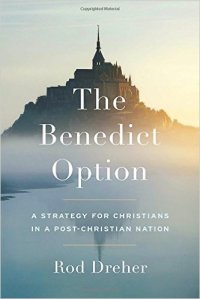
benedict optionI finished Rod Dreher’s The Benedict Option.  As a friend recently said: if you’ve been reading Dreher’s blog for a while, you totally know what you’re getting in this book.  The only thing that really stood out from the book-version of his argument concerning the Christian church’s place in contemporary society is the chapter about the monks of Norcia, which gives us a glimpse at “basic Benedictine spirituality,” something that has interested me for over a decade.
It seems to me that Dreher makes one basic assertion that needs to be dealt with.  And before getting to it, let me acknowledge that the response to that assertion (when posed as a question) is both yes and no.  Early in the book, in the first chapter, Dreher says

This is not just about our own survival.  If we are going to be for the world as Christ meant for us to be, we are going to have to spend more time away from the world, in deep prayer and substantial spiritual training– just as Jesus retreated to the desert to pray before ministering to the people.  We cannot give the world what we do not have. [emphasis mine]

Is that final statement true?  Does the church today actually lack what it hopes to give to the world?  If the statement is true, then how do we “get” what we should already have?  If the statement is false, why does it often feel like the statement is true?

The Gospel, of course, is what we have to give to the world.  I think most churches today would say that we have the Gospel but it’s the world that doesn’t want it.  And there is some truth in that.  But the Gospel, the good news of Jesus the Messiah crucified and resurrect and ascended to redeem God’s fallen creation, is more than just a proposition to be spoken until we feel we can knock the dust off our sandals.  It is more than a propositional framework.  It is truth with implication.  As every word of the New Testament claims, it is a reality rooted in revelation and relationship.  It is truth that works its way into every aspect of life like yeast through kneaded dough.  It’s a city on a hill and a lamp on a stand.  It’s a royal priesthood and a holy nation.  As Dreher notes a number of times, quoting Marshall McLuhan, “the medium is the message.”  That is true of both the incarnation and the church in Gospel terms.

Dreher asserts for over 200 pages that we need to think long and hard about what we say we believe and how we understand the implications of the Gospel for living day-to-day.  One does not have to whole-heartedly agree with his argument to take a moment and reflect on the different areas of life his book touches on.  On some level, humility demands this of us.  If, like an alarm, it wakes us up to the reality of the world around us, then so be it.  If it reminds us that we have tapped the snooze button one time too many, then so be it.  And if we are already wide awake when the alarm sounds, let’s be glad for the reminder and get on with the work that we are already doing.  And let us hope that more will join us.

(image from amazon.com, where you can always order the book)

Posted in 2017, Books, Faith | Tagged | Leave a comment

Fellowship of Legends

Tonight DC’s Legends of Tomorrow traveled to World War I and the Battle of the Somme to track down some literary help from JRR Tolkien.  The show has used the idea of the “Spear of Destiny” (the spear that pierced Jesus’ side and also used in the comics) as a thread for much of the season, and getting rid of it involves a legend in Tolkien’s area of expertise.   The episode is full of nice one-liners that fans of the books and movies will catch.  Consider:

And when they finally meet Tolkien, exchanges like this happen:

And while the episode doesn’t wrap up as neatly as the George Lucas adventure from earlier in the season, you still get a sense of the seriousness of things with some nice moments of humor.  Here’s a production video bringing in some of the creators’ thoughts on the episode.

We’ve got two episodes left in what has been a season markedly better than the previous.  Hopefully they’ll get the ring into the lake of fire, if you know what I mean.

Posted in Books, Movies, Television | Tagged , | Leave a comment

Closer to the Dark Tower

Talking about the theatrical version of The Dark Tower is almost impossible without giving away the ending of the series of novels by Stephen King.  Granted, I wasn’t really looking forward to the theatrical version until they announced that it was a continuation of the story more than a retelling.  It would make more sense, though, if you’d read the books.  The series was something that bridged my time in Texas (when two friends recommended The Eyes of the Dragon to me) and Hawaii (when King got around to finishing the series).

Here’s a movie poster recently released by King via Twitter.  It’s a great visual with one of the best lines of the series.  I look forward to the world the movie will take us to.

dark tower poster

Follow the Beam to your local cinema on July 28th.

Posted in Books, Movies | Leave a comment

Amazing Race Back on Track

After almost a year off the air, The Amazing Race is back on track at CBS.  The show will start its 29th cycle at the end of the month . . . with a twist that some have been asking about for a long time.

So we’re looking at eleven teams made up of pairs who have no knowledge of one another before the raise.  And by the end of the first episode, we see who gets chosen as partners.

Here’s a short introduction to the different contestants.

So we’re about two-and-a-half weeks away from a new journey around the world.  I hope the show does well enough in its new time-slot to picked up for additional seasons.  I can’t imagine being a contestant who had to keep the cycle’s conclusion a secret for almost a year.

Posted in Television, Travel | Leave a comment

Dovetailing Dreher and Smith

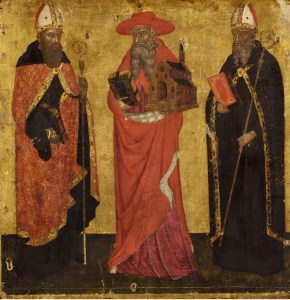
augustine and benedictThe last couple of weeks have brought a number of reactions to Rod Dreher’s eagerly-awaited book on conservative Christians in contemporary culture, The Benedict Option.  For many, it’s been an interesting litmus test for where particular “personalities” in the Christian (and particularly evangelical) reside ideologically.  Most critics of the book see the book as a call for almost complete withdrawal from the broader culture (even though it isn’t).  James K. A. Smith recently penned what Mark Bauerlein at First Things called a “hatchet job” of The Benedict Option and two other recent, same-vein books (one by a recent favorite of mine, Anthony Esolen).  Even giving Smith the benefit of the doubt (which I am apt to do), the article seemed harsh and unnecessarily presumptive.

One of the better “takes” on Dreher’s book came from Ross Douthat of the New York Times.    Douthat uses the recent issue of Russell Moore and the Southern Baptist Convention as a pivot for discussing “Christians in the Hands of Donald Trump.”  The last half of the article brings in Dreher’s book, warning of seeing the book as “prophecy” while also pointing out the good job Dreher does in talking counter-culture.

Today Smith finally posted his review of The Benedict Option over at Comment Magazine (a quarterly journal well-worth the subscription).  The snark is mostly gone.  It is clear that Smith is more optimistic than Dreher about “what happens next.”  It’s actually a great review and wonderful counter-point to Dreher’s perceived pessimism.  What is unfortunate, though, is that Smith is just short of saying “peace, peace when there is no peace.”  Almost, but not quite.

Smith seems to assume that contemporary Christianity has both the resources and the skills to “live Augustinianly” in American culture.  One could say that most of Smith’s work in the last decade have pointed out the fact that the resources are there, but the skills to understand and live well aren’t.  The best of the Benedict Option (at least as I understand it) is the challenge to acknowledge the resources that the church has (both in Scripture and in rich traditions too often neglected in contemporary Christianity) and our need to relearn the practices that will help us live faithfully.  For Dreher, a moment of retreat, of reconnoiter, is totally appropriate and even necessary.  And I would have to agree.  Don’t get me wrong: I can’t speak for every church or denomination out there.  But as best as I can tell, there are real reasons why young people are leaving the church and not returning, why Russell Moore can be called to the carpet for doing his job rightly and face closed-door meetings, why orthodox Christians seem unable to articulate orthodox truth well to a world that has rewritten societal DNA in significant ways over the last half-century.

I dream of the day where more Christians can “live Augustinianly” in the world around us. But many of us are not prepared to deal with a culture of expressive individualism that has no residual respect for a religious worldview they see as undefendable (and that is ultimately undefinable by those who supposedly hold to it).  Smith may very well be ahead of the curve, further down the road than the rest of us.  What he has to say might be vital for helping us learn to “live Augustinianly.”  But for those of us who, individually or collectively, just aren’t there yet, the Benedict Option might be part of the framework we need to see ourselves in the world rightly, a way for us to “lift our drooping hands and to strengthen our weak knees, to make straight paths and to heal things recently put out of joint.”

(image of Augustine and Benedict with Jerome in the middle; artist unknown; from artclon.com)

Posted in 2017, Books, Faith, Teaching | Tagged , , | Leave a comment

A Different Kind of Fellowship

This first trailer for next week’s Legends of Tomorrow doesn’t give away much.  After traveling to the moon, the team looks to be heading back to World War I as they pursue the  Spear of Destiny.  What we don’t yet see is who they meet: a young John Ronald Reuel Tolkien.

If it’s half as good as the George Lucas episode, it should be amazing.

Posted in Books, Television | Leave a comment