Waking Up in the Framework

Tuesday night’s episode of Marvel’s Agents of SHIELD went exactly where the show needed to go . . . at least for me.  After supernatural and scientific storylines, the show second “pod” of episodes ended with a virtual reset button.  All of the agents, either by choice or by coercion, are part of the reality known as the Framework.  And this new “reality” looks to bring back absent characters while also revisiting story points like Hydra.  Here’s the last scene of the episode, which begins with Daisy “waking up” in the Framework.

As far as this fan is concerned, this is an amazing swerve.  Maybe this will be a way that they can bring Lance Hunter and Bobbi Morse back into the show, if only for a little while.

Posted in Television | Leave a comment

Anticipation and Participation

For years I was taught to see the kingdom of God as that which is now-but-not-yet.  It’s one of those teachings with tension, pointing to a reality as frustrating as it is fulfilling.  One of the best articulators of this approach is N. T. Wright.  I’ve been rereading After You Believe, Wright’s book on virtue and ethics.  A lot of water has passed under the bridge since first reading the book seven years ago, so I have really been struck by Wright’s assertion of virtue as a way of anticipating and participating in what God is doing.

Because of Jesus’ death, resurrection, and ascension, Wright asserts, “we can draw down some of God’s future into our own present moment.  The rationale for this is that in Jesus that future has already burst into our present time, so that anticipating that which is to come, we are also implementing what has already taken place.”

For Wright, this is evident in the New Testament picture of the new heaven and new earth found in Revelation (and more than hinted at in the writings of Paul and the teachings of Jesus).  Wright continues:

In the new heavens and new earth, there will be new vocations and new tasks, the ultimate fulfillment of those given to [Adam] in the first place.  Once we glimpse this, we will be in a position to see how the New Testament’s vision of Christian behavior has to do, not with struggling to keep a bunch of ancient and apparently arbitrary rules, nor with “going with the flow” or “doing what comes naturally,” but with the learning of the language, in the present, which will equip us to speak fluently in God’s new world.

Holiness, then, is “the learning in the present of the habits which anticipate the ultimate future.”

The question for many of us today, then, is how to we keep our heads and hearts in the right place.  How do we see the world rightly?  And how, in the midst of this, do we live into holiness with hope?  I think music, particularly the kind that reflects the language of Scripture, can help with that immensely.  That’s why Andrew Peterson’s “The Dark Before the Dawn” has stuck with me for the last couple of years.  Here’s a recent recording of the song.  It is a good reminder of the reality of the now, but also of the seeds and the hope of the not-yet, which we are already participating in as we faithfully follow Jesus.

Posted in Books, Faith, Music, Teaching | Tagged | Leave a comment

“They Don’t Know That We Know”

Marvel’s Agents of SHIELD has taken the approach of two-seasons-in-one to a new level.  This season has been divided into thirds.  The first focused on Ghost Rider and a renegade Daisy Johnson.  The second has focused on life-model decoys, LMDs, while keeping some of the supernatural elements of the first third quietly bubbling beneath the surface.  That storyline comes to a conclusion this coming Tuesday.  Here’s a preview of that episode.

While this season hasn’t been particularly bad, it has been airing a little late for me.  Beyond that, the stories of spirits and robots has rarely been a big draw for me.  But season three earned enough trust for me that I’d like to see this season through.  It will be interesting to see what thread they focus on most in the season back third.

Posted in Television | Leave a comment

Not Enough

One day I’m going to string together various recordings of Caedmon’s Call performances, but it is not this day.  This day I am tired, ready for bed, and feeling like this classic Caedmon’s is totally appropriate.

Posted in Faith, Music | Tagged | Leave a comment

The Circle Closes In

We’re just a few weeks away from the release of the cinematic take on Dave Eggers’s The Circle.  The trailer that dropped today does a great job of capturing the “thriller” feel of the work, I think.

Sure, it gives you scenes that would be spoilers if not for how they are cut and mixed.  But you still get a great sense of the story’s rising tension.  We’re in that lull between Oscars and summertime at the movies, so a movie like this is more than welcome.

Posted in Books, Movies | Tagged | Leave a comment

Gorillas and Guinevere?

We have two weeks before new episodes of The Flash and DC’s Legends of Tomorrow on the CW.  While The Flash has been decent, it hasn’t been setting things on fire this season (particularly since returning from its winter break).  Hopefully things will pick up with the next two episodes, which take us to Earth-2 and Gorilla City.  Here’s the preview.

DC’s Legends of Tomorrow second season continues to excel.  After last week’s great weaving of some Flash mythos into the story, this week’s Legion of Doom-less episode kept things moving forward nicely.  Rip Hunter is much better as a villain, at this point.  The next episode should be interesting, as it looks to take us to the time of King Arthur.  But what time, exactly, is that?

Posted in Television | Tagged , | Leave a comment

The Story We Tell

story-tellingYesterday’s op-ed piece by Ross Douthat at the New York Times told a great story: the story of a nation divided down narrative lines.  He does not begin with our current political moment, but with the just-preceding one.  Reflecting on President Obama’s refrain of “that’s not who we are,” Douthat points out that

The problem with this rhetorical line is that it implicitly undercuts itself. If close to half of America voted for Republicans in the Obama years and support Trump today, then clearly something besides the pieties of cosmopolitan liberalism is very much a part of who we are.

This self-undermining flaw makes the trope a useful way to grasp the dilemmas facing Trump’s opponents. In seeking to reject Trump’s chauvinist vision, they end up excluding too much of what a unifying counternarrative would require.

Narratives are important, of course.  For many they are more important than the flash-and-blood world right in front of them.  Every fall I show my students a talk from Donald Miller where he talks about the power of narrative to change things: learn to tell a better story if the one you’re in is going no where.

But what do you do when you cannot decide on a guiding, comprehensive narrative (of which a worldview is same coin, different side)?

What is both interesting and sad is that this conundrum is true for more than just a nation.  It’s true for organizations, institutions, people, and even relationships.  And for some reason, we’d rather wallow in the slog of unnecessarily messy narrative than to get out in front of it or above it to get a better view in order to find a better way.

After a broad-strokes look at the liberal and conservative narratives, Douthat concludes (?)

Maybe no unifying story is really possible. Maybe the gap between a heroic founders-and-settlers narrative and the truth about what befell blacks and Indians and others cannot be adequately bridged.

But any leader who wants to bury Trumpism (as opposed to just beating Trump) would need to reach for one — for a story about who we are and were, not just what we’re not, that the people who still believe in yesterday’s American story can recognize as their own.

Whether you agree with his politics or not, Douthat’s article is a good conversation starter (much like Jedediah Purdy’s recent tweet asserting that “you might classify people politically now by whether they think the country needs to be restored (the right) saved (center) or built (left)”).

You can read all of Douthat’s post here.

(image from germaneconsulting.com)

Posted in 2017 | Leave a comment

Stranger Things, Too

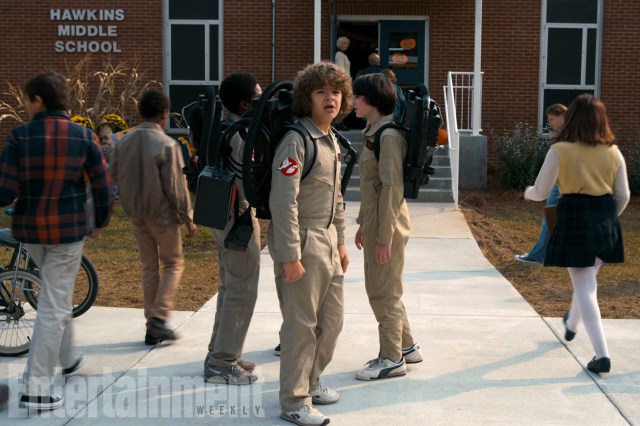
Netflix recently announced that a trailer for the second season of Stranger Things would drop during the Super Bowl.  They also released an image from the trailer, which dates the new season at 1984, one year after the events of the first season.  Here’s that image:

stranger-things-twoYou can read the entire (but short) Entertainment Weekly write-up for the announcement here.  And you can catch the trailer for the season sometime Sunday . . . and hopefully here, too.
Posted in Television | Leave a comment

Being Free in Crazy Times

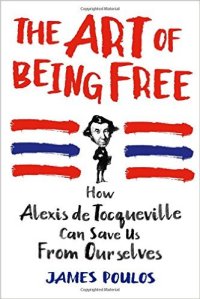
art-of-being-freeThere exists a handful of what you might call “magisterial works” that I would like to say that I have read.  Augustine’s City of God (working on it), MacIntyre’s After Virtue, DFW’s Infinite Jest, Charles Taylor’s A Secular Age all come to mind.  Another is Alexis de Tocqueville’s Democracy in America.  I’ve known about it since college but have yet to check it out, purchase it, or even really peruse it.  So I was glad to hear that a book about it had been written and that it was apropos for our time.  I’m just over 100 pages into James Poulos’s The Art of Being Free.  And while it takes a while to get used to his style (super-personal and energetic voice), it’s definitely giving me a good primer on a work of national significance.  One of his key assertions, taken from Tocqueville, is that we live in crazy times, and that such crazy times are “baked into” what it means to be American and always in a state of change.

Here’s a recent interview Poulos did with Larry King about the book and about other points of interest in these crazy times in which we live. It’s a good watch, even if the book is only talked about half the time.

Posted in 2017, Books, Faith | Leave a comment

Notes for Navigation

overloadWhen news of the recent Executive Order concerning refugees and immigration broke, I quickly turned to some of my favorite news sites to get a better understanding of things.  One of my favorite bloggers, Rod Dreher, posted nothing.  Part of that was a matter of familial responsibility.  Another part of it was his need for better and more complete information himself (you can read that Sunday afternoon post here).  It’s a reminder that we live in tricky times, which is more than just living in a world of “alternative facts” (regardless of what some pundits would have us believe).  And so how do we navigate our contemporary information culture, particularly when every moment could be a trigger for protest?

One of my other favorite writers, Alan Jacobs, recently shared his thoughts on the matter in a post called “Recency Illusions.”  I’m not sure how feasible his conclusion is, but it makes a lot of sense.

Those who are interested in history will remember events like the Battle of New Orleans, fought weeks after the Treaty of Ghent had ended the War of 1812 because word of the treaty hadn’t reached the armies. Since then, thanks to a series of well-known technological changes, the news cycle has grown shorter and shorter until now many people get their news minute-by-minute.

If the frequency that led to the Battle of New Orleans was too long, the Twitter-cycle is far, far too short. People regularly get freaked out by stories than turn out to be false, and by the time the facts are known a good deal of damage (not least to personal relationships) has often already been done — plus, the disappearance of the cause of an emotion doesn’t automatically eliminate the emotion itself. In fact, it often leaves that emotion in search of new justifications for its existence.

I have come to believe that it is impossible for anyone who is regularly on social media to have a balanced and accurate understanding of what is happening in the world. To follow a minute-by-minute cycle of news is to be constantly threatened by illusion. So I’m not just staying off Twitter, I’m cutting back on the news sites in my RSS feed, and deleting browser bookmarks to newspapers. Instead, I am turning more of my attention to monthly magazines, quarterly journals, and books. I’m trying to get a somewhat longer view of things — trying to start thinking about issues one when some of the basic facts about them have been sorted out. Taking the short view has burned me far too many times; I’m going to try to prevent that from happening ever again (even if I will sometimes fail). And if once in a while I end up fighting a battle in a war that has already ended … I can live with that.

The reasonable pushback, of course, is that perhaps we cannot afford to wait for the facts.  If life moves quickly, we should have response times that match.  The word “afford” in the previous sentence could be telling.  And yet . . .

It’s an interesting challenge, for sure, one made difficult by the speed of daily life.  I can’t help but think, though, that Jacobs makes a great point.

(image from knowyourmeme.com)

Posted in 2017, Internet | Leave a comment