Gorillas and Guinevere?

We have two weeks before new episodes of The Flash and DC’s Legends of Tomorrow on the CW.  While The Flash has been decent, it hasn’t been setting things on fire this season (particularly since returning from its winter break).  Hopefully things will pick up with the next two episodes, which take us to Earth-2 and Gorilla City.  Here’s the preview.

DC’s Legends of Tomorrow second season continues to excel.  After last week’s great weaving of some Flash mythos into the story, this week’s Legion of Doom-less episode kept things moving forward nicely.  Rip Hunter is much better as a villain, at this point.  The next episode should be interesting, as it looks to take us to the time of King Arthur.  But what time, exactly, is that?

Posted in Television | Tagged , | Leave a comment

The Story We Tell

story-tellingYesterday’s op-ed piece by Ross Douthat at the New York Times told a great story: the story of a nation divided down narrative lines.  He does not begin with our current political moment, but with the just-preceding one.  Reflecting on President Obama’s refrain of “that’s not who we are,” Douthat points out that

The problem with this rhetorical line is that it implicitly undercuts itself. If close to half of America voted for Republicans in the Obama years and support Trump today, then clearly something besides the pieties of cosmopolitan liberalism is very much a part of who we are.

This self-undermining flaw makes the trope a useful way to grasp the dilemmas facing Trump’s opponents. In seeking to reject Trump’s chauvinist vision, they end up excluding too much of what a unifying counternarrative would require.

Narratives are important, of course.  For many they are more important than the flash-and-blood world right in front of them.  Every fall I show my students a talk from Donald Miller where he talks about the power of narrative to change things: learn to tell a better story if the one you’re in is going no where.

But what do you do when you cannot decide on a guiding, comprehensive narrative (of which a worldview is same coin, different side)?

What is both interesting and sad is that this conundrum is true for more than just a nation.  It’s true for organizations, institutions, people, and even relationships.  And for some reason, we’d rather wallow in the slog of unnecessarily messy narrative than to get out in front of it or above it to get a better view in order to find a better way.

After a broad-strokes look at the liberal and conservative narratives, Douthat concludes (?)

Maybe no unifying story is really possible. Maybe the gap between a heroic founders-and-settlers narrative and the truth about what befell blacks and Indians and others cannot be adequately bridged.

But any leader who wants to bury Trumpism (as opposed to just beating Trump) would need to reach for one — for a story about who we are and were, not just what we’re not, that the people who still believe in yesterday’s American story can recognize as their own.

Whether you agree with his politics or not, Douthat’s article is a good conversation starter (much like Jedediah Purdy’s recent tweet asserting that “you might classify people politically now by whether they think the country needs to be restored (the right) saved (center) or built (left)”).

You can read all of Douthat’s post here.

(image from germaneconsulting.com)

Posted in 2017 | Leave a comment

Stranger Things, Too

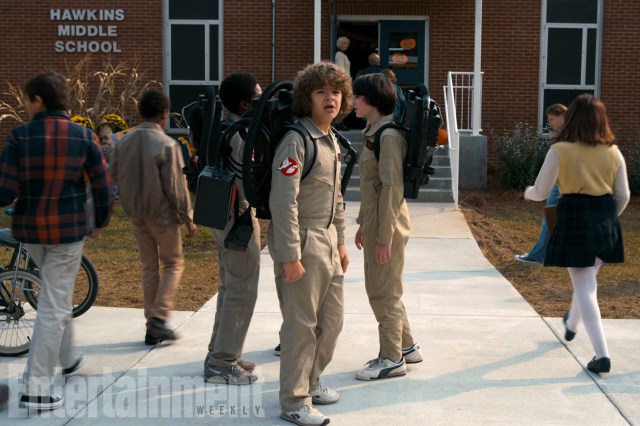
Netflix recently announced that a trailer for the second season of Stranger Things would drop during the Super Bowl.  They also released an image from the trailer, which dates the new season at 1984, one year after the events of the first season.  Here’s that image:

stranger-things-twoYou can read the entire (but short) Entertainment Weekly write-up for the announcement here.  And you can catch the trailer for the season sometime Sunday . . . and hopefully here, too.
Posted in Television | Leave a comment

Being Free in Crazy Times

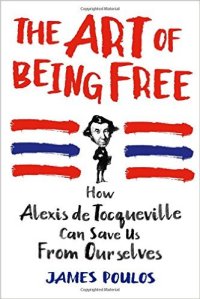
art-of-being-freeThere exists a handful of what you might call “magisterial works” that I would like to say that I have read.  Augustine’s City of God (working on it), MacIntyre’s After Virtue, DFW’s Infinite Jest, Charles Taylor’s A Secular Age all come to mind.  Another is Alexis de Tocqueville’s Democracy in America.  I’ve known about it since college but have yet to check it out, purchase it, or even really peruse it.  So I was glad to hear that a book about it had been written and that it was apropos for our time.  I’m just over 100 pages into James Poulos’s The Art of Being Free.  And while it takes a while to get used to his style (super-personal and energetic voice), it’s definitely giving me a good primer on a work of national significance.  One of his key assertions, taken from Tocqueville, is that we live in crazy times, and that such crazy times are “baked into” what it means to be American and always in a state of change.

Here’s a recent interview Poulos did with Larry King about the book and about other points of interest in these crazy times in which we live. It’s a good watch, even if the book is only talked about half the time.

Posted in 2017, Books, Faith | Leave a comment

Notes for Navigation

overloadWhen news of the recent Executive Order concerning refugees and immigration broke, I quickly turned to some of my favorite news sites to get a better understanding of things.  One of my favorite bloggers, Rod Dreher, posted nothing.  Part of that was a matter of familial responsibility.  Another part of it was his need for better and more complete information himself (you can read that Sunday afternoon post here).  It’s a reminder that we live in tricky times, which is more than just living in a world of “alternative facts” (regardless of what some pundits would have us believe).  And so how do we navigate our contemporary information culture, particularly when every moment could be a trigger for protest?

One of my other favorite writers, Alan Jacobs, recently shared his thoughts on the matter in a post called “Recency Illusions.”  I’m not sure how feasible his conclusion is, but it makes a lot of sense.

Those who are interested in history will remember events like the Battle of New Orleans, fought weeks after the Treaty of Ghent had ended the War of 1812 because word of the treaty hadn’t reached the armies. Since then, thanks to a series of well-known technological changes, the news cycle has grown shorter and shorter until now many people get their news minute-by-minute.

If the frequency that led to the Battle of New Orleans was too long, the Twitter-cycle is far, far too short. People regularly get freaked out by stories than turn out to be false, and by the time the facts are known a good deal of damage (not least to personal relationships) has often already been done — plus, the disappearance of the cause of an emotion doesn’t automatically eliminate the emotion itself. In fact, it often leaves that emotion in search of new justifications for its existence.

I have come to believe that it is impossible for anyone who is regularly on social media to have a balanced and accurate understanding of what is happening in the world. To follow a minute-by-minute cycle of news is to be constantly threatened by illusion. So I’m not just staying off Twitter, I’m cutting back on the news sites in my RSS feed, and deleting browser bookmarks to newspapers. Instead, I am turning more of my attention to monthly magazines, quarterly journals, and books. I’m trying to get a somewhat longer view of things — trying to start thinking about issues one when some of the basic facts about them have been sorted out. Taking the short view has burned me far too many times; I’m going to try to prevent that from happening ever again (even if I will sometimes fail). And if once in a while I end up fighting a battle in a war that has already ended … I can live with that.

The reasonable pushback, of course, is that perhaps we cannot afford to wait for the facts.  If life moves quickly, we should have response times that match.  The word “afford” in the previous sentence could be telling.  And yet . . .

It’s an interesting challenge, for sure, one made difficult by the speed of daily life.  I can’t help but think, though, that Jacobs makes a great point.

(image from knowyourmeme.com)

Posted in 2017, Internet | Leave a comment

Brexit as Beginning?

I remember that I had spent most of June 23rd thinking about attending a Thursday-night premiere of Independence Day: Resurgence.  For some reason (possibly because reviews were horrible), I stayed home and found myself watching CNN.  By early evening, I was transfixed to cable news as they told the story of the Brexit referendum vote in England.  It was the first time in a long time that I witnessed professional newscasters appear dumbstruck, as if the whole world (or at least a significant part of it) had turned upside down.  It was fascinating to think that such a monumental decision could be made and that so few people seem to have predicted it.  If that referendum wasn’t a sign of things to come, I don’t know what could’ve done the job.

With the Brexit aftermath, I spent some time reading some British websites to see what was going on.  I came across a site, Spiked, that purported to be a humanist/Libertarian website that seemed both to be highly opinionated and to have highly opinionated commenters.  It’s a site that takes the concern of freedom of speech to an almost uncomfortable level (so I often don’t agree with [or even understand]some of what is said there).  It was fascinating to see the first hints of revolution against “the global elites” and “the cosmopolitan.”  It was sobering to see charges of racism and xenophobia.  It was intriguing to speculate (and to watch others speculate) as they tried to figure out what would happen next to the land of Dickens and Shakespeare and Austen.

The folks over at Spiked recently put together a video that summarized the events and trains of thought rooted in the Brexit referendum.  It’s fascinating to watch and think through.

It’s fascinating because it mirrors (predicted?) the current American situation so well.  Which group is doing the revolting (rurals or cosmopolitans)?  Where does final decision-making power rest (electoral college? parliament?)?  What do you do when one demographic long thought “done with” seems to raise it’s head in some kind of defiance (is it generational?  is it social class?)?  And how in the world does a country move forward when each foot is pointed in a different direction?

It’s interesting to me that this event didn’t cause our own country to stop and take stock.  It’s like we ignored the rumble of fault lines that really demanded our attention.  The evening of June 23rd reminded me (as either prelude or beginning) that the course is not set and that whatever path we are on remains windy and unclear.  To think otherwise is dangerously presumptuous.

Posted in 2017, Television | Tagged | Leave a comment

George Lucas Has the Spear of Destiny

This week, DC’s Legends of Tomorrow finally achieved excellence.  In this week’s episode, “Raiders of the Lost Art,” the team of misfits traveled to 1967 to track down the Spear of Destiny (fictionally said to be the spear that pierced the side of Jesus on the cross) before the “Legion of Doom.”  They end up encountering the man that brought the team together in the first place- Rip Hunter, mind scrambled and working on a film with George Lucas.  Convoluted?  Sure.  But also lots of fun to watch.  Here’s an extended scene from the episode . . . one that takes place in a trash compactor.

The episode was amazingly tongue-in-cheek, especially when Lucas decides to leave film school . . . and thus radically changing the fates of two of the show’s main characters.  And it accomplished all this while moving a complicated time travel narrative forward.

I’m glad Legends was picked up for a third season a few weeks ago.  I’m sad that the show is shining a bit more than it’s new Tuesday companion, The Flash.  I’m looking forward to how this season of Legends ends.

+ + + + +

Meanwhile, the CW shows seem to be fully embracing the shared-universe(s) concept.  This week’s Supergirl brought in a Dominator (last seen in the four-series crossover).  And tonight’s Arrow brought in the Earth-2 Canary, last seen at the end of the second season of The Flash.  These kind of cross-series nods are also something to look forward to (as long as they play them right and mostly without fanfare).

Posted in Television | Tagged , | Leave a comment

Map or Globe?

america-globeSeth Godin recently posted some thoughts that might be helpful in getting a handle on the world we are all trying to navigate.  From a post titled “Maps or Globes”:

If someone needs directions, don’t give them a globe. It’ll merely waste their time.

But if someone needs to understand the way things are, don’t give them a map. They don’t need directions, they need to see the big picture.

I think our technical society is at least somewhat proficient with the “maps” of the world around us.  Not perfect, but proficient.  Not perfect because even the best of maps might be just outdated enough to require some off-the-cuff navigation.

It’s the globe that matters.  And it’s the globe that we might be arguing over most.  If the globe is the big picture, then we all have our take on which globe gives the best big picture.  Without sounding redundant: your globe is your worldview.  The world is the same; the lenses are the difference.  We often don’t realize that we’re giving second-story arguments without really considering basic presuppositions (foundation and basement talk).

Worldview is not without its weaknesses (see James K. A. Smith’s Desiring the Kingdom).  Worldview done poorly remains too abstract, doesn’t have the necessary flesh and bone.  And so a worldview, an image of the world in the shape of a globe, cannot simply be a framework.  It has to be a shared reality.

As so many before me have noted, these days we are arguing about fruit with no regard for the root, about consequence with no regard for ultimate cause.  Those are the conversations we need to have.

You can read more of Godin’s thoughts on all kinds of things here.

(image from publicdomanpictures.net)

Posted in 2017, Faith, Teaching | Leave a comment

Living Room Session

living-roomPerhaps the most personally enlightening moment of this last election season came a few weeks before ballots were cast.  A friend’s church was having a “living room” meeting to discuss the election and concerns particular to Christians in light of the candidates.  I attended as a frustrated but willing to learn listener.  What I found over the course of the evening were Christians who were frustrated with a broken system and who were trying to think ahead . . . not just to the November ballot but to ten or twenty years down the road when the current two-party system might be obsolete.  They saw themselves as laying some kind of long-term foundation that might benefit their children and churches decades from now.  But that meant something of a break with the system as it stands today.

+ + + + +

I’ve been thinking about “the Benedict Option” as articulated by Rod Dreher for some time (mostly since reading this post).  The quote that Dreher takes from Alasdair MacIntyre’s After Virtue draws a parallel between ancient and contemporary situations that point to the need to redraw some lines, rethink some tactics, as culture shifts and changes.  Events like that “living room meeting” or even the events of this past weekend remind me of that quote:

It is always dangerous to draw too precise parallels between one historical period and another; and among the most misleading of such parallels are those which have been drawn between our own age in Europe and North America and the epoch in which the Roman empire declined into the Dark Ages. Nonetheless certain parallels there are. A crucial turning point in that earlier history occurred when men and women of good will turned aside from the task of shoring up the Roman imperium and ceased to identify the continuation of civility and moral community with the maintenance of that imperium.

What is the best way to react to the times in which we find ourselves, whatever those times may be?  At what point to you take a step and decide to direct your energies elsewhere?  This is true, of course, for more than just life after an election.  (And let’s not kid ourselves.  Most of us, regardless of who we voted for, need to have a good and long think about what we do next.)  And it’s true for more than just a nation: it’s true for cities and schools and churches and anyone figuring out how to make a way through the world.  From MacIntyre:

What they set themselves to achieve instead often not recognizing fully what they were doing—was the construction of new forms of community within which the moral life could be sustained so that both morality and civility might survive the coming ages of barbarism and darkness. If my account of our moral condition is correct, we ought also to conclude that for some time now we too have reached that turning point. What matters at this stage is the construction of local forms of community within which civility and the intellectual and moral life can be sustained through the new dark ages which are already upon us. And if the tradition of the virtues was able to survive the horrors of the last dark ages, we are not entirely without grounds for hope. This time however the barbarians are not waiting beyond the frontiers; they have already been governing us for quite some time. And it is our lack of consciousness of this that constitutes part of our predicament.

MacIntyre published those words in 1981, which means we’ve been off our guard for a long time.  Whatever the cure for what ails us might be, it would include civility and an intellectual and moral life that includes a virtuous tradition.

+ + + + +

I’ve been trying to process lots of thoughts on multiple levels for a while now.  As a citizen, for sure.  But also as a member of a church, as a teacher at a school, as a son and a brother, as a friend, as someone who loves stories both read and performed, as someone frail and fallible but also in some way responsible.  Culture matters.  Ideas matter.  People matter.  And the reality in which we find ourselves (and the eyes we have to see that reality) matters.

I still plan on posting previews for The Flash and trailers for upcoming movies that have my attention.  I still plan on posting the best of the four-color funnies throughout the week (and particularly on Sundays).  But I’m also going to start loading this site with quotes and reflections about the space and time in which we find ourselves.  I’ll tag these entries as “2017” until I think of something better.  If you see something that piques your interest, please comment and let me know.

(image from xmito.com)

Posted in 2017 | Tagged | Leave a comment

For When You’re Shaking Like a Leaf

A recording of Andrew Peterson performing one of Rich Mullins’ best as part of a soundcheck.

Posted in Faith, Music | Tagged , | Leave a comment