Summer Break and Beyond

Difficult to believe that it’s back to school in just over two weeks for me.  In cinematic terms, that means we’re about 2/3 of the way through summer movie season (at least how I reckon it).  In a bit of a blockbuster lull right now (ID:R didn’t quite make it and Finding Dory is more personal thank “blockbuster” when it comes to genre).  So summer will end with Star Trek Beyond and Jason Bourne, it seems.

Here’s the most recent trailer for STB.  I think it does a great job of pop song integration, something that doesn’t happen nearly enough these days.

Star Trek Beyond lands Friday, July 22nd.  I’m hoping to catch it July 21st.

Posted in Internet, Movies | Leave a comment

The Root and Fruit of Affection

Yesterday I wrote a bit about Wendell Berry’s “rescue” of imagination as preparation for understanding the importance of affection (which I will take as at least a form of what others might call love).  Both terms are used by Berry in “It All Turns onPiros_bakator_grape_cluster Affection,” a lecture given in 2012 through the National Endowment for the Humanities concerning the role of farming in America.  After refining the meaning of imagination, Berry moves on to affection.

Obviously there is some risk in making affection the pivot of an argument about economy. The charge will be made that affection is an emotion, merely “subjective,” and therefore that all affections are more or less equal: people may have affection for their children and their automobiles, their neighbors and their weapons. But the risk, I think, is only that affection is personal. If it is not personal, it is noth
ing; we don’t, at least, have to worry about governmental or corporate affection. And one of the endeavors of human cultures, from the beginning, has been to qualify and direct the influence of emotion. The word “affection” and the terms of value that cluster around it—love, care, sympathy, mercy, forbearance, respect, reverence—have histories and meanings that raise the issue of worth. We should, as our culture has warned us over and over again, give our affection to things that are true, just, and beautiful. When we give affection to things that are destructive, we are wrong. A large machine in a large, toxic, eroded cornfield is not, properly speaking, an object or a sign of affection.

I almost want to encourage anyone reading this to read that excerpt again and substitute the word love in each time you see affection (like it was 1 Corinthians 13 or something).  Berry is right, though: it is a dangerous thing to make an argument a
bout seemingly immensely practical things with an “emotional” thing like affection.  In faith circles, that would be taking the personal/emotional route and totally dismissing the apologetics route.  And maybe that’s a good thing.  (Or maybe the analogy is weak.  Hmm.)

I like the word “cluster” Berry connects with affection: love (see!), care, sympathy, mercy, forbearance, respect, and reverence.  Then it’s less than a hop, skip, and jump to things that are true, just, and beautiful.  These are things that move us, that move in us.  And Berry seems to think that culture throughout history has been tasked with “qualifying and directing” those affections that shape our “life together.”  This, of course, lines up well with the assertions of James K. A Smith (and Augustine before him) about how we are shaped by what we love (and then shape other things accordingly).  In Berry’s mind (and heart), affection is key in refraining the big economic/community issues of our time.

And so imagination followed by affection.  Tomorrow we’ll look at the role knowledge plays in Berry’s argument.  Feel free to read the rest of his essay here.

(image from commons.wikimedia.org)

Posted in Books, Faith, The Long Story | Tagged | 2 Comments

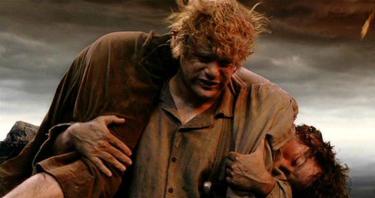
100 Years and the Land of Mordor

frodo sam 100The New York Times recently posted a short piece about the life of JRR Tolkien and its connection to The Lord of the Rings.  The author, Joseph Loconte, recently published a biography connecting Tolkien and Lewis.  The article begins:

In the summer of 1916, a young Oxford academic embarked for France as a second lieutenant in the British Expeditionary Force. The Great War, as World War I was known, was only half-done, but already its industrial carnage had no parallel in European history.

“Junior officers were being killed off, a dozen a minute,” recalled J. R. R. Tolkien. “Parting from my wife,” he wrote, doubting that he would survive the trenches, “was like a death.”

The 24-year-old Tolkien arrived in time to take part in the Battle of the Somme, a campaign intended to break the stalemate between the Allies and Central Powers. It did not.

The first day of the battle, July 1, produced a frenzy of bloodletting. Unaware that its artillery had failed to obliterate the German dugouts, the British Army rushed to slaughter.

It was during this moment (and the four months that followed for Tolkien), that the seeds of the world of Middle Earth were born.

Tolkien’s creative mind found an outlet. He began writing the first drafts of his mythology about Middle-earth, as he recalled, “by candle light in bell-tents, even some down in dugouts under shell fire.” In 1917, recuperating from trench fever, Tolkien composed a series of tales involving “gnomes,” dwarves and orcs engaged in a great struggle for his imaginary realm.

In the rent earth of the Somme Valley, he laid the foundation of his epic trilogy.

Some of the worst places in the Tolkien’s world found root in those moments.

On the path to Mordor, stronghold of Sauron, the Dark Lord, the air is “filled with a bitter reek that caught their breath and parched their mouths.” Tolkien later acknowledged that the Dead Marshes, with their pools of muck and floating corpses, “owe something to Northern France after the Battle of the Somme.”

The article crescendoes with a nod to the spiritual reality that infused Tolkien’s work:

Even this was not the whole story. For Tolkien, there was a spiritual dimension: In the human soul’s struggle against evil, there was a force of grace and goodness stronger than the will to power. Even in a forsaken land, at the threshold of Mordor, Samwise Gamgee apprehends this: “For like a shaft, clear and cold, the thought pierced him that in the end the Shadow was only a small and passing thing: There was light and high beauty forever beyond its reach.”

Good triumphs, yet Tolkien’s epic does not lapse into escapism. His protagonists are nearly overwhelmed by fear and anguish, even their own lust for power. When Frodo returns to the Shire, his quest at an end, he resembles not so much the conquering hero as a shellshocked veteran. Here is a war story, wrapped in fantasy, that delivers painful truths about the human predicament.

Even the most fantastic of worlds and stories, in the end, can sit in the shadow of reality.  Leconte’s article is a great reminder of that, one hundred years after the loss of so many lives at such a major moment in history.

You can read the entire article here.  It’s a good read.

(image from lots.wikia.com; tip-of-the-pipe to Gerry Canavan)

Posted in Books, Faith, Internet | Tagged | Leave a comment

Affection is Rooted in Imagination

farmlandWhat’s been interesting to me over the last few years of thinking through things like James K. Smith’s cultural liturgies concept (teased out well in You Are What You Love) is how the idea of what you love and how it shapes you is nothing new (or even, ultimately, unique to Smith).  Wendell Berry, Kentucky poet, essayist, and farm-spokesman, has had similar thoughts, some of which show up in his essay, “It All Turns on Affection.”  Affection is tied closely to, might even be synonymous with, love.  From the essay:

The term “imagination” in what I take to be its truest sense refers to a mental faculty that some people have used and thought about with the utmost seriousness. The sense of the verb “to imagine” contains the full richness of the verb “to see.” To imagine is to see most clearly, familiarly, and understandingly with the eyes, but also to see inwardly, with “the mind’s eye.” It is to see, not passively, but with a force of vision and even with visionary force. To take it seriously we must give up at once any notion that imagination is disconnected from reality or truth or knowledge. It has nothing to do either with clever imitation of appearances or with “dreaming up.” It does not depend upon one’s attitude or point of view, but grasps securely the qualities of things seen or envisioned.

I will say, from my own belief and experience, that imagination thrives on contact, on tangible connection. For humans to have a responsible relationship to the world, they must imagine their places in it. To have a place, to live and belong in a place, to live from a place without destroying it, we must imagine it. By imagination we see it illuminated by its own unique character and by our love for it. By imagination we recognize with sympathy the fellow members, human and nonhuman, with whom we share our place. By that local experience we see the need to grant a sort of preemptive sympathy to all the fellow members, the neighbors, with whom we share the world. As imagination enables sympathy, sympathy enables affection. And it is in affection that we find the possibility of a neighborly, kind, and conserving economy.

Imagination hasn’t fared well in our all-too-practical way of life.  Perhaps that’s why Berry seems to try and rescue it from simply being “flights of fancy” or what in the time of King James had an air of thought set in opposition to the mind of God.  Instead, imagination is active, rooted in tangible things.  I remember learning a number of years ago (from a book I can no longer recall) that imagination is the thing that helps us hold things together, an act of faith that helps us see connections that are present but perhaps not seen.

I think this is a great rehabilitation of the term.  In Berry’s argument, it is our lack of imagination (and therefore affection) that has crippled what he sees as a key part of living well.  More on that tomorrow.

If you’ve got some time, you can read the entire essay from Berry here.

(image from natureworldnews.com)

Posted in Books, Faith, The Long Story | Tagged | Leave a comment

Independence, Resurgence, and Collapse

id4-gallery2Last weekend, and against the better judgment of Rotten Tomatoes, I caught a showing of Independence Day: Resurgence.  The movie is decent.  The effects were amazing (and made me wish I had chosen the 3D route).  The script was okay.  The only actors that got any audience response were the veteran actors, which I thought was interesting.  What ultimately made the movie for me was the current socio-political climate, particularly with the UK referendum to leave the European Union.

Independence Day: Resurgence, much like its predecessor, is based on a particular way of seeing the world (a way that mostly felt emerging back in the 90s): globalism.  Disaster movies, because they catch their characters at their worst, often depend on “everyone putting their differences aside for the sake of the greater good.”  (They are, I suppose, the opposite of a horror movie, where everyone gets knocked off one by one.)  Many pundits have spoken of the recent UK referendum results as a rejection of globalism.  Some have called this a resurgence of nationalism, akind of “Independence Day.” There have been cries of racism and ageism and xenophobia thrown into the discussion.  I’ve seen people identifying themselves as European (as opposed to) British (as opposed to) a Londoner.  What do you do when even the way you describe yourself and what you identify as home collapses?  It’s been an interesting situation to watch unfold, and there are things to be learned (so let’s hope we’re paying attention).  And while actions are a big part of what we should consider, we have to be particularly careful about the words we hear (as well as the words we use).

+ + +

Over the next few days, I’m going to post some reflections on a Wendell Berry essay titled “It All Turns on Affection.”  It was delivered as a speech back in 2012.  Over the course of the posts, I’ll point out a few terms that Berry uses that I think might be helpful (at least for someone like me) to understand a better way of being in the world.  For me, at least, they are particularly powerful for this moment.

+ + +

A couple of days ago, Slate posted an article about the sad situation of the summer blockbuster titled “RIP, big 4th of July movie: ‘Independence Day’ then and now and monoculture’s slow demise.”  The article reminds us of a time when the “monoculture” meant almost everyone would see and listen to the same movies, the same music, the same television shows.  Independence Day was a great example of this.  It was an interesting way for us to “all be together,” a way that definitely had hints of a kind of globalism.  That “monoculture” is dead.  I cannot help but wonder who will determine the kind of ghost (or zombie) it will leave behind.

(image from foxmovies.com)

Posted in Internet, Movies | Leave a comment

So Plays the Fool

Travel day today, so a simple post with a deceptively simple song by Andrew Peterson.

Funny that it’s Andy Gullahorn (who plays on the song) that shows up in the still image for the video.

Posted in Faith, Internet, Music, Travel | Tagged | Leave a comment

Asking the LEGO Question

It’s a good question, one that actually comes to mind every now and then.  Community season three: the question was asked, but was it every answered?

Posted in Internet, Television | Leave a comment

Valleys Fill First

This past week I came into possession of the Caedmon’s Call Guild Volume 4.  Unlike its three predecessors, the fourth volume of the batch was all video footage.  And while it lacks some of the full-song punch of the other Guild effort, it more than makes up for it with its “slice of life” from the 90s content.  The videos cover childhood performances up to the band’s first “worship” album, In the Company of Angels.  It also includes appearances by Rich Mullins, Andrew Peterson, and Bebo Norman. Here’s concert footage of “Valleys Fill First” from Long Line of Leavers, one of the few full songs on the DVD.  It’s a great performance that really hits stride when all three main voices finally get together.

Posted in Faith, Internet, Music | Tagged | Leave a comment

Think Ahead: Beyond Specialization

actuarialscience-minorOne of the things that I like most about Stanley Hauerwas’s letter to Christians starting college is that he takes a few paragraphs to think ahead to the time when a student moves from core curriculum to major and minor concentrations.

Eventually, you will no longer be a freshman, and American undergraduate education will force you to begin to specialize. This will present dangers as well as opportunities. You will be tempted to choose a major that will give you a sense of coherence. But be careful your major does not narrow you in the wrong way.

I think one of the best things that happened to me in college was moving beyond just a major in Bible to a second major in English.  They kept one another in check even while they pushed each other along.  Hauerwas continues.

The argument Hauerwas presents encourages the student to treat the history of one’s chosen discipline with care because it can inform one’s understanding of the big picture.  It also helps to understand the evolution of unspoken “agendas” for a given field:

Too often, though, students have no idea how and why the scientific fields’ research agendas developed into their current form of practice. To go back and read Isaac Newton can be a bit of a shock, because he interwove his scientific analysis with theological arguments. You shouldn’t take this as a mandate for doing the same thing in the twenty-first century. It should, however, make you realize that modern science has profound metaphysical and theological dimensions that have to be cordoned off, perhaps for good reasons. Or perhaps not. The point is that knowing the history of your discipline will, inevitably, broaden the kinds of questions you ask and force you to read to be an intellectual rather than just a specialist.

Hauerwas goes on to say that writers like Dante shouldn’t be “kept” by English departments alone, that he has much to offer in areas beyond the land of literary criticism.

In the end, Hauerwas promotes a kind of “theological interrogation” that I think is appropriate (if not grossly under-practiced on multiple levels, high school included).

I emphasize broadening your major with historical questions and challenges to set categories because your calling is to be a Christian student, not a physics student or an English student. Again, I do not want to make every Christian in the university into a theologian, but it is important for you to interrogate theologically what you are learning. For example, you may major in economics, a discipline currently dominated by mathematical models and rational-choice theories. Those theories may have some utility (to use an economic expression), but they also may entail anthropological assumptions that a Christian cannot accept. You will not be in a position even to see the problem, much less address it, if you let your intellectual life be defined by your discipline.

In the end, it’s really a way of thinking about thinking that involves the Spirit.  And it’s just as particular as any other perspective or form of “criticism.”  There is some real wisdom, I think, in what Hauerwas asserts.

(image from sju.edu)

Posted in Faith, Internet, Teaching | Leave a comment

Think Ahead: Books, Books, Books (or Just Keep Swimming)

Stack Of BooksIn his letter to college freshmen who are Christians, Stanley Hauerwas introduces the idea of students being theologians, which he contextually defines as

thinking about what you are learning in light of Christ. This does not happen by making everything fit into Church doctrine or biblical preaching—that’s theology in the strict, official sense. Instead, to become a Christian scholar is more a matter of intention and desire, of bearing witness to Christ in the contemporary world of science, literature, and so forth.

The use of scholar is also interesting, and its something he deal with in the letter.  He suggests, and rightly so, that students can’t do this work on their own.  Which is where friends and books come in.  Consider:

You can’t do this on your own. You’ll need friends who major in physics and biology as well as in economics, psychology, philosophy, literature, and every other discipline. These friends can be teachers and fellow students, of course, but, for the most part, our intellectual friendships are channeled through books. C. S. Lewis has remained popular with Christian students for many good reasons, not the least of which is that he makes himself available to his readers as a trusted friend in Christ. That’s true for many other authors too. Get to know them.

Books, moreover, are often the way in which our friendships with our fellow students and teachers begin and in which these friendships become cemented. I’m not a big fan of Francis Schaeffer, but he can be a point of contact—something to agree with or argue about. The same is true for all writers who tackle big questions. Read Plato, Aristotle, Hume, and John Stuart Mill, and not just because you might learn something. Read them because doing so will provide a sharpness and depth to your conversations. To a great extent, becoming an educated person means adding lots of layers to your relationships. Sure, going to the big football game or having a beer (legally) with your buddies should be fun on its own terms, but it’s also a reality ripe for analysis, discussion, and conversation. If you read Mary Douglas or Claude Levi-Strauss, you’ll have something to say about the rituals of American sports. And if you read Jane Austen or T. S. Eliot, you’ll find you see conversations with friends, particularly while sharing a meal, in new ways. And, of course, you cannot read enough Trollope. Think of books as the fine threads of a spider’s web. They link and connect.

This is especially true for your relationships with your teachers. You are not likely to become buddies with your teachers. They tend to be intimidating. But you can become intellectual friends, and this will most likely happen if you’ve read some of the same books. This is even true for science professors. You’re unlikely to engage a physics professor in an interesting conversation about subatomic particles. As a freshman you don’t know enough. But read C. P. Snow’s book The Two Cultures, and I’ll bet your physics teacher will want to know what you’re thinking. Books are touchstones, common points of reference. They are the water in which our minds swim.

I do think there’s a large dollop of idealism here, but I applaud the sentiment.  Books have become my go-to gifts for graduates (usually Tozer or Miller or, most recently, Garber and Smith).  On a biographical note, a lot of my reading has been done in a kind of solitude.  Bonhoeffer and Buechner were on the fringe for me in college, and I didn’t quite know how to bring them up with others.  In seminary, my favorite books had nothing to do with the content of most of my courses (Crabb and Nouwen ).  I am thankful for books, though, particularly when people have not been available.  And I am thankful for those who read books and turn them into bridges into the lives of others for the sake of the Gospel.

(image from whytoread.com)

Posted in Books, Faith, Internet, Teaching | Leave a comment