
So Plays the Fool

Travel day today, so a simple post with a deceptively simple song by Andrew Peterson.

Funny that it’s Andy Gullahorn (who plays on the song) that shows up in the still image for the video.

Posted in Faith, Internet, Music, Travel | Tagged | Leave a comment

Asking the LEGO Question

It’s a good question, one that actually comes to mind every now and then.  Community season three: the question was asked, but was it every answered?

Posted in Internet, Television | Leave a comment

Valleys Fill First

This past week I came into possession of the Caedmon’s Call Guild Volume 4.  Unlike its three predecessors, the fourth volume of the batch was all video footage.  And while it lacks some of the full-song punch of the other Guild effort, it more than makes up for it with its “slice of life” from the 90s content.  The videos cover childhood performances up to the band’s first “worship” album, In the Company of Angels.  It also includes appearances by Rich Mullins, Andrew Peterson, and Bebo Norman. Here’s concert footage of “Valleys Fill First” from Long Line of Leavers, one of the few full songs on the DVD.  It’s a great performance that really hits stride when all three main voices finally get together.

Posted in Faith, Internet, Music | Tagged | Leave a comment

Think Ahead: Beyond Specialization

actuarialscience-minorOne of the things that I like most about Stanley Hauerwas’s letter to Christians starting college is that he takes a few paragraphs to think ahead to the time when a student moves from core curriculum to major and minor concentrations.

Eventually, you will no longer be a freshman, and American undergraduate education will force you to begin to specialize. This will present dangers as well as opportunities. You will be tempted to choose a major that will give you a sense of coherence. But be careful your major does not narrow you in the wrong way.

I think one of the best things that happened to me in college was moving beyond just a major in Bible to a second major in English.  They kept one another in check even while they pushed each other along.  Hauerwas continues.

The argument Hauerwas presents encourages the student to treat the history of one’s chosen discipline with care because it can inform one’s understanding of the big picture.  It also helps to understand the evolution of unspoken “agendas” for a given field:

Too often, though, students have no idea how and why the scientific fields’ research agendas developed into their current form of practice. To go back and read Isaac Newton can be a bit of a shock, because he interwove his scientific analysis with theological arguments. You shouldn’t take this as a mandate for doing the same thing in the twenty-first century. It should, however, make you realize that modern science has profound metaphysical and theological dimensions that have to be cordoned off, perhaps for good reasons. Or perhaps not. The point is that knowing the history of your discipline will, inevitably, broaden the kinds of questions you ask and force you to read to be an intellectual rather than just a specialist.

Hauerwas goes on to say that writers like Dante shouldn’t be “kept” by English departments alone, that he has much to offer in areas beyond the land of literary criticism.

In the end, Hauerwas promotes a kind of “theological interrogation” that I think is appropriate (if not grossly under-practiced on multiple levels, high school included).

I emphasize broadening your major with historical questions and challenges to set categories because your calling is to be a Christian student, not a physics student or an English student. Again, I do not want to make every Christian in the university into a theologian, but it is important for you to interrogate theologically what you are learning. For example, you may major in economics, a discipline currently dominated by mathematical models and rational-choice theories. Those theories may have some utility (to use an economic expression), but they also may entail anthropological assumptions that a Christian cannot accept. You will not be in a position even to see the problem, much less address it, if you let your intellectual life be defined by your discipline.

In the end, it’s really a way of thinking about thinking that involves the Spirit.  And it’s just as particular as any other perspective or form of “criticism.”  There is some real wisdom, I think, in what Hauerwas asserts.

(image from sju.edu)

Posted in Faith, Internet, Teaching | Leave a comment

Think Ahead: Books, Books, Books (or Just Keep Swimming)

Stack Of BooksIn his letter to college freshmen who are Christians, Stanley Hauerwas introduces the idea of students being theologians, which he contextually defines as

thinking about what you are learning in light of Christ. This does not happen by making everything fit into Church doctrine or biblical preaching—that’s theology in the strict, official sense. Instead, to become a Christian scholar is more a matter of intention and desire, of bearing witness to Christ in the contemporary world of science, literature, and so forth.

The use of scholar is also interesting, and its something he deal with in the letter.  He suggests, and rightly so, that students can’t do this work on their own.  Which is where friends and books come in.  Consider:

You can’t do this on your own. You’ll need friends who major in physics and biology as well as in economics, psychology, philosophy, literature, and every other discipline. These friends can be teachers and fellow students, of course, but, for the most part, our intellectual friendships are channeled through books. C. S. Lewis has remained popular with Christian students for many good reasons, not the least of which is that he makes himself available to his readers as a trusted friend in Christ. That’s true for many other authors too. Get to know them.

Books, moreover, are often the way in which our friendships with our fellow students and teachers begin and in which these friendships become cemented. I’m not a big fan of Francis Schaeffer, but he can be a point of contact—something to agree with or argue about. The same is true for all writers who tackle big questions. Read Plato, Aristotle, Hume, and John Stuart Mill, and not just because you might learn something. Read them because doing so will provide a sharpness and depth to your conversations. To a great extent, becoming an educated person means adding lots of layers to your relationships. Sure, going to the big football game or having a beer (legally) with your buddies should be fun on its own terms, but it’s also a reality ripe for analysis, discussion, and conversation. If you read Mary Douglas or Claude Levi-Strauss, you’ll have something to say about the rituals of American sports. And if you read Jane Austen or T. S. Eliot, you’ll find you see conversations with friends, particularly while sharing a meal, in new ways. And, of course, you cannot read enough Trollope. Think of books as the fine threads of a spider’s web. They link and connect.

This is especially true for your relationships with your teachers. You are not likely to become buddies with your teachers. They tend to be intimidating. But you can become intellectual friends, and this will most likely happen if you’ve read some of the same books. This is even true for science professors. You’re unlikely to engage a physics professor in an interesting conversation about subatomic particles. As a freshman you don’t know enough. But read C. P. Snow’s book The Two Cultures, and I’ll bet your physics teacher will want to know what you’re thinking. Books are touchstones, common points of reference. They are the water in which our minds swim.

I do think there’s a large dollop of idealism here, but I applaud the sentiment.  Books have become my go-to gifts for graduates (usually Tozer or Miller or, most recently, Garber and Smith).  On a biographical note, a lot of my reading has been done in a kind of solitude.  Bonhoeffer and Buechner were on the fringe for me in college, and I didn’t quite know how to bring them up with others.  In seminary, my favorite books had nothing to do with the content of most of my courses (Crabb and Nouwen ).  I am thankful for books, though, particularly when people have not been available.  And I am thankful for those who read books and turn them into bridges into the lives of others for the sake of the Gospel.

(image from whytoread.com)

Posted in Books, Faith, Internet, Teaching | Leave a comment

Think Ahead: Minds Needed, Minds Wanted

college-classroomThe church, particularly the evangelical Protestant kind, often has a strange relationship between faith and learning.  It as if one must necessarily cancel out the other.  And while I got more of a sense of that when heading off to seminary, I imagine it is also true for college, particularly in light of the myths/realities one hears about coming form campuses today.  In his letter to Christian college freshmen, Hauerwas will have none of it.
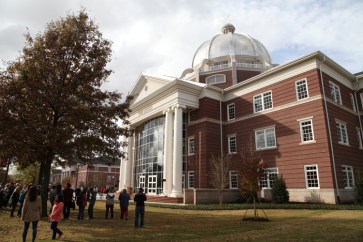
Don’t underestimate how much the Church needs your mind. Remember your Bible-study class? Christians read Isaiah’s prophecy of a suffering servant as pointing to Christ. That seems obvious, but it’s not; or at least it wasn’t obvious to the Ethiopian eunuch to whom the Lord sent Philip to explain things. Christ is written everywhere, not only in the prophecies of the Old Testament but also in the pages of history and in the book of nature. The Church has been explaining, interpreting, and illuminating ever since it began. It takes an educated mind to do the Church’s work of thinking about and interpreting the world in light of Christ. Physics, sociology, French literary theory: All these and more—in fact, everything you study in college—is bathed in the light of Christ. It takes the eyes of faith to see that light, and it takes an educated mind to understand and articulate it.

It really is saddening (and maddening) to hear people of faith compartmentalize their beliefs in a way that ultimately rejects the lordship of Christ over all of His creation.

It is, though, too easy to go too far in the other direction: where learning is more of a distraction than an in-road for what God has done and is doing.  And, as everyone since Paul’s time (and probably before) knew: knowledge tends to puff up.  As Hauerwas states, though, learning is good for many things in the church, including a sense of defense for the faith.  Even still, there is something else to keep in mind:

So, yes, to be a student is to be called to serve the Church and the world. But always remember who serves what. Colleges focus on learning; as they do so, they can create the illusion that being smart and well educated is the be-all and end-all of life. You do not need to be educated to be a Christian. That’s obvious. After all, Christ is most visible to the world in the person who responds to his call of “Come, follow me.” I daresay St. Francis of Assisi was more important to the medieval Church than any intellectual. One of the most brilliant men in the history of the Church, St. Bonaventure, a Franciscan, said as much. But the Church needs some Christians to be educated, as St. Bonaventure also knew; this is why he taught at the University of Paris and ensured that, in their enthusiasm for the example of St. Francis, his brother Franciscans didn’t give up on education.

(image from yourquizmaster.com)

Posted in Faith, Internet, Teaching | Leave a comment

Think Ahead: The College Calling

“The Christian religion,” wrote Robert Louis Wilken, “is inescapably ritualistic (one is received into the Church by a solemn washing with water), uncompromisingly moral (‘be ye perfect as your Father in heaven is perfect,’ said Jesus), and unapologetically intellectual (be ready to give a ‘reason for the hope that is in you,’ in the words of 1 Peter). Like all the major religions of the world, Christianity is more than a set of devotional practices and a moral code: it is also a way of thinking about God, about human beings, about the world and history.”

TheLogosSo begins “Go With God,” an “open letter” from Stanley Hauerwas to up-and-coming Christian college freshmen that was posted to First Things back in 2010.  I didn’t know that it existed until last week, when the site re-upped the letter on its Twitter feed.  It’s a great read that I thought I’d work through over the course of a few days.

It is interesting to reflect on “Christian thinking,” particularly in a culture that has (overly?) emphasized feeling as the prime faith disposition.  And while I would ultimately argue that its a false distinction, I do think it’s good to think about “thinking Christianly” as a particular muscle that needs exercise for many of us.  Hauerwas does a great job of helping us see that.

The Christian fact is very straightforward: To be a student is a calling. . .

It is an extraordinary gift. In a world of deep injustice and violence, a people exists that thinks some can be given time to study. We need you to take seriously the calling that is yours by virtue of going to college. You may well be thinking, “What is he thinking? I’m just beginning my freshman year. I’m not being called to be a student. None of my peers thinks he or she is called to be a student. They’re going to college because it prepares you for life. I’m going to college so I can get a better job and have a better life than I’d have if I didn’t go to college. It’s not a calling.”

But you are a Christian. This means you cannot go to college just to get a better job. These days, people talk about college as an investment because they think of education as a bank account: You deposit the knowledge and expertise you’ve earned, and when it comes time to get a job, you make a withdrawal, putting all that stuff on a résumé and making money off the investment of your four years. Christians need jobs just like anybody else, but the years you spend as an undergraduate are like everything else in your life. They’re not yours to do with as you please. They’re Christ’s.

Hauerwas is correct: it’s an odd thing to think of going to college as a “calling.”  It is an assumption for many high school students today, a necessary step to getting reach certain employment goals in a decent time-frame.  It is good to be reminded, though, that there is something special and humbling about getting to set aside a chunk of time to get the chance to think and read and learn and explore God’s creation and mankind’s interaction with it.  And then to say that, like everything else, those years belong to Christ?  Brilliant.

Christ’s call on you as a student is a calling to meet the needs of the Church, both for its own life and the life of the world. The Resurrection of Jesus, Wilken suggests, is not only the central fact of Christian worship but also the ground of all Christian thinking “about God, about human beings, about the world and history.” Somebody needs to do that thinking—and that means you.

You can read the whole letter here.  Next time we’ll look at what Hauerwas says about the intellectual life and the church.

(image from vipjackson.com)

Posted in Faith, Internet, Teaching | Leave a comment

LOST at 30 Rock

These days I’m enjoying a quick trip back through the fifth season of 30 Rock.  The wordplay throughout the season is amazing (particularly with the episode titled “College”).  It’s also interesting to see how often LOST was occasionally referenced in the show.  Here’s a quick montage of most of those moments (I think it’s missing some from the last season or two).

Ah, Kenneth and Jacob.  That’s a crossover that would’ve been interesting.

Posted in Internet, Television | Leave a comment

Two Things for the Toolbox

Yesterday I reflected some on a recent article by Alan Jacobs about “dropping clues in our technological society.”  I linked to the article in the hopes that you would take note of the last thing that Jacobs suggests as a way of approaching the Christian mission in today’s world.  That suggestion just showed up in an interview with James K. A. Smith, who, in the video below, talks about two things that Anglicans have in their “toolbox” that the rest of us would be wise to take note of.

I’ll be the first to admit the strangeness of terms like catholicity and even the Book of Common Prayer (though I’ve owned one and used it intermittently for over a decade.  But I also think that Smith and Jacobs are “onto” something.  Something that Baptists should navigate carefully, but navigate nonetheless.

Posted in Faith, Internet, Teaching | Tagged , | Leave a comment

Finding Dory: Into Darkness

doryLike many Americans, I spent a couple of hours in the theater this past weekend catching up with Dory, Marlin, and Nemo.  And by catching up with, I mean swimming far into the murky existential depths of the children’s movie that is Finding Dory.

Confession: I had so much exposure to Finding Nemo when it first came out on DVD that anything that made it special was truly lost on me.  So going into Finding Dory, I was simply hoping for a decent story with some great animation.  I went in assuming that, as children’s fare, the movie would be easy and breezy.  It really wasn’t, which is part of what K. Austin Collins makes note of early in his reflection on the movie at The Ringer:

Surprisingly and not, Finding Dory gets dark. Quite dark, when you think about it, but you have to look beyond the fabricated whimsy of the story toward all the tragic weirdness hovering just outside of it. You have to notice the surroundings: a sunken freighter, with its steel cargo containers crumpled along the seafloor like a kingdom of forgotten junk and the plastic soda rings that briefly ensnare an always-unsuspecting, freckle-faced Dory. You have to consider where Dory comes from: a marine life institute where (the voice of Sigourney Weaver tells us) scientists believe in the three R’s: “rescue, rehabilitation, and release.” Sounds dreamy — until an octopus named Hank (Ed O’Neill) explains he’s missing a tentacle thanks to the throngs of grabby children at said institute, making him, as Dory helpfully points out, a septopus, not an octopus. A septopus with toddler-induced post-traumatic stress disorder.

It’s insightful, darkly funny stuff, this trove of secondary details, all of it hinting at a weirder world of humans and other forces that exceed the eventual story’s needs.

Finding Dory is a great example, at least to me, of a movie that can be safely dangerous (as opposed to dangerously safe).  Dory’s memory issue make the journey that more uncertain.  Her slowly returning memories make the stakes that much higher.  When she ultimately hits “rock bottom,” she stays there for longer than expected.  And because of the nature of the character, achieving the intended goal is never the end of the adventure.

In his Ringer article, Collins asserts that it’s Dory’s “safe bet” status that should’ve allowed the movie to go weird places. For him, the movie might be an example of the dangerously safe.  That makes more sense when Collins reminds us of Dory‘s director’s previous work as writer and/or director on Wall-E, A Bug’s Life, and the Toy Story movies (which had moments very dark and very weird).

Too often, the utopias Pixar imagines for children are so much duller, morally and aesthetically, than the worlds those kids already live in. The pleasure of Finding Dory, for an adult, is its sense of the dangerous wonder of the wider world, as scary as it is irresistible . . .

The central irony of Finding Dory is that Dory is a risk-taker trapped in a movie that, for all its likability, won’t join her on whimsical leaps.

I remember hearing (perhaps reading) somewhere last week that Finding Dory really is the missing piece of the Finding Nemo story, that the idea of Dory finding her home was something that begged for resolution. I’m not sure that I would’ve agreed prior to seeing the sequel. I’m glad they told the story, though.  And I’m kind of glad that it’s dark and more serious than I expected (and much more subtle than a gang of toys trapped in an incinerator).  I also get Collins’ point. Perhaps, in that way, Dory is a missed opportunity.  We’ll see if Pixar dips its toes in the same water for a third time to meet that challenge.

You can read the whole Ringer article about Finding Dory here.

(image from wallpapershome.com)

Posted in Internet, Movies | Leave a comment