Epistemological Humility

Mountains-625882Throughout his lecture on life in light of affection, Berry attempts to remind us of the significance of the local and the personal.  Certain kinds of knowledge, certain kinds of ways of life, are ultimately antithetical to “the good life.”  For Berry, that good life is tied to a right relationship with the land (and those who share the land with him).  It’s a healthy localism, I think.

I’ve been going back through Yuval Levin’s The Fractured Republic, and a good portion of it rings true with Berry’s thoughts.  Levin’s approach to healthy conservatism sounds a lot like what Berry says about human knowledge and humility.  From Berry:

In my reading of the historian John Lukacs, I have been most instructed by his understanding that there is no knowledge but human knowledge, that we are therefore inescapably central to our own consciousness, and that this is “a statement not of arrogance but of humility. It is yet another recognition of the inevitable limitations of mankind.”  We are thus isolated within our uniquely human boundaries, which we certainly cannot transcend or escape by means of technological devices.

But as I understand this dilemma, we are not completely isolated. Though we cannot by our own powers escape our limits, we are subject to correction from, so to speak, the outside. I can hardly expect everybody to believe, as I do (with due caution), that inspiration can come from the outside. But inspiration is not the only way the human enclosure can be penetrated. Nature too may break in upon us, sometimes to our delight, sometimes to our dismay.

I don’t think he’s overly anthropomorphizing nature here (or in any of his thinking).  I think he sees an intrinsic cause-and-effect relationship between man and nature.  Nature has things to teach us: if we do not learn with humility, we will have to learn the hard way.

We cannot know the whole truth, which belongs to God alone, but our task nevertheless is to seek to know what is true. And if we offend gravely enough against what we know to be true, as by failing badly enough to deal affectionately and responsibly with our land and our neighbors, truth will retaliate with ugliness, poverty, and disease. The crisis of this line of thought is the realization that we are at once limited and unendingly responsible for what we know and do.

(image from express.co.uk)

Posted in Books, Teaching, The Long Story | Tagged | Leave a comment

Change the Game with One Move

I’ve gotten into the habit of posting some of Jeff Winger’s “greatest hits” from the now-defunct show Community. Here’s his big speech from the end of season three (what could’ve been the last one from the original show runner).  A number of plot lines come together in the moment: Pierce’s lawsuit against Shirley, Troy’s investigation into wrong-doing in the air conditioner repair school, and Abed’s struggle against/with “the darkest timeline.”  All woven together to a conclusion in Winger’s courtroom speech.

Posted in Internet, Television | Tagged | Leave a comment

Two Kinds of Knowledge

StatisticsAbstraction is a powerful thing.  It works in favor of whoever can wield it, really.  Wendell Berry knows this, particularly when it comes to how we see the places around us (just as much as the people, really).  In his reflection on affection, Berry asserts that our abstraction of knowledge has contributed a great deal to what we prioritize as important.  He starts with economy and works in from there.

That we live now in an economy that is not sustainable is not the fault only of a few mongers of power and heavy equipment. We all are implicated. We all, in the course of our daily economic life, consent to it, whether or not we approve of it. This is because of the increasing abstraction and unconsciousness of our connection to our economic sources in the land, the land-communities, and the land-use economies. In my region and within my memory, for example, human life has become less creaturely and more engineered, less familiar and more remote from local places, pleasures, and associations. Our knowledge, in short, has become increasingly statistical.

Statistical knowledge once was rare. It was a property of the minds of great rulers, conquerors, and generals, people who succeeded or failed by the manipulation of large quantities that remained, to them, unimagined because unimaginable: merely accountable quantities of land, treasure, people, soldiers, and workers. This is the sort of knowledge we now call “data” or “facts” or “information.” Or we call it “objective knowledge,” supposedly untainted by personal attachment, but nonetheless available for industrial and commercial exploitation. By means of such knowledge a category assumes dominion over its parts or members. With the coming of industrialism, the great industrialists, like kings and conquerors, become exploiters of statistical knowledge. And finally virtually all of us, in order to participate and survive in their system, have had to agree to their substitution of statistical knowledge for personal knowledge. Virtually all of us now share with the most powerful industrialists their remoteness from actual experience of the actual world. Like them, we participate in an absentee economy, which makes us effectively absent even from our own dwelling places. Though most of us have little wealth and perhaps no power, we consumer–citizens are more like James B. Duke than we are like my grandfather. By economic proxies thoughtlessly given, by thoughtless consumption of goods ignorantly purchased, now we all are boomers.

Personal knowledge and statistical knowledge.  The latter abstracts and distances us.  The former helps us truly the understand the world on both sides of the window.

(Berry’s use of the term boomer at the end of the excerpt relates to those who care for location only insomuch as they can strip it of its value before moving on to the next location.  Nothing to do with boomers and busters.)

(image from onyxacademy.org)

Posted in Books, Faith, The Long Story | Tagged | Leave a comment

Skywalking It

My travel day started by traveling into (not out of) a flash flood/thunderstorm situation.  Pretty harrowing for 4:00 in the morning.  And thanks to the weather, the two-hour layover that I had at LAX became a fifteen minute sprint from one terminal to another to make my connection.

This clip kind of reminds me of the way the day worked itself out . . .

Thankful for the time spent in Tennessee.  Glad to be done with travel for a while.

Posted in Internet, Movies, Travel | Leave a comment

June Bugs in July

Time in Tennessee has ended with an afternoon storm and an evening without electricity.   At least there are candles and lightning bugs (but not enough for an Owl City lyric).


Hopefully back to reflecting on Wendell Berry tomorrow.

Posted in Uncategorized | Leave a comment

Summer Break and Beyond

Difficult to believe that it’s back to school in just over two weeks for me.  In cinematic terms, that means we’re about 2/3 of the way through summer movie season (at least how I reckon it).  In a bit of a blockbuster lull right now (ID:R didn’t quite make it and Finding Dory is more personal thank “blockbuster” when it comes to genre).  So summer will end with Star Trek Beyond and Jason Bourne, it seems.

Here’s the most recent trailer for STB.  I think it does a great job of pop song integration, something that doesn’t happen nearly enough these days.

Star Trek Beyond lands Friday, July 22nd.  I’m hoping to catch it July 21st.

Posted in Internet, Movies | Leave a comment

The Root and Fruit of Affection

Yesterday I wrote a bit about Wendell Berry’s “rescue” of imagination as preparation for understanding the importance of affection (which I will take as at least a form of what others might call love).  Both terms are used by Berry in “It All Turns onPiros_bakator_grape_cluster Affection,” a lecture given in 2012 through the National Endowment for the Humanities concerning the role of farming in America.  After refining the meaning of imagination, Berry moves on to affection.
Obviously there is some risk in making affection the pivot of an argument about economy. The charge will be made that affection is an emotion, merely “subjective,” and therefore that all affections are more or less equal: people may have affection for their children and their automobiles, their neighbors and their weapons. But the risk, I think, is only that affection is personal. If it is not personal, it is noth
ing; we don’t, at least, have to worry about governmental or corporate affection. And one of the endeavors of human cultures, from the beginning, has been to qualify and direct the influence of emotion. The word “affection” and the terms of value that cluster around it—love, care, sympathy, mercy, forbearance, respect, reverence—have histories and meanings that raise the issue of worth. We should, as our culture has warned us over and over again, give our affection to things that are true, just, and beautiful. When we give affection to things that are destructive, we are wrong. A large machine in a large, toxic, eroded cornfield is not, properly speaking, an object or a sign of affection.

I almost want to encourage anyone reading this to read that excerpt again and substitute the word love in each time you see affection (like it was 1 Corinthians 13 or something).  Berry is right, though: it is a dangerous thing to make an argument a
bout seemingly immensely practical things with an “emotional” thing like affection.  In faith circles, that would be taking the personal/emotional route and totally dismissing the apologetics route.  And maybe that’s a good thing.  (Or maybe the analogy is weak.  Hmm.)

I like the word “cluster” Berry connects with affection: love (see!), care, sympathy, mercy, forbearance, respect, and reverence.  Then it’s less than a hop, skip, and jump to things that are true, just, and beautiful.  These are things that move us, that move in us.  And Berry seems to think that culture throughout history has been tasked with “qualifying and directing” those affections that shape our “life together.”  This, of course, lines up well with the assertions of James K. A Smith (and Augustine before him) about how we are shaped by what we love (and then shape other things accordingly).  In Berry’s mind (and heart), affection is key in refraining the big economic/community issues of our time.

And so imagination followed by affection.  Tomorrow we’ll look at the role knowledge plays in Berry’s argument.  Feel free to read the rest of his essay here.

(image from commons.wikimedia.org)

Posted in Books, Faith, The Long Story | Tagged | 2 Comments

100 Years and the Land of Mordor

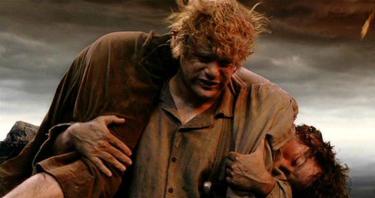
frodo sam 100The New York Times recently posted a short piece about the life of JRR Tolkien and its connection to The Lord of the Rings.  The author, Joseph Loconte, recently published a biography connecting Tolkien and Lewis.  The article begins:

In the summer of 1916, a young Oxford academic embarked for France as a second lieutenant in the British Expeditionary Force. The Great War, as World War I was known, was only half-done, but already its industrial carnage had no parallel in European history.

“Junior officers were being killed off, a dozen a minute,” recalled J. R. R. Tolkien. “Parting from my wife,” he wrote, doubting that he would survive the trenches, “was like a death.”

The 24-year-old Tolkien arrived in time to take part in the Battle of the Somme, a campaign intended to break the stalemate between the Allies and Central Powers. It did not.

The first day of the battle, July 1, produced a frenzy of bloodletting. Unaware that its artillery had failed to obliterate the German dugouts, the British Army rushed to slaughter.

It was during this moment (and the four months that followed for Tolkien), that the seeds of the world of Middle Earth were born.

Tolkien’s creative mind found an outlet. He began writing the first drafts of his mythology about Middle-earth, as he recalled, “by candle light in bell-tents, even some down in dugouts under shell fire.” In 1917, recuperating from trench fever, Tolkien composed a series of tales involving “gnomes,” dwarves and orcs engaged in a great struggle for his imaginary realm.

In the rent earth of the Somme Valley, he laid the foundation of his epic trilogy.

Some of the worst places in the Tolkien’s world found root in those moments.

On the path to Mordor, stronghold of Sauron, the Dark Lord, the air is “filled with a bitter reek that caught their breath and parched their mouths.” Tolkien later acknowledged that the Dead Marshes, with their pools of muck and floating corpses, “owe something to Northern France after the Battle of the Somme.”

The article crescendoes with a nod to the spiritual reality that infused Tolkien’s work:

Even this was not the whole story. For Tolkien, there was a spiritual dimension: In the human soul’s struggle against evil, there was a force of grace and goodness stronger than the will to power. Even in a forsaken land, at the threshold of Mordor, Samwise Gamgee apprehends this: “For like a shaft, clear and cold, the thought pierced him that in the end the Shadow was only a small and passing thing: There was light and high beauty forever beyond its reach.”

Good triumphs, yet Tolkien’s epic does not lapse into escapism. His protagonists are nearly overwhelmed by fear and anguish, even their own lust for power. When Frodo returns to the Shire, his quest at an end, he resembles not so much the conquering hero as a shellshocked veteran. Here is a war story, wrapped in fantasy, that delivers painful truths about the human predicament.

Even the most fantastic of worlds and stories, in the end, can sit in the shadow of reality.  Leconte’s article is a great reminder of that, one hundred years after the loss of so many lives at such a major moment in history.

You can read the entire article here.  It’s a good read.

(image from lots.wikia.com; tip-of-the-pipe to Gerry Canavan)

Posted in Books, Faith, Internet | Tagged | Leave a comment

Affection is Rooted in Imagination

farmlandWhat’s been interesting to me over the last few years of thinking through things like James K. Smith’s cultural liturgies concept (teased out well in You Are What You Love) is how the idea of what you love and how it shapes you is nothing new (or even, ultimately, unique to Smith).  Wendell Berry, Kentucky poet, essayist, and farm-spokesman, has had similar thoughts, some of which show up in his essay, “It All Turns on Affection.”  Affection is tied closely to, might even be synonymous with, love.  From the essay:

The term “imagination” in what I take to be its truest sense refers to a mental faculty that some people have used and thought about with the utmost seriousness. The sense of the verb “to imagine” contains the full richness of the verb “to see.” To imagine is to see most clearly, familiarly, and understandingly with the eyes, but also to see inwardly, with “the mind’s eye.” It is to see, not passively, but with a force of vision and even with visionary force. To take it seriously we must give up at once any notion that imagination is disconnected from reality or truth or knowledge. It has nothing to do either with clever imitation of appearances or with “dreaming up.” It does not depend upon one’s attitude or point of view, but grasps securely the qualities of things seen or envisioned.

I will say, from my own belief and experience, that imagination thrives on contact, on tangible connection. For humans to have a responsible relationship to the world, they must imagine their places in it. To have a place, to live and belong in a place, to live from a place without destroying it, we must imagine it. By imagination we see it illuminated by its own unique character and by our love for it. By imagination we recognize with sympathy the fellow members, human and nonhuman, with whom we share our place. By that local experience we see the need to grant a sort of preemptive sympathy to all the fellow members, the neighbors, with whom we share the world. As imagination enables sympathy, sympathy enables affection. And it is in affection that we find the possibility of a neighborly, kind, and conserving economy.

Imagination hasn’t fared well in our all-too-practical way of life.  Perhaps that’s why Berry seems to try and rescue it from simply being “flights of fancy” or what in the time of King James had an air of thought set in opposition to the mind of God.  Instead, imagination is active, rooted in tangible things.  I remember learning a number of years ago (from a book I can no longer recall) that imagination is the thing that helps us hold things together, an act of faith that helps us see connections that are present but perhaps not seen.

I think this is a great rehabilitation of the term.  In Berry’s argument, it is our lack of imagination (and therefore affection) that has crippled what he sees as a key part of living well.  More on that tomorrow.

If you’ve got some time, you can read the entire essay from Berry here.

(image from natureworldnews.com)

Posted in Books, Faith, The Long Story | Tagged | Leave a comment

Independence, Resurgence, and Collapse

id4-gallery2Last weekend, and against the better judgment of Rotten Tomatoes, I caught a showing of Independence Day: Resurgence.  The movie is decent.  The effects were amazing (and made me wish I had chosen the 3D route).  The script was okay.  The only actors that got any audience response were the veteran actors, which I thought was interesting.  What ultimately made the movie for me was the current socio-political climate, particularly with the UK referendum to leave the European Union.

Independence Day: Resurgence, much like its predecessor, is based on a particular way of seeing the world (a way that mostly felt emerging back in the 90s): globalism.  Disaster movies, because they catch their characters at their worst, often depend on “everyone putting their differences aside for the sake of the greater good.”  (They are, I suppose, the opposite of a horror movie, where everyone gets knocked off one by one.)  Many pundits have spoken of the recent UK referendum results as a rejection of globalism.  Some have called this a resurgence of nationalism, akind of “Independence Day.” There have been cries of racism and ageism and xenophobia thrown into the discussion.  I’ve seen people identifying themselves as European (as opposed to) British (as opposed to) a Londoner.  What do you do when even the way you describe yourself and what you identify as home collapses?  It’s been an interesting situation to watch unfold, and there are things to be learned (so let’s hope we’re paying attention).  And while actions are a big part of what we should consider, we have to be particularly careful about the words we hear (as well as the words we use).

+ + +

Over the next few days, I’m going to post some reflections on a Wendell Berry essay titled “It All Turns on Affection.”  It was delivered as a speech back in 2012.  Over the course of the posts, I’ll point out a few terms that Berry uses that I think might be helpful (at least for someone like me) to understand a better way of being in the world.  For me, at least, they are particularly powerful for this moment.

+ + +

A couple of days ago, Slate posted an article about the sad situation of the summer blockbuster titled “RIP, big 4th of July movie: ‘Independence Day’ then and now and monoculture’s slow demise.”  The article reminds us of a time when the “monoculture” meant almost everyone would see and listen to the same movies, the same music, the same television shows.  Independence Day was a great example of this.  It was an interesting way for us to “all be together,” a way that definitely had hints of a kind of globalism.  That “monoculture” is dead.  I cannot help but wonder who will determine the kind of ghost (or zombie) it will leave behind.

(image from foxmovies.com)

Posted in Internet, Movies | Leave a comment