Star Wars on a Budget

These days the internet is full of “remakes” of movies and their trailers.  Most of the time, the quality stuff seems to be done with LEGO blocks.  The folks over at Robot 6 recently posted the “Budget Video” version of the Star Wars- The Force Awakens trailer.  This is the kind of stuff that reminds you that imitation is a great form of flattery . . . and that it’s great to be around people who love to make this kind of thing.  Check it out . . .

+ + + + +

If you want to read something a bit more polarizing, here’s an article by Grantland alum Bryan Curtis that looks at how some are “rethinking” George Lucas and his legacy in light of SW-TFA in the broader context of the six previous movies.  I think it goes too far in the wrong direction, but I can appreciate what Curtis is trying to communicate.

Posted in Internet, Movies | Leave a comment

Stars Wars and Sensibility

We’re two weeks into life with Star Wars- The Force Awakens, and it seems like there’s always some new opinion or auxiliary content to read through.  This morning I came across an article listing various concepts and scenes that were included in earlier drafts of TFA but that didn’t make it into the finished product (but will probably resurface twenty years from now when they end up doing “special editions” of the trilogy, I imagine).  Some of the things in the list were also in early trailers, which have become their own kind of business with movies.  I mentioned earlier how much I liked how the movie subverted expectations raised by the trailers.

Trailers have changed a lot since the original trilogy, which makes the following “remake” of the trailer for The Empire Strikes Back so interesting.  I feel like it hits some of the best beats (all while using music from TFA trailers).  You have to admire the creator’s creativity and sensibilities.

(hat tip to relevantgazine.com for pointing out the trailer)

Posted in Internet, Movies, Uncategorized | Leave a comment

“Happily Ever After” and the Doctor

This year’s Doctor Who Christmas special, “The Husbands of River Song,” is a great example of the tension that exists in long-term stories broken up into narrative fragments.  While not totally the same as The Lord of the Rings or Star Wars, any serial-formatted story has to deal with the short-term benefits of a “big ending.”

Steven Moffatt introduced (is that the right word when it comes to time travel?) the character of River Song back when David Tennant played the  Doctor.  She was almost a regular presence during parts of Matt Smith’s run.  I really thought that her last appearance (during that era) would be her last.  It wasn’t.

The clip below handles the idea of “happily ever after” as well and as honestly as possible, I think.  Be warned: spoilers.

Rumor has it that this was Steven Moffat’s last intended episode as the show’s runner.  I don’t think that is still the case.  If it is, this was the perfect send-off for Moffatt and for River.  A wonderful bookend that revisits that fairy tale motif that started with Amy Pond back in series five.

Posted in Internet, Television | Leave a comment

Unfinished

imageMy calendar year 2015 actually started five weeks before 2014 ended. I had been asked to preach at the church I now call home on the first Sunday of Advent. And while I was okay with what I said and how I said it, I left the church that day feeling like something was missing, that the sermon was, in some key way, unfinished. And that became my word for 2015. I tried to use it as a lens as I read, as I taught, and I tried to love those around me. What was missing in what I said that Sunday? Could the same be said for the other areas of my life?

And so here I am, at the end of 2015, fully aware that I leave this year unfinished. It was a good year, though it had its particular difficulties. A number of seeds were sown this year, mostly thank to experiences at work coupled with the writings of people like James K. A. Smith, Rod Dreher, Alan Jacobs, and others. Those guys weren’t new to my thinking in 2015, but their online and print presence definitely became more substantial. A number of books beyond that quartet also took root, particularly Kevin VanHoozer (whose name kept creeping into my lectures and lessons at school). I look forward to seeing how all of those seeds and fledgling plants grow in the coming year.

What was most unfinished from that sermon, as best as I can surmise just over a year later, was my inability to speak more directly and decisively “into the moment” of those listening. Part of that was the nature of the task: begin the Advent season in the pastor’s absence, not get everybody riled up. Part of that is the nature of teaching: “you can lead a horse to water; you can even make it drink; but you can’t change its point of view.” But there has to be moments where there is more than that.

I am not overly optimistic about 2016. By that, I mean that I am not blindly optimistic. This is not to dismiss the goodness of God and the kindness of people. Not being an optimist doesn’t make you a pessimist, either (as I’ll hopefully teach my students in a few weeks, that’s an example of the either-or fallacy). It is mostly a matter of waking up, staying awake, and being watchful as life happens. I think that’s quite biblical, wonderfully New Testament, event. I look forward learn more by loving God and loving my neighbor as myself. I am hopeful, even if it involves patiently enduring when life is at its hardest. I am hopeful for great celebrations, too. I am most hopeful, though, for the chance to know the concern of the Father, the compassion of the Son, and the comfort of the Spirit in even the most simple of moments.

(image from efile.com)

Posted in Faith, Teaching, The Long Story | Leave a comment

Augustine’s Note to Self: On Thinking and Writing

From early on in Augustine’s Soliloquies (translated by Kim Paffenroth):

Pray for good health and aid, so that you may accomplish what you desire; and put it in writing, so that your confidence may be increased by what you have done.  Then briefly summarize your discovery in a few short conclusions.  But you should not bother about attracting a lot of readers: this will be enough for a few of your fellow citizens.

I had not heard of Augustine’s Soliloquies until a few weeks ago.  It’s interesting to me that he wrote it soon after his conversion to Christianity.  As the book’s preface notes, there’s no where near as much Bible and theology in it (compared to his later works).  The book consists of two long dialogues between the writer and his Reason, which is much more the classical style than what is common today.  Hoping to finish the book before landing in Honolulu on New Year’s Day.

Posted in Books, Faith, Internet | Leave a comment

And After the King and the Jedi Return?

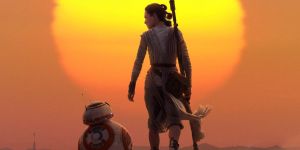
imagePerhaps the biggest complaint I’ve heard about Star Wars- The Force Awakens has to do with whether to call it a remake (because of a plethora of repetitive elements) or a sequel (which it most certainly is). The same could (and, in this case, should) be said for the prequels, which made regular nods to the original trilogy (but that’s a totally separate rant). SW-TFA had to do two things. First, it had to connect with the past (mainly through tropes but also through character and banter). Second, it had to push the story forward (which it did through new characters and relational configurations).  I think it did both quite well (not perfectly, but well).

The best thing I’ve seen written about Star Wars- The Force Awakens was written by Gerry Canavan, a reader of the “expanded universe” Star Wars books who also recently re-read Tolkien’s Silmarillion.  I found the essay because Ross Douthat tweeted about it.  If you’ve read this far into this post, click over to that short essay here and read it. It’s great stuff.

What do you do after the big story ends? And how do you handle the fact that change happens but that change is rarely, if ever, lasting? And how do you fight the urge to milk every story for what it’s worth? (Some would say that this has become a problem for J. K. Rowling and could become a problem for those involved with The Hunger Games franchise.). Turns out that Tolkien faced the similar dilemma when thinking about a “sequel” to the Lord of the Rings that he abandoned in order to work more on his “prequel” material. From the essay:

I don’t know that I would call this material “sinister,” but I taught The Silmarillion this semester after having tried and failed to read it as a child, and I think it would certainly be fair to call it “depressing.” What looks, in The Lord of the Rings, like a fairy-tale about how good and decent folk are able to do the impossible and defeat evil (with just a little bit of help from the divine, here and there) becomes in The Silmarillion and The New Shadow and Tolkien’s pseudo-theological commentary only the briefest, most temporary respite from a nightmare history in which things always turn out wrong, millennia after millennia after millennia. In fact Arda, the planet on which the continent of Middle-earth rests, is a cursed and fallen place, infused with evil and wickedness at its material core, and the only thing to do is raze the place and start over, as Eru Ilúvatar will at long last at the very end of time. To study Tolkien beyond Lord of the Rings is to come to a keen understanding of how tragic this history actually is, how Return of the King looks like a happy ending mostly because that’s where Tolkien (quite deliberately and self-consciously) decided to stop writing. But the Fourth Age was no better than the Third, and likely quite worse, and on and on through the degenerative millennia that bring us to the end of the Sixth Age and the beginning of the Seventh with the fall of the Third Reich and the development of the atom bomb.

I really like Gerry Canavan’s article. I just have one point of contention with it. I just finished my re-read of The Silmarillion recently (after starting it way earlier in the year). I don’t find it has depressing as Canavan. Which isn’t to say that the stories are hopeful, by any stretch of the imagination. They are masterful, for sure. And they are beautiful. And they are packed with wonderfully flawed characters. As beautiful and flawed as the best of us, really. And while some hope must be found in people, there is always the underlying hope in the final intervention from the God of the story, who wove the world with beautiful music and even made the song able to endure the discord of evil.  I don’t think that weakens the story by any stretch of the imagination.  It’s just not an easy story to live through (which is a big point in the last paragraph of Canavan’s essay).

I think one sign of SW-TFA‘s success is that it can pick up on strands from the previous story and still be hopeful. And it’s not a blind hopefulness, either. It is a hope for both the moment and for the long game (since “even the wise cannot see all ends”). I think it is clear from LOTR that the defeat of Sauron is not and cannot be the defeat of all evil. It is the defeat of a particularly powerful kind of evil.

There is, of course, a kind of eschatological significance for Christians in light of such stories.  It’s connected to the idea of “now and not yet” for the Kingdom of God.  Using N. T. Wright’s schemata of the biblical story as a five-act play (of which the Jesus-centric act four is the climax and the church-centric act five is the action-filled fall-out), we get a sense of living in a time period like those after the return of the king and the Jedi. It’s no easy place to be. And while it is a place full of struggle, it is not a place without meaning and hope. But it definitely makes a struggle for faithfulness (which makes us more Faramir than anyone else in the story, sort of).  We ought not be surprised, though, if themes from earlier in the story show up again. That is both the nature of story and the nature of the Story.  That’s why I’m as excited as Canavan seems to be about the possibilities of Episodes 8 and 9.  The story goes on . . .

(Image from hdwallpapers.in)

Posted in Uncategorized | Leave a comment

The Promise of 2016

There are a handful of things that I’m already looking forward to in 2016. While I’m sure there will be many pleasant surprises, these are five things I’m eagerly awaiting:

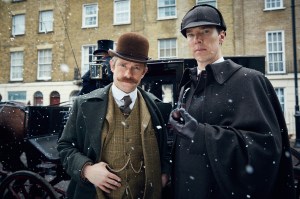
Sherlock Special1.  A bit more Britain. We’re starting the year off well. First, we’ve got the Sherlock New Year’s special, our first foray into the world of Moffatt’s version of the detective in a couple of years. I’m still not sure how we’ll “go back in time,” but that’s okay. After that, we’ve got the final season of Downton Abbey to enjoy. It’s not the most engaging of shows for me, but it’s nice because of the scenery, pace, and overall story. It will be interesting to see how the show ends.

2.  Early spring will also see the release of Steven Curtis Chapman’s Worship and Believe album. I’ve spent some time listening to the first three releases from the album. While there is quite a bit of sonic similarity, I can’t help but feel like Chapman is “breaking new ground” by producing worship songs that are packed with Scripture. I’m hoping for a bit more variety from the finished product, but I’m not really complaining. The album drops March 4.

3.  I’ve been waiting for James K. A. Smith’s newest book for a while now. You Are What You Love is rooted in the thinking of Augustine (whose Soliloquies I hope to finish by year’s end). It’s all about what you love and how you love it. I think it will also be a good place to introduce new readers to some of Smith’s pet concepts (like cultural liturgies). The book drops drops at the end of March.

4.  Out of left field (but also a long time coming) for me is Tom Bissell’s Apostle: Travels Among the Tombs of the Twelve. I’ve been a fan of Bissell since I came across him as a reader of The Believer (an off-shoot of McSweeney’s). I really like is non-fiction voice, and I’m interested in seeing how he handles the traditions of what happened to the apostles of the early Christian church after the New Testament narrative ends.

5.  Finally: Earth-2. It’s been months since we were “first” introduced to the concept in The Flash (though it’s been around in the comics for ages). So far, we’ve mostly seen characters visit from there. The next few episodes of The Flash promise to take Barry to the other side (hopefully for more than one episode). It’s a nice chance to tell a different kind of story . . . one that will hopefully be full of Easter eggs for long-time fans.

Beyond that, there are at least a dozen movies (I imagine) that will have my attention. It will be interesting to see if the broader culture is tire of super-hero movies or if it’s just tired of poorly-made super-hero movies. Either way, it’s nice having something to forward to in 2016.

(image from ibtimes.com)

Posted in Books, Faith, Music, Television | Leave a comment

My TV in 2015

imageLike so many other mediums for me, television continues to diminish. Even still, I have enough to watch to keep me at least a little engaged with the medium. The year’s best in TV for me (in no particular order):
1.  After all these years, Survivor continues to be an amazing thing to watch. I’m so glad that I came back to the show a few years ago. This year’s two “seasons” were full of amazing moments. While the contestants rarely talk about the things you want them to (religion, social issues, etc.), the way that the game is played says more than enough about human relations in the 21st century. What started off as a game of alliances has become a game of day-to-day voting blocks. And yet it was an alliance that made it to the final three in this fall’s “second chances” game. The show remains as unpredictable as Jeff Probst is consistent. Best Moment: this fall’s finale, where three immunity idols (one won, two hidden) were used, leaving the final six contestant with a three-level stalemate. Never before, and probably never again.

2.  Parks and Recreation came to an end with a shortened seventh season. It also picked up “3 years later” thanks to a twist at the end of season six. The season was full of great moments. The show-runners really gave the audience what they wanted, I suppose. The finale was particularly sweet (and did the flash-forward aspect quite well). Best Moment: The episode where Ron and Leslie come to terms with their ruined friendship was a laughable yet poignant way to revisit the main themes of the show while also reminding us that people matter, even when it comes to work and government (maybe especially so).

3. Peter Capaldi returned for his second series as the Doctor this year, headlining what many Who-fans consider the most solid series since the reboot a decade ago. The season seemed all about tension (mostly thanks to the predominance of two-episode stories). And while I wasn’t enamored with the Ashdir character (who appeared often), I can say that I finally learned to appreciate Clara. It was good to finally see more of Gallifrey, though I totally understand why the show doesn’t spend much time there. Best Moment: The Doctor’s speech at the end of “The Zygon  Inversion” episode. Wonderfully acted by Capaldi. I find myself thinking “it’s not a game” quite often. Quick update: say what you will about Moffatt, but when he sticks a landing, he really sticks a landing.  Evidence? Las night’s Christmas special.  He can walk away from the show now and will have accomplished a wonderful wrap to all of his work.

4. Tuesday television has been a great thing for me. The first reason is The Flash on the CW. While old-school Wally West will always be “my Flash,” Grant Gustin has turned Barry Allen into a likable character amidst a wonderful cast. The show continues to do a great job of bringing in the character’s past while shining things up for a 21st century television audience. The show has also benefited from the recent trend towards building to the “mid-season finale.” Best Moment: “Out of Time” from near the end of season one when the Flash experienced the end of his city (and found out how Iris really felt), only to travel back in time and do things differently. I didn’t see that part coming, but I didn’t feel robbed when it happened.

5. The second part of Tuesday television that was great in 2015 was Marvel’s Agents of SHIELD. Everyone knows how bland the show felt until the Winter Soldier twist. It’s been a roller-coaster ride ever since. Much like The Flash, the show has used the build towards mid-season finales well. It moves things along at a great pace while also leaving a little room for long-term mystery. Best Moment: the episode “4,722 Hours,” where Simmons is stranded on what is now referred to as the planet Maveth. I didn’t think I would buy in, but I did. And when they revisited the planet during the mid-season finale? Hope and heartbreak. Can’t believe we have to wait until March to pick back up on the story.

Honorable Mentions: I did thoroughly enjoy most of Fargo season two. It was a slow build for me. Once all the pieces were in place, though, things fell apart amazingly. I also really enjoyed Fear the Walking Dead (which means I’d rather watch things fall apart than deal with the aftermath). You pretty much know what’s going to happen with zombies, but you still don’t want her to go to school and run into the principal (poor, poor principal).

(image from avclub.org)

Posted in Television | Leave a comment

Merry (Subversive) Christmas!

imageAlan Jacobs recently brought together Star Wars, The Lord of the Rings, and Pixar’s The Incredibles for a quality reflection on power (or, in most cases, super-powers) and its subversion in popular mediums.  From the article:

“The race is not [always] to the swift, nor the battle to the strong,” saith the Preacher — to which Damon Runyon famously replied, and with some justification, yeah, but that’s the way to bet. It is, if you’re a betting person. Nobody smart would have bet on David against Goliath. But sometimes — not often, but sometimes — longshots come in. And if you hang around long enough, or read enough history, you start to notice that they tend to do so at curiously opportune times. Not often, mind you, not often enough that everyone will see a pattern, but … sometimes the battle is not to the strong; sometimes overwhelming force is defeated. Occasionally it plays a role in its own defeat, by trusting too much in itself — counting on, calculating by, force only — never suspecting that there may be powers at work other than those of strength, skill, numbers.

And then:

In Tolkien’s Lord of the Rings — setting aside Peter Jackson’s — Gandalf tells the history of the Rings of Power, and especially of the Great Ring made “to rule them all,” and explains that that Ring was constantly striving to get back to its maker, Sauron. And yet it did not make its way to him. Instead it came to Bilbo. And behind that curious event “there was something else at work, beyond any design of the Ring-maker. I can put it no plainer than by saying that Bilbo was meant to find the Ring, and not by its maker.” This is not putting the matter very plainly at all: Gandalf’s use of the passive voice is telling. It is perhaps, even for him, just a suspicion — little more than the reading of hints, in the long historical record he knows so well, that Sauron’s bet on the inevitable victory of Power just might not pay off; that perhaps there is something more moving in the world, something that does not work through the Great but through the small, the weak, the unknown, the neglected, the utterly marginal.

You can read the whole article here.  Be warned, though, as Star Wars spoilers are present.

Good thoughts for this good day, I think.  For all of it’s angels and shepherds, hopeful prophets and angry kings, there is a smallness to the story of Jesus’ birth we ought not forget.  Simple. Mysterious.  Wonderful.

(image from dailymail.co.uk)

Posted in Books, Faith, Movies | Leave a comment

Thoughts on Star Wars- The Force Awakens

Caught an early showing of Star Wars- The Force Awakens last night.  And while I don’t want to give too much of anything away, I can’t help but say a few things.  Anything you read below the banner could be a spoiler.

Star_Wars_The_Force_Awakens

  1. The movie wonderfully subverts the main theatrical trailers.  Some of those big scenes in the trailers aren’t quite what they originally seem.  It’s always nice when a movie does that.
  2. Star Wars might work best when it’s “generational.”  That’s a big part of what was missing from the prequels. It’s a huge part of this movie’s success.
  3. The movie answers so many questions but also does a great job leaving some key things open-ended.  It really leaves you wanting more.
  4. I can’t help but think that this is both “the movie we want” as well as “the movie we need.”  I’ll say more about that sometime later.  There are some great themes at work that are both totally 21st-century but also as old as human history.

I’ll be curious to see how the movie plays on second-viewing.  The pace worked really well, and they packed an awful lot in (with many subtle moments).  The humor was spot on, and there was a nice sense of self-awareness that was refreshing.  I look forward to hearing how others articulate comparisons with this movie and the prequels (especially in terms of motifs and callbacks).

(image from starwars.wikia.com)

Posted in Movies | Tagged | Leave a comment