Unstuck

The music is wonderful.  The framing, though, of the porch and the house is oddly picturesque.  It’s a nice blend of things, particularly since it’s a great U2 song in general.

Posted in Music | Tagged | Leave a comment

Measuring the Fallout

FalloutIt’s been a week of getting back to work, which has been good.  But it also marks that transition from summer to fall (even though summer isn’t over for a while yet).  That’s just how the calendars we live by often overlap, I suppose.  And with that comes the ins and outs of the summer movie season.  It started early with Avengers: Infinity War.  It’s limped along, really, with a few enjoyable movies that just didn’t “catch fire” like summer movies in the past.  Which makes this weekend’s Mission Impossible: Fallout something like the last cinematic fling for the summer . . . and it works amazingly well.

I opted for an IMAX showing of the movie (mainly since it was the first showing of the night and tomorrow’s a school day).  A number of scenes were shot for IMAX, though.  For the first time, I really noticed a difference with those scenes.  Things go full-screen.  The action goes full-force.  And your heart starts to pound a little more than it did just one cut prior.  McQuarrie does an amazing job directing some incredible action sequences.  Lots of sky shots that seem utterly impossible.  Which is fitting.

Something about an action flick like Mission Impossible feels like a dozen heist movies packed into one.  The planning and possibilities that the characters deal with keep you guessing.  And while trying to figure things out is part of the fun, it’s more fun to see things actually fall apart/fall in place.  And that happens a number of times in this movie.  Just when you think you’ve seen enough car chases or motorcycle chases, you find yourself totally sucked into one more.

Mission Impossible: Fallout is easily the most enjoyable, roller-coaster ride of a movie since Infinity War.  It’s worth the big screen.  It’s good to go to the movies and be amazed at every little thing: the acting, the locations, the tricks, the humor, and the action.  Highly recommended.

(image from heroichollywood.com)

Posted in Movies | Leave a comment

Crashing Again (or Staircase Serenade)

Maybe someone should start a blog recording every time someone records U2 performing “Every Breaking Wave.”  It’s a great song that captures something vital about the human experience that showcases the musical and vocal talents of the band well.  And this recent rendition was shot on the front porch of a house.  Turn up the volume and press play.

I’m a little bummed for the short/video posts so far this week.  Today was the first official day back at school, which means yesterday was the first unofficial full day back at school.  So the days have been packed . . . and probably will be until I get home from Mission Impossible: Fallout Thursday night.  But more on work and fun later.

Posted in Music | Tagged | Leave a comment

Pieces of Glass

There’s a part of me that’s excited to see this and another part of me that simply wants to know as little as possible about the story that’s being told.  But that’s the way it always is for me when M. Night Shyamalan has a new movie releasing.  The ending of Split was probably one of my favorite movie surprises of the last few years (and by probably, I mean definitely).  Such a nice surprise.  So here’s the first official trailer for Glass, which brings the worlds of Unbreakable and Split together completely.  The trailer says a lot, but I’m just not sure how it all fits together.

Yeah.  May not watch it again . . . and definitely will try and stay away from comments and fan theories.  But definitely cool to see some shots of some long boxes.

Posted in Movies | Tagged | Leave a comment

Rest and Reset in a Culture of Constant Content

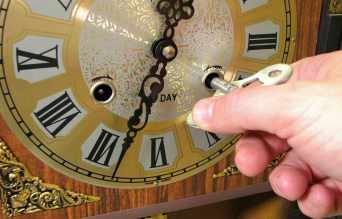
resetting clockOne of the interesting aspects of my two weeks of mainland travel was a lack of internet access for two different chunks of time. While I was at Laity Lodge, I had nothing.  While traveling beyond Tennessee, I had phone access but no real iPad wifi access.  Beyond that, I decided before traveling that I wasn’t going to carry an external keyboard or laptop while traveling.  So while it wasn’t a total unplug, there were some real moments of a kind of freedom from deeply embedded online practices.

Just over a week beyond Laity Lodge, speaker Alan Jacobs posted some interesting thoughts on his role as a writer/thinker and a sense of meaninglessness that had befallen him in light of his work (most recently with the book How to Think and then next month with The Year of Our Lord 1943).  It had even gotten to the point that he had decided against writing a third book in line with How to Think and an earlier book on reading for pleasure.  For some time now, Jacobs has (publicly) processed multiple attempts at making sense of the digital behemoth, often leaving and returning to Twitter or going back and forth between “dumb” phone and “smart” phone.  And while little was said of that at the retreat, it was interesting to see it appear again in his online work.  From the original post’s conclusion:

There has been one significant consequence of all these moves, and I find it an interesting one. Curiously, though in a way logically, my escape from Twitter’s endless cycles of intermittent reinforcement and its semi-regular tsunamis has made me significantly calmer about my own future as a writer, in large part because it has re-set my mental clock. I have always told myself that I have time to think about what, if anything, I want to write next, but I haven’t really believed it, and I think that’s been due to my immersion in the time-frame of Twitter and other social media. Now that I’ve climbed out of that medium, I can give not merely notional but real assent to the truth that I have time, plenty of time, to think through what I might want to say.

It was Douglas Coupland who first introduced me to the idea of “an accelerated culture” via Generation X.  That’s been a common complaint for each successive generation, and yet perhaps more pertinent for ours than for many that have gone before us.  Jacobs sees that in his own life with “Twitter and other social media.”  (There was one point during the retreat where some gentleman’s name was mentioned that no one seemed to know.  But we knew well his “invention,” the “pull down to refresh” option on phones.  Upon the revelation, I nodded and laughed uncomfortably).  That is, of course, the downside to our culture of constant content.

As I reflect on the ideas of rest and “resetting mental clocks,” I think that such a “resetting” involves more than just our “accelerated” culture, though that is the one that many of us are most prone to fall prey to.  As I traveled, I often found myself at the whim of whatever time-trapped culture I was in.  Whether a culture of leisure or of labor, fast or slow, finding the footing to establish and maintain a good and healthy rhythm can seem impossible.  That was part of my hope for this summer.  For the last year, I had lived a kind of rhythm that could work in the short-term but not in the long.  Now I’m on the edge of repeating that rhythm.  And I’m wondering if I’ve done the work necessary to circumvent the worst parts of that rhythm.  Because here’s the thing: no one is going to do that work for you.  Or if those people exist, they are rare and likely have little say in the rhythms of your life.

You can read all of the Alan Jacobs post here.

(image from credit.com)

Posted in Books, Internet, Teaching | Leave a comment

Restless and on the Road

Road TripA few weeks ago I had the opportunity to attend a retreat at Laity Lodge on the topic of “Attending to God in an Age of Distraction.”  Since then, I’ve written a bit about the musical artist for the weekend, Claire Holland, here, and one of the two speakers for the weekend, Alan Jacobs, here.  The second speaker for the weekend was James K. A. Smith, whose ideas and writings I blog about often (just search You Are What You Love in the tag section).  While I have more to say about the broader content of Jacobs and Smith’s presentations, I thought I’d mention something particular to Smith’s approach first.

Much of what Smith had to say was rooted in his research and understanding of Augustine, one of the most significant thinkers of the early church (4th and 5th centuries AD).  (Aside: One of my favorite little moments of the retreat was when, intentionally or not, Smith referred to the saint as his best friend.  Because that’s what happens when you spend time with someone, reading their thoughts and insights.)  Smith has been working with Augustine for a while now (you get good evidence of it in You Are What You Love) and is looking to publish a book on Augustine’s thoughts next year.

Last year, Smith spent some time “walking in the footsteps” of Augustine thanks to financial support from Calvin College’s Alumni Association.  Smith wrote a short article about his travel experience for Spark, the school’s magazine.  It is clear both in the 2017 article and the 2018 retreat that Smith sees Augustine as a “saint for our times.”  From the article:

Despite being a citizen of ancient north Africa, Augustine was well-acquainted with the demons that plague us in late modern America: the pressure to succeed; the driving ambition to climb social and professional ladders; the disorienting thrill of so-called “freedom”; the anxieties that beset our quests for power and pleasure; and the persistent frustration of foisting inordinate expectations upon our accomplishments and possessions. Like us, Augustine knew the exasperation of looking for love in all the wrong places.

From there, Smith writes of Augustine’s own tension-filled existence of being “on the road” from the City of Man to the City of God, which is a key reason why Smith holds to the image of Augustine’s life (and later biography) as a kind of “road trip” or “quest story.”  From the end of the article:

Augustine not only helps us find home, he also helps us be brutally honest about the Christian’s ongoing penchant to run away. “Prone to wander, Lord I feel it” as the hymn writer put it (captured with just the right melancholy tone in Sufjan Stevens’ rendition). Even when we are in Christ, the pull and tug of the mythical “open road” can lull us into thinking the grass is greener elsewhere, that freedom is the absence of obligation, that the goods of creation could be a substitute for the Creator. But Augustine’s honesty about his own continued struggles with ambition and vanity are oddly encouraging. They remind us that we can never reach the end of God’s grace, that the Father is always waiting for us at the end of the road, ready to forgive and throw a feast. His grace is the fetter that sets us free.

Smith had much to say about Augustine throughout the retreat weekend, particularly about the saint’s idea of rest as it relates to joy, focus, and Sabbath.  I hope to come back around to at least a couple of his assertions over the next few days, particularly as I prepare for the beginning of another school year.

You can read the rest of Smith’s “travelogue” of his time “on the road” with Augustine here.

(image from frommers.com)

Posted in Books, Faith | Tagged , | Leave a comment

Thirteen Incoming

The BBC released a teaser clip for the upcoming 11th series of Doctor Who.  It’s a first in two ways: first female Doctor (Jodie Whitaker) and first season for a new show-runner (Chris Chibnall).  If the show is a smartly written as Broadchurch (which starred Whitaker and was headed by Chibnall)  . . . and if it’s as adventurously fun as Broadchurch was seriously depressing . . . then the show could be amazing.  Here’s the teaser, which gives little-to-nothing away about major storylines.

Posted in Television | Tagged | Leave a comment

Media and More in Our Distracted Age

past and futureOne of the two speakers at my recent Laity Lodge weekend was Alan Jacobs.  I’m not quite sure how I first heard of him.  I know that I read his wonderful The Pleasures of Reading in an Age of Distraction a good while before I knew him as “Alan Jacobs,” if that makes any sense.  I did get to enjoy one group meal with him, dinner on the second day, I believe.  It was good to ask him about his Harry Potter reviews and to talk movies in general with the whole table.

Over the course of his two talks, Jacobs presented himself as something of the “bad cop” speaker when it came to technology.  His was more of a “nuts and bolts” approach to the issues of smartphones and media consumption, those things that often distract us from just about everything, it seems.  It was something of an odd twist for me, as he spoke more frequently of habitus than Jamie Smith did (because when I hear “habits,” I think Jamie Smith).  Jacobs spoke of two key things that popular media culture has honed in on that the church has also seen as a source for its approach to things media-centric: the idea that everything has a simple solution (which he calls ‘solutionism’) and that we should all embrace an “I am my own, I belong to me” mentality for living.  Both Jacobs and Smith returned to these two insidious ideas often. When he mentioned the “I am my own” mentality, Jacobs quickly pointed us to the first question of the Heidelberg Catechism:

Q:What is your only comfort in life and death?

A: That I am not my own, but belong with body and soul, both in life and in death, to my faithful Saviour Jesus Christ.

From there, Jacobs walked us through stories, Scripture, and trends/statistics to better understand “the mess that we’re in.”  He went from Genesis to Auden, from Calvin to Bonhoeffer to Lanier in his thinking.  What I appreciated about his concluding argument was that he attempted to point us to the way of wisdom and discernment, knowing that walking wisely through our distracted world would take both courage and renunciation.  Both would be necessary: we just need to know when to embrace each of them.

+ + + + + + +

A couple of weeks before the retreat, Jacobs posted an interesting essay to The Guardian titled “To survive our high-speed society, cultivate ‘temporal bandwidth.'”  It’s a good read that, as his talks, points us to the way of wisdom.  In the essay, which you can read here, he argues that one powerful way to combat our “instant” and “in the moment” society is to read from the past and think well about the future.  From the essay:

We cannot, from within [our current, in-the-moment] ecosystem, restore old behavioral norms or develop new and better ones. No, to find a healthier alternative, we must cultivate what the great American novelist Thomas Pynchon calls “temporal bandwidth” – an awareness of our experience as extending into the past and the future.

In Pynchon’s 1973 novel Gravity’s Rainbow, an engineer named Kurt Mondaugen explains that temporal bandwidth is “the width of your present, your now … The more you dwell in the past and future, the thicker your bandwidth, the more solid your persona. But the narrower your sense of Now, the more tenuous you are.”

If we want to extend our bandwidth, we begin with the past, because exploring the past requires only willingness.

Reading well of the past, in turn, helps us consider the future.  Jacobs continues:

Another benefit of reflecting on the past is awareness of the ways that actions in one moment reverberate into the future. You see that some decisions that seemed trivial when they were made proved immensely important, while others which seemed world-transforming quickly sank into insignificance. The “tenuous” self, sensitive only to the needs of This Instant, always believes – often incorrectly – that the present is infinitely consequential.

Odd to think that one of the best ways to understand Our Present Moment is by taking the time to revisit the past and imagine the future.  But I think Jacobs is right.  Without wisdom, though, such actions would look more like distractions.

(image from organizationsandmarkets.com)

Posted in Books, Faith, Internet, Movies, Travel | Leave a comment

Dolly and Tammy Beyond Beauty School

Claire HolleyThis past weekend I spent some time on retreat at Laity Lodge outside of Leakey, TX.  On the final night of the retreat, the artist-in-residence for the weekend, Claire Holley, played a concert in the Cody Center.  Before the concert, though, we had our regular dinner (and by regular I mean consistently wonderful: that night it was steak and a bounty of delicious sides).  As can often happen at such a retreat, my friends and I actually got to eat with and talk to Claire.  It was a great time talking about music and influences and how the weekend had gone for each of us.  I asked her about the content of her upcoming concert, if we could expect any covers.  She quickly hinted at two: one with roots in jazz and another reggae song that would probably catch us by surprise.  She started with the reggae song: a bare and beautiful rendition of Bob Marley’s “Three Little Birds.”

Perhaps the highlight of her set, though, was “Beauty School,” which recounts something of the friendship between Dolly Parton and Tammy Wynette.  She tells some of that story in the video below before going into the song.  It’s a nice, simple picture of what friendship over time can look like.

Claire is currently slated to work on a “20th anniversary” refresh of her hymns album, Sanctuary.  Her voice is exquisite (with of Dolly, too).  If you get a chance to see her live, take it.  She’s a great storyteller and a blessing of a person.

(image from arkansasonline.org)

Posted in Faith, Friendship, Music | Tagged | Leave a comment

“It Seems I Never Stop Losing You”

Leave it to good-old radio to surprise me with a new song from Death Cab for Cutie.  The new album, Thank You for Today, drops mid-August.  As is often the case, the melancholy emotion gets held at bay with a more upbeat sound in “Gold Rush.”  I love the bridge:

I’ve ascribed these monuments
A false sense of permanence
I’ve placed faith in geography
To hold you in my memory
I’m sifting through these wreckage piles
Through the rubble of bricks and wires
Looking for something I’ll never find

Posted in Music | Tagged | Leave a comment