SHIELD vs. LMDs

Last night’s Agents of SHIELD made the move from supernatural thriller (with Ghost Rider) to technological apocalypse (with the concept of the Life Model Decoy).  As many critics have noticed, it was an almost-seamless transition, which is a good thing.  Last season, I felt like the first half was full of great set-up and tension that wasn’t resolved as well as I’d hoped in the second half.  And while the Ghost Rider storylines was decent (quite well-done for a supernatural/comic book story on TV), I’m hoping that this season’s back-half picks up the pace and pushes things forward.  Here’s the trailer for  next Tuesday’s episode.

A number of long-term plot threads are moving forward well.  That includes the Inhumans thread, which hasn’t paid off as well as I’d hoped.  Maybe the revelations about the new SHIELD director will move things forward there.

Posted in Television | Tagged | Leave a comment

Borrowing Promos from the Future

We’re still a couple of weeks away from the return of the DC television universe.  There’s not been much on network TV beyond two episodes of Sherlock and tonight’s return of Marvel’s Agents of SHIELD.  Here’s the latest trailer for the next episode of The Flash, “Borrowing Problems from the Future.”

The CW recently renewed all of its super-hero shows, which means we’ll get a fourth season of Barry and friends.  I’m hoping that this will help them build some long through-lines that can go beyond the norm.  That also means at least one more major crossover with the other shows, hopefully.  They also recently announced a “musical” crossover with Supergirl, since the principals on both shows have musical chops (as seen years ago on Glee).  Plus we’ll be getting a return of Grodd, which means a trip back to Earth-2.

The second half of this season can’t get here fast enough, I think.

Posted in Television | Tagged | Leave a comment

Lie Detective

I was afraid that this Sunday’s second episode of Sherlock was going to suffer from being too interior, too cerebral.  It happens every now and then (particularly with Doctor Who, really), an episode where nothing much happens that isn’t all mind games.  I can’t help but think of the “Hounds of Baskerville” episode from 2012.  Too much depended on the psychological for me to really enjoy things.

But “The Lying Detective” came through in a way that moved things forward (and thus to their end) quite well.  I was surprised to see Mary being there, but that was fine.  It added a nice touch along with a reminder that grief can be a long process.

Here’s the trailer for the final episode of the fourth series, what could be the final episode for Sherlock for a long, long time.

I do feel like this series has been a kind of abbreviated “greatest hits” album of a run.  The stories have been intricate.  The principal character work has been phenomenal.  The cast beyond the main three has been just present enough.  So it will be interesting to see how everything weaves together . . . particularly as many members of the crew think that “The Final Problem” is their best  episode ever.

Posted in Television | Tagged | Leave a comment

We Don’t Get to Know Everything

One of the more fun and upbeat tracks of the Avett Brothers’ True Sadness is “Smithsonian.”  It feels a little slower in this live performance last year in Nashville, but it still shows energetic artistry that is always good to see.


Posted in Internet, Music | Tagged | Leave a comment

Habit, Addiction, and the New Year

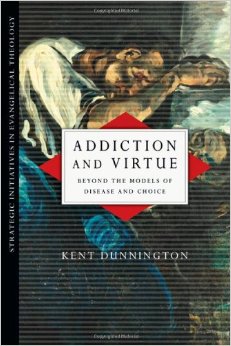
addiction-virtueThe best sermon I heard this year made good use of You Are What You Love, the book by James K. A. Smith about the power of habit in the life of faith.  The sermon also made connection to one of my favorite books of the New Testament: Hebrews, which speaks of being in the habit of meeting together with one another.  The sermon also utilized a book that I read on that pastor’s recommendation, Addiction and Virtue: Beyond the Models of Disease and Choice.  I’ve been meaning to write about the book for a while now, but just couldn’t find the right time.

Kent Dunnington, the author of the book, summed up the premise of the book in a recent online interview:

The main argument of the book is that addiction is neither a disease nor a choice, but a complex habit. It’s neither fully determined nor voluntary, but is rather a “second nature” that a person takes on. The power of any habit is correlative to the kinds of things the habit helps an agent achieve, thus a big part of the book is spent showing what it is that addictions help us achieve. Contrary to popular belief, we don’t get addicted for pleasure, though pleasure may be an initial hook. We get addicted because addictions help us attain, though only fleetingly, certain moral and intellectual goods that late-modern capitalist culture makes difficult to attain. And this insight led me to the discovery that addiction is really a counterfeit of the theological virtue of charity or love, in that it promises sustained ecstatic existence and an ordering principle for all of life. So — not surprisingly, really — it turns out that addiction has everything to do with God!

Habit, of course, is a key concept for many at the beginning of a new year.  Many people see the fresh start of a new year as an opportunity to rethink hopes and habits, looking for practical ways to “rethink one’s settings.”  And when many of us fail to achieve that change, we got back and forth between blaming our (weak) will power and the (strong) influence/habit/routine that seems insurmountable.   Few people would admit to the power of some level of addiction to be at work (and, honestly, the word addiction shouldn’t be thrown around carelessly until it has no weight).

In an essay dated to 1992 and titled “The Problem of Tobacco, Wendell Berry asserted that calling out the addiction to tobacco is actually a “red herring.”  He goes on to say:

In calling attention to the dangers of one kind of addiction, the tobacco controversy distracts from the much greater danger that we are an addictive society — that our people are rushing from one expensive and dangerous fix to another, from drugs to war to useless merchandise to various commercial thrills, and that our corporate pushers are addicted to our addictions.

And so you could replace the 1992 list with things like work, the internet, cell phones, YouTube, sports, and any of a number of things that we as a culture have settled on as acceptable addictions.

And so habits and addictions here at the beginning of a new year.  I’m going to try and articulate a few thoughts on things through the lens of Dunnington’s book, particularly as it pertains to a particularly Christian community.

You can read the rest of the quoted interview with Dunnington here.  And you can read Berry’s essay in its entirety here. (special thanks to Alan Jacobs’ reading list for the lead to the Berry essay)


Posted in Books, Faith | Leave a comment

Not Perfect Apart from Us

When it’s time to start talking about “life in the fifth act” with my students, I often use Hebrews 11-12 as my starting point (which is why it’s neat that the passage is the New Testament epistle reading for the first few days of the new year).  The chapter, which is all about living by faith, presents a long list of fallible people who lived their lives in a particular, seemingly invisible, direction.  By the time you get to the part where individuals are no longer named, you’ve been totally synched to the passage’s rhythm.

And what more shall I say? For time would fail me to tell of Gideon, Barak, Samson, Jephthah, of David and Samuel and the prophets— who through faith conquered kingdoms, enforced justice, obtained promises, stopped the mouths of lions, quenched the power of fire, escaped the edge of the sword, were made strong out of weakness, became mighty in war, put foreign armies to flight. Women received back their dead by resurrection. Some were tortured, refusing to accept release, so that they might rise again to a better life. Others suffered mocking and flogging, and even chains and imprisonment. They were stoned, they were sawn in two,[a] they were killed with the sword. They went about in skins of sheep and goats, destitute, afflicted, mistreated— of whom the world was not worthy—wandering about in deserts and mountains, and in dens and caves of the earth.

And all these, though commended through their faith, did not receive what was promised, since God had provided something better for us, that apart from us they should not be made perfect.

But the chapter’s end is not the story’s end by any stretch of the imagination.  With the first two verses of chapter twelve, we find that all followers of Jesus are part of the story.  And we have a better understanding of what is appropriate for us by seeing the secondary example of those who have gone before us and the primary example of the founder and perfecter of the our faith: Jesus.

Therefore, since we are surrounded by so great a cloud of witnesses, let us also lay aside every weight, and sin which clings so closely, and let us run with endurance the race that is set before us, looking to Jesus, the founder and perfecter of our faith, who for the joy that was set before him endured the cross, despising the shame, and is seated at the right hand of the throne of God.

Posted in Faith, Life in the Fifth Act, Scripture | Leave a comment

Non-Curiosity, the New Standard?

candySeth Godin asked a good question today of contemporary culture and our relationship with curiosity:

The bestselling novel of 1961 was Allen Drury’s Advise and Consent. Millions of people read this 690-page political novel. In 2016, the big sellers were coloring books.

Fifteen years ago, cable channels like TLC (the “L” stood for Learning), Bravo and the History Channel (the “History” stood for History) promised to add texture and information to the blighted TV landscape. Now these networks run shows about marrying people based on how well they kiss.

And of course, newspapers won Pulitzer prizes for telling us things we didn’t want to hear. We’ve responded by not buying newspapers any more.

The decline of thoughtful media has been discussed for a century. This is not new. What is new: A fundamental shift not just in the profit-seeking gatekeepers, but in the culture as a whole . . .

Is it possible we’ve made things simpler than they ought to be, and established non-curiosity as the new standard?

It’s strange to think that we would have “made things simpler than they out to be,” but I think Godin is on to something.  In our race to make things palatable, easily digestible, we’ve inadvertently made a culture where we think we have become instant masters of things.  And instead of persevering and learning the ins-and-outs of complex things, we walk away thinking we know it all because we have mastered one thing.

Godin continues:

While it’s foolish to choose to be stupid, it’s cultural suicide to decide that insights, theories and truth don’t actually matter. If we don’t care to learn more, we won’t spend time or resources on knowledge.

We can survive if we eat candy for an entire day, but if we put the greenmarkets out of business along the way, all that’s left is candy.

And, of course, ultimately we won’t know any different.  Godin’s solution is a good one, perhaps a little more idealistic than others might expect.

Even if only a few people use precise words, employ thoughtful reasoning and ask difficult questions, it still forces those around them to catch up. It’s easy to imagine a slippery slope down, but there’s also the cultural ratchet, a positive function in which people race to learn more and understand more so they can keep up with those around them.

Turn the ratchet.

You can read all of Godin’s thoughts on curiosity and “turning the ratchet” here.  It’s a good, challenging read.

(image from candy.com)

Posted in Internet, Teaching | Leave a comment

Strangers and Exiles, Seeking

Today’s daily office reading from Hebrews 11 captures one of my favorite snippets in what is an already-amazing chapter.  After talking about Abel and Noah, Abraham and Sarah, the writer digs in for a bit:

These all died in faith, not having received the things promised, but having seen them and greeted them from afar, and having acknowledged that they were strangers and exiles on the earth. For people who speak thus make it clear that they are seeking a homeland. If they had been thinking of that land from which they had gone out, they would have had opportunity to return. But as it is, they desire a better country, that is, a heavenly one. Therefore God is not ashamed to be called their God, for he has prepared for them a city.

These ancients were commended for their faith.  They saw Someone who could not be seen.  They received much, but not the Thing that would last.  And for that, they were strangers and exiles, misfitted in the very place God made for His image-bearers to rule.  But a better country awaited them, a prepared city, a place to call home.

Posted in Faith, Life in the Fifth Act, Scripture | Leave a comment

Another Way the Force Wakes Up

rogue-one-forceMuch digital ink has been spilled over the last year writing about the return of the Star Wars franchise to the big screen, for with Star Wars: The Force Awakens and most recently with Rogue One: A Star Wars Story.  A recent article by Marc Barnes at First Things addresses one thing that the new movies have brought a course correction to the much-maligned prequels.

One of the most significant issues long-time fans of Star Wars have with the prequels is the inclusion of midi-chlorians to the concept of the Force.  After three movies of the Force being mysterious and elusive, we find out something completely different.  From First Things:

In the prequels, the Force is a part of the biological world. It is accessed not by the mind or spirit but by microscopic organisms. This view renders the Jedi religion superfluous—one either has a “high midi-chlorian count,” or one does not. The prequels rewrite the Jedi’s disciplined access to the mystical life as something determined by a blood-test.

This secularization of the Force coincides with its most grotesque, irreverent use. The Jedi of the originals were concerned with not using the Force, with the profound need for being “ready” to wield it. Yoda told Luke he will be able to discern the ways of the Force “when you are calm, at peace. Passive.” He restricted its use: “A Jedi uses the Force for knowledge and defense, never for attack.” He warned that the “quick and easy path” is precisely what makes one an “agent of evil.”

Barnes then points out that a younger Yoda uses the Force in all kinds of ways that seem to go against his later teaching.  With the newer movies, though, Barnes sees a good and necessary change in how the Force is treated, one that hearkens back to how it was handled in the original trilogy.

But in the new Star Wars movies (2015-), something else has been happening. In The Force Awakens, Han Solo derides Finn’s blithe mechanization of the Force as an easy answer to the problem of how to disable some shields: “That’s not how the Force works!” This shut-down of Finn’s use-the-cool-Force attitude indicates a shift in the new Star Wars movies, a certain return of the religious dimension that fueled the originals—a return to reverence.

This turn achieves its maturity in Rogue One. If the prequels scooped the sacred from the Force by biologizing and technologizing it, Rogue One returns it by spiritualizing and refusing to use the Force. Physical sight can no longer behold the Force. Its main adherent is Chirrut Îmwe, a blind warrior-monk who believes in the power of the Force. Îmwe’s temple has been destroyed by an imperial power, and thus, deprived of any obvious geographical site of the sacred, he must carry the evidence of the Force that “binds the galaxy together” by his own prayer and upright action.

A nice save, really.  One I’m interested in seeing built on in the next few Skywalker-centric movies.  Barnes sums it up best near the end of his article:

The religious emphasis of the film is not how to use the Force, but how to conform oneself to something that is beyond use. We do not hear the iconic line, “Use the force,” in Rogue One. We hear a reverent one: “Trust the force.” The difference between use and trust sums up the difference between magic and religion. Magic wishes to use supernatural powers for material ends. Religion wishes to subordinate material ends to a good and wise supernatural power. Rogue One elevates the disciple over the magician and the saint over the technician.

You can read the whole article here.  It’s a good read.  It’s also another reminder of how a good movie can work on multiple levels well, even if it isn’t necessarily intended to.

(image from collider.com)

Posted in Faith, Movies | Tagged | Leave a comment

Assurance, Conviction, Commendation

Today’s epistolary reading from the daily office is the first third of one of my favorite chapters from one of my favorite books: Hebrews 11.  The chapter finishes out over the rest of the week.  The chapter rings loudly, even after the rousing commands of chapter 10 to draw near, hold fast, and consider key aspects of the Christian life and story.  Chapter 11, of course, focuses on faith.

Now faith is the assurance of things hoped for, the conviction of things not seen. For by it the people of old received their commendation. By faith we understand that the universe was created by the word of God, so that what is seen was not made out of things that are visible.

Faith is vital to the Christian life but tricky in its translation to those outside of church.  It is not simply hope (as good as hope is).  It is an assurance of things hoped for.  It is not pie-in-the-sky wishful thinking.  It is a conviction concerning things we cannot see.  And because of faith, “the people of old received their commendation.”  Most of the remaining chapter points us to those ancient people, commended in spite of their faults and failures.

Nestled in between Abel and Enoch and Noah we find a potent promise concerning faith, particularly in light of Enoch:

. . . without faith it is impossible to please him, for whoever would draw near to God must believe that he exists and that he rewards those who seek him.

Someone recently asked me how they could grow in their relationship with God.  I encouraged the friend to go for some long walks and talk to God as if He was walking along with him.  True: God is walking along with him.  But it is also an act of faith to believe it when you cannot see it.

Today’s reading ended with Abraham and Sarah.  And with that reminder comes the nudge that faith isn’t just about achieving your personal best, about having grit, about some kind of individual empowerment.  Instead, it is faith in the context of a purposeful story, a history going somewhere.  Abraham was

looking forward to the city that has foundations, whose designer and builder is God.

That becomes a thread that takes center stage in tomorrow’s reading.

Posted in Faith, Life in the Fifth Act, Scripture | Leave a comment