Like a Sitting Duck

This past Saturday morning was one of those moments that will be difficult to forget.

It started out like almost every other Honolulu Saturday morning for me.  Slept in a little bit (compared to a work day).  Caught the bus down to the coffee shop where I usually grab a hot breakfast before walking over to check out what’s new at Barnes and Noble.  Frustratingly, the wifi was out, so I had to settle for my phone and whatever was downloaded to my iPad.  My phone, as usual, had been put to the side.  I remember hearing what sounded like the buzz of a new email, which I didn’t check.  Then I heard the worker at the counter ask someone if they had “gotten the message.”  I looked at my phone and saw the the message from 8:07 am in all caps and ending “this is not a drill.”

I had no idea what to do.  I’d left a movie theater for a tsunami warning.  I’d put up plywood for a hurricane warning.  I’d experienced an earthquake.  But a ballistic missile alert?  That’s something from the worst of my 1980s-fueled imagination, really.  So I took my coffee and backpack and headed for Ala Moana Center, which was across the street.  I wasn’t sure if it was all that safe, really.  As I walked, I pointed out the phone message to others who had not heard anything.  I came across a group of workers leaving their not-yet-opened story.  Still not knowing where to go (and knowing that getting back home wasn’t an option), I stopped and spoke to a couple of bus drivers waiting on instructions from their office.  And then, just after speaking to a couple of tourists at a bus stop, I made my way over to the new gym that just opened by the new Target.

Along the way I got a phone call from a friend and co-worker checking on me.  I think I got a call in to my landlady.  At some point long the walk, phone service stopped working.  So I was glad to get a FaceTime call from a friend while waiting in the gym to see what would happen next.  I couldn’t find anything of consequence online or with Twitter.  The lady next to me, though, eventually said something about a false alarm.  We looked it up and there it was.  Others around the lobby confirmed what she had found.  We quietly dispersed and went back to our Saturday mornings.

I went back to the coffee shop, grabbed a small coffee, and used my phone to look online for different responses (mostly Twitter, as I’d removed the Facebook app from my phone couple of years ago).  Lots of confusion.  Anger, too.  After a while I made my way over to Barnes and Noble, reflecting on what had (and had not) just happened.  On my way from there, I ran into a few friends, who still seemed to be processing things as well.

+ + + + + + +

Sunday brought a couple of different church services, a couple of different conversations.  It brought more news, more processing things from a national perspective.  My own Twitter feed (the people I follow) didn’t have much to say about the alert at all.  Finally Rod Dreher posted a hypothetical-question that used the alert as a springboard for others to question what they would have done had they been a part of the situation.  Most of the humor from almost every source was rooted in relief.  One pastor I heard, after finishing the bulk of his sermon, took a small digression to share from his own experience.  It was, perhaps, the most comforting and challenging thing I had heard.

+ + + + + + +

I’ve learned some things about myself over the last couple of days.  I’ve realized some things worth un-learning.  And I continue to learn more about what it means to live a single life, somehow rooted in the Christian faith, far away from family and a deep history.  It’s been a reminder of the kind of  “sitting duck” existence all of us live, some more than others, each in our own times and ways.  And if I let Him, God will use it to continue showing me a better way.
Posted in Faith | Leave a comment

Closer to “the Last Day”

Marvel’s Agents of SHIELD continues to hit it out of the space-time ballpark.  Now, as their journey to the future crescendoes, some major plot devices from previous seasons are coming into play.  The end-of-episode reveal this week was as cool as the return of Gravitonium (which some have been speculating about for a while).  Here’s the preview for next week’s episode.

Posted in Television | Tagged | Leave a comment

Unclosed Loop: How to Think

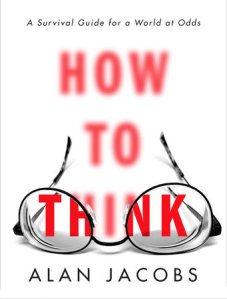
how to thinkThe floor of my digital mind is littered with reflections that didn’t make it to this site.  At the end of December, I started titling a handful of entries with the phrase “Unclosed Loop.”  It’s a reference to something I learned a few years ago from Douglas Rushkoff, who suggests that lots of stress comes from mental loops that we can’t seem to bring full circle.  What’s nice is that this keeps some things open for reinterpretation as life continues.  What’s frustrating is that a good and necessary “marker” doesn’t get made in my mental-and-digital record of things.
I had meant to spend a good amount of time with Alan Jacobs’s How to Think, a nice and quick read that dropped a few months ago.  The book has a number of great things as components of the author’s main argument, things that I hope to revisit in my own “Thought” classes.

One of the best things that Jacobs brings out is the social nature of thinking.  He does this brilliantly by contrasting two popular essays by C. S. Lewis: “Membership” and “The Inner Ring.”  It’s a great example of “thinking Christianly” without beating people over the head with it.  In the chapter titled “Attractions,” Jacobs asserts:

Along that path we can learn from one another in a great many ways– and we have a chance of discovering unexpected opportunities for membership: for there can be more genuine fellowship among those who share the same disposition than those who share the same beliefs, especially if that disposition is toward kindness and generosity.

That’s a very sobering assertion, particularly to someone who strongly thinks that what you believe matters.  But I think Jacobs is onto something.  I have found that similarity of belief doesn’t necessarily become the foundation for better work so much as it becomes an excuse to refrain from wrestling with difficult things (including the implications of the things believed in common).

+ + + + + + +

One of the other “unclosed loops” that I need to get back around to before the month closes out is a previous mention of C. S. Lewis’s Mere Christianity.  At the end of last semester, I decided to make the book required reading for my senior Bible class.  It’s a trial run, a way of seeing (1) if it is doable and (2) if it could be a junior-level reading.  Because I’d really like to get to Jacobs’s How to Think with students.  Agree with him or not, Lewis and his work in Mere Christianity is a great example of a long-form argument that starts well and goes in the right direction.

+ + + + + + +

“How to think” is something that a professor like Christian Smith (mentioned in a post here yesterday) would probably say is missing from the current higher education experience.  That he notes the deep roots of this in our recent past and the long-term implications of this for our future is a sobering reminder that many of us have not been trained in a good kind of metacognition (we can call it out in our students, but we probably aren’t all that able to call it out in ourselves).  It’s a good and consistent challenge for each of us . . . and for the institutions we inhabit.

Posted in Books, Faith, Teaching | Tagged , | Leave a comment

Education Drowning?

One of the first things that crossed my virtual desk this morning was this brilliantly rendered essay by Christian Smith.  I quickly got a copy to a friend.  And then, throughout the day, I couldn’t help but share it with others.

The awkward continuum that can exist between all levels of education, from elementary school to college, is one of the most interesting and elusive things to think about and try to capture.  Some things trickle up; most things trickle down.  Sometimes, schools lack the filters and frameworks necessary to combat some of the things that Smith calls out as BS.  Here are some of Smith’s assertions that stand out to me:

BS is the university’s loss of capacity to grapple with life’s Big Questions, because of our crisis of faith in truth, reality, reason, evidence, argument, civility, and our common humanity.

BS is the farce of what are actually “fragmentversities” claiming to be universities, of hyperspecialization and academic disciplines unable to talk with each other about obvious shared concerns.

BS is the expectation that a good education can be provided by institutions modeled organizationally on factories, state bureaucracies, and shopping malls — that is, by enormous universities processing hordes of students as if they were livestock, numbers waiting in line, and shopping consumers.

And then:

BS is undergraduate “core” curricula that are actually not core course systems but loose sets of distribution requirements, representing uneasy truces between turf-protecting divisions and departments intent on keeping their classes full, which students typically then come to view as impositions to “get out of the way.”

That phrase “get out of the way” really stings.

It’s a worthwhile read.  And even if it doesn’t look like it’s going to “go there,” Smith does a good job in the second half of the essay to handle the other end of the academic conversation that strengthens instead of weakens his observations.

Posted in Teaching | Leave a comment

Super-Saturation Point?

Just when you think you’ve hit the real sweet-spot with super-hero shows on television, something else comes along that just might add something significant to the mix.  While I’ve kept most of my super-hero watching to three shows on the CW, I have expanded this season to Fox’s The Gifted.  And now we have the story of Superman’s ancestors coming on SyFy in March.  Here’s the first full trailer for Krypton.

The production values look quite good.  And the cast is off-the-beaten-path enough that it could feel fresh.  Definitely worth at least one viewing when it drops in the spring.

Posted in Television | Leave a comment

Unclosed Loop: The Last Jedi

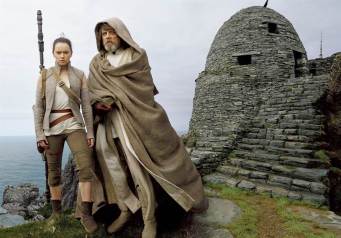
Last Jedi?Perhaps the only thing more interesting in the Star Wars universe than The Last Jedi right now is what people have been saying about the movie.  I posted my initial thoughts here.  Now that school is back in session, though, I’ve been able to talk with co-workers and students about their thoughts (which can be divisive).  At the same time, some good writing and theorizing continues to be produced online.  A handful of Tweet-storms have presented great theories about the nature of the Force, the fallibility of the Jedi order, and the controversial stand taken by Luke throughout the movie.
One of the best articles I’ve read about the movie is another piece from The Ringer,  this one by Chris Ryan.  The title, of course, gives it all away: that Star Wars movies are now all about Star Wars.  Here’s an excerpt from early in the piece:

In some ways, The Last Jedi is a perfect Empire Strikes Back remake, just not in the way we usually think of remakes. It follows the narrative structure (characters separate, go on missions, and reunite having learned something) and borrows some of the same emotional beats (parental betrayal, loss, confronting your darker impulses, sacrifice) while also tweaking them. Johnson treats Empire like a musical standard. You will recognize the melody (the cave in Empire is the pit in The Last Jedi, etc.), but it’s what the artist does within the confines of the song that matters.

For Ryan, then, the comparison between ESB and TLJ are necessary and good.  I thought the same way going into the movie.  When I left the first viewing, though, I felt like the movies were quite different.  Which is something that Ryan deals with in his take, too.  For Ryan, it’s the “busyness” that makes TLJ radically different.  He continues:

It is in this relative lack of busyness that the thematic weight of the movie is felt. Empire is about lots of things—purpose, sacrifice, love, friendship, droid repair. A few people make a lot of very important decisions—Han Solo takes Princess Leia to Bespin; Luke drops out of training to save them, against Yoda’s wishes; Darth Vader makes a play for Luke by revealing himself as his father—and they have profound consequences (carbonite freezing, loss of a hand). By clearing out all the noise, the centrality of the four main characters—Han, Leia, Luke, and Vader—is made all the more apparent. What’s happening to them really feels like it’s happening to the entire galaxy. The importance of what is taking place on Dagobah and in Cloud City, to these few characters, feels enormous. Han and Leia go through enough traumatic experiences (can we talk about the friggin’ bats that attack the Falcon?) and have enough downtime that their romance feels authentic, and his “I know” hits like a hammer.

I believe Ryan is onto something here.

+ + + + + + +

Rod Dreher finally got around to writing about The Last Jedi through the lens of the Benedict Option.  And rightly so.  There are a lot of parallels, more so in TLJ than in The Force Awakens, which was, of course, released at a very different time in our popular culture.

Here’s Dreher’s point of connection between the contemporary Christian condition and the position taken by Luke Skywalker in the movie:

Another point of comparison: we see that Luke’s spiritual burnout came because he thought he could use the Force to subdue the galaxy for Good. It turns out, though, that the Force can be used equally for Evil, and that there is no guarantee that the Light will triumph over the Darkness. This yin-yang structure is not Christian, but I see in Luke’s condition contemporary Christianity in the post-Christian era. It’s not so much that Christianity can be used for evil — though it certainly can be perverted that way — as it is that Christianity as a force for political good has been routed and beaten back.

You can also see Luke’s plight as the same as the Church in post-Christian modernity. The world has been lost. Luke has retreated to the hermitage, where he will live out the old religion until it dies with him. There is room in the Jedi religion for monastic figures. Think of Obi Wan Kenobi, and Yoda. But the Jedi religion also has a warrior class, who learn from the contemplative monks (so to speak), and take that knowledge out into the world, acting on it. You can see why Luke felt he had to retreat to the island where the Jedi religion was born — to go back to the roots — but if he does not pass the faith on, somehow, it will die. He needs someone to take the — wait for it — Jedi Option. Bwahahahaha!

That last laugh is a bit much (and very Giffen and DeMatteis).  But I can understand his laughter.  And while some might see his comparisons as a bridge too far, I definitely think it’s allowable.  The whole post is worth reading, even if you don’t agree with Dreher’s take (or the Benedict Option in general).

+ + + + + + +

It is, of course, the little things that give away fans and detractors of the movie.  I heard it said early on that you can tell someone will like TLJ if they loved Rogue One.  That’s held up mostly to be true in my conversations with others.  But it’s things like Luke chucking the lightsaber or Kylo simply tossing out that Rey’s parentage is meaningless or the quick and easy death of Snoke that has turned some “fan boys” off from the movie.  Was it all too easy, too flippantly executed, these ways of “cleaning the deck” from TFA?  Maybe.  And for every fan of Rose, there seemed to be someone else who felt like, even as good as the character might be, the story points the character was most vested in were too much of a distraction.

Another interesting comment that I’ve heard from a number of people has to do with how the movie “democratizes” the Force in a necessary way.  Part of that comes with the Rey reveal from Kylo.  Another part of that comes from the closing shot with the kid and his broom.  It’s an interesting take.  I thought the whole point of Luke in the original movie was to show how a kid from no where could find himself in the middle of everything, good and bad, that the universe had to offer.  Even when the prequels were “all about the Skywalkers,” I never assumed that the whole Star Wars story was utterly tied to one bloodline.  That seems to be the narrative, though, that any people feel that The Last Jedi is saving us from.

+ + + + + + +

Maybe more than The Last Jedi, the “final” entry in this particular trilogy will determine many things about the big picture story being told.  It’s interesting that JJ Abrams is back on board for the finale.  How will he respond to so many of the elements he set up being removed from the table almost effortlessly?  Just how different will the narrative be timeline-wise?  We’ve got a few years to wait . . . and to predict . . . and to let expectations grow.

(image from nbc.com)

Posted in Books, Faith, Movies, Teaching | Tagged | Leave a comment

“SHIELD in Space” Continues

Of course, it should also be “SHIELD in the Future,” as the barely-hanging-on series continues its brilliant fifth season.  Here’s a scene from last week’s Marvel’s Agents of SHIELD.  It brings Daisy and Jemma back together.  It’s also a “follow-up” moment to the conversation that Fitz thought he was having with Jemma at the beginning of the episode.

By episode’s end, the gang is almost all back together.  Agent May has been exiled to the surface.  Coulson and friends are trying to help a new Inhuman.  Fitz, Simmons, and Daisy are together but on the run.

If nothing else, this show does a great job of putting its main cast in crazy situations against unbeatable odds.  That they’ve survived this long is quite the miracle.  Here’s the trailer for this Friday’s new episode.

Posted in Television | Tagged | Leave a comment

Updating Brad’s Status

Couldn’t bring myself to seeing at a movie in the theater today, so I ended up renting a flick from RedBox.  At some point in the morning I realized that Brad’s Status, a recent Ben Stiller flick, was on DVD.  Say what you will, but Stiller has made some astounding smaller-movie choices.  Brad’s Status is one of them.  The movie follows a father and son as they go on a college tour . . . and the interior journey Stiller’s character goes through in the process.

Here’s a clip from early in the movie, when Stiller’s character learns that his son has a real chance of getting into Harvard.

As much as anything else, Brad’s Status is an interesting flip-side to While We’re Young, another great “getting older” movie that Stiller starred in (and also worth seeing, too).

Posted in Movies | Leave a comment

Taking a Chance on Molly’s Game

One thing that shifted for me, even if only by a little, was the amount of movie-going that I did in 2017.  Over the last few years, my interest in less commercial fare as ebbed and flowed.  Last year I didn’t even make a point of seeing a majority of the best picture nominees (whereas there have been some years where I had seen a majority even before any list was released).  That’s been especially true for the last couple of months.

Until Tuesday.  I knew that I had limited time with a pending return to school and a handful of prior commitments to take care of before the first bell rang.  So I had one shot: repeat viewing of Thor?  Downsizing?  What was that new comedy about the board-game-turned-video-game?  Thanks to the in-flight magazine on Monday’s plan, though, I remembered that Aaron Sorkin’s directorial debut, Molly’s Game, had just been released. I have, of course, over time become a big fan of particular directors and show-runners.  That’s also true of script-writers, of which Sorkin is the cream of the crop for the verbal crowd.  So not having even seen a trailer, I made my way to the theater for an early show . . . and I was blown away.

Jessica Chastain has been something off an off-the-radar actress for me.  When pushed to tell someone what movies she had been in, I could only name Interstellar (though she anchored Zero Dark Thirty, which I did not see).  Idris Elba, on the other hand, had just experienced a major flop in this summer’s The Dark Tower (which is so unfortunate).  Both actors bring Sorkin’s script to life, making it sing at its best moments.  Beyond that, Sorkin weaves a few different threads together very well, threads that cover different moments in Bloom’s life.

The movie isn’t necessarily an easy one to watch.  The stepping around the edges of any moral grey areas becomes a dance and tightrope.  But Chastain anchors it astoundingly.  We learn just enough about Elba’s lawyer-character to understand and respect him, but he still finds a way to soar without necessarily revealing deep roots (in fact most of those roots seem provided to serve as a mirror of Bloom’s own father).  And things get worse for Bloom much more often than they get better.

It’s nice, really, to go into a movie with limited knowledge of its subject (and even it’s cast, as I had no idea that Michael Cera had any part to play in the proceedings until he appeared onscreen).  Beyond that, it’s nice going into a movie knowing that the words matter.  Not so much that they are big or small, fancy or simple, words, but that they are words strung together in such a away that the whole movie, even in its quiet moments, sings.

Here’s the first trailer for the movie.  It doesn’t give too much away, definitely not as much as the later trailers.

One other thing: seeing “Quo Vadimus” across the back wall of a bar early in the movie was quite exciting, much like hearing the phrase “Doomsday Clock” being dropped nonchalantly in Justice League.  Even outside of the Marvel Cinematic Universe, things connect.

Posted in Movies | Tagged | Leave a comment

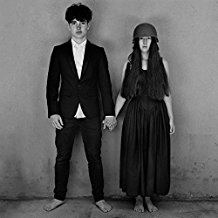
Unclosed Loop: U2’s Songs of Experience

Songs of ExperienceI’ve been meaning to get something a little more substantial down concerning U2’s most recent release, Songs of Experience.  It’s been a rough semester for U2 in my classroom.  Each fall for the last few years I’ve played “When I Look at the World” from All That You Can’t Leave Behind as an “artifact” relating to the concept of worldview.  Reception this year was chillier than usual (and still with the “aren’t they the ones that forced my iPhone to accept an album?”).  Even still . . .

Rolling Stone recently published a substantial interview with Bono (recent as in just this week).  If you’ve seen anything about the interview, it’s probably because of Bono’s comment about contemporary music being too “girly.”  This led to what seems to have been a brief firestorm about the term.  Whether or not you agree with or are mortified by Bono’s opinion and word choice, the rest of the interview is a brilliant read that covers lots of ground.

What’s most interesting to me at this point is the time spent talking about King David in the Old Testament and Jesus and Paul in the New Testament.  Granted, Bono’s appreciation for the psalms of David is well-documented (you can find the interview about that quite easily online).  When asked about his faith in the context of life’s struggles, Bono goes straight to the apostle Paul:

The person who wrote best about love in the Christian era was Paul of Tarsus, who became Saint Paul . . .  He is a superintellectual guy, but he is fierce and he has, of course, the Damascene experience. He goes off and lives as a tentmaker. He starts to preach, and he writes this ode to love, which everybody knows from his letter to the Corinthians: “Love is patient, love is kind. . . . Love bears all things, love believes all things” – you hear it at a lot of weddings. How do you write these things when you are at your lowest ebb? ‘Cause I didn’t. I didn’t. I didn’t deepen myself. I am looking to somebody like Paul, who was in prison and writing these love letters and thinking, “How does that happen? It is amazing.”

Sure, Bono has issues with other things that Paul believed and said, but at least there is a light pointed in a biblical direction.  The same happens when asked about David and ultimately Jesus (though be warned, Bono is unplugged and uncensored in the interview).

+ + + + + + +

The other online writing that has stuck with me since the release of Songs of Experience has been a piece from The Ringer.  Part of what made Rob Harvilla’s quite-caustic review of the album so interesting was the author’s use of “Acrobat” from Achtung Baby as a kind of foil.  Achtung Baby was released at a time where I was far from pop music (and definitely far from U2), so I discovered “Acrobat” at a time when I didn’t even know that Achtung Baby was often hailed as the band’s best work.  As I discovered, the album was great.  And one of my favorite, go-to tracks was “Acrobat.”  Harvilla’s article taught me that the song, definitely not the kind of anthem that the band is usually loved for, has never actually been played in concert.  From Harvilla:

The mood is near-apocalyptic, the discord as close as stadium rock stars can get to “punk” without embarrassing themselves. Bono’s opening lines: “Don’t believe what you hear / Don’t believe what you see / If you just close your eyes / You can feel the enemy.” The Edge’s seething guitar solo is one of the few that makes no attempt to train its eyes heavenward.

Harvilla then adds:

This song is a ghost, an emblem of the Cormac McCarthian road not taken. I want to live in a universe where it’s the first single from U2’s new album in 2017, heralding a darkest-timeline reboot that intensifies society’s general dystopian mood.

So when I heard that U2 was postponing the release of the album in light of the political events of 2016, I thought maybe we’d get something both searing and soaring (which is what Harvilla hoped for, too).  And that’s pretty much what we didn’t get.

When asked by a friend what I thought of the album (an album that he said was the first U2 album he’d liked in quite some time), I commented that it felt like they had gotten the names of the two Songs of . . . albums switched.  While Songs of Innocence was an attempt to remember/revisit/recast what the band knew and understood when they were starting out, it had an edge to it, a realism really, that is almost wholly absent from Songs of Experience.  With Innocence we got historical moments and place names and one of the most tragic turns-of-phrases I’ve ever heard to describe the loss of a loved one.  What tries to shine through at times with Experience is too abstracted and very (frustratingly) 21st century (and here I would go back to the other conclusions that Bono made about the apostle Paul that I don’t necessarily agree with).  That’s probably at least one reason why Harvilla’s article has the unpoetic title “U2’s New Album Is a Study in Forced Optimism.”

+ + + + + + +

While spending time in Tennessee with family, I’ve had some time to drive with Songs of Experience.  I think that’s probably the best way to get your mind and heart around a new album.  I listened to the plain, not-deluxe version of the album (partly because the deluxe version just feels too long and partly because my phone won’t stop shuffling everything it plays).  Here’s the thing: it sounds like a great album.  I have none of the major gripes about most of the songs that frustrated Harvilla.  And my previously-mentioned friend is right, there are a handful of songs on the album that sound like early U2 in a good way.  Part of me thinks that you could remove a couple of songs and re-arrange a couple of others and have a stand-out album.  I can’t help but think that “You’re the Best Thing About Me” stands as a perfect example of the album’s promise: catchy idea tinged with a subtle-but-real sense of loss (why am I walking away?).  “Get Our of Your Own Way,” which Harvilla seems quite taken with, moves a little bit away and in the wrong direction for me.  Tracks 6 through 10, “Summer of Love” to “Landlady” are quality and in good order.  “Love is Bigger Than Anything in Its Way” is the song I want to like the most . . . even if it’s retrogressive, I love how it builds.  But there’s just too much equivocation at play there.  The last song on the album, “13,” is a great way to end the album: an actual call-back to Songs of Innocence that really makes me appreciate that album even more.

+ + + + + + +

I mentioned a few days ago that I finally got around to listening to the audio commentary version of Andrew Peterson’s The Burning Edge of Dawn album and how great it was to hear some of the stories behind the songs.  The same is true for the Rolling Stones article.   It’s a long one, and its a doozy.  It’s about people and politics and the possibilities of life and love.  Bono’s frustrations are evident (including his reflections on his own fallible political heroes).  But his hopes are, too, and that’s an admirable and encouraging thing, even if we don’t interpret all things similarly.  The interview ends with this:

I am holding on to the idea that through wisdom, through experience, you might in some important ways recover innocence. I want to be playful. I want to be experimental. I want to keep the discipline of songwriting going forward that I think we had let go for a while. I want to be useful. That is our family prayer, as you know. It is not the most grandiose prayer. It is just, we are available for work. That is U2’s prayer. We want to be useful, but we want to change the world. And we want to have fun at the same time. What is wrong with that?

(image from amazon.com)

Posted in 2017, Faith, Music, Teaching | Tagged | Leave a comment