
 We’re two episodes away from the end of the first season of The Rings of Power on Amazon Prime. It’s been a fun 6 episodes so far, putting to the screen characters and locations that have mostly only resided in text and pictures. The show has not been without its critics. (Let me say that I am so glad that the Peter Jackson trilogy came out before Twitter was a thing.). That’s been true of every other adaptation of Tolkien’s work, so it’s nothing new. As I might have mentioned before, it’s just nice being able to step into Tolkien’s world in a way like this. It’s not something that happens often. And it’s fun to see the show’s creators find interesting ways to pace things and slow-burn certain mysteries. (I’m glad we’ve had a couple of episodes without the Harfoots.) It’s also be interesting to see how the show-runners have brought in echoes (or almost direct quotes) from the Tolkien story and media (like the Harfoot song “This Wandering Day” or Bronwyn’s use of a Samwise Gamgee quote).
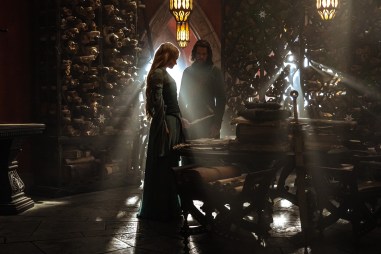
I think the thing that stands out to me this far into the story is the balance of the promise of the trailers with the realities of each episode. And it mostly centers on Galadriel, since she’s the show’s true lead and the most significant thread tying things into Lord of the Rings. The trailers (and the first episode) brought out a strong sense of the important of vigilance. Is Sauron back or not? Either way, what do we do about it? Vigilance is a good word for everyone. But for Galadriel, the other side of vigilance’s coin is vengeance. She really wants to get back at Sauron for what has happened to her loved ones. Which is understandable and likely sells more than the slow work of vigilance. I hope that vigilance comes back to the foreground as the season comes to an end. This first season has had the benefit/curse of evil being “unseen” (thus little action from the elves). But based on this last episode, evil is about to be more fully seen, which requires a vigilance all its own.
+ + + + + + +
I’m still slowly rereading Tolkien’s Unfinished Tales (and mostly out of order). Yesterday I finished the the story of Turin from the First Age. And it’s all about vengeance (or at least it felt like it). I think maybe the strength of both The Hobbit and Lord of the Rings is that vengeance isn’t very present as a motivation. Maybe that’s why Galadriel both “takes and passes” the test when the Ring is presented to her. Almost everyone else is focusing on vigilance or on prevention or protection. As others have said before, maybe this is the arc of Galadriel’s journey in the series. If so, it will be a good arc to witness.
(image from imdb.com)
 One of the questions posed early on at the Lodge a few weeks ago was the question of what authors we turn to for comfort (because these last few years have brought great need for comfort). I told the couple I sat near that I would often turn to Tolkien and Lewis and Chesterton. And it doesn’t matter much what I read from them as long as it is from them. Granted, the shorter the better has been the case of late. I had just reread a number of shorter Lewis pieces collected in Present Concerns. But I did want to read some Tolkien. So I went back to Unfinished Tales. I had read the entries tied into The Hobbit and LOTR a few weeks before but had, at that time, decided to stay away from the longer pieces from “the first age” that take up most of the book. I’ve read the Silmarillion before and enjoyed it, but it is also a bit of a commitment. And I’m a little leery of reading “First Age” and “Second Age” content with
 On the other hand, I didn’t have too high expectations for Stranger Things 4. It had been so long since the last series. Humor has also been a hallmark for the show. But the humor is there to humanize things and to keep things from getting too heavy. And this season was quite heavy. The show also took the risk of sending its characters in different directions for the entire run: three groups, actually. Sometimes that can backfire. But as with stories like Harry Potter, the adventures of Eleven and her friends gets better the more it digs into the past of things. And I really think the show benefits from having set an actual conclusion to the story (which also helped immensely with shows like Lost). And so the final scene, which isn’t quite a cliffhanger but definitely leaves you hanging, doesn’t grate as much as the conclusion and stingers for Love and Thunder. And it sets you up for what you know will be the real finale. The show has stuck with what makes it great: friendship, spiritual struggle, and something about life in the 80s. Such an interesting story: so consistently tense with super-high stakes but with something of a simple set-up. I’m glad that it still resonates on multiple levels.


